

TL;DR:
- Gas labor sensations, caused by hormonal shifts, mimic intense gas cramps and follow a rhythmic pattern during early labor. Understanding these sensations helps expecting parents distinguish them from digestive issues and feel more confident managing discomfort effectively. Natural methods, pain relief options like nitrous oxide, and support from healthcare providers or partners enhance labor experience and control.
That sudden cramping pressure you feel in early labor? It often catches people completely off guard. Gas labor sensations are one of the most common and least talked-about parts of early childbirth, and many expecting parents mistake them for digestive trouble rather than a genuine sign that labor is progressing. Understanding what is actually happening in your body, and knowing your relief options, can shift that fear into confidence before you even arrive at the hospital.
Table of Contents
- Key Takeaways
- What gas labor really is
- Nitrous oxide for labor pain and anxiety
- Managing gas labor discomfort naturally
- When to check in with your healthcare provider
- My perspective on gas labor and birth preparation
- How Myserenitydoula supports you through labor
- FAQ
Key Takeaways
| Point | Details |
|---|---|
| Gas labor is normal | Hormonal shifts cause both uterine contractions and bowel activity, creating intense gas-like sensations. |
| Nitrous oxide offers fast relief | It takes effect within seconds and clears from the body in about five minutes after stopping. |
| You stay in control with nitrous oxide | It is self-administered, preserves your ability to move, and does not slow labor progress. |
| Natural comfort measures matter | Positioning, breathing, massage, and emotional support all reduce the intensity of gas labor discomfort. |
| Talk to your provider about your preferences | Discuss pain relief options before labor begins so you feel prepared and heard during delivery. |
What gas labor really is
You may be surprised to learn that those sharp, cramping, gassy feelings in early labor are not a digestive problem. They are your body doing exactly what it should. Hormones preparing your cervix cause both uterine contractions and bowel irritation at the same time, which is why the sensations feel so similar to intense gas cramps.
When labor begins, your body releases oxytocin and prostaglandins. These hormones trigger uterine contractions, but they also stimulate the bowels and relax smooth muscle throughout your digestive tract. Add growing pressure from your baby descending into your pelvis, and your intestines feel every bit of it.
Here is what makes gas labor sensations distinct from regular digestive gas:
- They follow a rhythmic pattern, building and easing like contractions
- They are often felt low in the abdomen, pelvis, and lower back together
- They may be accompanied by loose stools or the urge to have a bowel movement
- They increase in frequency and intensity as labor progresses
- They do not respond to antacids or gas relief remedies the way ordinary gas does
Understanding this difference matters. When you recognize gas labor for what it is, you stop spending energy worrying and start focusing on working through each wave.
Pro Tip: If you are unsure whether what you feel is gas labor or regular digestive discomfort, time your sensations. True labor contractions, including gas-like ones, come at regular intervals and grow longer and stronger over time.

Nitrous oxide for labor pain and anxiety
Nitrous oxide, often called laughing gas, is one of the most flexible pain relief options available to you during labor. It does not make the pain disappear completely. What it does instead is shift your perception of it, taking the sharp edge off and reducing the anxiety that often makes pain feel worse than it is. Many people describe it as feeling calmer and more detached from the discomfort without losing awareness of what is happening around them.
Nitrous oxide reduces anxiety and shifts how you experience pain, helping you feel more in control during labor. That sense of control is genuinely meaningful when your body is working hard.
Here is how it works in practice:
- You hold a mask over your nose and mouth and breathe in the gas yourself
- Effect begins within seconds and wears off within about five minutes after stopping
- Delivered as a 50/50 blend of nitrous oxide and oxygen, never exceeding 50% concentration for safety
- Because you hold the mask yourself, it has a built-in safety feature: if you become too sedated, you naturally drop the mask, which stops the gas flow immediately
- It does not affect labor progress, your baby’s alertness, or your ability to breastfeed afterward
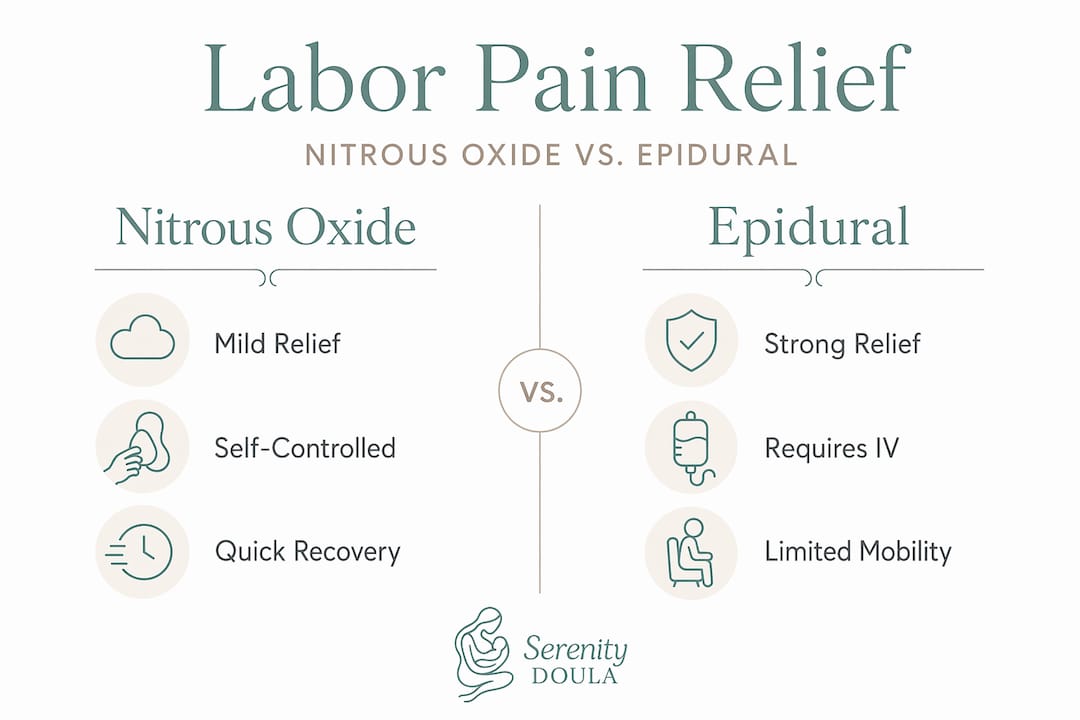
Here is a quick comparison to help you see where nitrous oxide fits among your options:
| Feature | Nitrous oxide | Epidural |
|---|---|---|
| Pain relief level | Moderate, perception-shifting | Strong, numbing |
| Ability to move freely | Yes | Limited |
| Takes effect | Seconds | 10 to 20 minutes |
| Wears off quickly | Yes, within minutes | Hours |
| Affects labor progress | No | Possible slowdown |
| Self-administered | Yes | No |
Common side effects include dizziness, nausea, and mild sedation. Side effects are generally mild and short-lived, and the American College of Nurse-Midwives supports its use for appropriate patients. It cannot be used after an epidural is placed, and it works alongside other analgesics prior to epidural placement if needed. Unlike an epidural, nitrous oxide preserves your ability to move freely and stay physically active during delivery.
Pro Tip: Begin inhaling the nitrous oxide about 30 seconds before a contraction peaks. This gives it time to take effect right when you need it most.
Managing gas labor discomfort naturally
You have more tools available than you might realize, and none of them require medication. Natural comfort measures can be remarkably effective when used consistently and with a knowledgeable support person at your side. Calm environments and attentive support genuinely ease labor stress and improve outcomes.
Here is a step-by-step approach to managing gas labor sensations without medication:
- Adjust your position. Hands-and-knees positioning takes pressure off the intestines and lower back. Rocking or swaying on a birth ball can also provide relief. Learn more about how labor bed positioning affects your comfort options.
- Use slow, intentional breathing. Inhale deeply through your nose for a count of four, then exhale slowly through your mouth. This activates your parasympathetic nervous system and reduces the perception of pain.
- Ask for warm pressure. A warm compress or a partner’s firm hands pressing on your lower back during a contraction can reduce the cramping sensation significantly.
- Create a calm birth space. Dim lighting, familiar music, and a quiet room all reduce the anxiety that amplifies pain. Knowing how to create a calm birth space before labor begins makes a real difference.
- Let your support person lead. A partner, doula, or support person who knows your preferences can offer encouragement, physical comfort, and steady presence, which studies consistently show helps people cope better with labor pain.
Pro Tip: Prepare your partner or support person ahead of time with specific techniques you want them to use. Vague instructions like “just be there” are harder to follow than “press firmly here during each contraction.”
When to check in with your healthcare provider
Gas labor sensations are normal, but there are times when a symptom warrants a closer look. Not every pain during labor is routine, and knowing the difference helps you advocate for yourself confidently.
Talk to your care provider right away if you notice:
- Pain that does not ease at all between contractions and stays constant
- Severe pain localized to one side of the abdomen rather than across the lower belly
- Fever, chills, or unusual discharge alongside gas-like sensations
- Symptoms that do not match the rhythmic pattern of labor contractions
If you are considering nitrous oxide, there are a few situations where it may not be recommended. Vitamin B12 deficiency is a contraindication due to potential neurotoxic effects. Certain respiratory conditions may also limit its use. Your provider can review your health history and help you decide whether it is a good fit.
The broader point here is that you deserve to understand every option available to you before labor begins. Go into those prenatal appointments prepared with questions. Write down what matters to you and share it clearly. Preparing your mind and body before your due date means you walk into the delivery room with a plan, not just a hope.
My perspective on gas labor and birth preparation
I have worked with many expecting parents who arrive at labor completely blindsided by gas-like sensations. The fear on their faces is real. They wonder if something is wrong, if they missed a sign, if they should have known. Almost always, they are right on track. What they needed was someone to explain what their body was doing before the moment arrived.
From what I have seen, the people who cope best with gas labor are not the ones who have the highest pain tolerance. They are the ones who walked in prepared. They knew what to expect. They had practiced their breathing, they had talked through their relief options, and they had a support person who knew how to help.
Nitrous oxide often surprises people in the best way. Many expect it to do more than it does, and when it helps them feel calmer and more grounded rather than numb, they appreciate the control it gives them. That feeling of staying present during labor is something an epidural cannot always offer.
My honest take? Understanding gas labor is not just reassuring. It is genuinely useful. The more you know going in, the less fear you carry through it.
— Alexis Wallace
How Myserenitydoula supports you through labor

At Myserenitydoula, we believe that every laboring person deserves to feel informed, supported, and genuinely cared for through every sensation labor brings, including gas labor discomfort. Our pregnancy and birth support doula services are designed to walk with you through every stage, from early labor to the moment you meet your baby. We bring comfort measures, emotional encouragement, and practical guidance when you need it most.
We also offer childbirth education classes that cover labor sensations, pain relief options like nitrous oxide, and everything in between, so you and your partner feel ready rather than reactive. If you want to feel seen, supported, and prepared, we would love to connect with you.
FAQ
What does gas labor feel like?
Gas labor feels like intense, crampy pressure in the lower abdomen, pelvis, and sometimes the back, similar to strong gas pains. Unlike regular digestive discomfort, these sensations follow a rhythmic pattern that intensifies as labor progresses.
Is nitrous oxide safe for my baby during labor?
Yes. Nitrous oxide does not affect labor progress, infant alertness, or breastfeeding capability when used as directed in a 50/50 blend with oxygen.
Can I use nitrous oxide and an epidural together?
No. Nitrous oxide cannot be used after an epidural has been placed, but it can be used before epidural placement and may be combined with other analgesics during that window.
How can my partner help with gas labor discomfort?
Partners can apply firm counter-pressure to the lower back, guide breathing techniques, maintain a calm environment, and offer steady encouragement, all of which measurably reduce the intensity of labor discomfort.
When should I call my provider about labor sensations?
Call your provider if you experience constant pain that does not ease between contractions, pain on only one side of the abdomen, fever, chills, or sensations that do not follow a rhythmic labor pattern.