

TL;DR:
- Creating a positive birth environment involves intentionally arranging physical, emotional, and social conditions to promote safety and calm during labor. Preparing the space with proper lighting, sound, temperature, and privacy supports hormone balance and reduces stress, improving labor outcomes. A concise, flexible birth plan and a well-prepared support team enhance maternal satisfaction and help handle unexpected changes confidently.
A positive birthing environment is defined as the intentional arrangement of physical, emotional, and social conditions that support a birthing parent’s sense of safety, calm, and control during labor. Research confirms that environment directly shapes hormonal balance, pain perception, and maternal satisfaction. The World Health Organization and ACOG both endorse supportive birth practices as evidence-based standards of care. The workflow for creating a positive birthing environment covers three core areas: preparing the physical space, building a flexible birth plan, and assembling the right support team. Serenity Doula works with Bucks County families to put all three in place, well before the first contraction.
What basic elements are essential in setting up a calming birthing space?
The physical space where you labor has a direct effect on your body’s hormonal output. Dim lighting, soft music, and privacy are not comfort extras. They are practical tools that support oxytocin production and reduce adrenaline, the hormone that slows labor when stress levels rise.
A well-prepared birthing room setup addresses four sensory areas:
- Lighting: Request dimmer switches or bring battery-powered warm lights. Bright overhead fluorescents signal “clinical alert” to your nervous system and can stall labor progress.
- Sound: A curated playlist of familiar, calming music masks hospital noise and gives your brain a focal point. Silence works too, but most parents find gentle sound more grounding.
- Temperature: Labor generates significant body heat. Ask your care team about thermostat control, and bring a small fan. A cool cloth on the forehead during transition is a simple comfort measure that works.
- Privacy: Limit unnecessary foot traffic into your room. Every unfamiliar face triggers a small stress response. Fewer interruptions mean more consistent oxytocin flow.
Clutter reduction matters more than most parents expect. Visible medical equipment can heighten anxiety. Ask your nurse whether IV poles, monitors, or supply carts can be repositioned or partially covered when not in active use. Bringing a few personal items, a favorite pillow, a photo, a familiar scent like lavender essential oil, creates a sensory bridge between home and hospital.
Pro Tip: Ask your provider at Trinity Health St. Mary or your chosen Bucks County facility whether they allow battery-powered LED candles and personal diffusers. Many do, and these two items alone can transform the feel of a standard delivery room.
How do you develop a flexible birth plan that actually guides your care?
A birth plan is a communication tool, not a contract. The most effective plans are concise, one-page documents using bullet points that clinical staff can scan in under two minutes during a busy shift. Color-coding by category, such as green for preferences and yellow for contingencies, helps nurses and midwives find what matters fast.

A birth plan significantly increases the likelihood of normal vaginal delivery and early breastfeeding initiation. That outcome is not accidental. A clear plan reduces decision fatigue for both parents and providers, keeping care aligned with your goals.
Build your plan around these five areas:
- Support people: Name who you want present and their roles. Specify whether you want a doula, partner, or family member to speak on your behalf if you cannot.
- Pain management preferences: List your first, second, and third choices. Include whether you want to be offered pain medication or prefer to ask for it yourself.
- Environment: Reference your lighting, sound, and privacy preferences from your birthing room setup plan.
- Interventions: Note which interventions you want explained before they happen. Asking providers to share the “why” and “what if” before acting is a recognized way to protect parental empowerment during labor.
- Newborn care: Cover skin-to-skin contact, cord clamping timing, feeding intentions, and who cuts the cord.
Include a short backup section. Flexible plans that acknowledge the possibility of interventions reduce feelings of failure and support calmer decision-making when plans change. A single sentence like “If a cesarean becomes necessary, we ask for a gentle cesarean protocol and immediate skin-to-skin when safe” covers a major contingency without adding length.
Pro Tip: Review your birth plan with your OB or midwife at least four weeks before your due date. Bring it to your 36-week appointment and ask directly: “Is there anything here that conflicts with this facility’s policies?” That one conversation prevents most day-of surprises.
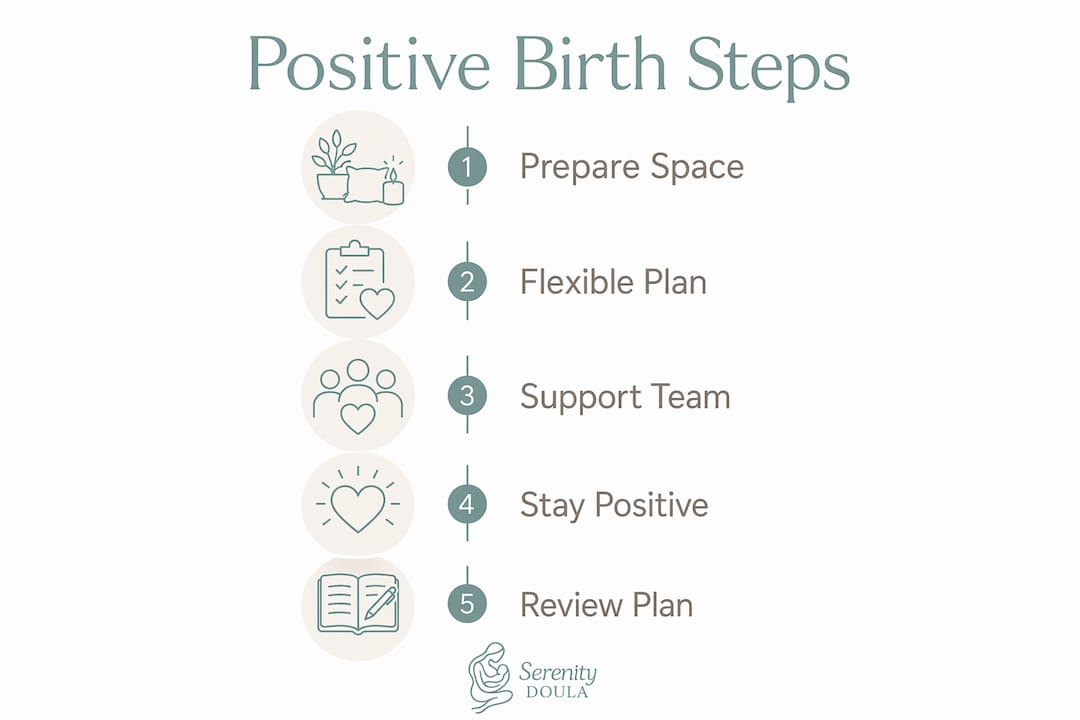
Who should be on your birth support team?
Continuous labor support is one of the most evidence-backed interventions in obstetrics. Intrapartum supportive care that includes a personalized environment and consistent emotional presence produces a mean maternal satisfaction score of 9.9 compared to 7.2 in standard care. That gap is significant. It reflects how much the human element shapes the birth experience.
Your core support team typically includes:
- Your partner or chosen support person: Prepare them with specific tasks. Knowing how to apply counter-pressure, when to offer water, and how to advocate calmly with staff makes them far more effective. The partner support guide from Serenity Doula walks through this step by step.
- A birth doula: A doula provides continuous physical and emotional support that complements your medical team. Education and emotional support for birth partners from trained professionals measurably improve maternal satisfaction and overall birth experience.
- Your healthcare providers: Your OB, midwife, and nursing team handle clinical decisions. Your job is to communicate your preferences clearly. Their job is to explain options before acting.
- An advocate: This can be your doula, partner, or a trusted family member. Advocacy during labor protects privacy, resolves conflicts, and keeps care aligned with your expectations, preventing the helplessness that some parents feel when decisions happen around them rather than with them.
Preparing your support people before labor day is as important as choosing them. Share your birth plan with everyone on your team. Walk through the “what if” scenarios together. A personalized pregnancy platform can also help partners and families track preferences and stay aligned throughout the process.
How do you stay positive when labor doesn’t go as planned?
Labor is unpredictable by nature. Cervical progress stalls, positions shift, and clinical recommendations change. The parents who feel most satisfied with their births are not the ones whose plans went perfectly. They are the ones who felt heard, informed, and supported through every turn.
Mental preparation starts before you arrive at the hospital. Breathing techniques like slow diaphragmatic breathing and the 4-7-8 pattern give you a physical anchor when anxiety rises. Mindset work, specifically practicing acceptance of uncertainty rather than resistance to it, reduces the emotional crash that can follow an unexpected intervention. Flexible birth plans that include backup preferences prepare families for these moments without requiring them to make high-stakes decisions under pressure.
On admission day, do a quick review of your birth plan with your nurse. Confirm which preferences are in your chart. Ask one clear question: “What does the next few hours look like based on where I am now?” That single question orients your whole team and gives you a realistic picture to work with.
Pro Tip: When a contraction peaks and your plan feels far away, return to your breath and one anchor phrase. Something simple like “I am safe, my baby is safe” works better than complex affirmations. Keep it short enough to repeat in under five seconds.
Key takeaways
A positive birthing environment requires intentional preparation of the physical space, a flexible one-page birth plan, and continuous support from a prepared team before labor begins.
| Point | Details |
|---|---|
| Physical space matters | Control lighting, sound, temperature, and privacy to support oxytocin and reduce stress. |
| Birth plans work | A concise, flexible birth plan increases the likelihood of vaginal delivery and early breastfeeding. |
| Continuous support is evidence-based | Trained support raises maternal satisfaction scores significantly above standard care. |
| Prepare your team | Brief every support person on your plan, their role, and your backup preferences before labor day. |
| Flexibility protects you | A backup mindset reduces distress when plans change and keeps decision-making calm. |
What 10 years of birth work taught me about environment and planning
Most families I work with in Bucks County arrive at their birth with a beautiful, detailed plan and a vague hope that the room will somehow feel right. What I’ve learned is that the room never feels right by accident. The families who walk away feeling good about their birth, regardless of how it unfolded, are the ones who did the preparation work weeks earlier.
The single most underused step I see is the pre-birth provider conversation. Parents write a plan, print it out, and then never actually discuss it with their OB or midwife before labor day. That conversation is where you find out that your hospital allows diffusers, or that your provider has never done a gentle cesarean but is open to it. You cannot have that conversation at 8 centimeters.
I also want to say something that most birth content skips: a positive birth experience is not the same as a perfect birth. I have supported parents through emergency cesareans, unexpected NICU stays, and plans that changed completely within the first hour. Many of them describe their births as deeply positive. What made the difference was feeling seen, informed, and supported throughout. That is what evidence-based doula care actually delivers. Not a guaranteed outcome, but a guaranteed presence.
If you are a Bucks County family preparing for birth at Doylestown Hospital, Trinity Health St. Mary, or anywhere in the region, start your environment and support planning at 28–32 weeks. That window gives you time to have real conversations, make real adjustments, and arrive on labor day feeling genuinely ready.
— Alexis Wallace
How Serenity Doula helps you build your birth environment
Serenity Doula offers pregnancy and birth support designed around the exact workflow covered here: physical space preparation, birth plan development, and continuous labor support. Alexis Wallace works with families across Bucks County to build a plan that reflects their values and prepares their team for whatever labor brings. Serenity Doula also offers childbirth education classes that cover breathing techniques, comfort measures, and partner preparation in depth. If you are ready to feel grounded and prepared before your due date, book a free consultation and let’s build your plan together.
FAQ
What is a positive birthing environment?
A positive birthing environment is the intentional combination of physical comfort, emotional safety, and continuous support that helps a birthing parent feel calm, informed, and in control during labor.
How does the birth environment affect labor progress?
Dim lighting, minimal interruptions, and a calm atmosphere promote oxytocin release and reduce adrenaline, which directly supports labor progress and reduces pain perception.
What should a birth plan include?
A birth plan should cover support people, pain management preferences, environment requests, intervention communication preferences, and newborn care wishes, all on one concise page with a backup section.
How does a doula support a positive birth experience?
A doula provides continuous physical comfort, emotional reassurance, and advocacy throughout labor, which research links to significantly higher maternal satisfaction scores compared to standard care alone.
When should I start planning my birth environment?
Start at 28–32 weeks. That timeline gives you enough time to visit your birth facility, discuss preferences with your provider, and prepare every member of your birth support team before labor begins.