

TL;DR:
- Supporting sibling bonding postpartum involves active nurturing, attention, and emotional validation from the first days at home. Preparing beforehand through reading, role play, and honest conversations helps ease firstborn anxiety and fosters early connection. After the baby arrives, consistent one-on-one time, age-appropriate helping, and warmth during regression strengthen sibling relationships and reduce jealousy.
Supporting sibling bonding postpartum means actively nurturing connection through attention, involvement, and emotional validation from the very first days home. The transition from only child to older sibling is one of the biggest shifts a young child will ever face, and how parents respond in those early weeks shapes the relationship for years to come. Research from Utah State University confirms that deliberate, warm strategies reduce jealousy and build genuine closeness between siblings. This guide gives Bucks County families practical, evidence-based steps to make that connection real.
How to support sibling bonding postpartum: preparing before baby arrives
The most effective sibling bonding work begins before the baby is even born. Preparation during pregnancy with books, role-playing, and early involvement decreases firstborn children’s behavioral problems and increases emotional readiness. That means fewer meltdowns in week one and a calmer start for everyone.
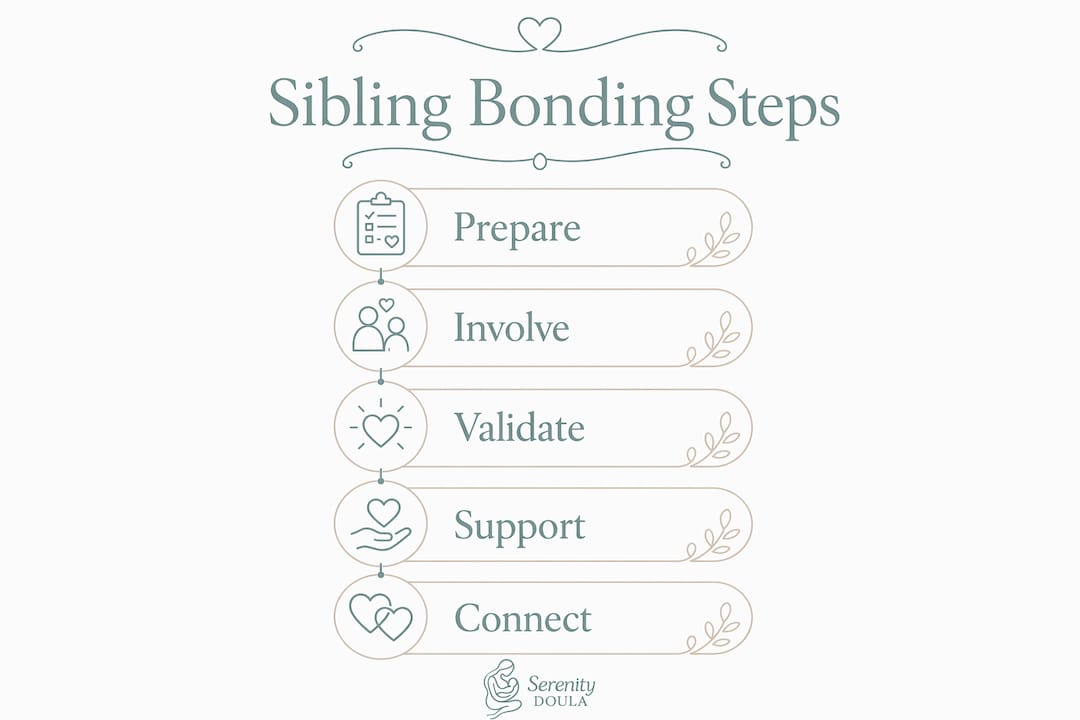
Here are the most effective ways to prepare your older child:
- Read picture books together about becoming a big sibling. Titles like There’s a House Inside My Mommy or I’m a Big Brother/Sister give toddlers a concrete, friendly picture of what is coming.
- Use role play. Let your child practice holding, feeding, and soothing a baby doll. This builds confidence and reduces the shock of seeing a real, fragile newborn.
- Involve them in pregnancy activities. Let your child feel the baby kick, come to a prenatal appointment, or help pick out a onesie. Inclusion creates ownership rather than exclusion.
- Set honest expectations. Tell your child that newborns sleep a lot, cry often, and cannot play yet. Surprises fuel anxiety; preparation builds calm.
- Reframe the family story. Utah State University child development experts recommend telling your child that love in a family grows rather than divides. This one shift helps firstborns feel secure rather than replaced.
Pro Tip: Pack a special “big sibling bag” for the hospital or birth day at home. Fill it with a small gift, a new book, and a handwritten note “from the baby.” That first meeting sets the emotional tone for everything that follows.
You can find more ideas in this family involvement guide from Serenity Doula.
What daily strategies help bond siblings after baby comes home?
Once the baby is home, consistency and inclusion become your two most powerful tools for nurturing sibling connections postpartum.
- Give focused one-on-one time every day. Research confirms that 10–15 minutes of daily uninterrupted attention with the older sibling reduces jealousy and strengthens the sibling bond. This time does not need to be elaborate. A puzzle, a walk around the block in Newtown, or reading together counts fully.
- Invite age-appropriate helping. Children who sing lullabies or help with the baby’s clothes feel included and develop curiosity and connection rather than resentment. Keep helping voluntary, not pressured.
- Protect familiar routines. Consistent daily rituals provide emotional security and help regulate older children’s behavior during family transitions. If Tuesday night was bath-and-story night before the baby, keep it exactly that way.
- Label emotions out loud. When your child looks sad or frustrated, name it: “You look like you miss having Mama all to yourself. That makes sense.” Naming feelings reduces their intensity and builds the emotional vocabulary children need to express themselves without acting out.
- Celebrate the sibling role. Use phrases like “The baby smiled when you sang. You are so good at this.” Positive reinforcement builds identity around being a caring older sibling.
Pro Tip: Place a small basket of “big kid only” activities near where you nurse or feed the baby. Your older child gets something special during those long feeding sessions, which turns a potentially jealous moment into a calm, parallel one.
How do you respond to behavioral changes in older siblings after birth?
Regression and testing limits are the most common postpartum sibling behaviors, and they are not misbehavior. They are communication.
Toddler regression is a sophisticated emotional signal reflecting insecure attachment. Disciplinary tactics often increase the problem, while connection responses extinguish it quickly. This is one of the most counterintuitive truths in early childhood development.
Common behaviors and what they actually mean:
- Bedwetting after being toilet trained: “I need more of your attention and care.”
- Baby talk or wanting a bottle: “I want to feel as safe and held as the baby looks.”
- Clinginess and separation anxiety: “I am not sure I am still your priority.”
- Hitting or pushing the baby: “I do not have the words for how big this feeling is.”
When your toddler acts younger than their age after a new baby arrives, they are not going backward. They are reaching for reassurance in the only language they know. Meet them there with warmth, not correction, and the behavior resolves far faster than any discipline strategy will.
NCT research confirms that recognizing these behaviors as communication rather than misbehavior builds healthier sibling relationships over time. Responding with warmth, not shame, is the fastest path through regression. Families navigating neurodiverse dynamics can also find additional support through resources like Parents Helping Parents, which offers sibling bonding strategies tailored to a wider range of family needs.
What role do parents play in strengthening sibling bonds?
Parents are the architects of sibling warmth. Your emotional regulation, your coparenting teamwork, and how you coach conflict all shape how your children relate to each other.
Intervention studies show that parents who teach prosocial behaviors and conflict management see real gains in children’s emotional regulation and sibling relationship quality. The effect runs both ways: programs that strengthen sibling relationships also improve parental emotional regulation and coparenting collaboration. The whole family system gets stronger together.
| Parental action | Effect on sibling bond |
|---|---|
| Naming and validating both children’s feelings | Reduces rivalry and builds mutual empathy |
| Coparenting consistently (both parents using same language) | Creates predictability that calms older sibling anxiety |
| Coaching conflict rather than solving it | Builds children’s own repair and negotiation skills |
| Praising kindness between siblings specifically | Reinforces sibling identity as caring and connected |
| Modeling calm during your own stress | Teaches emotional regulation by example |
The partner support role matters enormously here. When one parent is focused on the newborn, the other can be the anchor for the older child, maintaining routines and providing that daily one-on-one time. Coordinated coparenting is not a luxury. It is the structure that makes everything else work.
Key takeaways
Supporting sibling bonding postpartum requires daily one-on-one time, consistent routines, emotional validation, and coordinated parental responses that treat regression as communication rather than misbehavior.
| Point | Details |
|---|---|
| Prepare before birth | Use books, role play, and honest conversations to reduce firstborn anxiety before baby arrives. |
| Give daily focused attention | Ten to fifteen minutes of uninterrupted one-on-one time each day reduces jealousy and builds security. |
| Involve the older child | Age-appropriate helping roles like singing lullabies build connection and reduce resentment. |
| Respond to regression with warmth | Attachment-focused responses resolve regression faster than discipline or shame. |
| Coparent consistently | Both parents using the same language and routines creates the stability older siblings need. |
What I have learned after a decade of supporting Bucks County families
After ten years as a birth doula working with families across Doylestown, Newtown, and the broader Bucks County area, the question I hear most often in those first postpartum weeks is: “Is my older child going to be okay?”
The honest answer is yes, and the speed of that “okay” depends almost entirely on how much the older child feels seen. I have watched two-year-olds who screamed at the baby for the first week become the most tender, protective big siblings by week four. The turning point was always the same: a parent who stopped trying to correct the behavior and started sitting on the floor with their toddler, just being present.
What I tell every family I work with is this: you do not need a perfect plan. You need five minutes on the floor, a consistent bedtime routine, and the willingness to say “I see you” when your older child is struggling. Those three things do more than any structured activity program ever will.
I also want to say something that does not get said enough. This adjustment is hard for parents too. You are recovering physically, running on broken sleep, and trying to love two children at once when you feel like you barely have enough left for one. That is not failure. That is the reality of postpartum life. Getting support for yourself, whether through a postpartum doula, a partner, or a trusted community, is what makes you available to your older child in the first place.
— Alexis Wallace
Serenity Doula’s postpartum support for your whole family
The postpartum weeks are a lot to hold at once, and you do not have to figure out sibling dynamics on top of everything else alone.

Serenity Doula’s postpartum care services are designed for exactly this season. A postpartum doula helps you implement the sibling bonding strategies in this article in real time, from coaching the older child’s first interactions with the baby to helping you protect that daily one-on-one time when the day feels impossible. Serenity Doula also offers pregnancy and birth support that begins the sibling preparation process well before your due date. Book a free consultation and let us walk alongside your whole family through this transition.
FAQ
How long does sibling adjustment take after a new baby?
Most older children show significant improvement in behavior and connection within four to six weeks when parents respond with warmth and consistency. Regression behaviors typically resolve faster with connection-focused responses than with discipline.
What are the best activities for new siblings to do together?
Gentle activities like singing lullabies to the baby, helping choose an outfit, or reading a book aloud near the baby build curiosity and connection without overwhelming a newborn or pressuring the older child.
Should I be worried if my toddler regresses after the baby arrives?
Regression is a normal, temporary response to a major family change. Attachment-focused responses like warmth and extra closeness resolve regression more effectively than correction or punishment.
How much one-on-one time does an older sibling need postpartum?
Research confirms that 10–15 minutes of daily, uninterrupted time with the older sibling is enough to reduce jealousy and reinforce their sense of importance within the family.
Can a postpartum doula help with sibling bonding?
A postpartum doula supports the whole family, not just the newborn. Serenity Doula’s doulas help parents implement bonding strategies, coach sibling interactions, and free up parental attention for the older child during the most demanding early weeks.