

TL;DR:
- Breathing techniques during labor help manage pain, reduce tension, and promote relaxation. Practicing techniques before labor builds muscle memory, making them effective when contractions are intense. Partner support and stage-specific methods enhance the overall labor experience.
Natural childbirth breathing techniques are intentional breath patterns that help regulate pain, reduce tension, and promote relaxation throughout labor. Clinically known as structured respiratory control, these methods form the foundation of the Lamaze method and similar childbirth preparation programs. Research shows that 66.1% of mothers using structured breathing during labor reported low stress, compared to 0% in the control group. That gap is striking. Whether you are planning a birth at Trinity Health St. Mary in Langhorne or a home birth in Bucks County, this natural childbirth breathing techniques guide gives you the tools to feel grounded, calm, and ready. Serenity Doula works with families across Newtown and Doylestown to put these practices into real, personalized use.
Which breathing techniques work best at each stage of labor?
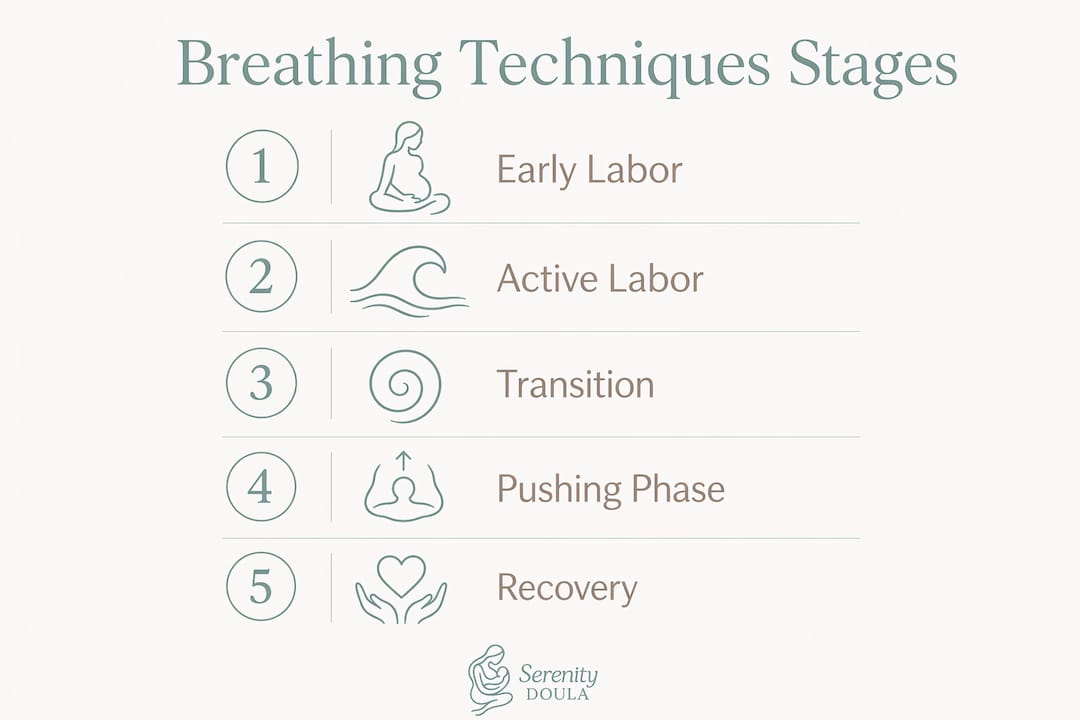
Breathing techniques are not one-size-fits-all. Stage-based breathing helps you maintain energy and focus from early contractions all the way through pushing. Matching your breath to your labor stage is the single most effective way to use this tool.
Early labor: slow belly breathing
Slow belly breathing is the go-to method for early labor, when contractions are mild and spaced apart. Sit or stand with a relaxed posture, place one hand on your belly, and inhale slowly through your nose for a count of four. Let your belly rise, then exhale through your mouth for a count of six to eight. The longer exhale activates your parasympathetic nervous system, which signals your body to release tension. Repeat this pattern through each contraction, resting naturally between them.

Active labor and transition: patterned breathing
Active labor calls for a shift in rhythm. A common pattern is inhaling for a count of four, then exhaling in short bursts: “hee-hee-who.” This keeps your breath moving and prevents the urge to hold it. During transition, the most intense phase, light and shallow breathing through the nose and mouth together can help you stay present without over-exerting. Breathing techniques reduce fear and anxiety during this phase, though they work as a coping tool rather than a complete pain cure. Knowing that distinction helps you stay realistic and confident.
The pushing phase: coached breathing
Pushing requires a different approach. Take a deep breath at the start of each contraction, then exhale slowly as you bear down. Avoid holding your breath for long counts, which increases tension and can slow progress. Your birth team will guide the timing. Short, controlled exhales during pushes keep your pelvic floor muscles working with you, not against you.
- Avoid breath holding between contractions. It builds tension in your jaw, shoulders, and pelvic floor.
- Avoid forced hyperventilation. If you feel dizzy or tingling, slow down and return to normal breathing.
- Body position matters. Upright positions like hands-and-knees or side-lying open the pelvis and make breathing easier.
- Stay loose. A soft jaw and dropped shoulders signal your whole body to release.
Pro Tip: Pair each exhale with a conscious release of your jaw. A loose jaw directly relaxes the pelvic floor, which makes every contraction more manageable.
How do you prepare for labor breathing techniques before birth?
Structured antenatal practice is what turns breathing techniques from theory into muscle memory. Waiting until labor to try them for the first time rarely works. Short, consistent sessions during pregnancy build the automatic response you need when contractions are intense.
- Practice daily for 5–10 minutes. Choose a quiet time, morning or evening, and run through slow belly breathing and one patterned technique. Consistency matters more than duration.
- Pair breathing with relaxation cues. Try combining your exhale with a body scan: soften your face, drop your shoulders, release your hands. This trains your nervous system to associate the breath with full-body release.
- Use visualization. Picture each exhale carrying tension out of your body. Some mothers visualize waves, others picture a warm light. Use whatever image feels natural to you.
- Involve your partner. Practice together so your partner learns the rhythm and can breathe alongside you during labor. This shared practice builds confidence for both of you.
- Time practice to mild discomfort. Hold an ice cube in your hand while practicing. It sounds simple, but it mimics the focus required during a real contraction and tests whether your technique holds under pressure.
Regular prenatal breathing practice also supports overall physical conditioning for labor. Ask your provider which breathing program fits your birth plan. Serenity Doula’s childbirth preparation classes in Bucks County walk you through each technique with hands-on coaching before your due date.
Pro Tip: Record yourself or your partner counting breath cues on your phone. Playing it back during practice helps you internalize the rhythm without needing to think.
What are the most common breathing mistakes during childbirth?
Even well-prepared mothers run into trouble when labor intensifies. Knowing the most common mistakes in advance lets you catch them early and adjust.
- Breath holding during contractions. This is the most frequent error. Holding your breath increases muscle tension throughout your body, including your pelvic floor, which slows labor and amplifies pain. Keep air moving at all times.
- Switching to shallow chest breathing under stress. Chest breathing bypasses the diaphragm and reduces oxygen efficiency. If you notice your shoulders rising with each breath, consciously drop them and redirect the breath lower.
- Over-breathing or forced patterns. Forced breathing patterns can cause dizziness and tingling in the hands and face. If this happens, cup your hands over your mouth and breathe normally for a few cycles to restore balance.
- Ignoring tension in the jaw and shoulders. Slow exhale breathing softens the jaw, shoulders, and pelvic floor. Tension in these areas is a reliable sign that your breath pattern needs to slow down.
- Rigidly sticking to one technique. Breathing techniques should flex as labor intensity changes. If a pattern stops working, switch. There is no penalty for adapting.
Your birth team and partner play a real role here. A calm voice saying “breathe out” or “soft jaw” at the right moment can reset your rhythm faster than any internal reminder. Ask your doula or midwife to watch for these signs and prompt you when needed.
How can partners support breathing techniques during labor?
Partners are not passive observers during labor. With the right approach, they become one of the most effective tools in your pain management plan.
- Use short, simple verbal cues. Words like “loose jaw” and “drop shoulders” reduce mental load during contractions. Long instructions create confusion. Keep it to two or three words.
- Breathe with her. Matching your partner’s breath pattern gives her a rhythm to follow and signals that she is not alone.
- Time counter-pressure with exhales. Gentle firm pressure on the lower back or hips, applied as she exhales, amplifies the relaxation response. Practice this at home before labor begins.
- Read her body language. If she tenses up or her breathing becomes erratic, offer a calm cue rather than a question. “Breathe out slowly” works better than “Are you okay?”
- Know when to step back. Some mothers need silence during intense contractions. Check in between contractions, not during them.
Serenity Doula’s partner support guidance prepares partners with exactly these skills before labor begins. Combining breathing with physical support and partner cues produces better labor comfort than breathing alone.
Pro Tip: Partners: practice the counter-pressure technique during Braxton Hicks contractions at home. By the time real labor starts, it will feel natural for both of you.
Key takeaways
Structured breathing techniques, practiced consistently before labor and adapted by stage, are the most reliable non-medical tool for managing pain and reducing stress during natural childbirth.
| Point | Details |
|---|---|
| Match breath to labor stage | Use slow belly breathing in early labor, patterned breathing in active labor, and coached exhales during pushing. |
| Practice before labor | Daily antenatal sessions build muscle memory so techniques work automatically when contractions are intense. |
| Avoid breath holding | Holding your breath increases tension throughout the body and slows labor progress. |
| Partners are active coaches | Short verbal cues and timed counter-pressure from partners significantly improve breathing effectiveness. |
| Adapt as labor changes | Rigid technique use backfires. Switch patterns freely as intensity shifts throughout labor. |
What I have learned after 10 years of birth work in Bucks County
I have been in the room for a lot of births, and the mothers who handle labor most confidently are rarely the ones who memorized the most techniques. They are the ones who practiced one or two methods until those patterns felt like second nature.
What surprises most families is how much the partner’s calm presence shapes the mother’s breathing. I have watched a single quiet “breathe out” from a partner reset a mother’s entire rhythm mid-contraction. That is not luck. That is preparation.
The other thing I tell every family I work with in Doylestown and Newtown: breathing will not take your pain away. Breathing acts as a coping tool, not a cure. When you go in with that expectation, you stay grounded instead of feeling like the technique failed you. That mindset shift alone changes how labor feels.
If you are looking for prenatal education that covers breathing alongside the full picture of labor preparation, I encourage you to ask your provider about structured childbirth classes. And if you want personalized, hands-on coaching from someone who will be there with you, that is exactly what Serenity Doula is here for.
— Alexis Wallace
Serenity Doula’s approach to breathing and birth preparation
Serenity Doula offers personalized birth coaching for families across Bucks County, including hands-on breathing technique practice tailored to your birth plan. Every client receives one-on-one guidance on labor-stage breathing, partner coaching, and relaxation strategies before their due date.

Whether you are planning a birth at Trinity Health St. Mary or at home, the pregnancy and birth support services at Serenity Doula include dedicated preparation sessions so you and your partner arrive at labor feeling ready. You can also explore the full childbirth education program for structured group and private class options. Book a free consultation to talk through your birth plan and find the right level of support for your family.
FAQ
What are the main breathing techniques for labor?
The three core methods are slow belly breathing for early labor, patterned breathing such as the “hee-hee-who” rhythm for active labor and transition, and coached exhale breathing during pushing. Each technique matches the intensity of that labor stage.
Do breathing techniques actually reduce labor pain?
Breathing reduces muscle tension and perceived pain intensity, but it does not eliminate pain completely. Breathing works as a coping tool that helps you stay calm and focused rather than as a substitute for pain relief.
How early should I start practicing labor breathing?
Start practicing in the second trimester if possible. Structured antenatal training builds the muscle memory needed for techniques to work automatically during active labor.
What should my partner do if my breathing becomes erratic?
Your partner should offer a short, calm verbal cue such as “breathe out” or “soft jaw” rather than asking questions. Simple cues reduce mental load and help reset your rhythm quickly.
Can breathing techniques shorten labor?
Research shows that 59.3% of mothers using Lamaze breathing completed the second stage of labor in under 30 minutes, compared to 10.2% in a control group. Results vary, but consistent practice improves the odds significantly.