

TL;DR:
- A birth support partner workflow is a structured plan guiding partners through labor, delivery, and postpartum care to promote calm and confidence. Proper preparation, including practice and education, enhances the partner’s ability to support effectively during all phases of childbirth.
A birth support partner workflow is a structured plan that guides partners through every phase of labor, delivery, and early postpartum care with confidence and calm. Without a clear plan, even the most loving partner can feel lost in the delivery room. Continuous support during labor links directly to higher rates of spontaneous vaginal birth and fewer medical interventions. Serenity Doula works with Bucks County families to build this kind of structured, evidence-based support into every birth plan, so you walk into that room ready.
What is a birth support partner workflow?
A birth support partner workflow is the recognized framework doulas and childbirth educators use to organize a partner’s responsibilities across three distinct phases: prenatal preparation, active labor support, and postpartum care. The industry also calls this a labor support plan or birth partner protocol. Both terms describe the same thing: a clear sequence of tasks and roles that prevents partners from improvising under pressure. Serenity Doula builds personalized versions of this plan with every family it serves in Newtown, Doylestown, and across Bucks County.
The workflow matters because birth is unpredictable. A written plan gives your partner a reference point when emotions run high and decisions need to happen fast. It also defines your partner’s role clearly, so medical staff at facilities like Trinity Health St. Mary know exactly who to communicate with and how.
How do you prepare as a birth support partner before labor?

Preparation is the foundation of every effective labor support plan. Partners who arrive at the hospital having practiced comfort techniques perform those techniques far more effectively during actual contractions. Practicing breathing and massage before labor begins is a recommendation backed by NHS maternity experts and childbirth educators alike.
Here is what to complete before labor starts:
- Attend childbirth education classes together. Serenity Doula’s childbirth education program covers labor stages, comfort techniques, and partner roles in one structured course.
- Read the birth plan in full. Thorough birth plan review by the partner is strongly recommended by the NCT and NHS because it enables effective advocacy during labor.
- Practice counter-pressure and massage. Work through hip squeezes, lower back pressure, and shoulder massage at home so the movements feel natural.
- Pack a practical labor bag. Include snacks for yourself, a phone charger, a change of clothes, and any comfort items from the birth plan.
- Discuss roles openly. Talk through who will speak to nurses, who will time contractions, and what the birthing person needs most from you emotionally.
- Build your stamina. Labor can last many hours. Rest well in the final weeks and eat before you leave for the hospital.
Pro Tip: Run a “dry run” to the hospital at least once before your due date. Knowing the route, parking, and entrance removes one stressor on the day.
What should you do during early and active labor?
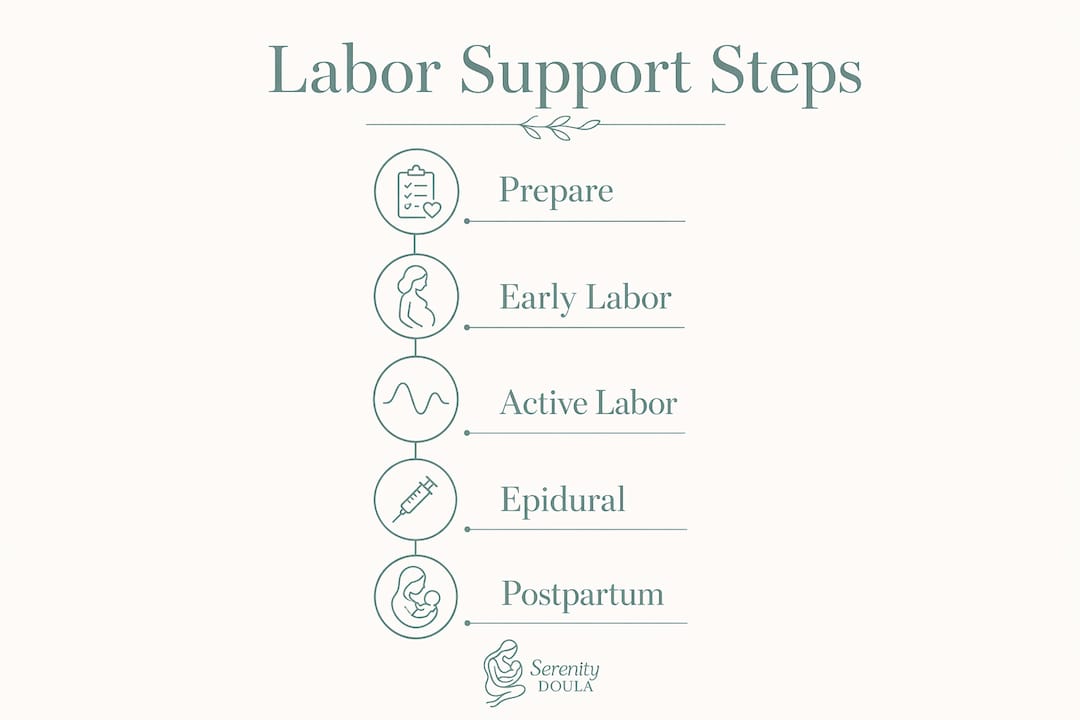
Your role shifts from preparation to active presence the moment contractions begin. The most grounded partners follow a clear sequence of tasks rather than reacting moment to moment.
- Time contractions accurately. Use a contraction timing app or a watch to track frequency and duration. Call your provider or doula when contractions reach the 5-1-1 pattern: five minutes apart, one minute long, for one hour.
- Offer hydration and light nourishment. Keep water, ice chips, or electrolyte drinks within reach. Ask your provider whether light snacks are permitted.
- Apply physical comfort techniques. Counter-pressure, massage, cool cloths, and adjusted lighting all reduce labor discomfort in ways that are well-supported by NHS and maternity care research.
- Adjust the environment. Dim the lights, lower the volume on the TV, and reduce foot traffic in the room. A calmer space helps the birthing person focus inward.
- Stay present and minimize distractions. Put your phone away except for timing contractions or contacting your doula. Your full attention is the most valuable thing you can offer.
- Advocate clearly with medical staff. When decisions arise, ask direct questions such as “Is my baby in immediate danger?” and “What are our options?” This keeps decisions informed rather than rushed.
Pro Tip: Silent, grounding presence during contractions is often more effective than constant verbal encouragement. Hold a hand, breathe steadily, and let the birthing person lead.
How do you support your partner through interventions and delivery?
Medical interventions, including epidurals and cesarean births, require a specific and calm partner response. Your composure directly affects how the birthing person experiences these moments.
- During epidural placement: Sit in front of your partner, hold both hands, and maintain steady eye contact. Epidural placement takes 10–20 minutes and requires the birthing person to stay very still. Your calm physical presence makes that possible.
- After the epidural: Help with repositioning, keep the birthing person comfortable, and monitor for any changes they want to communicate to the nurse.
- During a cesarean birth: Stay at the head of the table, keep talking softly, and follow the surgical team’s instructions. Your steady voice is an anchor.
- During pushing: Offer encouragement in the tone your partner asked for during prenatal planning. Some parents want quiet focus; others want vocal support. Follow their lead.
- When the birth plan changes: Stay flexible. Decisions made in the moment are valid. Your job is to support the birthing person’s evolving choices, not to defend a document.
“The partner’s role during an intervention is not to fix anything. It is to be the one steady thing in a room full of movement and uncertainty. That steadiness is what the birthing person remembers.”
What does postpartum support look like right after birth?
Support does not end at birth. The first hours after delivery are physically and emotionally intense, and the partner’s role as a buffer and advocate becomes even more important.
- Facilitate skin-to-skin contact. If the birthing parent cannot hold the baby immediately, you can do skin-to-skin. This supports bonding and regulates the newborn’s temperature.
- Support early feeding. Ask the nurse or lactation consultant to assist with the first latch. Your role is to hold space, not to instruct.
- Manage visitors and announcements. The birth partner acts as the primary buffer between the recovering parent and the outside world. Delay family visits until the birthing person is ready.
- Communicate with providers. Speak up if the birthing person’s pain, discomfort, or emotional needs are not being addressed.
- Stay emotionally present. Postpartum emotions shift quickly. Your calm, attentive presence reduces anxiety and supports early recovery.
| Postpartum task | Partner’s role |
|---|---|
| Skin-to-skin contact | Initiate if birthing parent cannot; hold baby chest-to-chest |
| Early breastfeeding | Call nurse or lactation consultant; hold space calmly |
| Visitor management | Screen calls and texts; delay visits until parent approves |
| Provider communication | Relay parent’s needs and questions to nursing staff |
| Emotional support | Stay present, limit phone use, check in frequently |
Partners navigating the emotional weight of early postpartum should know that postpartum depression support is available for both birthing parents and partners when needed.
Key Takeaways
A structured birth support partner workflow, built on preparation, active labor techniques, and postpartum advocacy, produces calmer births and stronger early recovery for the whole family.
| Point | Details |
|---|---|
| Prepare before labor | Attend classes, review the birth plan, and practice comfort techniques at home. |
| Follow a labor sequence | Time contractions, offer hydration, apply physical comfort, and advocate with staff. |
| Stay calm during interventions | Hold hands during epidural placement and follow the birthing person’s evolving decisions. |
| Extend support postpartum | Manage visitors, facilitate skin-to-skin, and communicate with providers after delivery. |
| Silence is a tool | A calm, grounding presence during contractions often helps more than constant words. |
What I’ve learned after 10 years of watching partners show up
Most partners walk into the delivery room believing their job is to say the right thing at the right moment. After more than a decade supporting births across Bucks County, I can tell you the opposite is usually true. The partners who make the biggest difference are the ones who do less talking and more holding. They breathe steadily. They stay in the room. They do not check their phones.
What I have also seen is that preparation is the single biggest predictor of a partner’s confidence. The families I work with through Serenity Doula who come to childbirth preparation sessions together arrive at the hospital grounded. They have a plan. They know their roles. And when the plan changes, which it often does, they adapt because they understand the why behind each decision.
One thing Bucks County families sometimes underestimate is how much the local care environment matters. Trinity Health St. Mary has a strong nursing team, but nurses are managing multiple patients. Your partner is the one person in that room whose only job is you. That is a powerful role. Take it seriously, prepare for it, and do not carry it alone.
— Alexis Wallace
How Serenity Doula supports partners through every birth phase
Serenity Doula works alongside partners, not instead of them. The goal is to make you feel prepared, confident, and genuinely useful in the delivery room.
Serenity Doula’s pregnancy and birth support services include prenatal planning sessions where partners learn hands-on comfort techniques, birth plan review, and real-time labor support from an experienced doula. Families in Newtown, Doylestown, and surrounding Bucks County communities have found that having a doula present alongside a prepared partner creates a calmer, more supported birth experience. If you are ready to build your own labor support plan with expert guidance, book a free consultation with Serenity Doula today.
FAQ
What is a birth support partner workflow?
A birth support partner workflow is a structured plan that outlines a partner’s specific tasks and emotional roles across labor, delivery, and early postpartum care. It replaces guesswork with a clear, phase-by-phase sequence of support.
How does continuous labor support improve birth outcomes?
Continuous birth partner support links to higher rates of spontaneous vaginal birth and fewer medical interventions, according to NCT and NHS research. Consistent presence and advocacy are the key factors.
What is the partner’s role during an epidural?
During epidural placement, the partner sits in front of the birthing person, holds both hands, and helps them stay still and calm for the 10–20 minutes the procedure requires.
When should a birth partner start preparing?
Partners benefit most from starting preparation in the second trimester. Attending childbirth education classes, reviewing the birth plan, and practicing comfort techniques before 36 weeks gives enough time to build real confidence.
Does the partner’s role continue after the baby is born?
The partner’s role is critical immediately postpartum. Managing visitors, facilitating skin-to-skin contact, and communicating the birthing person’s needs to providers are all key postpartum responsibilities that protect rest and support recovery.