
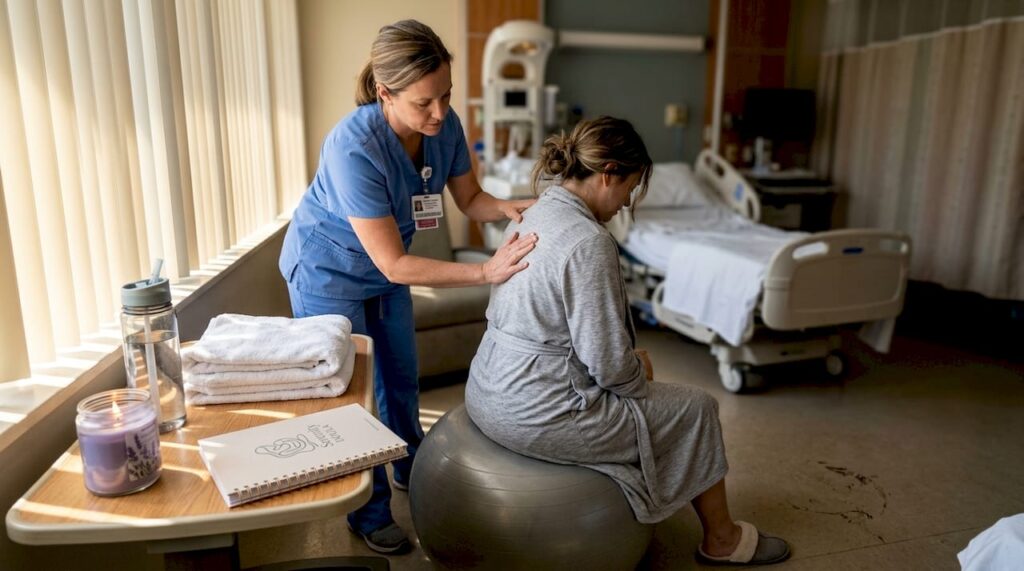
Choosing comfort measures during labor can feel overwhelming when you’re faced with countless options and conflicting advice. The right combination of physical techniques and emotional support can transform your birth experience from anxious to empowering. This guide provides an evidence-based framework to help you evaluate and select comfort strategies that align with your unique needs, preferences, and birth setting in Pennsylvania and New Jersey.
Table of Contents
- Key takeaways
- Criteria for choosing effective comfort measures during labor
- Physical comfort measures: techniques and tools for labor pain relief
- Emotional comfort strategies: support systems and mental preparation
- Comparing comfort measures: effectiveness, accessibility, and personal fit
- How Serenity Doula supports your comfort during labor
- What are comfort measures during labor?
Key Takeaways
| Point | Details |
|---|---|
| Combine comfort measures | Using a mix of physical techniques and emotional support can enhance labor comfort and satisfaction. |
| Physical and emotional comfort | Addressing both body sensations and emotional needs improves the birth experience and can reduce anxiety. |
| Tailor comfort to you | Assess your medical history, personal preferences, and birth setting to select techniques that fit your unique situation. |
| Doulas and education matter | Having trained support and preparatory education helps you apply techniques confidently during active labor. |
Criteria for choosing effective comfort measures during labor
Selecting the right comfort measures requires understanding what makes certain techniques effective for your specific situation. Personalized care improves labor satisfaction and outcomes by addressing your physical needs, emotional state, and birth environment preferences.
Consider these essential criteria when evaluating comfort options:
- Your medical history and any pregnancy complications that might limit certain techniques
- Physical comfort preferences such as touch sensitivity, temperature tolerance, and mobility needs
- Emotional support requirements including who you want present and what reassurance style works best
- Birth setting availability of tools like tubs, birthing balls, or private spaces
- Evidence-based effectiveness for pain management and anxiety reduction
- Ease of learning and practicing techniques before labor begins
Your comfort measure selection should reflect both practical considerations and personal values. Some people respond beautifully to water immersion while others prefer active movement. Understanding your body’s signals and comfort patterns during pregnancy helps predict what might work during labor.
The availability of education and support also matters significantly. Learning to prepare your mind and body for labor through classes and practice sessions increases your confidence in using techniques effectively when contractions intensify. Your birth team’s familiarity with various methods influences how smoothly you can implement them during active labor.
Pro Tip: Create a comfort measure preference list ranked by priority, then discuss it with your healthcare provider and doula at least six weeks before your due date to ensure everyone understands your goals and can prepare appropriate resources.
Physical comfort measures: techniques and tools for labor pain relief
Physical comfort measures such as hydrotherapy, massage, and movement reduce pain and anxiety during labor by working with your body’s natural pain management systems. These non-invasive techniques offer flexibility and can be adjusted as your labor progresses.
Hydrotherapy provides remarkable relief for many laboring people. Warm water immersion in a tub or shower relaxes tense muscles, supports your body weight, and creates a calming sensory environment. The buoyancy allows easier position changes while the warmth increases blood flow to working muscles. Some hospitals and birth centers offer jetted tubs specifically designed for labor, while others accommodate shower use throughout active labor.
Massage techniques address muscle tension and provide distraction from contraction intensity. Counter-pressure on the lower back relieves pain from posterior baby positions. Light touch massage on arms and legs promotes relaxation between contractions. Hip squeezes and sacral pressure target specific pain points. Your support person can learn these techniques in advance, making massage one of the most accessible comfort measures.
Movement and positioning facilitate labor progress while reducing discomfort:
- Walking and swaying help baby descend and rotate into optimal positions
- Hands and knees position relieves back pain and opens the pelvis
- Side-lying with peanut ball support rests your body while maintaining progress
- Squatting and supported lunges use gravity to assist descent
- Slow dancing with a partner combines movement with emotional connection
Birthing balls, peanut balls, and rebozo scarves provide versatile support for various positions. A birthing ball allows gentle bouncing and hip circles that ease discomfort. Peanut balls maintain pelvic opening during rest periods. Rebozos enable sifting techniques that help baby position optimally.
Understanding doula support benefits becomes especially clear with physical comfort measures. A trained doula knows which positions work best for different labor stages and can suggest modifications when one technique stops providing relief. They also help you create a calm birth space that supports your chosen comfort strategies.
Pro Tip: Pack a comfort kit with items like massage oil, tennis balls for counter-pressure, a portable speaker for music, and your own pillows. Having familiar tools readily available eliminates stress about finding resources during active labor.
Emotional comfort strategies: support systems and mental preparation
Continuous emotional support improves labor satisfaction and reduces interventions by addressing the psychological aspects of birth that significantly influence pain perception and progress. Your emotional state directly affects your body’s ability to labor efficiently.

Doulas and continuous labor support provide consistent presence throughout your birth experience. Unlike medical staff who rotate shifts, a doula remains with you from active labor through birth. This continuity creates trust and allows them to recognize your unique coping patterns. They offer encouragement during difficult moments, remind you of your strength, and help you stay focused on your goals.
Breathing and relaxation techniques give you concrete tools to manage contraction intensity:
- Slow breathing maintains oxygen flow and prevents tension buildup
- Patterned breathing provides rhythmic focus during peak intensity
- Progressive muscle relaxation releases tension between contractions
- Visualization transports your mind to calming mental spaces
- Vocalization through low tones helps release pain and tension
Enrolling in childbirth education programs builds knowledge that reduces fear and increases confidence. Understanding the physiology of labor helps you recognize normal sensations rather than interpreting them as problems. Learning about interventions and their alternatives empowers informed decision making. Education also provides opportunities to practice comfort techniques with feedback from experienced instructors.
Your trusted support person plays a vital role in emotional comfort. Choose someone who respects your birth preferences, stays calm under pressure, and advocates effectively for your needs. This might be your partner, family member, or close friend. Clear communication about their role prevents confusion during labor.
Mental preparation through mental preparation for labor practices strengthens your psychological resilience. Daily affirmations reinforce positive beliefs about your body’s capabilities. Guided imagery rehearses successful birth scenarios. Mindfulness meditation develops present-moment awareness that helps you ride contraction waves rather than fighting them.
Pro Tip: Record personalized affirmations in your own voice or a loved one’s voice, then play them during labor to maintain positive focus when you’re too tired to generate encouraging thoughts independently.
Professional doula birth support services integrate emotional and physical comfort seamlessly, adjusting strategies as your needs change throughout labor.
Comparing comfort measures: effectiveness, accessibility, and personal fit
Different comfort measures vary in effectiveness and may be combined for best results depending on your birth setting, support team, and personal preferences. Understanding these differences helps you create a realistic and effective comfort plan.
| Comfort Measure | Pain Relief Effectiveness | Ease of Use | Best For | Limitations |
|---|---|---|---|---|
| Hydrotherapy | High for back and overall pain | Moderate (requires tub access) | Hospital or birth center births | Not available in all facilities; timing restrictions |
| Massage and counter-pressure | Moderate to high for localized pain | High (minimal equipment needed) | All birth settings | Requires skilled support person; touch sensitivity varies |
| Movement and positioning | Moderate for pain; high for progress | High (can be done anywhere) | All birth settings | May be limited by monitoring equipment or exhaustion |
| Breathing techniques | Moderate for anxiety; low to moderate for pain | High (no equipment needed) | All birth settings | Requires practice; effectiveness varies individually |
| Continuous doula support | High for overall satisfaction and reduced interventions | High (doulas work in all settings) | All birth settings | Cost consideration; availability in your area |
Home births typically offer the most flexibility for comfort measure use since you control the environment completely. You can move freely, use your own tub, adjust lighting and temperature, and have unlimited support people present. However, medical interventions are not immediately available if complications arise.
Hospital births provide access to both comfort measures and medical pain relief options. Many hospitals now accommodate hydrotherapy, movement, and doula support. Policies vary regarding eating, drinking, and continuous monitoring, which can affect comfort measure accessibility. Understanding your hospital’s specific policies helps you plan realistically.
Birth center environments often balance home-like comfort with nearby medical backup. They typically encourage natural comfort measures and have fewer restrictions than hospitals regarding movement and support people.
Combining methods optimizes comfort throughout labor’s changing phases. Early labor might respond well to movement and distraction. Active labor often benefits from focused breathing and counter-pressure. Transition might require intensive emotional support and position changes. Your comfort measure services comparison options should remain flexible as labor progresses.
Measures with minimal side effects include movement, positioning, massage, breathing techniques, and emotional support. These carry virtually no risk and can be used freely throughout labor. Hydrotherapy requires monitoring water temperature and timing relative to labor progress but remains very safe when used appropriately.
How Serenity Doula supports your comfort during labor
Navigating comfort measure choices becomes significantly easier with experienced guidance tailored to your unique situation. Serenity Doula offers comprehensive support that transforms evidence-based comfort strategies into your personalized birth experience.
Our pregnancy birth support doula services provide continuous physical and emotional support throughout your labor. We help you implement the comfort measures you’ve chosen, suggest alternatives when needed, and advocate for your preferences with healthcare providers. Our doulas bring expertise in multiple techniques, allowing us to adapt quickly as your labor progresses.
We create customized comfort plans during prenatal visits, considering your medical history, personal preferences, and birth setting. This preparation ensures you feel confident and your support team understands their roles. Our childbirth education programs teach you and your partner practical skills for using comfort measures effectively.
Understanding the doula role explanation clarifies how we complement your medical team while focusing exclusively on your comfort and empowerment. We bridge communication gaps, provide consistent presence, and help you make informed decisions aligned with your values.
What are comfort measures during labor?
Comfort measures during labor are evidence-based techniques and support strategies designed to reduce pain, manage anxiety, and enhance your sense of control throughout the birth process. They include physical methods like hydrotherapy, massage, movement, and positioning, as well as emotional support through continuous presence, breathing techniques, and encouragement. These approaches work with your body’s natural capabilities rather than against them. Most comfort measures carry minimal risk and can be combined freely to match your changing needs as labor progresses.
Can I combine different comfort measures during labor?
Yes, combining physical and emotional comfort methods is strongly encouraged because different techniques address different aspects of labor discomfort. You might use hydrotherapy for overall pain relief while also practicing breathing techniques for anxiety management. Movement and positioning can be combined with massage and counter-pressure for targeted relief. Your birth team or doula helps coordinate multiple strategies smoothly, adjusting the combination as your labor intensity and needs change throughout different stages.
How can a doula help with comfort measures?
Doulas improve comfort and reduce interventions by offering continuous support and expert knowledge of multiple comfort techniques. They coach your breathing, assist with position changes, provide hands-on comfort through massage and counter-pressure, and offer constant emotional reassurance. Doulas recognize when one technique stops working and suggest alternatives immediately. They also advocate for your comfort preferences with healthcare providers, ensuring your birth team understands and respects your choices.
Are comfort measures effective for all types of births?
Many comfort measures work effectively across natural, medicated, and cesarean births, though their application varies by situation. Movement and positioning remain helpful even with epidural anesthesia, though options become more limited. Breathing techniques and emotional support benefit all birth types. Hydrotherapy typically isn’t available once epidural is placed. Your healthcare team can guide which measures remain appropriate for your specific circumstances. The key is maintaining flexibility and having backup options prepared.
When should I start learning about comfort measures?
Begin learning about comfort measures during your second trimester, ideally around 20 to 24 weeks, to allow ample practice time before labor begins. Early education reduces anxiety by building confidence in your ability to use techniques effectively. This timeline also permits attending childbirth education classes, practicing with your support person, and having detailed discussions with your doula or healthcare provider. However, learning comfort measures at any point during pregnancy provides benefit, and even last-minute education offers more preparation than none.