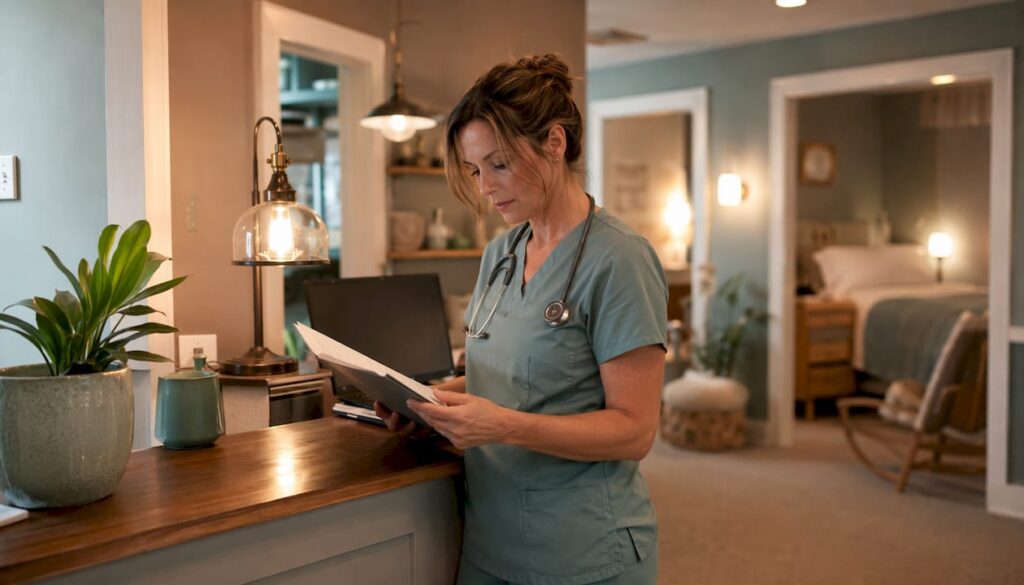
Three birth settings define where American families welcome their babies: hospitals, accredited birth centers, and planned home births. Each offers a genuinely different experience, and understanding what separates them is the first step toward choosing the one that fits your body, your values, and your support team.
Here is the landscape at a glance:
- Hospitals account for 98.3% of births, offering the full spectrum of medical intervention, from epidurals to emergency cesarean delivery.
- Freestanding birth centers serve roughly 0.5% of births, providing a home-like setting with midwifery-led care and lower intervention rates for low-risk pregnancies.
- Planned home births represent approximately 1.1% of births, attended primarily by midwives and suited for carefully screened, low-risk candidates.
The American College of Obstetricians and Gynecologists (ACOG) recognizes hospitals and accredited birth centers as the safest options and emphasizes that out-of-hospital birth requires strict candidate screening, including singleton pregnancy and full-term gestation. No single setting is right for everyone. What matters is matching your health profile, preferences, and access to care with the environment that genuinely serves you best.
1. Home birth: what are the real advantages and how do you plan safely?
Home birth offers something no hospital can replicate: you labor in your own space, surrounded by the people you choose, with one-to-one continuous care from your midwife. For carefully screened, low-risk families, planned home births attended by certified midwives within integrated healthcare systems achieve outcomes comparable to birth center births.
Advantages:
- Continuous, personalized midwifery care throughout labor
- Freedom of movement, position, and comfort measures without institutional constraints
- Lower rates of cesarean section and labor induction compared to hospital births among low-risk women
- Extended postpartum home visits from your midwife, typically at 24 hours and 3 days after birth, supporting a smoother fourth trimester
Considerations:
- No access to epidural anesthesia, Pitocin augmentation, or emergency cesarean on site
- Candidate screening is non-negotiable: singleton pregnancy, cephalic presentation, term gestation, and no significant comorbidities
- Transfer to a hospital is sometimes necessary, and written transfer protocols with a named receiving hospital are a safety requirement, not a formality
- Midwife credential type matters significantly (see Pro Tip below)
Planning steps:
- Confirm your provider is a Certified Nurse-Midwife (CNM) or Certified Midwife (CM); many home birth attendants in the U.S. do not meet International Confederation of Midwives global standards, which can affect safety
- Ask your midwife to walk you through the specific transfer plan, including which hospital and how transport is arranged
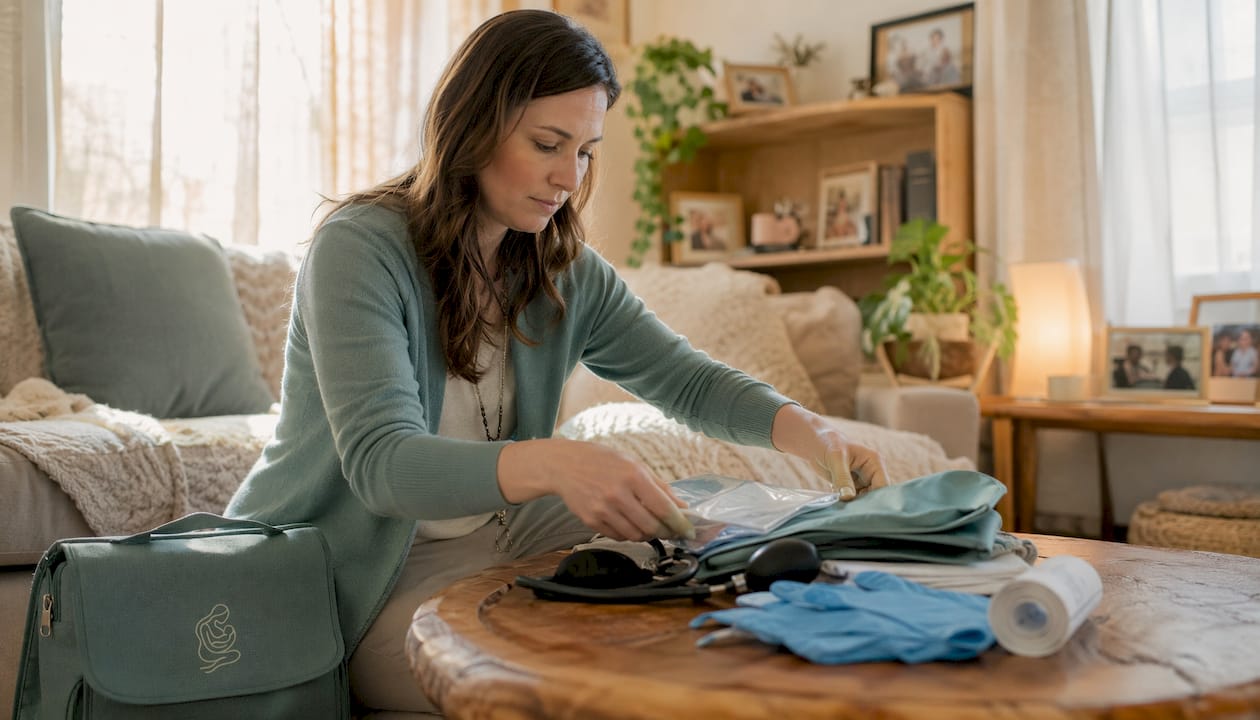
- Prepare your space with adequate lighting, a birth pool if desired, and easy access for emergency responders
- Discuss postpartum care expectations before your due date
Pro Tip: Before signing with any home birth midwife, ask directly: “What is your transfer rate, and which hospital do you have a collaborative relationship with?” A midwife who cannot answer that clearly is a red flag, regardless of how warm the initial consultation feels.
2. Birth centers: what makes them different and who are they right for?
A freestanding birth center is, as the American Association of Birth Centers puts it, “a maximized home rather than a mini-hospital.” These midwifery-led settings are physically separate from hospitals and designed specifically for low-risk pregnancies where the goal is physiologic birth with minimal medical intervention.
What you can expect:
- One-to-one midwifery care throughout labor, with a second attendant present at birth
- Deep soaking tubs for water labor or water birth, birthing balls, freedom to eat and move freely
- Nitrous oxide and acupressure for pain management; no epidurals or Pitocin on site
- Discharge typically 4–6 hours after birth, followed by a home visit around 24 hours postpartum
Advantages:
- Lower cesarean and induction rates compared to hospital births for equivalent low-risk populations
- Warm, private, home-like rooms that actively support comfort and labor progress
- Integrated transfer protocols with a partner hospital when higher-level care is needed
- Postpartum continuity: office visits at 10 days to 2 weeks and 4–6 weeks, plus phone follow-up
Considerations:
- Eligibility is strict: birth centers serve healthy, uncomplicated pregnancies only
- Availability varies widely by region; as of 2019, only 375 freestanding centers operated across the U.S.
- Insurance coverage differs by state and plan; Medicaid covers birth center care in many but not all states
- Not all facilities labeled “birth center” are freestanding; hospital-based birth suites use the same name but offer a different care model
Pro Tip: When researching birth centers, ask whether the facility holds accreditation from the Commission for the Accreditation of Birth Centers (CABC). Accreditation signals that the center meets established safety and quality standards, which matters far more than aesthetics.

3. Hospital birth: what are the advantages and how do you choose wisely?
Hospital birth is the default for good reason. Hospital resources include rapid access to cesarean delivery, blood transfusions, epidural anesthesia, and neonatal specialists, making hospitals the only appropriate setting for high-risk pregnancies or those with known complications. For families in Bucks County, facilities like Trinity Health St. Mary Medical Center offer labor and delivery units with varying levels of maternal care.
Advantages:
- Immediate access to the full range of obstetric interventions, including induction, augmentation, and cesarean birth
- On-site neonatal intensive care at many facilities for unexpected newborn needs
- Anesthesia available around the clock, including epidurals and spinal blocks
- Federal law mandates insurance coverage for at least 48 hours of postpartum stay after vaginal birth and 96 hours after cesarean
Considerations:
- Hospital environments can feel clinical, with shift changes, multiple providers, and less continuity of care
- Intervention rates tend to be higher in hospital settings, partly reflecting higher-risk patient populations and partly institutional culture
- The atmosphere varies considerably between facilities; some hospitals offer dedicated low-intervention birth suites that resemble birth centers in feel, though not always in philosophy
- Choosing the right hospital matters as much as choosing the right provider
Planning tips:
- Ask your OB-GYN or midwife which hospital they have privileges at and what the facility’s cesarean rate is for low-risk, first-time mothers
- Tour the labor and delivery unit before your due date to understand the physical space and staffing model
- Discuss your birth preferences in writing with your provider well before 36 weeks
- Confirm your insurance network includes your chosen hospital to avoid surprise billing
ACOG’s Levels of Maternal Care framework designates hospitals from Level I (basic care) through Level IV (regional perinatal centers). Knowing your hospital’s level helps you understand what is available on site versus what would require transfer.
4. How does the birth environment shape your labor experience?
The physical space where you labor is not just a backdrop. Lighting, noise, privacy, and the presence of trusted support people all influence how your body responds to labor. A calm, low-stimulation environment tends to support the release of oxytocin, the hormone that drives contractions, while stress and perceived threat can slow labor progress.
Statistic spotlight: Studies in midwife-led units show noticeably lower cesarean rates compared to obstetric units for equivalent low-risk populations, a difference that reflects both provider philosophy and the environment’s effect on physiologic birth.
Whether you are at home, in a birth center, or in a hospital room, specific adjustments make a real difference. Dimming lights, reducing foot traffic, playing familiar music, and limiting unnecessary interruptions all help your nervous system stay in the parasympathetic state that supports labor. Serenity Doula’s guide on creating a calm birth space walks through practical modifications for both home and hospital settings.
Pro Tip: If you are planning a hospital birth, bring items from home that engage your senses: a familiar scent, a soft blanket, a playlist. These small anchors signal safety to your nervous system and can genuinely shift how your body moves through labor.
5. How do you choose the right birth setting for your situation?
Start with your health profile, then layer in your preferences. ACOG’s guidance is clear: out-of-hospital birth is appropriate only for low-risk candidates. If you have a high-risk condition, a hospital is not a preference, it is a clinical requirement. For everyone else, the decision involves honest reflection on what you value most.
Questions worth bringing to your provider:
- What is my current risk classification, and could that change before my due date?
- Does my preferred setting have a written transfer protocol, and which hospital would receive me?
- What is my provider’s credential, and do they have hospital privileges if transfer is needed?
- What pain management options matter most to me, and which settings offer them?
- How far am I from the nearest hospital, and is that distance acceptable if an emergency arises?
Beyond clinical factors, consider your comfort preferences and birth philosophy. Families who prioritize physiologic birth and minimal intervention often feel most supported in birth center or home settings. Those who want the security of immediate medical access, or who simply feel calmer knowing an OR is down the hall, often thrive in hospital settings. Neither instinct is wrong. An evidence-based birth framework can help you organize these values into a coherent plan before your conversations with your provider.
6. What do safety statistics actually tell us about birth settings?
Comparing outcomes across birth settings is genuinely complicated, because the populations are not the same. Hospitals serve the full risk spectrum; birth centers and home births serve only low-risk candidates. With that caveat in mind, the research offers some useful patterns.
For low-risk women, planned home and birth center births show lower rates of cesarean section and labor induction than hospital births. International evidence, particularly from countries with well-integrated midwifery systems, generally shows no increase in neonatal morbidity or mortality for planned out-of-hospital births when appropriate risk selection, trained providers, and seamless transfer systems are in place. The key phrase is “when those systems are in place.” In the U.S., integration between out-of-hospital providers and hospitals is fragmented compared to countries like the Netherlands or the United Kingdom, which affects how those international findings translate here.
ACOG’s position is that the evidence does not support planned home birth as equivalent in safety to hospital or accredited birth center birth for all candidates, and that transfer protocols and collaborative hospital relationships are non-negotiable safety components for any out-of-hospital plan.
7. Legal and insurance considerations for each birth setting
Your birth setting choice has real legal and financial dimensions that vary by state.
Home birth: Certified Professional Midwives (CPMs) are licensed in some states but not others, and their scope of practice differs from CNMs and CMs. In states where CPMs are unlicensed, home birth attended by a CPM exists in a legal gray area. Always verify your midwife’s licensure status in Pennsylvania before signing any agreement.
Birth centers: Freestanding birth centers must be licensed as healthcare facilities in most states. Medicaid covers birth center care in many states, but coverage is not universal. Private insurance plans vary; some cover birth center fees in full, others apply out-of-network rates even for accredited facilities.
Hospitals: Hospital birth is covered under virtually all insurance plans, including Medicaid. Federal law under the Newborns’ and Mothers’ Health Protection Act mandates minimum postpartum stays of 48 hours for vaginal birth and 96 hours for cesarean, and prohibits insurers from requiring earlier discharge.
Ask your insurance plan directly: Does it cover freestanding birth center care? Does it cover CNM-attended home birth? Get the answer in writing before committing to a provider or setting.
8. What does each birth setting actually cost?
Cost varies significantly by setting, insurance coverage, and geographic market.
Hospital birth typically costs the most out of pocket when uninsured, but most insured families pay only their deductible and copay. The facility fee, anesthesia, and provider fees are billed separately, so confirm all three are in-network before your due date.
Birth center birth generally costs less than a hospital birth in total charges, but out-of-pocket costs depend entirely on your insurance plan’s coverage of the facility and the attending midwife. Some families pay less than a hospital copay; others pay the full birth center fee if their plan excludes it.
Home birth fees are typically charged as a global fee covering all prenatal visits, the birth itself, and postpartum home visits. This bundled model can be cost-effective, but many insurance plans do not cover home birth midwifery fees, leaving families to pay entirely out of pocket. Costs vary by provider and region; ask for an itemized fee schedule and a superbill you can submit to your insurer for potential reimbursement.
A useful birth preparation checklist can help you plan the practical logistics and supplies for any setting, which is one area where preparation genuinely reduces stress.
9. How does access to birth settings vary across the U.S.?
Where you live shapes your options as much as your health profile does. Regionalized maternal care routes high-risk births to specialized centers while allowing low-risk births to occur closer to home, but the system works only where facilities exist.
Rural communities face the sharpest access gaps. Maternity care deserts, areas with no hospital obstetric unit and no birth center within a reasonable distance, affect a growing share of rural counties. In these areas, home birth with a qualified midwife may be the most accessible option, which makes midwife credential verification even more critical.
Urban and suburban areas like Bucks County generally offer more choices: hospital systems with multiple campuses, birth centers within driving distance, and a pool of CNMs who attend both birth center and home births. Families in Newtown or Doylestown typically have access to hospital-based care at Trinity Health St. Mary and, depending on their risk profile, birth center options within the greater Philadelphia region.
State licensing laws also shape access. In states where CPMs are not licensed, the pool of available home birth providers shrinks considerably, and families may find their options limited to CNMs willing to attend home births, a smaller group.
10. What happens if you need to transfer from home or a birth center?
Transfer is not a failure. It is a planned safety mechanism, and the families who fare best are those who understood the process before labor began.
Transfers from home and birth center settings occur most often for labor progress concerns, fetal heart rate patterns that need continuous monitoring, or the desire for pain medication not available outside a hospital. Less commonly, transfers happen for urgent complications like hemorrhage or fetal distress. In those cases, the speed and smoothness of the transfer directly affect outcomes.
Written transfer protocols between your out-of-hospital provider and a receiving hospital are the backbone of this system. A good protocol names the hospital, establishes a communication chain, and ensures the receiving team has your records before you arrive. Ask your midwife or birth center: “Can I see your written transfer protocol?” If one does not exist in writing, that is a serious concern.
In Bucks County, families planning out-of-hospital births should know in advance which hospital their provider works with and how far that hospital is from their home or birth center. Practicing the drive is not excessive caution; it is sensible preparation.
What I’ve seen in 10 years of supporting Bucks County families
The question I hear most often is not “Which setting is safest?” It is “How do I know which one is right for me?” And that is exactly the right question to be asking.
Families who feel most at peace with their birth experience, regardless of where it happened, are the ones who made an informed, values-aligned choice before labor began. The ones who struggled most were often those who defaulted to a setting without really examining whether it matched what they needed. A hospital birth can be deeply empowering. A home birth can feel grounded and right. A birth center can offer the best of both. None of those outcomes is guaranteed by the setting alone; they come from preparation, the right provider, and genuine support throughout.
What I notice in my work is that families often underestimate how much the relationship with their provider matters relative to the setting itself. A warm, communicative CNM in a hospital room creates a very different experience than a distracted or dismissive one in a birth center. The environment sets the stage, but the people in it write the story.
If you are weighing your options and feeling uncertain, that is completely normal. Childbirth education that covers all three settings, not just the one your provider prefers, gives you the foundation to ask better questions and advocate for yourself with confidence. And having a doula alongside you means you are never navigating those conversations alone, whatever setting you choose.
Ready to talk through your options?
Choosing where to give birth is one of the most personal decisions of your pregnancy, and you deserve support that meets you exactly where you are. Serenity Doula offers birth and pregnancy support for families across Bucks County, whether you are planning a hospital birth at Trinity Health St. Mary, exploring birth center options, or considering a home birth. Book a free consultation and let’s talk through what feels right for you.
Key Takeaways
Choosing a birth setting comes down to your health profile, your values, and the quality of your provider and transfer systems, not a single universal answer.
| Point | Details |
|---|---|
| Hospital birth dominates | 98.3% of U.S. births occur in hospitals, offering the widest range of medical interventions. |
| Birth centers suit low-risk families | Freestanding centers provide midwifery-led, home-like care with lower intervention rates for eligible candidates. |
| Home birth requires strict screening | ACOG emphasizes candidate criteria and written transfer protocols as non-negotiable safety requirements. |
| Environment shapes labor | Lighting, noise, privacy, and support people all influence oxytocin release and labor progression. |
| Transfer protocols save lives | Ask any out-of-hospital provider for their written transfer plan and named receiving hospital before committing. |
FAQ
What are the three main types of birthing environments in the U.S.?
The three primary settings are hospitals, freestanding birth centers, and planned home births. Hospitals account for the vast majority of U.S. births, with birth centers and home births serving low-risk families who prefer less medical intervention.
Is home birth safe for low-risk pregnancies?
Home birth can be safe for carefully screened, low-risk candidates when attended by a certified midwife with written hospital transfer protocols in place. ACOG notes that safety outcomes improve significantly when out-of-hospital birth is integrated into a collaborative healthcare system.
Does insurance cover birth center or home birth costs?
Coverage varies by plan and state. Most insurance plans cover hospital birth fully within network. Birth center coverage depends on your plan and whether the facility is accredited; home birth midwifery fees are often not covered, leaving families to pay out of pocket and seek reimbursement via a superbill.
What is the difference between a freestanding birth center and a hospital birth suite?
A freestanding birth center is a separate facility not attached to a hospital, staffed by midwives, with no on-site surgical capability. A hospital birth suite, sometimes also called a “birth center,” is located within a hospital and has access to the full range of obstetric interventions.
When does a transfer from home or a birth center become necessary?
Transfers most often occur for labor progress concerns, fetal heart rate changes requiring continuous monitoring, or a request for pain medication unavailable outside a hospital. Urgent transfers for hemorrhage or fetal distress are less common but require a pre-established written protocol between your provider and a receiving hospital.