TL;DR:
- A calm birth environment involves controlling sensory inputs like lighting, sound, scent, and touch to reduce anxiety and support physiological labor progression. Preparation, practice, and portable tools such as headphones, massage, and written preferences enable you to maintain calm even when circumstances change, whether at home or in a hospital. Partner support and respectful communication further reinforce a positive, controlled birth experience grounded in evidence-based strategies.
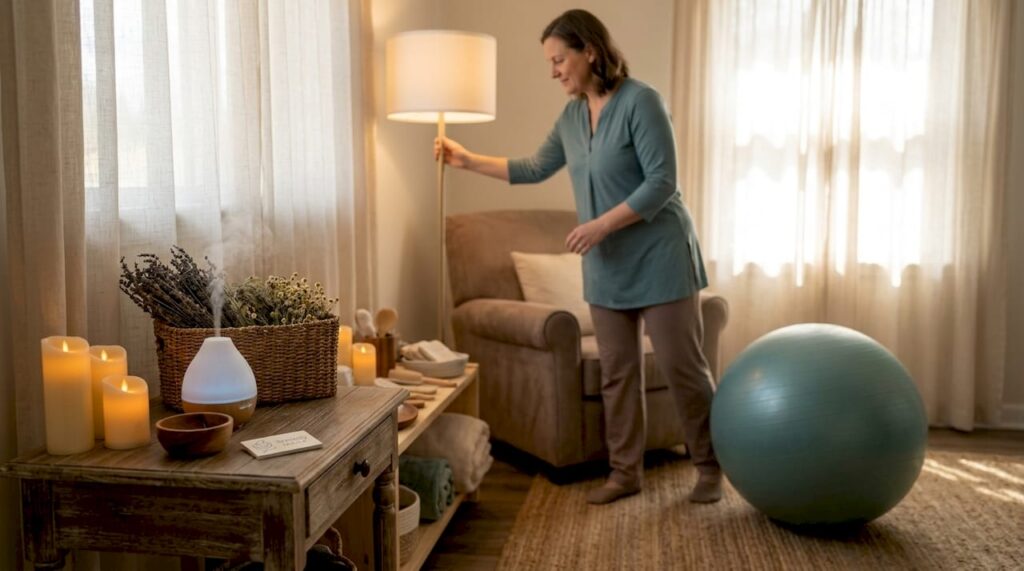
A calm birth environment is defined as a physical and emotional space that reduces anxiety, supports hormonal labor progression, and gives you a genuine sense of control during childbirth. This is not just about soft lighting and a playlist. Research from 2025 and 2026 confirms that intentional sensory choices, including lighting, sound, scent, and touch, combined with respectful support from partners and care teams, directly shape how you experience labor. Whether you are planning a home birth or a hospital delivery, you have more power over your environment than you might realize. This guide walks you through exactly what to do.
What key sensory elements create calmness in a birth setting?
Lighting is the most underestimated tool in your birth space. A 2025 Frontiers study found that dim, low lighting is associated with fewer medical interventions and supports the melatonin and oxytocin synergy that helps labor progress naturally. That matters because bright overhead lights trigger alertness and tension, the opposite of what your body needs to open and release. Think of it like trying to fall asleep with the lights blazing. Your nervous system simply cannot settle.

Beyond dimming, the same research shows that reducing glare and contrast in the room supports the parasympathetic state your body needs to stay calm. A den-like, intimate setting with minimal visual clutter keeps your focus inward, which is exactly where it needs to be during active labor.
Sound is equally powerful. A 2026 PLOS ONE review confirmed that music listening during labor significantly reduces pain, with personal headphones outperforming hospital speakers. This means your carefully chosen playlist, delivered directly to your ears, is a genuine comfort measure, not just a nice touch. Pair that with scent and touch. Clinical trial protocols using lavender aromatherapy diffused for 20-minute intervals alongside sacral massage during labor stages show measurable decreases in pain and increases in birth satisfaction.
Here is a quick breakdown of the core sensory elements and their effects:
- Lighting: Dim, warm, glare-free light supports oxytocin release and reduces the urge to tense up
- Sound: Personal music via headphones reduces pain perception and creates a private sensory bubble
- Scent: Lavender aromatherapy diffused in short intervals decreases discomfort and promotes relaxation
- Touch: Sacral massage during contractions provides direct pain relief and a grounding physical connection
Pro Tip: Pack a small, battery-operated warm-light lamp in your hospital bag. Most hospitals allow them, and they transform the feel of a room faster than anything else you can bring.
How can you set up your birth space at home or in the hospital?
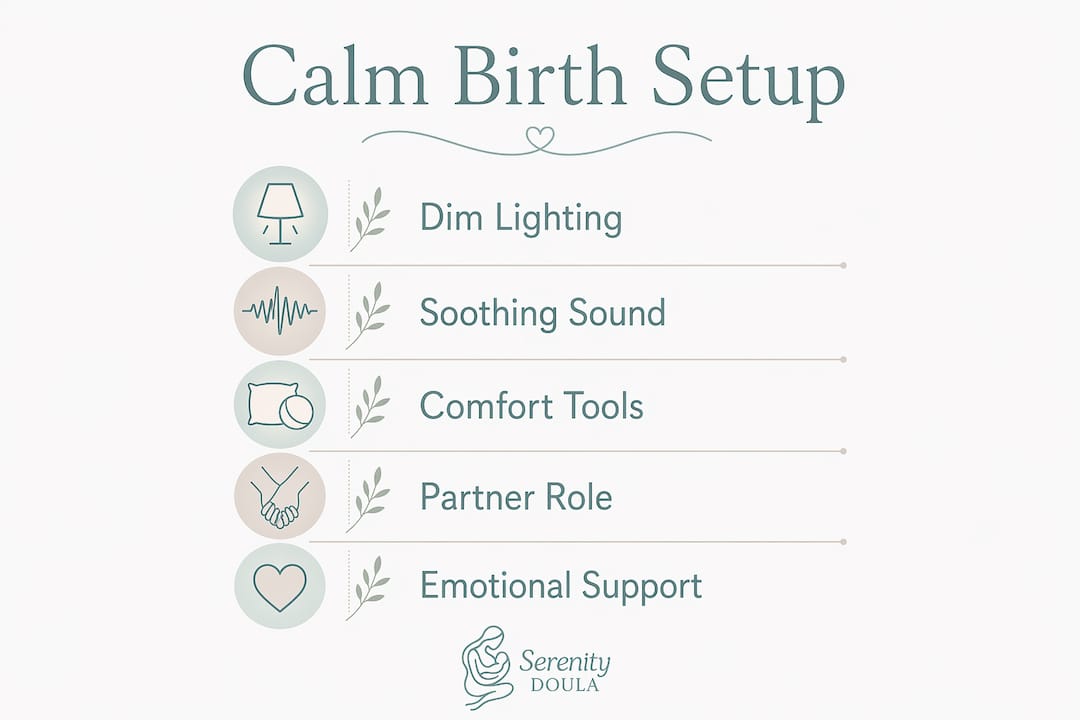
Setting up a calming birth space is about preparation, not perfection. You do not need to transform a hospital room into a spa. You need a short list of portable, purposeful items and a conversation with your care team before labor begins.
Here is a practical setup checklist to work through in the weeks before your due date:
- Lighting: Pack a battery-operated warm lamp or LED candles. Confirm with your hospital that these are allowed. Ask staff to turn off overhead fluorescents when you arrive.
- Sound: Download your playlist in advance so it works without Wi-Fi. Bring noise-canceling headphones for personal listening and a small Bluetooth speaker as a backup for the room.
- Scent: Choose a personal aromatherapy inhaler or a small diffuser with lavender or chamomile oil. Check hospital policy on diffusers first. An inhaler stick is always a safe fallback.
- Touch tools: Pack a massage ball or ask your partner to learn a basic sacral massage technique before labor. This takes 10 minutes to learn and pays off enormously.
- Personal comfort items: A familiar pillow, a soft blanket, or a photo that grounds you emotionally all contribute to a sense of safety and ownership over the space.
Communicating your preferences to hospital staff is not optional. It is part of respectful maternal care, which the WHO’s 2025 compendium identifies as central to positive birth experiences. A written birth preferences document that includes your environmental requests, such as low lighting, minimal interruptions, and preferred communication style, gives staff clear guidance and reduces friction in the moment.
| Setup element | Hospital-safe adaptation |
|---|---|
| Candles | Battery-operated LED candles or a warm lamp |
| Aromatherapy diffuser | Personal aromatherapy inhaler stick |
| Home sound system | Bluetooth speaker or noise-canceling headphones |
| Dim room lighting | Request overhead lights off; use personal lamp |
| Familiar textures | Personal pillow and blanket from home |
What role do partners and care teams play in maintaining calm?
Your partner is not just emotional support. They are the active manager of your birth environment once labor is underway. When you are deep in a contraction, you cannot adjust the lighting or remind a nurse about your preferences. Your partner can, and should.
Here is what a prepared partner does during labor to protect the calm space you have created:
- Dims or adjusts lighting when you arrive and again as labor intensifies
- Manages the music, switching tracks or adjusting volume based on your cues
- Applies sacral massage during contractions using the technique practiced beforehand
- Communicates with nursing staff on your behalf, referencing your written birth preferences
- Gently redirects unnecessary conversation or interruptions in the room
The WHO Labour Care Guide emphasizes person-centered, evidence-based intrapartum care that treats respectful communication as a clinical standard, not a courtesy. That means you have every right to ask staff to knock before entering, speak softly, and limit non-urgent check-ins during active labor. Drafting simple scripts with your partner before labor, such as “She is in active labor and prefers minimal interruptions. Can we signal you when we need you?” helps set that tone without confrontation.
Pro Tip: Practice your communication scripts out loud with your partner at least once before your due date. Knowing exactly what to say removes hesitation in the moment and keeps the room feeling calm and controlled.
Relational safety, meaning feeling seen, respected, and in control, is as important as any physical element in your space. The WHO respectful care compendium confirms that perceived control is central to how calm and safe a birthing person feels. Your care team’s tone, body language, and communication approach shape your experience just as much as the lighting does.
How do you adapt when labor does not go as planned?
Even the most carefully prepared birth space can shift. A transfer to the operating room, a change in care providers, or a labor that moves faster than expected can disrupt your environment. The goal is not to control every variable. It is to have portable calm tools that work anywhere.
A few strategies that hold up under pressure:
- Headphones are your anchor. If the room changes, your playlist stays with you. Music via personal headphones is effective regardless of the physical setting.
- Breathing techniques require nothing. Slow, patterned breathing, such as inhaling for four counts and exhaling for six, activates the parasympathetic nervous system without any equipment.
- Your partner’s voice and touch are portable. Sacral pressure, hand-holding, and calm verbal reassurance travel with you into any room.
- Speak up, even in urgency. The WHO respectful care framework applies in medical emergencies too. You can ask for brief, clear explanations before procedures and request that your partner stay close.
Mental preparation matters as much as physical setup. Reading about preparing your mind and body for labor before your due date builds the stress tolerance that keeps you grounded when plans change. Flexibility is not giving up your preferences. It is knowing which ones you can carry with you no matter what.
Key takeaways
A calm birth environment combines intentional sensory choices with relational respect and portable comfort tools that work in any setting.
| Point | Details |
|---|---|
| Dim lighting supports labor | Low, glare-free light activates hormonal pathways that help labor progress naturally. |
| Personal headphones beat speakers | Music delivered via headphones reduces pain more effectively than room-level sound. |
| Lavender and sacral massage work | Clinical protocols show 20-minute aromatherapy sessions and massage reduce pain and increase satisfaction. |
| Written preferences protect your space | A birth preferences document gives staff clear guidance and reduces unwanted interruptions. |
| Portable tools carry you through changes | Headphones, breathing techniques, and partner touch maintain calm even when the environment shifts. |
What I have learned after supporting hundreds of births
Here is something most articles will not tell you: the parents who feel calmest during labor are rarely the ones with the most elaborate setups. They are the ones who practiced. They tried the sacral massage at home. They listened to their playlist during a stressful week. They had one real conversation with their partner about how to handle interruptions. That repetition is what makes the tools feel natural when labor is intense.
I have also seen a common misconception play out repeatedly. Many parents assume a calm birth environment is something the hospital provides, or something that only applies to home births. Neither is true. You bring the calm with you. The lamp, the headphones, the written preferences, the practiced partner. These are yours regardless of where you deliver.
What I encourage every family I work with to do is start early. Do not wait until 38 weeks to think about your birth space. Give yourself time to explore comfort measures that actually resonate with you, practice them, and build confidence in them. That confidence is what carries you through the moments when nothing goes according to plan. And some part of every birth does not. That is not failure. That is birth.
— Alexis Wallace
How Myserenitydoula helps you build your calm birth experience
Creating a serene birth space takes planning, practice, and the right support around you. At Myserenitydoula, we work with expectant parents and their partners to build personalized birth environment strategies grounded in evidence and tailored to your specific setting, whether that is a home birth, a hospital room, or a birth center. Our pregnancy and birth support doula services include hands-on guidance for sensory setup, partner preparation, and communication with your care team. We also offer childbirth education that builds the confidence and knowledge you need to feel grounded from the first contraction to the moment you meet your baby. You do not have to figure this out alone.
FAQ
What is a calm birth environment?
A calm birth environment is a physical and emotional space designed to reduce anxiety and support labor by controlling sensory inputs like lighting, sound, and scent while maintaining respectful, person-centered care from support people and staff.
Does dim lighting really help during labor?
Yes. A 2025 Frontiers study found that dim lighting during labor is associated with fewer medical interventions and supports the melatonin and oxytocin pathways that help labor progress naturally.
Can I use aromatherapy in a hospital birth?
Most hospitals allow personal aromatherapy inhalers, and some permit small diffusers. Clinical protocols using lavender aromatherapy in 20-minute intervals show reduced pain and improved birth satisfaction, making it worth confirming with your care team in advance.
How can my partner help maintain a calm space during labor?
Partners can manage lighting, run the music playlist, apply sacral massage, and communicate your preferences to staff. Learning how partners support childbirth before labor begins makes all of these roles feel natural rather than stressful in the moment.
What if my birth plan changes and I lose my calm environment?
Focus on portable tools: personal headphones, breathing techniques, and your partner’s touch all travel with you into any room or situation. Anxiety management strategies, including techniques for managing stress, can also support you when the environment shifts unexpectedly.