

TL;DR:
- Managing birth anxiety involves open communication, evidence-based psychological tools like CBT and mindfulness, and practicing labor support strategies before labor begins. Building daily habits such as proper sleep, nutrition, and gentle movement supports emotional regulation, while professional help is essential for severe anxiety or trauma. A supportive doula can provide ongoing reassurance and practical guidance throughout pregnancy and birth.
Birth anxiety is defined as fear or worry about pregnancy, labor, and delivery that affects your emotional well-being and daily life. Knowing how to manage birth anxiety starts with understanding that you are not alone. Research shows that open communication, evidence-based psychological tools like cognitive behavioral therapy (CBT), and practical labor support strategies are the most effective ways to feel calmer and more in control. This guide walks you through each approach so you and your partner can build a birth preparation toolkit that actually works.
How can open communication help you manage birth anxiety?
Sharing your childbirth fears openly with your partner and healthcare provider is the recommended first step in reducing birth anxiety. Keeping fears inside makes them grow. Saying them out loud to someone you trust begins to shrink them.
Start by naming what specifically worries you. Is it pain? Loss of control? Something going wrong? Getting specific helps your doctor, midwife, or doula give you targeted reassurance rather than general comfort. It also helps your partner understand what kind of support you actually need in the room.
Here are the conversations worth having before your due date:
- With your partner: Share your fears without filtering. Ask them to listen first, then problem-solve together.
- With your midwife or OB: Bring a written list of questions to appointments. Ask about your birth plan, pain management options, and what to expect at each stage.
- With a doula or childbirth educator: These professionals are trained to hold space for fear without judgment and can offer practical coping tools alongside emotional support.
- With a therapist: If anxiety feels overwhelming, a perinatal mental health counselor can help you work through it before labor begins.
Pro Tip: Write your three biggest birth fears on paper before your next prenatal appointment. Handing that list to your provider takes the pressure off saying it out loud and opens the conversation immediately.
Sharing reduces isolation and prepares your support team to help you during labor. You do not have to carry this alone.
What psychological approaches can reduce birth anxiety during pregnancy?
CBT, or cognitive behavioral therapy, is the first-line psychological treatment for mild-to-moderate perinatal anxiety, recommended by both NICE and ACOG. This means it is the approach most clinicians will suggest before considering medication. CBT works by helping you identify negative thought patterns about birth and replace them with realistic, grounded ones.

A 2024 meta-analysis of 101 studies involving 15,330 pregnant women found that mindfulness therapy significantly reduces anxiety and depression symptoms during pregnancy. That is a large body of evidence pointing in one clear direction: non-pharmacological therapies like mindfulness are not optional extras. They belong at the center of your anxiety management plan.
Internet-based CBT is also worth knowing about. A randomized controlled trial showed that digital CBT for tokophobia (a clinical term for severe childbirth fear) produced large effect sizes and meaningful symptom improvement. This matters because it means you can access effective therapy from home, which removes barriers like travel, scheduling, and cost.
Here is a comparison of the main psychological approaches and what each one offers:
| Approach | What it does | Best for |
|---|---|---|
| CBT (in-person) | Identifies and reframes negative birth thoughts | Mild to moderate anxiety |
| Internet-based CBT | Structured therapy accessible online | Busy schedules or limited local access |
| Mindfulness therapy | Builds present-moment awareness and calm | Ongoing anxiety and stress management |
| Trauma-focused CBT or EMDR | Reprocesses past birth trauma | Previous traumatic birth experiences |
Avoidance of birth-related information can actually worsen anxiety over time. Gradual, supported exposure to birth information combined with coping skills builds confidence rather than fear.
Pro Tip: If formal therapy feels like a big step, start with a guided mindfulness app like Insight Timer or Calm for 10 minutes each morning. Consistency matters more than duration.
Which labor techniques and partner support strategies help during birth?
During labor, your nervous system is working hard. Creating conditions that activate your body’s soothing system, rather than its stress response, directly affects how you experience contractions and how well you cope. The Gidget Foundation recommends specific breathing patterns and sensory tools that partners can practice with you before labor begins.
Breathing techniques to practice together:
- Slow breathing: Inhale for 4 counts, exhale for 6 counts. The longer exhale activates the parasympathetic nervous system.
- Counting breaths: Count each exhale from 1 to 10, then restart. This gives your mind a focus point during intense contractions.
- Pant-pant-blow: A short rhythm used during transition or pushing to prevent breath-holding and tension.
Sensory comfort tools that work in the birth room:
- Soft lighting or an eye mask to reduce visual stimulation
- A familiar scent like lavender on a cloth or diffuser
- A playlist of calming music prepared in advance
- Warm compresses or a birth pool for physical relief
- Gentle touch or counter-pressure on the lower back from your partner
Movement also plays a significant role. Walking, swaying, using a birth ball, or changing positions every 30 minutes keeps labor progressing and gives you a sense of agency. You can explore more childbirth relaxation techniques to build out your toolkit before the big day.
Partners who rehearse breathing and grounding techniques beforehand reduce panic and emotional escalation during labor. Practicing these skills at home means your partner arrives in the birth room calm and prepared, not scrambling to remember what to do.
Pro Tip: Schedule one dedicated “birth prep night” with your partner each week in the final trimester. Practice breathing together, review your birth plan, and talk through what each of you needs. Preparation is its own form of reassurance.
What lifestyle habits support managing birth anxiety naturally?
Managing pregnancy stress through daily habits is one of the most underrated tools available to you. These are not dramatic interventions. They are small, consistent practices that keep your nervous system regulated over time.
- Sleep: Aim for 7 to 9 hours with a consistent bedtime. Poor sleep amplifies anxiety significantly. Use a pregnancy pillow, keep your room cool, and limit screens an hour before bed.
- Nutrition and hydration: Blood sugar dips worsen mood and anxiety. Eat regular meals with protein and complex carbohydrates, and drink at least 8 glasses of water daily.
- Prenatal yoga or walking: Physical activity reduces cortisol and improves sleep quality. Even a 20-minute walk three times a week makes a measurable difference.
- Mindfulness practice: A daily 10-minute body scan or breathing exercise builds the same neural pathways that help you stay calm during labor. The Cleveland Clinic recommends CBT-style self-care skills alongside counseling for managing perinatal anxiety.
- Self-compassion: Anxiety during pregnancy is not a character flaw. Treating yourself with the same kindness you would offer a friend changes the emotional weight of hard days.
For a deeper look at building these habits from the start, the first trimester self-care guide from Myserenitydoula covers holistic strategies worth reading early in pregnancy.
How can you recognize when professional help is needed?
Birth anxiety exists on a spectrum. Mild worry is normal and manageable with the strategies above. But some anxiety crosses into clinical territory and deserves professional attention.
Signs that your anxiety may need more support:
- Persistent fear that interferes with sleep, eating, or daily functioning
- Intrusive thoughts about birth that you cannot control
- Avoidance of prenatal appointments or birth-related conversations
- Physical symptoms like racing heart, nausea, or panic attacks tied to birth thoughts
- A diagnosis of tokophobia, which is a severe, phobic-level fear of childbirth
“Untreated perinatal mood disorders can lead to serious complications. Access to SSRIs during pregnancy is safe and effective when clinically indicated.” — ACOG, 2025
If past birth trauma is part of your story, trauma-informed approaches like trauma-focused CBT or EMDR are specifically designed to reprocess those memories and reduce their hold on you. Fast-tracked perinatal therapy is available in many healthcare systems, with assessment often within two weeks and treatment starting within four. Asking for help early shortens the time you spend struggling.
Key takeaways
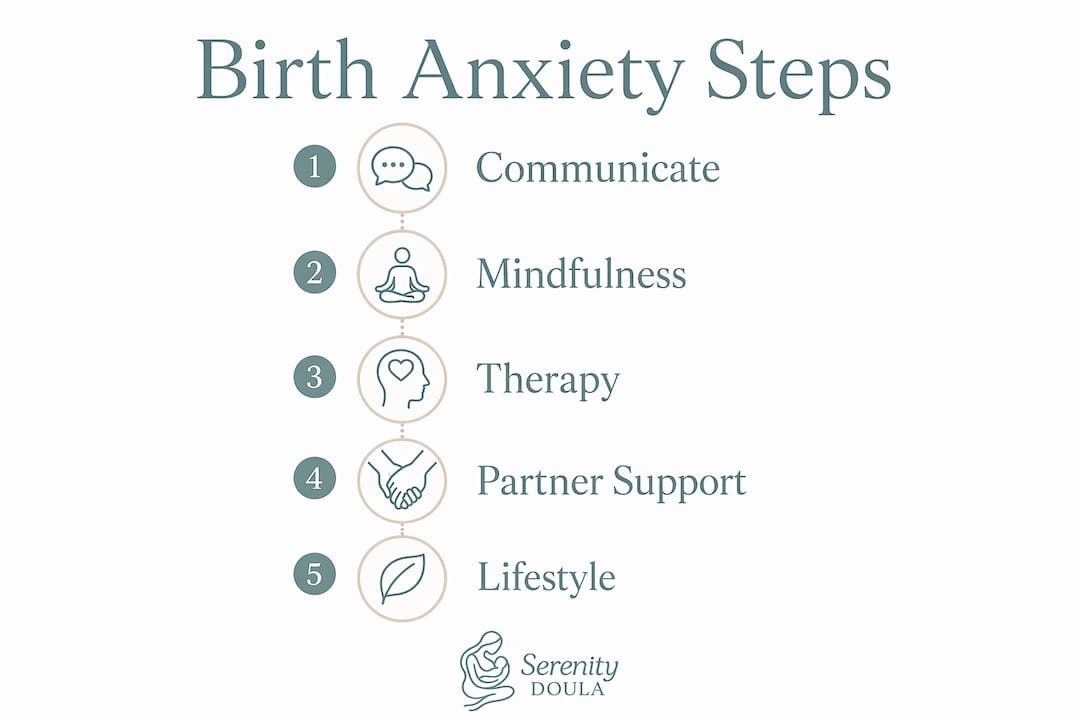
Managing birth anxiety effectively requires a combination of open communication, evidence-based psychological tools, practiced labor strategies, and consistent daily self-care.
| Point | Details |
|---|---|
| Start with communication | Share specific fears with your partner, midwife, and support team before labor begins. |
| Use CBT and mindfulness | Both are proven first-line treatments for perinatal anxiety and work without medication for most people. |
| Practice labor tools together | Partners who rehearse breathing and comfort techniques beforehand provide calmer, more effective support. |
| Build daily habits | Sleep, nutrition, movement, and mindfulness keep your nervous system regulated throughout pregnancy. |
| Seek help early | Clinical anxiety and tokophobia respond well to therapy. Fast-tracked perinatal care is available. |
What I’ve learned from sitting with birth fear
Working with pregnant clients over the years, I have noticed one pattern more than any other. The people who arrive at birth feeling calm are not the ones who had no fear. They are the ones who did something with their fear before labor started.
What I tell every client is this: anxiety is information, not prediction. It is your mind trying to protect you, not a sign that something will go wrong. The moment you stop fighting the fear and start working with it, everything shifts. You pick up the phone and call your midwife. You practice the breathing with your partner. You show up to the childbirth class even when part of you wants to avoid it.
The strategies in this article are not a checklist to complete perfectly. They are a toolkit to return to, again and again, as your pregnancy unfolds. Some weeks you will need the therapy. Some weeks you will need the walk and the early bedtime. Both count. Both work.
Build your toolkit now, while you have time. Birth preparation is not about eliminating fear. It is about building enough confidence that the fear no longer runs the show.
— Alexis Wallace
How a doula can support you through birth anxiety

You deserve continuous, personalized support throughout pregnancy and labor, not just at appointments. At Myserenitydoula, our doulas are trained to work alongside your medical team to provide emotional reassurance, physical comfort, and practical guidance from early pregnancy through postpartum. Whether you are working through fear, building your birth plan, or simply need someone in your corner who has been through this many times, we are here. Explore our pregnancy and birth support services to learn how a doula can help you feel grounded, seen, and ready for birth.
FAQ
What is birth anxiety and is it normal?
Birth anxiety is fear or worry about labor, delivery, or pregnancy outcomes. It is very common among expecting mothers and their partners, and mild levels are a normal part of preparing for a significant life event.
How can I cope with birth anxiety without medication?
CBT, mindfulness therapy, open communication with your care team, and practiced labor techniques are all proven non-pharmacological approaches for coping with birth anxiety effectively.
When does birth anxiety become tokophobia?
Tokophobia is a clinical diagnosis describing severe, phobic-level fear of childbirth that significantly disrupts daily life. It responds well to internet-based CBT and trauma-informed therapy when identified early.
How can my partner help reduce my birth anxiety?
Partners who practice breathing and grounding techniques before labor begins provide calmer, more effective support during contractions and reduce emotional escalation in the birth room.
Should I tell my doctor about my birth anxiety?
Yes, always. Your doctor or midwife can offer reassurance, refer you to perinatal mental health services, and adjust your birth plan to address specific fears. Early conversations lead to better outcomes.