

TL;DR:
- A partner support workflow for new moms is a structured plan providing ongoing emotional, physical, and mental health support from pregnancy through postpartum. It involves milestone-based check-ins, proactive task management, and escalation steps to address mental health concerns effectively. Building such a plan with professional guidance enhances resilience and ensures no one faces postpartum challenges alone.
A partner support workflow for new moms is a structured, proactive approach where partners provide coordinated emotional, physical, and mental health support from pregnancy through the postpartum months. When this kind of plan is in place, new moms recover faster, feel less isolated, and are more likely to get help early if postpartum mood challenges arise. The National Maternal Mental Health Hotline offers free, 24/7 confidential support at 833-852-6262 for both moms and their partners. This guide walks you through exactly how to build that plan, step by step.
What does a partner support workflow for new moms actually include?
A partner support workflow is not a single task or a one-time gesture. It is a continuous, coordinated process that covers emotional check-ins, practical household help, and mental health monitoring across the full postpartum period. Think of it as a living plan you update as your family’s needs shift.

The term “postpartum care plan” is the recognized clinical framework for this kind of structured support. At Myserenitydoula, we use both terms because partners searching for how to help often think in terms of workflows and roles, while healthcare providers speak in terms of care plans. Both point to the same goal: making sure no one is carrying this alone.
Postpartum care works best as a continuous, coordinated process rather than a single check-in event. That means your involvement does not end when mom and baby come home from the hospital. It deepens.
What are the key roles and responsibilities for partners?
Partners carry more weight in the first week than most people realize. Partner and family involvement is especially recommended in the first week postpartum for both emotional and physical support. Showing up fully in those early days sets the tone for everything that follows.
Here is what that looks like in practice:
- Protect rest. Take the baby for two to three hour stretches so mom can sleep uninterrupted. Sleep deprivation is one of the biggest drivers of postpartum mood struggles.
- Handle household logistics. Meals, laundry, and visitor management are yours to own. Do not wait to be asked.
- Encourage hydration and nutrition. Breastfeeding moms need significantly more calories and fluids. Keep water and snacks within arm’s reach.
- Be emotionally present without trying to fix things. When she cries or feels overwhelmed, your job is to listen and validate, not to solve. “That sounds really hard. I’m here” goes further than any advice.
- Support baby care hands-on. Diaper changes, soothing, and bath time are not just helpful. They build your bond with your baby and give mom genuine recovery time.
You can explore a deeper look at your role during childbirth and beyond in Myserenitydoula’s partner guide, which covers both labor and the weeks that follow.
Pro Tip: Write down three specific tasks you will own each day before the baby arrives. Having a plan removes the mental load of figuring it out in the fog of those first weeks.
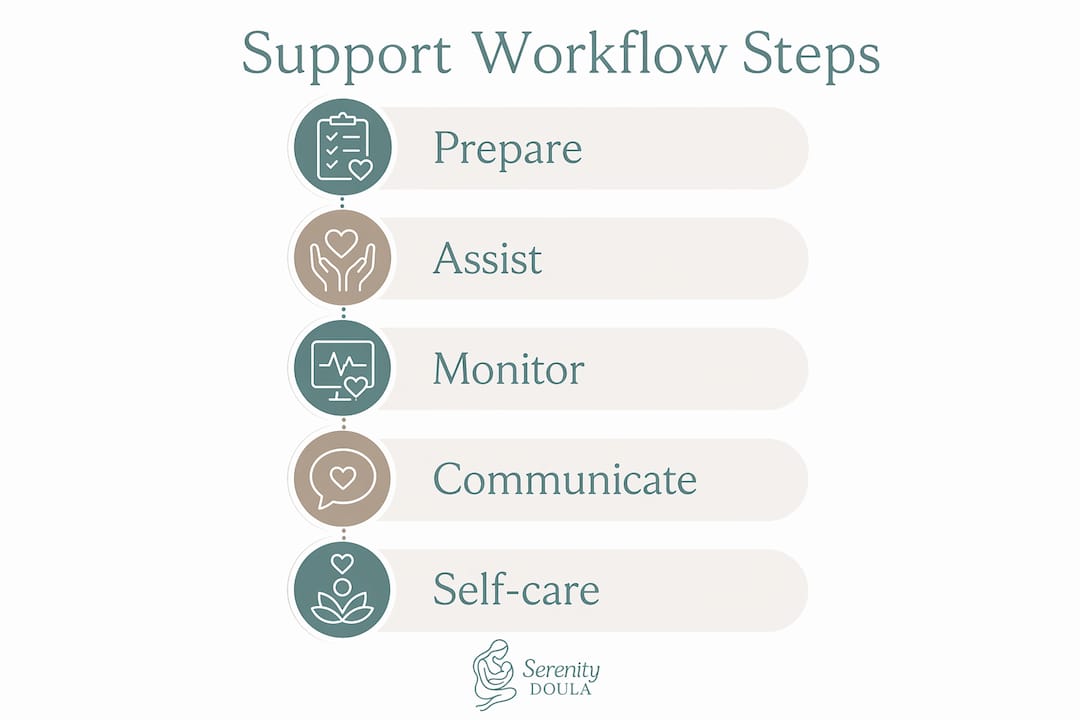
How can partners structure support around postpartum milestones?
The postpartum period has predictable windows that your workflow should be built around. Knowing these milestones in advance means you are never caught off guard.
| Milestone | What partners should do |
|---|---|
| Days 1 to 10 | Provide hands-on physical help, protect sleep, and watch for signs of postpartum blues |
| Days 10 to 14 | Assess whether blues are resolving; if not, coordinate a provider call |
| 1 month well-visit | Attend with mom, ask about mood and anxiety screening results |
| 2, 4, and 6 month visits | Continue mood check-ins; use pre-visit question lists to keep mental health on the agenda |
The 10 to 14 day window is one of the most important and least talked about moments in postpartum care. Postpartum blues typically resolve within this window. If tearfulness, anxiety, or low mood persist past day 14, that is your signal to move from reassurance to clinical follow-up. Do not wait for the six-week OB appointment.
The American Academy of Pediatrics recommends mood screening at 1, 2, 4, and 6 months postpartum using validated tools like the Edinburgh Postnatal Depression Scale. Partners can build their own reminders around these pediatric well-visits so mental health topics never get lost in the busyness of new parenthood.
Pro Tip: Before each well-visit, write down two or three specific observations about mom’s mood or sleep from the past few weeks. Concrete examples help providers make better assessments than general answers like “she seems tired.”
What communication and escalation strategies work best for mental health support?
Knowing when to listen, when to act, and when to call for backup is the part of a new mom assistance plan that most partners feel least prepared for. Here is a clear escalation ladder you can follow:
- Validate first. Before anything else, acknowledge what she is feeling without minimizing it. “You’re not being dramatic. This is genuinely hard.”
- Monitor with a tool. The Edinburgh Postnatal Depression Scale is a short, validated questionnaire that screens for postpartum depression and anxiety. You can find it through your provider or through mental health resources that list postpartum screening tools.
- Coordinate provider contact within a week if scores are elevated or if you notice persistent sadness, withdrawal, or anxiety that is not improving.
- Use the hotline for urgent situations. The National Maternal Mental Health Hotline at 833-852-6262 is available 24/7 and serves both moms and partners. You do not need to wait for a crisis to call.
Partners don’t have to wait for serious symptoms to appear before using mental health resources. Early use provides reassurance and guidance that can prevent escalation.
Peer support tools also fit naturally into this workflow. NurturePA, a mom-to-mom texting service, provides anonymous, nonjudgmental support and conducts postpartum depression screening eight times in the first year. Services like this give moms a space to talk when they are not ready to open up to a provider, and they take pressure off partners to be the only source of emotional support.
How do partners balance self-care within the support workflow?
You cannot pour from an empty cup. This is not a cliché. It is a clinical reality. Partners who are running on no sleep, skipping meals, and suppressing their own stress become less effective caregivers and more reactive in moments that need calm.
A sustainable co-parenting strategy for new moms includes protecting partner well-being too. Here is how to build that in:
- Schedule your own breaks intentionally. Even 30 minutes of physical activity or quiet time daily makes a measurable difference in emotional regulation.
- Name your feelings out loud. Partners experience their own version of postpartum adjustment. Talking about it with a trusted friend, therapist, or even through a postpartum support resource normalizes the experience.
- Ask for help from your wider support system. Family, friends, and community are not replacements for your involvement. They are reinforcements that make your involvement sustainable.
When both partners feel seen and supported, the relationship becomes more resilient. And a resilient relationship is one of the strongest protective factors for new mom mental health.
Key takeaways
A partner support workflow for new moms works best when it combines daily emotional presence, milestone-based mental health monitoring, and a clear escalation plan from day one through six months postpartum.
| Point | Details |
|---|---|
| Start from day one | Partner involvement in the first week is critical for physical recovery and emotional well-being. |
| Use milestone windows | Build check-ins around the 10 to 14 day window and AAP well-visits at 1, 2, 4, and 6 months. |
| Know your escalation steps | Validate, monitor with the Edinburgh Scale, contact a provider, and use the hotline at 833-852-6262. |
| Protect partner well-being | Sustainable support requires partners to manage their own rest, emotions, and social connection. |
| Peer support fills gaps | Tools like NurturePA give moms additional confidential support beyond what partners can provide alone. |
What I’ve learned from watching partners show up (and struggle)
Working alongside families through birth and postpartum, I have seen the difference a prepared partner makes. Not a perfect partner. A prepared one.
The couples who struggle most are not the ones who love each other less. They are the ones who assumed support would come naturally and did not plan for it. The exhaustion, the emotional weight, and the sheer volume of new decisions hit them all at once, and without a structure in place, they default to survival mode.
The partners who thrive are the ones who came in with a plan and stayed flexible when the plan needed to change. They asked questions before the baby arrived. They learned what the Edinburgh Postnatal Depression Scale was before they needed it. They knew the hotline number. And when things got hard, they did not try to fix everything. They stayed present.
My honest advice: treat this workflow like you would treat any other important project. Write it down. Revisit it. Give yourself grace when you get it wrong, and keep showing up. That consistency is what new moms remember most.
— Justin
How Myserenitydoula supports partners and new moms together
Building a partner support workflow is so much easier when you have professional guidance alongside you. At Myserenitydoula, our doulas work with both partners and new moms to create personalized care plans that cover emotional support, physical comfort, and mental health awareness from pregnancy through postpartum.
Our pregnancy and birth support doula services are designed to guide partners through exactly this kind of structured, compassionate involvement. Whether you are preparing for your first birth or navigating a challenging postpartum period, we are here to help you feel confident, grounded, and ready. Schedule a consultation with Myserenitydoula today and let us help you build a plan that works for your family.
FAQ
What is a partner support workflow for new moms?
A partner support workflow for new moms is a structured plan where partners provide coordinated emotional, physical, and mental health support from pregnancy through the postpartum months. It includes daily check-ins, task management, and a clear escalation process for mental health concerns.
When should partners start their postpartum support role?
Partners should be hands-on from the moment the baby arrives. The first week postpartum is especially critical for physical recovery and emotional well-being, making early involvement more impactful than joining in later.
How do partners monitor postpartum mental health?
Partners can use the Edinburgh Postnatal Depression Scale to track mood changes and align check-ins with pediatric well-visits at 1, 2, 4, and 6 months postpartum, as recommended by the American Academy of Pediatrics.
What should partners do if they are worried about postpartum depression?
Follow the escalation ladder: validate her feelings, use a screening tool, contact her provider within a week, and call the National Maternal Mental Health Hotline at 833-852-6262 for immediate confidential support if needed.
Do partners need professional help to build a support workflow?
Not necessarily, but working with a doula through a service like Myserenitydoula gives partners structured guidance, evidence-based tools, and emotional coaching that makes the workflow far more effective and sustainable.