

TL;DR:
- Personalized birth support involves continuous, non-clinical care from a trained doula tailored to a family’s preferences and needs. It improves outcomes by reducing cesarean rates, shortening labor, and enhancing maternal confidence and satisfaction. Doulas serve as advocates and communicators, supporting families through every stage of birth and postpartum recovery.
Personalized birth support is defined as continuous, individualized labor and delivery assistance provided by a trained doula to improve birth outcomes and maternal well-being. Unlike clinical care from an OB or midwife, this support focuses entirely on your emotional comfort, physical needs, and informed decision-making throughout labor. The American College of Obstetricians and Gynecologists (ACOG) and Cochrane reviews both recognize continuous labor support as an evidence-based practice that reduces intervention rates and improves satisfaction. Serenity Doula brings this model to Bucks County families seeking a premium, high-touch birth experience.
What is personalized birth support and how does it work?
Personalized birth support is the practice of matching continuous, non-clinical care to your specific preferences, fears, cultural background, and birth goals. The industry term for this role is “doula support,” and it covers everything from prenatal preparation through postpartum recovery. What makes it personalized is that no two birth plans look alike. Your doula learns your history, your anxieties, and your wishes before labor ever begins.
A doula’s scope of care includes three core components:
- Emotional support: Staying present, offering calm reassurance, and helping you feel grounded when labor intensifies.
- Physical comfort: Applying counter-pressure, guiding position changes, suggesting breathing patterns, and using techniques like hydrotherapy or massage.
- Informational support: Explaining what is happening at each stage of labor, helping you understand your options, and preparing your birth partner to participate confidently.
Doulas maintain 100% continuous presence during labor, unlike hospital nurses who rotate shifts and manage multiple patients. That unbroken familiarity is what makes personalized care possible in a busy clinical setting.
Pro Tip: Ask any prospective doula how she adapts her support style when a birth plan changes unexpectedly. Her answer tells you more about her skill than any certification alone.

A doula does not perform clinical tasks. She does not check dilation, administer medication, or make medical decisions. For a clear breakdown of how this role differs from a midwife’s, the doula vs. midwife comparison from Serenity Doula is a helpful starting point.
What are the proven benefits of personalized birth support?
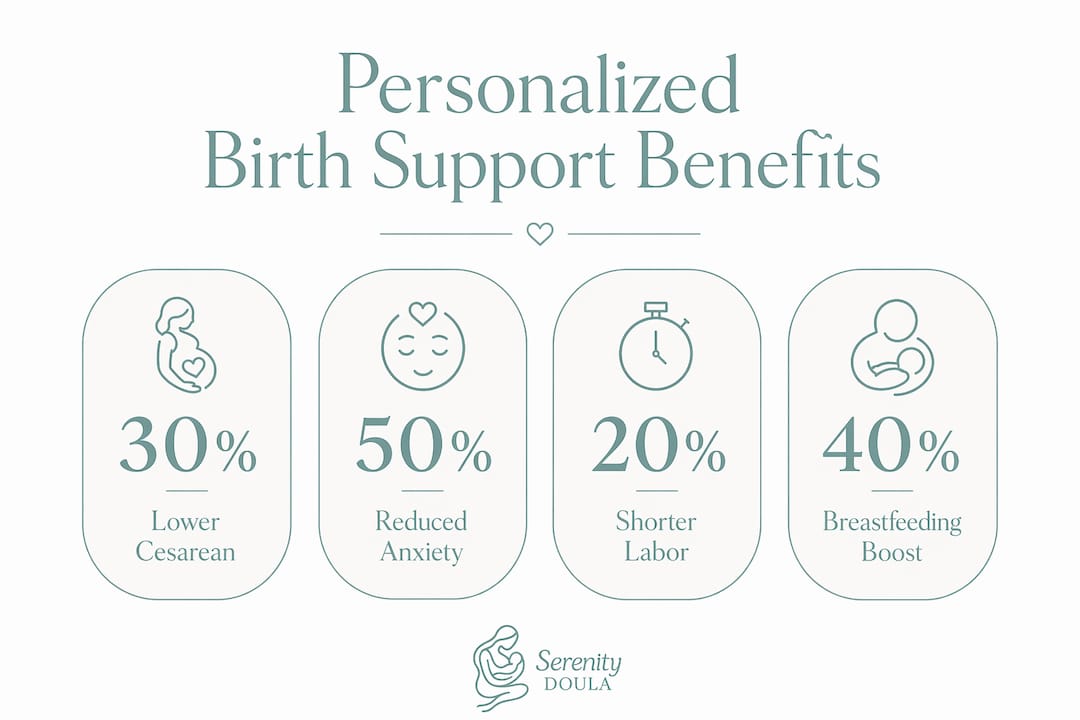
The evidence for tailored birth support is strong and growing. Continuous non-clinical labor support significantly lowers cesarean and preterm birth rates while increasing maternal comfort and satisfaction. That matters because cesarean recovery is longer, more costly, and carries higher surgical risk than vaginal birth.
The World Health Organization recommends continuous labor support based on global evidence showing measurable improvements in maternal and neonatal health. WHO-endorsed continuous support leads to reductions in medical interventions and shorter labor duration. Shorter, less medicated labors tend to produce better Apgar scores and fewer neonatal complications.
| Outcome | Impact of personalized birth support |
|---|---|
| Cesarean rate | Reduced with continuous doula presence |
| Labor duration | Shorter on average with trained companion support |
| Maternal satisfaction | Significantly higher compared to unsupported births |
| Breastfeeding initiation | Improved with prenatal education and postpartum follow-up |
| Neonatal Apgar scores | Higher with fewer interventions during labor |
Trained birth companions reduce maternal anxiety and increase coping effectiveness during labor. Lower anxiety means lower perceived pain, which often means less need for epidurals or other interventions. That cycle of calm produces measurably better outcomes for both parent and baby.
Community-based doula care also improves breastfeeding initiation and postpartum mental health support. The benefits do not end at delivery. Families who receive continuous doula care report feeling more confident and less isolated in the weeks after birth.
How does personalized support improve communication during childbirth?
Feeling heard during labor is not a luxury. It is a clinical factor. Doula-clinician partnerships improve communication and foster patient-centered births by creating a clear channel between you and your care team. Your doula knows your preferences before you walk into the hospital, so she can help you articulate them clearly when adrenaline makes thinking hard.
Personalized support validates your individual preferences, cultural background, and emotional needs to improve the overall birth experience. This is especially meaningful for families whose cultural or personal values differ from standard hospital protocols. A doula who knows your background can help your care team understand what matters to you.
Here is how a doula supports better communication in practice:
- She reminds you of questions to ask your provider before you consent to any intervention.
- She helps you use the BRAIN framework (Benefits, Risks, Alternatives, Intuition, Nothing) to evaluate options calmly.
- She keeps your birth partner informed and engaged so they feel confident rather than sidelined.
- She documents your preferences and advocates for them consistently across shift changes.
Choosing a personal birth companion increases self-efficacy and confidence for the birthing person before labor even begins. Confidence built in the prenatal period carries directly into the delivery room.
Pro Tip: If you feel anxious about speaking up with medical staff, tell your doula specifically. She can rehearse those conversations with you during prenatal visits so the words come naturally when it counts.
Postpartum emotional well-being is part of this picture too. Families who feel supported and heard during birth report lower rates of birth trauma and postpartum depression. For additional emotional support resources, online mental health counseling through MindShift Psychological Center is one option worth exploring alongside your doula care.
What types of birth support services should you consider?
Personalized childbirth assistance comes in several forms, and the right combination depends on your goals, your health history, and your birth setting. Here is a practical overview of the main options:
- Birth doula support: Continuous in-person care from a trained doula during labor and delivery. This is the most direct form of personalized support and the most studied.
- Prenatal education: Structured classes that prepare you for labor stages, pain management options, and newborn care. Serenity Doula’s childbirth education services cover both the physical and emotional sides of preparation.
- Birth plan creation: A written document that records your preferences for pain management, fetal monitoring, delivery positions, and immediate postpartum care. Your doula helps you build one that is realistic and flexible.
- Virtual doula support: Phone or video check-ins during early labor for families who want guidance before heading to the hospital or birth center.
- Postpartum doula care: In-home support during the first weeks after birth, covering infant feeding, recovery, and family adjustment.
When selecting a doula, the questions to ask a doula should include: How many births have you attended? What is your backup plan if you are unavailable? How do you support birth partners? What does your prenatal visit schedule look like? The answers reveal whether her approach matches your needs.
Doulas empower birth partners to remain active and confident during labor by teaching specific comfort techniques and helping partners navigate their own emotions. A good doula does not replace your partner. She makes your partner better at supporting you. For practical guidance on that dynamic, Serenity Doula’s partner support guide is a useful resource.
Key Takeaways
Personalized birth support, provided by a trained doula, reduces intervention rates, improves maternal satisfaction, and builds the communication and confidence families need for a positive birth experience.
| Point | Details |
|---|---|
| Definition of doula support | Continuous, non-clinical care tailored to your emotional, physical, and informational needs during labor. |
| Proven clinical benefits | Personalized support lowers cesarean rates, shortens labor, and improves neonatal Apgar scores. |
| Communication and advocacy | Doulas help you articulate preferences to your care team and maintain consistency across shift changes. |
| Types of support available | Options include birth doulas, prenatal education, birth plans, virtual support, and postpartum care. |
| Choosing the right fit | Ask about experience, backup plans, and how the doula supports birth partners before committing. |
What ten years of Bucks County births taught me about personalized care
Most families come to me thinking a doula is a nice extra. By the time we reach their birth, they understand it is the thing that held everything together. I have attended births at Trinity Health St. Mary in Langhorne and at home in Newtown, and the single biggest predictor of a positive experience is not the birth setting. It is whether the birthing person felt seen and heard throughout the process.
The misconception I hear most often is that personalized support means getting the birth you planned. It does not. It means having someone who knows you well enough to help you adapt when the plan changes, without feeling lost or alone. That is the real value. A birth plan is a starting point. A doula is the person who helps you stay grounded when the starting point shifts.
My advice to families in Doylestown, Newtown, and across Bucks County is this: start the conversation early. The prenatal visits are where the real personalization happens. By the time labor begins, your doula should already know your fears, your preferences, and your partner’s strengths. That preparation is what makes the difference between surviving your birth and feeling proud of it.
— Alexis Wallace
Serenity Doula’s approach to high-touch birth support
Serenity Doula serves Bucks County families who want more than a standard hospital experience. Every client receives continuous, evidence-based care from prenatal preparation through postpartum recovery, with a support style built around your specific needs, not a template.
Whether you are planning a natural birth, a medicated delivery, or a cesarean, Serenity Doula’s pregnancy and birth support services are designed to keep you informed, comfortable, and confident at every stage. Families across Newtown, Doylestown, and the greater Bucks County area have found that this level of care changes not just the birth experience, but the weeks and months that follow. Book a free consultation today and find out what truly personalized birth support feels like.
FAQ
What is the definition of personalized birth support?
Personalized birth support is continuous, individualized care provided by a trained doula that addresses your emotional, physical, and informational needs throughout labor and delivery. It is tailored to your specific preferences, background, and birth goals.
How does doula support differ from clinical care?
A doula provides non-clinical support, including comfort techniques, emotional reassurance, and advocacy, while your OB or midwife manages medical decisions. Doulas maintain continuous presence during labor, which hospital staff typically cannot provide.
What questions should I ask a doula before hiring one?
Ask about her experience, backup coverage, how she supports birth partners, and how she adapts when a birth plan changes. These questions reveal whether her approach fits your needs and communication style.
Does personalized birth support work for medicated or cesarean births?
Yes. Doula support improves outcomes and satisfaction across all birth types, including epidural, induced, and cesarean births. Continuous presence and advocacy remain valuable regardless of the delivery method.
When should I hire a doula for personalized birth support?
Most doulas recommend connecting in the second trimester, ideally by 20–28 weeks, so prenatal visits can build the relationship and personalize your birth plan before labor begins.