
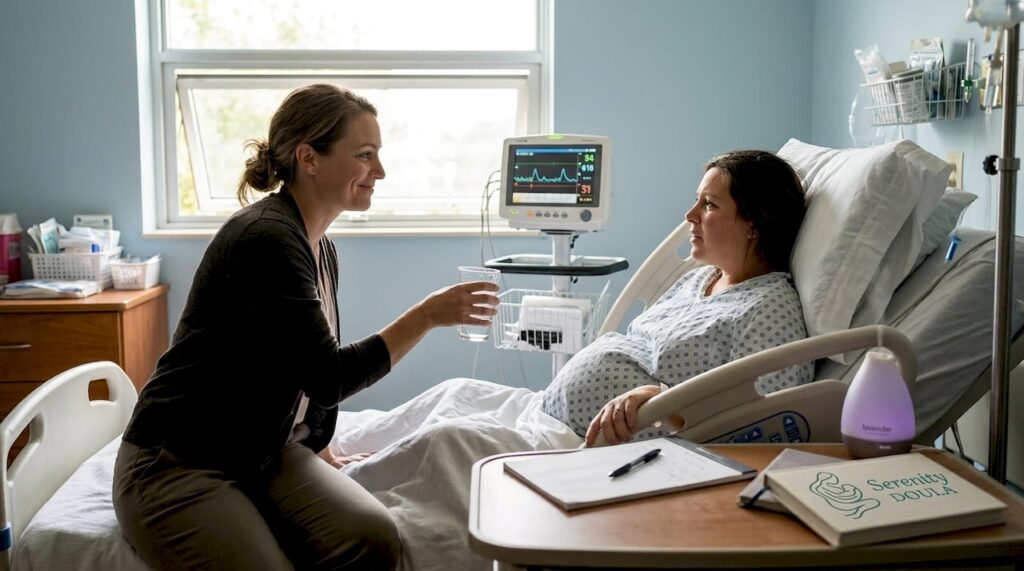
Your doctor and midwife are incredible. They monitor your health, manage complications, and keep you and your baby safe. But here’s something many families don’t realize until they’re already in the delivery room: medical providers rotate shifts, manage multiple patients, and focus primarily on clinical outcomes. Who stays by your side the entire time, coaching your breathing, holding your hand, and making sure your voice is heard? That’s where natural birth support comes in. Doula support reduces cesarean rates by up to 53%, and the research behind that number is hard to ignore. This article walks you through what natural birth support actually looks like, why the evidence is so compelling, and how personalized doula care can change your entire birth experience here in Pennsylvania.
Table of Contents
- What is natural birth support?
- Doula care: The evidence for better outcomes
- How doulas empower you during labor and birth
- Who benefits most from natural birth support?
- Medical care and natural support: A perfect team
- Ready to experience the difference personalized doula support makes?
- Frequently asked questions
Key Takeaways
| Point | Details |
|---|---|
| Lower intervention rates | Doula-supported natural birth significantly reduces the chance of C-section and other interventions. |
| Empowerment and satisfaction | Continuous, personalized care from a doula enhances your confidence and experience during birth. |
| Universal accessibility | Everyone—regardless of background or birth setting—can benefit from natural birth support. |
| Team-based safety | Doulas and medical providers complement each other for a safe, supported birth. |
What is natural birth support?
Natural birth support means continuous, non-medical care that begins during pregnancy and carries through labor and birth. It’s not about avoiding medicine or making a political statement about how you give birth. It’s about having someone in your corner who is focused entirely on you, your comfort, your confidence, and your choices.
Doulas, midwives, and doctors all play different roles. Your doctor or midwife manages your clinical care, monitors fetal heart rates, and handles medical decisions. A doula, on the other hand, provides emotional, physical, and informational support and advocacy throughout the entire process. Think of it this way: your medical team keeps you safe, and your doula keeps you grounded.
Natural birth support includes a wide range of non-medical comfort techniques:
- Breathing guidance to manage contractions and reduce anxiety
- Massage and counter-pressure to ease back labor and tension
- Movement and positioning to encourage baby’s descent and reduce pain
- Hydrotherapy such as warm showers or baths to relax muscles
- Emotional reassurance and continuous presence throughout labor
The beauty of this kind of support is that it’s completely personalized. You can explore the full range of types of childbirth support available so you can choose what fits your birth vision best.
Doula care: The evidence for better outcomes
Let’s talk numbers, because the data here is genuinely remarkable. When a doula is present during labor, the outcomes shift in meaningful ways.
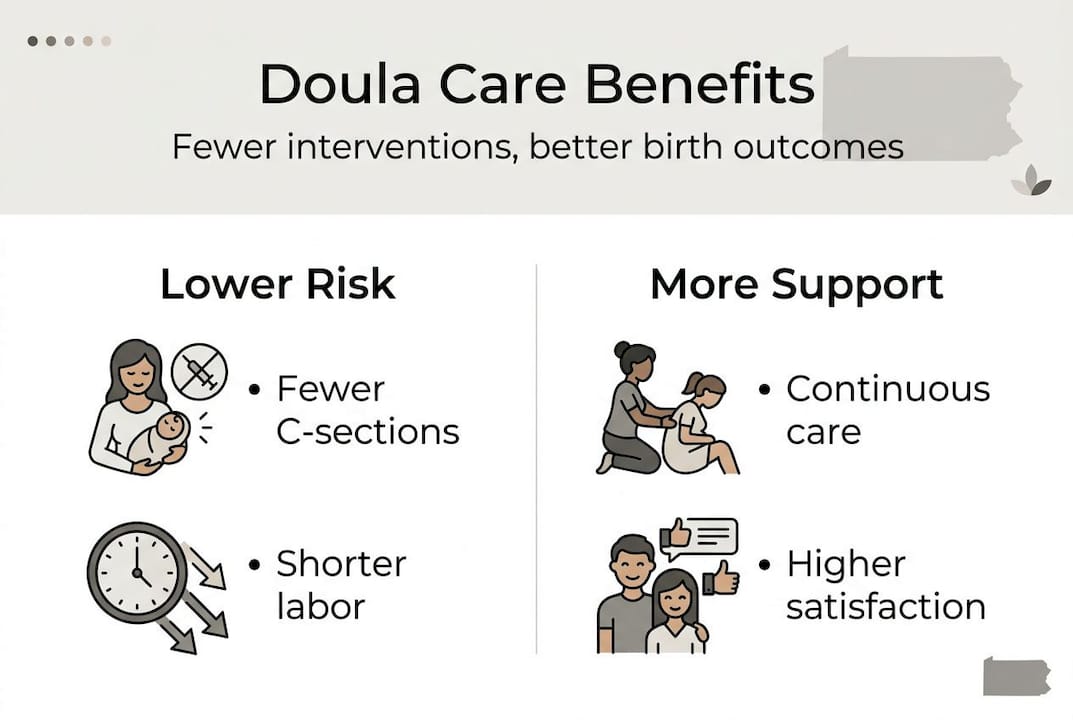
Doula support reduces cesarean rates by 25 to 53%. That’s not a small margin. Labors are also shorter, and the use of pain medication drops by roughly 10%. These aren’t just statistics on a page. They represent real families who had calmer, more empowered birth experiences.
A landmark Cochrane review on continuous support found that continuous labor support reduces the need for interventions and significantly increases overall birth satisfaction, with no clinical risk to mother or baby.
| Outcome | Without doula support | With doula support |
|---|---|---|
| Cesarean birth rate | Higher baseline | Reduced by 25 to 53% |
| Average labor length | Standard duration | at least 1 hr shorter |
| Pain medication use | Common | Reduced by ~10% |
| Birth satisfaction | Variable | Consistently higher |
| Intervention rates | Higher | Significantly lower |
“Continuous support during labor improves outcomes for women and babies, with no identified harms.” — Cochrane Review
Think about what that means for you. Fewer interventions. A shorter, more manageable labor. And a birth experience you feel genuinely good about. When you work with personalized labor comfort measures tailored to your needs, those numbers become your reality, not just someone else’s story.
How doulas empower you during labor and birth
Here’s what continuous presence actually looks like in practice. Your nurse may check in every 30 minutes. Your doctor may arrive for the final push. But your doula? She’s there from the moment active labor begins until after your baby is in your arms.

Doulas provide emotional reassurance, physical comfort through massage and positioning, informational support, and advocacy throughout your birth. These four pillars work together to create a birth experience that feels supported rather than overwhelming.
Here’s what that looks like in real life:
- Emotional support: Your doula reminds you of your strength when self-doubt creeps in at 3 a.m.
- Physical comfort: She applies counter-pressure to your lower back during contractions or helps you find a position that eases the intensity.
- Informational support: When a nurse mentions augmentation, your doula explains what that means in plain language so you can make an informed choice.
- Advocacy: She helps ensure your birth preferences are communicated clearly to your care team, so your voice matters even when you’re deep in labor.
Understanding what doulas do before you hire one makes a huge difference in how you prepare. And when you’re ready to explore your options, looking into pregnancy birth support options can help you find the right fit.
Pro Tip: Interview at least two or three doulas before making your choice. Personality and communication style matter just as much as experience. You want someone who feels like your birth-side bestie, not just a professional you hired.
Who benefits most from natural birth support?
Here’s something that might surprise you: doula support helps everyone, regardless of background, birth plan, or risk level. Whether you’re planning a natural birth, an epidural, or a cesarean, having a doula by your side improves your experience.
But the benefits are especially powerful for families who have historically faced barriers in the healthcare system. Research shows that benefits are consistent across races and insurance types, with particularly strong outcomes for underserved communities, including in Pennsylvania hospitals.
| Group | Key benefit observed |
|---|---|
| Low-income families | Reduced interventions, improved satisfaction |
| Black and Brown birthing parents | Lower cesarean rates, stronger advocacy |
| First-time parents | Increased confidence and preparedness |
| High-risk pregnancies | Better communication with medical teams |
“Doula care is one of the most effective tools we have for reducing disparities in maternal health outcomes.” — Contemporary OB/GYN
This matters deeply to us at Serenity Doula. Every birthing parent deserves to feel safe, heard, and supported, no matter their zip code or insurance card. Learning about the childbirth education benefits available to you is a great first step toward building that foundation of confidence.
Medical care and natural support: A perfect team
One of the biggest misconceptions we hear is this: “My doctor is great, so I don’t need a doula.” We love that you have a great doctor. And your doula will love working alongside them.
Doulas and medical teams are not in competition. They’re complementary. Research confirms that doulas complement medical teams, allowing clinical staff to focus on safety while doulas handle comfort, information, and advocacy. Everyone does their job better when the roles are clear.
Here’s how it works in practice:
- Your doctor or midwife monitors fetal heart tones, manages any complications, and makes clinical decisions.
- Your nurse administers medications, checks vitals, and coordinates hospital care.
- Your doula stays with you continuously, supports your comfort, explains what’s happening, and helps you communicate your needs.
- Your partner or family provides love and emotional presence, guided and supported by your doula.
- You stay informed, empowered, and in control of your birth experience.
No overlap. No conflict. Just a well-coordinated team working toward the same goal: a safe, positive birth for you and your baby.
Pro Tip: Share your birth preferences with your doula before your due date. She can help you refine them, anticipate questions your care team might have, and make sure everyone is aligned before labor begins. You can also browse our pregnancy and birth tips blog for practical guidance on building your birth team.
Ready to experience the difference personalized doula support makes?
You’ve seen the research. You understand the difference between medical care and continuous birth support. Now imagine having both working together for you, right here in Pennsylvania.
At Serenity Doula, we offer warm, personalized support for natural, medicated, and cesarean births. Whether you’re just starting to explore your options or you’re ready to book a consultation, we’re here to walk alongside you every step of the way. From prenatal visits to postpartum care, our goal is simple: to make sure you feel calm, confident, and completely supported. Reach out today to schedule your free consultation and find out how we can be your anchor through one of the most powerful experiences of your life.
Frequently asked questions
How does doula support make natural birth easier and safer?
Doula care reduces interventions and enhances birth satisfaction with no added clinical risk, giving mothers continuous guidance and comfort throughout labor.
Do doulas only help with home births, or also in hospitals?
Doulas support births in all settings, including hospitals, birth centers, and homes. Doulas complement medical care in every environment, working alongside your existing care team.
Does insurance in Pennsylvania cover doula services?
Coverage varies by plan, but some Pennsylvania families can access doula support through Medicaid, grants, or flexible spending accounts. Benefits are consistent across insurance types, so support is available regardless of your financial situation.
What if my partner or family is already supporting me—do I still need a doula?
Family love is irreplaceable, but doulas bring trained techniques, advocacy skills, and continuous presence that improve outcomes for all involved, including your partner, who often feels more confident with a doula present.