

The second-trimester energy surge is usually your body’s relative rebound toward its pre-pregnancy baseline, not a brand-new burst of energy above what you felt before you got pregnant. As nausea eases and hormones level out somewhere between weeks 13 and 28, the exhaustion that defined your first trimester often lifts, sometimes dramatically. The Cleveland Clinic notes fatigue typically peaks early and improves from there, while Mayo Clinic points to steadier hormone levels as the driver. At Serenity Doula, we call this window the “middle breath” of pregnancy, and it’s worth understanding exactly why it happens.
Key Takeaways
The second-trimester energy surge is a relative rebound toward your pre-pregnancy baseline, driven by falling hCG, placental hormone takeover, and eased nausea between weeks 13 and 28.
| Point | Details |
|---|---|
| It’s relative, not absolute | The surge reflects relief from first-trimester exhaustion, not necessarily more energy than you had before pregnancy. |
| Timeline varies by person | Most notice improvement between weeks 13 and 20, though onset and duration differ widely. |
| Watch for red flags | Crushing fatigue, dizziness, breathlessness, or palpitations warrant a CBC and TSH conversation with your provider. |
| Use energy for setup, not sprints | Prioritize postpartum planning and childbirth education over clearing an entire to-do list at once. |
| Serenity Doula supports this window | Personalized childbirth education and doula support help Bucks County families use this phase with intention and confidence. |
This article is general information, not a substitute for advice from a qualified doctor. Consult a qualified healthcare professional about your own circumstances before acting on anything here.
Table of Contents
- Why Does the Second Trimester Energy Surge Happen?
- Is This Really More Energy, or Just Relief?
- When Should You Call Your Provider About Fatigue?
- How to Use Your Energy Without Overdoing It
- Week-by-Week: What This Trimester Actually Feels Like
- When Fatigue Signals Something More Than Normal Pregnancy Tiredness
- The Emotional Side: Worry, Anticipation, and Feeling Ready
- How Long Does the Energy Surge Actually Last?
- Beyond Anemia: Other Reasons Energy Doesn’t Bounce Back
- How Clients Learn to Use This Window Wisely
- Make the Most of Your Energy Window With Serenity Doula
- Sources
- FAQ
Why Does the Second Trimester Energy Surge Happen?
Your body isn’t manufacturing extra energy from nowhere. It’s recovering from a first trimester that asked a lot of it.
During weeks one through twelve, your levels of human chorionic gonadotropin (hCG) spike dramatically, and that spike correlates closely with nausea and exhaustion for many women. By the second trimester, hCG drops off and the placenta takes over hormone production from the fragile early corpus luteum. That handoff brings steadier progesterone and cortisol levels, which is part of why the emotional and physical volatility of early pregnancy tends to calm down.
A few other things shift at the same time:
- Nausea fades for most people, which means you’re eating regularly again instead of surviving on crackers and willpower.
- Sleep quality often improves once nighttime nausea and the worst food aversions ease up.
- Blood volume keeps climbing, supporting better circulation and oxygen delivery, which many women feel as steadier stamina.
- Appetite returns, and with it, better intake of iron, protein, and the nutrients your prenatal vitamin can only partially cover.
The clinical framing matters here, because it reshapes expectations:
The “energy surge” is best understood as a relative return to normalcy because the first trimester’s exhaustion was so intense. It often feels like a surge rather than an actual energy gain above pre-pregnancy levels.
That distinction, drawn from Cleveland Clinic’s guidance, is one we repeat often with clients. You’re not superhuman right now. You’re simply not depleted anymore, and that difference can feel enormous.
Is This Really More Energy, or Just Relief?
Here’s the honest answer: it depends on the person, and it’s usually a mix of both.
| Pattern | What it looks like | How common it is |
|---|---|---|
| Full rebound | Energy feels close to (or better than) pre-pregnancy levels | Most common pattern reported |
| Partial relief | Less exhausted than trimester one, but not “back to normal” | Common, especially with disrupted sleep |
| Continued fatigue | Little improvement; exhaustion persists into weeks 14 to 20 | Less common, worth a provider conversation |
Baseline fitness, sleep quality, and underlying conditions like anemia or thyroid changes all shape where you land on that spectrum. Someone who was highly active before pregnancy often feels closer to their old self by week 16. Someone managing a toddler on four broken hours of sleep may feel simply less awful, which is still real progress.
Pro Tip: Use this window to build sustainable systems, not to sprint through a backlog. Batch-cook two extra meals a week instead of deep-cleaning the entire house in one weekend. The goal is a pace you can sustain into the third trimester, not a burnout by week 24.
When Should You Call Your Provider About Fatigue?
Most second-trimester tiredness is unremarkable. Some patterns are not, and knowing the difference protects you.
Bring these up with your provider if you notice:
- Crushing fatigue that hasn’t budged since your first trimester
- Dizziness or lightheadedness, especially when standing up
- Shortness of breath that feels disproportionate to activity
- A racing or pounding heartbeat (palpitations) at rest
- Unusual paleness, especially in your lips or nail beds
- Heavy or unusual bleeding of any kind
If any of these sound familiar, here’s how to make the most of your next appointment:
- Write down when the fatigue is worst (morning, after meals, after activity) for a few days before your visit.
- Ask about a CBC to screen for anemia, one of the more common and treatable causes of persistent exhaustion in pregnancy.
- Ask about a TSH check to rule out thyroid dysfunction, which can mimic normal pregnancy fatigue closely.
- Bring a specific question, such as, “Given how I’m feeling, is this within the range you’d expect, or should we investigate further?”
Cleveland Clinic’s guidance is direct on this point: if exhaustion remains crushing into the second trimester, providers typically look for an underlying cause rather than assuming it’s ordinary pregnancy fatigue.
How to Use Your Energy Without Overdoing It
This is the part clients ask about most: you finally feel human again, so how do you actually use that window well?
Start with nutrition. Second-trimester guidance commonly points to about 340 additional calories daily, built around balanced meals rather than empty snacking. Continue your prenatal vitamin, and ask your provider before adding a separate iron supplement, since needs vary and too much iron brings its own side effects. Our step-by-step guide to second-trimester nutrition breaks this down meal by meal if you want more specifics.

Sleep still deserves protection, even when you feel good. A consistent bedtime, a short afternoon nap capped around 20 to 30 minutes, and lying on your left side when it’s comfortable all support circulation. Cut caffeine off by early afternoon so it doesn’t undercut the sleep gains you’re finally getting.
Movement matters too. Medical News Today notes that roughly 150 minutes of moderate weekly activity, when your provider clears it, supports energy, mood, and sleep alike. Walking, prenatal yoga, and swimming are common favorites, and gentle pelvic-floor work now pays off during labor and recovery. A prenatal chiropractor can also help with the posture shifts that come with a growing belly, which indirectly protects your energy by protecting your sleep.
For pacing, try this simple structure:
- Morning: One priority task, done in a focused 20-minute block
- Midday: Movement plus a protein-and-fiber-forward lunch
- Afternoon: Rest window, even if you don’t nap
- Evening: Light planning for the week ahead, then wind down
Clinicians consistently recommend this exact combination, sleep hygiene, balanced protein and fiber, hydration, and moderate approved exercise as the backbone of safe second-trimester self-care. Resist the urge to “catch up” on everything at once. Instead, prioritize setting up your home and support systems for postpartum while your stamina is still relatively strong. Our healthy habits guide for 2026 covers this in more depth.
Week-by-Week: What This Trimester Actually Feels Like
Energy shifts aren’t uniform across all sixteen weeks. Here’s a rough map:
- Weeks 13 to 16: Nausea starts easing for many people; energy improvement often begins here first.
- Weeks 17 to 20: Energy tends to feel steadiest; you may notice first fetal movements (“quickening”).
- Weeks 21 to 24: Growth accelerates, appetite rises further, and stamina generally stays strong.
- Weeks 25 to 28: Some early fatigue creep can return as your body prepares for the third trimester.
Variability is normal here. If fatigue feels persistent rather than occasional across any of these windows, it’s worth noting the pattern for your provider. Many families use weeks 17 through 24, when energy tends to peak, to start childbirth education classes or begin nesting tasks, before the practical demands of the third trimester arrive.
When Fatigue Signals Something More Than Normal Pregnancy Tiredness
Persistent exhaustion that doesn’t respond to rest deserves a second look, not self-diagnosis and worry. If you’re sleeping reasonably well, eating regularly, and still feel flattened by mid-afternoon, that’s a legitimate reason to check in.
Ask your provider whether your fatigue pattern fits what’s typical for your stage, or whether it warrants bloodwork. A simple CBC can catch iron-deficiency anemia, which grows more common as pregnancy progresses and blood volume expands faster than iron stores can always keep up. Dizziness on standing, breathlessness climbing stairs you’d normally manage easily, or a heart that seems to race at rest are all worth mentioning specifically rather than folding into a general “I’m just tired” comment at your appointment.
Timing matters too. Fatigue that was mild in week 14 but has intensified by week 22, rather than following the more typical arc of gradual improvement, is a pattern worth naming out loud. Providers can’t act on what they don’t hear, and “I’m tired” covers a lot of very different situations. Being specific, “worse in the afternoons,” “better after I eat,” “constant regardless of sleep”, gives your clinician something to actually work with. This isn’t about alarm. It’s about making sure normal variation and something needing attention don’t get lumped together by accident.
The Emotional Side: Worry, Anticipation, and Feeling Ready
Physical energy returning often uncovers something else: mental space to actually think about labor, parenting, and everything that comes after. For many clients, the second trimester is when worry finally has room to surface, precisely because you’re not simply surviving day to day anymore.
That worry is normal, not a sign anything is wrong. Common questions we hear include whether you’ll recognize labor when it starts, how you’ll manage pain, and whether you’ll feel prepared as a parent once the baby actually arrives. These questions tend to ease with information and preparation rather than reassurance alone.
This is exactly why the second trimester is such a practical time for childbirth education. You have the mental bandwidth to absorb information about labor stages, comfort measures, and what your partner can actually do to help, bandwidth you likely didn’t have during first-trimester exhaustion, and won’t have as much of once third-trimester discomfort sets in. Classes taken now tend to stick better and get used more confidently in the delivery room.
If anxiety feels bigger than typical anticipatory nerves, that’s worth mentioning to your provider too. Emotional wellbeing during pregnancy deserves the same attention as physical symptoms, and holistic prenatal support exists specifically to help with that transition.
How Long Does the Energy Surge Actually Last?
There’s no single answer, and that variability trips people up more than almost anything else about this phase.
Some women feel the shift as early as week 13, right as nausea starts to lift. Others don’t notice real improvement until closer to week 18 or 20, particularly if first-trimester symptoms lingered longer than average. On the other end, practitioner and patient accounts describe the improved-energy window narrowing again as early as week 26 or 27 for some, while others stay steady all the way to 28.
What drives that spread? Baseline health before pregnancy plays a role, as does how physically demanding the first trimester’s symptoms were. Someone managing twins, working a physically demanding job, or caring for other young children will generally feel this window differently than someone with more built-in rest time. Anemia, undiagnosed thyroid shifts, and sleep disorders like restless leg syndrome can all shorten or blunt the rebound without necessarily causing dramatic symptoms on their own.
The practical takeaway: don’t measure your experience against a friend’s due date twin or an internet forum’s average. If your energy feels meaningfully different from what’s described here, that’s information for a conversation with your provider, not a reason to assume something is wrong on your own.
Beyond Anemia: Other Reasons Energy Doesn’t Bounce Back
Anemia gets most of the attention when second-trimester fatigue lingers, and for good reason, it’s common and treatable. But it isn’t the only explanation clinicians look for.
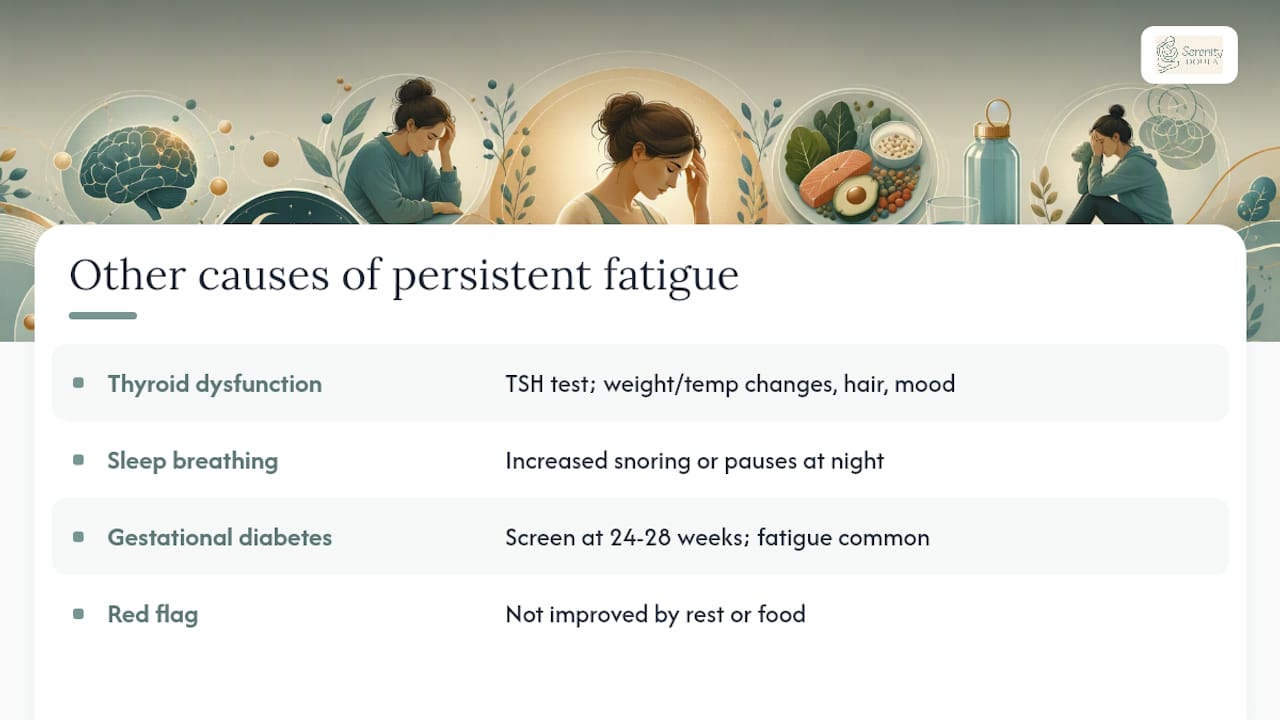
Thyroid dysfunction is a significant one. Both an underactive thyroid (hypothyroidism) and, less commonly, an overactive one (hyperthyroidism) can produce fatigue that looks a lot like “just pregnancy tired” on the surface. The distinguishing signs tend to show up alongside the fatigue: unexplained weight changes, feeling unusually cold or hot, hair thinning beyond typical pregnancy shedding, or mood shifts that feel more extreme than situational stress explains. A simple TSH blood test settles the question either way.
Sleep-disordered breathing, including pregnancy-related sleep apnea, is another possibility clinicians consider, particularly if snoring has increased or a partner notices breathing pauses at night. Gestational diabetes, typically screened between weeks 24 and 28, can also present with fatigue alongside its more classic symptoms.
The pattern that separates these from normal pregnancy tiredness is usually specificity: normal fatigue tends to improve with rest and food; these conditions tend to persist regardless of how well you’re sleeping or eating. If rest isn’t helping the way it should, that mismatch is worth naming clearly at your next appointment rather than assuming it will simply resolve on its own.
How Clients Learn to Use This Window Wisely
Nearly every client I work with describes the same moment: somewhere around week 15 or 16, they wake up and realize they want to do things again. Cook a real dinner. Organize the nursery closet. Actually read the childbirth class materials sitting in a tab they opened weeks ago.
My advice is almost always the same: pick one thing a day, not five. Set up a simple feeding station near where you’ll spend the most time postpartum. Schedule a postpartum helper or meal train now, while making calls feels easy instead of exhausting. This window is generous, but it isn’t endless, and the families who use it best treat it as a runway for later, not a to-do list to clear all at once.
Make the Most of Your Energy Window With Serenity Doula
There are plenty of ways to fill a Sunday afternoon of renewed energy, a nursery Pinterest board, a solo prenatal yoga class, a stack of parenting books. Serenity Doula offers something those can’t: a personalized childbirth education experience built around your actual birth plan, taught by someone who will likely also support you in the room. Families across Bucks County, from Newtown to Doylestown, use this exact window between weeks 16 and 24 to complete private classes while energy and focus are both working in their favor.

Our childbirth education classes cover labor stages, comfort techniques, and partner support in a format built around your questions, not a generic curriculum. If you’re also weighing hands-on labor support, our pregnancy and birth doula services extend that same personalized, evidence-based care from prenatal visits through delivery. The next step is simple: book a free consultation and let’s talk through where you are right now and what would help most.
Sources
- Pregnancy Fatigue: Why It Happens and How To Cope
- Second Trimester of Pregnancy: What To Expect
- Pregnancy week-by-week: Second trimester
- Second trimester — what to expect and how to stay healthy
- Why the second trimester feels like a deep breath
FAQ
Why do I feel more energetic in my second trimester?
Falling hCG, steadier progesterone from the placenta, and easing nausea combine to lift the exhaustion many people feel in the first trimester, creating what feels like an energy surge.
When does the second trimester energy surge typically start?
Many people notice improvement as early as week 13, though for some it doesn’t arrive until closer to week 18 or 20.
Is it normal to still feel tired in the second trimester?
Yes, some fatigue can persist, but crushing or unrelenting exhaustion is worth discussing with your provider to rule out anemia or thyroid issues.
How much extra energy should I actually have?
There’s no fixed amount. It’s best understood as relief from first-trimester depletion rather than a guaranteed energy boost above your pre-pregnancy normal.
What’s the best way to use this energy window?
Focus on childbirth education, nutrition, moderate approved exercise, and postpartum planning rather than trying to finish every task at once; Serenity Doula’s classes are designed to fit this exact window.
When does second-trimester energy typically fade?
Many notice early signs of third-trimester fatigue creeping back between weeks 25 and 28, though this varies by individual.