

Yes, pregnancy commonly brings up past trauma, and you are not broken, dramatic, or alone for feeling it. A 2023 longitudinal study in BMC Pregnancy and Childbirth found that women with multiple adverse childhood experiences (ACEs) were significantly more likely to report perinatal trauma, and fear for the unborn baby’s safety was one of the most common themes women described. The American College of Obstetricians and Gynecologists (ACOG) now recommends universal trauma screening in obstetric care, which tells you something important: this is common enough that medicine has built a response to it.
Start here, today:
- Ground yourself: name five things you see, four you hear, three you can touch. Sixty seconds resets your nervous system.
- Write one sentence for your chart: “I have a trauma history I’d like to discuss before my next exam.” You don’t need details yet.
- Ask about trauma-informed doula or therapy support before your next appointment, not after a hard one.
Statistic Spotlight: Women with multiple ACEs faced markedly higher odds of perinatal trauma in the BMC study, and fear their baby was in danger was among the most frequently reported experiences.
Key Takeaways
Trauma resurfacing during pregnancy is common, biologically explainable, and manageable with the right combination of grounding tools, trauma-informed care, and consistent support.
| Point | Details |
|---|---|
| Reactivation is common, not rare | Multiple ACEs raise the odds of perinatal trauma, per BMC research, so resurfacing is a documented pattern, not a personal failing. |
| Ground yourself in the moment | Use sensory grounding or the 4-7-8 breath during triggers to calm your nervous system quickly. |
| Name your history early | Tell your provider in one or two sentences before a triggering appointment, not during one. |
| Request trauma-informed behaviors | Ask for consent before touch, step-by-step narration, and an honored pause signal at every visit. |
| Bring in dedicated support | A doula or perinatal therapist trained in CBT or EMDR can coordinate care so you’re never navigating triggers alone. |
Table of Contents
- How Trauma Resurfacing Shows Up During Pregnancy
- Why Pregnancy Is Such a Sensitive Time for Old Trauma
- Coping Strategies That Actually Help Right Now
- Getting Trauma-Informed Care From Your Provider
- When to Seek Professional Help Right Away
- A Doula’s View From the Birth Room
- Ready for Support That Understands Your History?
- Where to Learn More
- The Real Gap in How This Topic Gets Discussed
- Sources
- FAQ
How Trauma Resurfacing Shows Up During Pregnancy
Trauma doesn’t always announce itself as a flashback. Sometimes it shows up sideways, disguised as “just anxiety” or “just how I am.” Learning to recognize the pattern is the first real tool you have.
Emotional signs often include intrusive images during quiet moments, sudden panic before appointments, or a fear so large it feels irrational even to you. Some clients describe crying in the parking lot before an ultrasound with no clear reason they can name.
Bodily signs are just as real, even when they’re harder to explain to a provider. Dissociation (feeling foggy, distant, or like you’re watching yourself from outside your body) is common. So is an exaggerated startle response to touch or sudden noise, and unexplained nausea or pain spikes that show up around specific triggers rather than randomly.

Behavioral signs tend to creep in quietly: skipping appointments, canceling last minute, using substances to cope, or losing sleep in the weeks leading up to a scan.
Here’s what this looks like in real appointments:
- A pelvic exam replicates the physical position of past assault, and the body reacts before the mind can explain why.
- A fetal heartbeat monitor, with its wires and pressure, echoes a past hospital experience unrelated to pregnancy at all.
- Labor prep classes discussing “loss of control” language can trigger someone whose trauma involved powerlessness in any setting, medical or not.
Pro Tip: Keep a simple note on your phone: “Trigger, what happened, what helped.” After a few entries, patterns become obvious, and that pattern becomes something concrete you can bring to your provider or therapist instead of trying to explain a vague feeling.
Why Pregnancy Is Such a Sensitive Time for Old Trauma
Pregnancy doesn’t create trauma. It reactivates what was already there, and there are real reasons why.
Your nervous system is chemically primed for heightened sensitivity right now. Hormonal shifts and an amplified stress response, both normal parts of pregnancy, can lower the threshold at which your body perceives threat. What used to feel manageable can suddenly feel enormous.
There’s also a psychological layer. Becoming a parent forces an identity shift, and identity shifts often pull old caregiver relationships into sharp focus. If your own childhood involved neglect or harm, the question “what kind of parent will I be” can reopen wounds you thought were closed.
Then there’s context. Prenatal care involves exams that require physical exposure, unpredictability around appointments and results, and for some, direct reminders of prior loss. None of that is incidental; it’s structurally similar to the conditions under which trauma often occurs.
Women with a history of childhood maltreatment, particularly abuse or neglect, show meaningfully higher rates of perinatal trauma and PTSD symptoms, according to longitudinal research tracking ACE exposure through pregnancy and postpartum.
That finding comes from a study on PMC tracking ACE exposure through the perinatal period, and it lines up with what the BMC researchers found as well: the more adverse experiences in childhood, the higher the odds of perinatal trauma symptoms showing up now. This isn’t a personal failing. It’s a documented, measurable pattern.
Coping Strategies That Actually Help Right Now
You don’t need to overhaul your life to feel steadier. You need a small set of tools you can reach for in the moment, plus a plan for the appointments and labor day itself.
For the moment a trigger hits:
- Sensory grounding, three steps. Name something you see, hold something with texture in your hand, and take one slow breath before doing anything else.
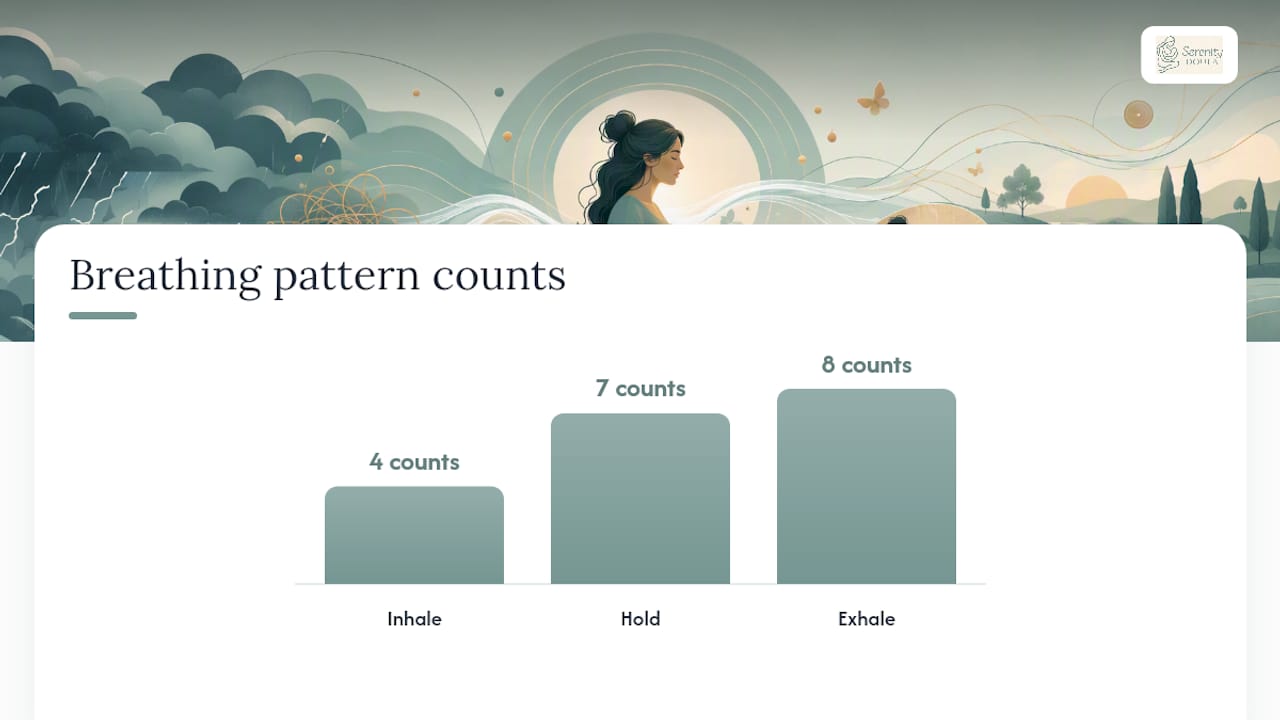
- The 4-7-8 breath. Inhale for four counts, hold for seven, exhale for eight. Repeat three times. This slows your heart rate faster than most people expect.
- Orient to the present. Say out loud, even quietly, “It’s [today’s date]. I am safe. This is not that.”
For daily regulation, shorter and more frequent tends to beat occasional and long. Five to ten minutes of gentle movement, a consistent wind-down before bed, and a brief mindfulness practice each day build resilience better than one long session on a bad week. Limiting exposure to known triggers, whether that’s certain media, conversations, or environments, matters too.
For professional support, two therapies show up consistently in research and clinical guidance for pregnancy: Cognitive Behavioral Therapy (CBT), which helps you identify and reframe trauma-linked thought patterns, and Eye Movement Desensitization and Reprocessing (EMDR), which helps the brain reprocess traumatic memories so they carry less charge. Ask your OB-GYN directly: “Can you coordinate with a perinatal mental health specialist while I’m pregnant?” Most practices can, even if they don’t offer it as a first mention.
For your birth plan, put a few concrete requests in writing: a pause signal you can use mid-exam, a request that every provider narrate what they’re about to do before doing it, and a clear list of who you want present in the room. Reviewing techniques like the ones in mindful birthing practices ahead of time gives your body something familiar to lean on when things feel unpredictable.
For partners and support people, specificity helps more than general reassurance. A simple, agreed phrase like “I’m going to hold your hand and you tell me if you need space” gives your partner an actual job instead of helpless worry. Partners carry their own version of this weight too, and understanding how partners experience birth can make that support steadier for both of you.
Pro Tip: Practice your pause signal now, at home, before labor. A hand raised or a single word agreed on in advance works under stress in a way that a brand-new idea never will.
Getting Trauma-Informed Care From Your Provider
You have a right to ask for care that accounts for your history, and most providers welcome the clarity when you name it directly.
Trauma-informed care, per ACOG’s own guidance, generally includes a few concrete behaviors: asking permission before any touch, narrating each step of an exam before doing it, offering options around clothing or positioning, and honoring a pause signal without pushback. That’s the checklist worth holding your provider to.
Scripts that work in the room:
- “Before you touch me, can you tell me what you’re about to do?”
- “I have a trauma history. Can we use a pause word if I need a break?”
- “Can I have a moment before we continue?”
Steps to take before your next appointment:
- Write your trauma disclosure in one or two sentences, no more detail than you’re comfortable sharing.
- Ask your practice directly whether they follow trauma-informed protocols, referencing ACOG’s guidance if it helps the conversation.
- Name an advocate, whether that’s a partner or a trained doula, who can speak up if you go nonverbal in a stressful moment.
- Put your preferences in writing in your chart, not just in conversation.
A doula’s role here is specific and practical: she can hold the pause signal steady when you can’t, remind the room of your written preferences mid-appointment, and simply stay present so you’re never navigating a triggering moment alone.
When to Seek Professional Help Right Away
Some signs mean it’s time to reach out today, not next week.
- Thoughts of harming yourself or your baby
- Dissociation severe enough that you lose time or can’t function
- Using alcohol or drugs to cope with distress
- Panic that doesn’t ease with grounding techniques
- Ongoing fear tied to a partner or household member’s behavior
March of Dimes notes that PTSD symptoms can begin or worsen during pregnancy, and some studies link untreated PTSD to higher risk for preterm birth and low birthweight. CBT and EMDR both have support in pregnancy-specific care; medication is a conversation to have directly with your provider, weighing your specific history. If you’re in crisis, call or text 988 for the Suicide and Crisis Lifeline, available 24/7. If you’re experiencing ongoing harm from a partner, the National Domestic Violence Hotline at 1-800-799-7233 can help you build a safety plan.
A Doula’s View From the Birth Room
I’ve sat with clients whose whole body tensed the second a blood pressure cuff came out, and I’ve watched a single sentence change everything: “You can tell her to stop, and she will.” That’s not a script. It’s a fact I make sure is true before we even walk into the room.
Small interventions do the heavy lifting. Asking a provider to explain a step before doing it. Offering a hand to hold instead of narrating reassurance. Reminding a client, quietly, that the pause word is still hers to use.
Doulas often serve as the continuity figure across appointments and labor, holding the agreed signals steady and coordinating with therapists and providers so a triggering moment doesn’t spiral into a retraumatizing one.
That coordination is the real work: connecting your OB-GYN, your therapist if you have one, and your birth plan into something consistent, so you’re never explaining your history from scratch under stress.
— Alexis Wallace
Ready for Support That Understands Your History?
You don’t have to carry this alone, and you don’t have to explain your trauma history over and over to feel safe in your own care. Serenity Doula works with families across Bucks, Montgomery, Philadelphia, and Burlington Counties, including clients at Doylestown and Newtown practices and those delivering at Trinity Health St. Mary, to build birth plans that hold your history with care from the very first conversation.
Whether you need continuous birth doula support, trauma-aware childbirth education, or a deeper look at important considerations when choosing a doula, a free consultation is the easiest way to find out what fits. There’s no pressure and no script you have to follow. Just a conversation about what would help you feel steadier for the months ahead.
Where to Learn More
For deeper reading: ACOG’s committee opinion on trauma-informed care, the BMC Pregnancy and Childbirth study on ACEs and perinatal trauma, and March of Dimes on PTSD and pregnancy. For local, hands-on support, explore Serenity Doula’s prenatal emotional support services or processing birth trauma as a healing guide.
The Real Gap in How This Topic Gets Discussed
Most advice on trauma and pregnancy stops at “talk to your therapist,” which is true but incomplete. It skips the room where the triggering moment actually happens: the exam table, the ultrasound, the labor bed. That’s where trauma resurfaces in real time, and that’s where support needs to exist, not just in a weekly session two days later.
What the research actually supports is layered care: therapy for processing, yes, but also a trained person physically present who can hold a pause signal steady when your voice won’t work. Conventional guidance underrates this second piece badly. A doula isn’t a substitute for CBT or EMDR. She’s the bridge between what you decide in a calm therapy session and what actually happens under fluorescent lights with a stranger’s hands near your body.
If you take one thing from this: build your support team before the triggering moment, not during it.
— Alexis Wallace
This article is general information, not a substitute for advice from a qualified doctor. Consult a qualified healthcare professional about your own circumstances before acting on anything here.
Sources
- Echoes of a dark past — longitudinal study (PMC10226204)
- Caring for Patients Who Have Experienced Trauma | ACOG committee opinion
- Post-Traumatic Stress Disorder and Pregnancy | March of Dimes
FAQ
Does pregnancy affect your emotions?
Yes. Hormonal shifts and heightened nervous system sensitivity during pregnancy can intensify emotional responses, including reactivating past trauma that felt resolved before conception.
When do most people start feeling emotionally steadier in pregnancy?
It varies widely by individual and trauma history, but many people notice more stability once they’ve established trauma-informed care routines, grounding practices, and consistent support, often improving gradually across trimesters rather than at one fixed point.
Can you remember trauma from when you were a baby?
Explicit memory typically doesn’t form until around age two or three, but the body can still hold physiological responses to very early experiences, which is part of why some triggers feel unexplainable.
Does trauma affect a baby in the womb?
Some research links untreated maternal PTSD to higher risk for outcomes like preterm birth, according to March of Dimes, which is exactly why addressing trauma symptoms during pregnancy matters for both parent and baby.
What is trauma-informed care in pregnancy?
It means providers ask permission before touch, explain each step of an exam, and honor a patient’s pause signal, following ACOG’s guidance on reducing retraumatization in obstetric care.