

TL;DR:
- Birth trauma includes emotional and psychological distress regardless of physical injury or medical outcome.
- Healing involves trauma-informed therapy, self-compassion, peer support, and holistic approaches.
- Recovery timelines vary, but early intervention and supportive relationships significantly improve outcomes.
Birth trauma is far more common than most people realize. If your birth experience left you shaken, fearful, or struggling to feel like yourself again, you are not alone and you are not overreacting. Many families carry the weight of a difficult birth long after they leave the hospital, often without knowing that real, effective support exists. This guide walks you through what birth trauma actually is, how it shows up in your body and mind, and the holistic recovery paths that can help you feel grounded, safe, and whole again. Whether you are a birthing parent, a partner, or both, healing is possible.
Table of Contents
- What is birth trauma? Definitions and impacts
- Core paths to recovery: Trauma-informed and holistic approaches
- What to expect: Benchmarks, timelines, and the role of self-compassion
- Contrasting perspectives: Medical, holistic, and feminist frameworks
- Practical support strategies for your healing journey
- The Serenity Doula perspective: What most guides miss about healing from birth trauma
- Support your recovery with expert guidance
- Frequently asked questions
Key Takeaways
| Point | Details |
|---|---|
| Birth trauma is common | Many experience emotional trauma regardless of physical injury, and recognition is the first step to healing. |
| Holistic recovery works | Combining professional therapies and supportive practices speeds healing and strengthens family bonds. |
| Benchmarks guide progress | Recovery signs include fewer flashbacks, better bonding, and improved well-being over time. |
| Support matters | Personalized care, self-compassion, and peer support are essential to lasting birth trauma recovery. |
What is birth trauma? Definitions and impacts
Birth trauma is not just about physical injury. It can be any experience during labor, delivery, or the immediate postpartum period that feels overwhelming, frightening, or out of your control. That matters because many people dismiss their own pain by thinking, “But everything turned out fine medically.” Emotional and psychological trauma is just as real.
1 in 3 birthing people perceive their birth as traumatic, with 4 to 6% going on to develop PTSD. That is a significant number of families quietly struggling while the world around them celebrates a new baby.
Common symptoms of birth trauma include:
- Flashbacks or intrusive memories of the birth
- Anxiety, hypervigilance, or panic attacks
- Difficulty bonding with your baby
- Avoidance of anything that reminds you of the birth
- Sleep disturbances and emotional numbness
- Feelings of shame, failure, or loss of control
What often surprises people is that trauma without physical injury is entirely valid. A birth can be medically “successful” and still leave deep emotional wounds. This includes situations where you felt unheard, unsupported, or terrified, even if no physical harm occurred.
Partners and non-birthing parents are also vulnerable. Witnessing a traumatic birth, feeling helpless, or fearing for a loved one’s life can cause real trauma responses. Learning how birth trauma affects partners is an important step in supporting your whole family.
“Trauma is not what happens to you. It is what happens inside you as a result of what happens to you.” This distinction is key to understanding why so many births that look fine on paper still leave lasting marks.
Birth trauma is often overlooked because the focus quickly shifts to the baby’s health. Parents are expected to feel joyful, and expressing distress can feel taboo. Early recognition changes everything. The sooner trauma is identified, the sooner healing can begin.
Core paths to recovery: Trauma-informed and holistic approaches
The good news is that recovery is not only possible, it is well-supported by both clinical research and holistic practice. Core methodologies include trauma-informed therapy, EMDR (Eye Movement Desensitization and Reprocessing), somatic experiencing, journaling, grounding techniques, and peer support groups. Each offers something different, and many people find that combining approaches works best.
Here is a quick comparison to help you understand your options:
| Approach | Best for | Format |
|---|---|---|
| EMDR therapy | Processing specific traumatic memories | One-on-one with a therapist |
| Trauma-focused CBT | Changing thought patterns around trauma | Individual or group therapy |
| Somatic experiencing | Releasing trauma stored in the body | One-on-one with a practitioner |
| Journaling and grounding | Daily emotional regulation | Self-led, at home |
| Peer support groups | Connection, validation, shared healing | Group setting, in-person or online |
EMDR therapy significantly reduces PTSD and depressive symptoms after traumatic birth, sometimes in just a few sessions. It works by helping your brain reprocess distressing memories so they lose their emotional charge.
Here are practical steps to begin your recovery:
- Acknowledge what happened. Name your experience as traumatic without minimizing it.
- Talk to your care provider about your symptoms and ask for a referral to a perinatal mental health specialist.
- Explore the benefits of childbirth education to rebuild confidence and knowledge for future births or ongoing care.
- Connect with postpartum support options that include emotional as well as physical recovery.
- Look into peer support groups where shared stories can reduce isolation and shame.
Pro Tip: Do not wait until symptoms feel unbearable. Early intervention, even just one or two sessions with a trauma-informed therapist, can dramatically speed up your healing and prevent symptoms from becoming chronic.
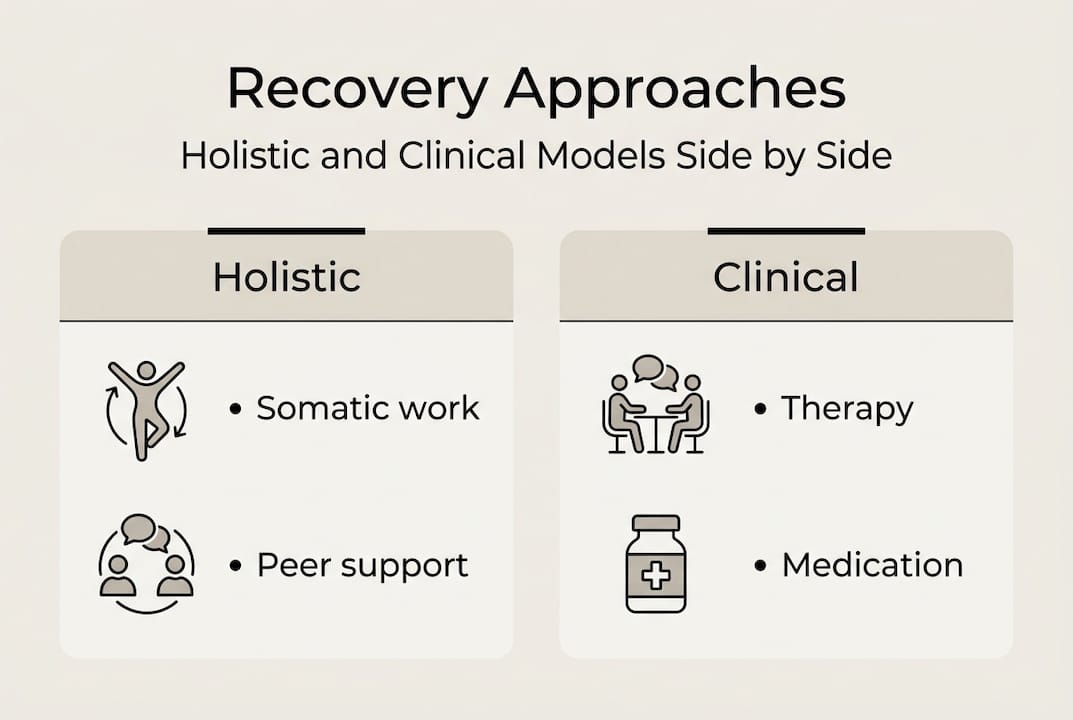
Clinical and holistic models are not opposites. They work beautifully together. Therapy addresses the mental patterns while somatic and community-based approaches help your body and spirit catch up.
What to expect: Benchmarks, timelines, and the role of self-compassion
One of the most common questions we hear is, “How long will this take?” The honest answer is that recovery is deeply personal. There is no universal timeline, and comparing your journey to someone else’s will only add pressure you do not need.
That said, there are meaningful markers that show healing is happening:
- Fewer intrusive memories or flashbacks
- A growing sense of safety in your body
- Improved connection with your baby
- Better sleep and daily functioning
- Feeling less triggered by reminders of the birth
Reduced PTSD scores and improved mother-infant bonding are two of the clearest clinical indicators that recovery is progressing. These are not abstract goals. They show up in real, everyday moments like enjoying a feeding, sleeping a little longer, or feeling present with your family.
Early intervention matters enormously. Benchmarks like reduced flashbacks and improved quality of life can appear quickly when support starts early. Some people experience meaningful relief after just two EMDR sessions.
Healing is not linear. Some days will feel like a step backward. That does not mean you are failing. It means you are human.
Self-compassion is not a soft add-on to recovery. It is a core ingredient. Research consistently shows that people who practice self-kindness and lean on social support recover more fully and with fewer long-term complications. Be as gentle with yourself as you would be with a dear friend going through the same thing.

You can also track your progress by measuring recovery progress using evidence-based frameworks that give you a clearer picture of where you are and where you are headed.
Contrasting perspectives: Medical, holistic, and feminist frameworks
Not everyone approaches birth trauma the same way, and understanding different frameworks can help you find the support that truly fits your needs.
The medical perspective focuses on measurable outcomes. It looks for PTSD diagnoses, physical injury, and risk factors like emergency interventions or prior mental health history. This approach is valuable for identifying who needs clinical treatment and for accessing insurance-covered care.
The holistic and somatic perspective goes deeper into the subjective experience. It recognizes that medical perspectives emphasize physical injury and PTSD risk, while holistic views focus on body-stored trauma and the restoration of agency. This framework asks not just “What happened?” but “How did it feel, and where does your body still carry it?”
The feminist framework centers the loss of voice and agency during birth. It highlights structural barriers, such as not being listened to, having choices made without consent, or feeling invisible in a medicalized system. This perspective is especially important for birthing people who felt dismissed or disempowered during their care.
Here is how each framework can help or hinder recovery:
- Medical: Helpful for accessing therapy and medication. Can feel reductive if your trauma is emotional rather than physical.
- Holistic: Honors the full experience. May lack insurance coverage or clinical structure.
- Feminist: Validates feelings of injustice and loss of control. Empowers advocacy but may not address immediate symptom relief.
The most effective recovery often draws from all three. Knowing your options means you can advocate for yourself and choose holistic support options that align with your values and needs.
Practical support strategies for your healing journey
Knowing what is available is one thing. Taking that first step is another. Here is a clear, compassionate roadmap to help you move forward.
- Build your support circle. Identify one or two people you trust to hold space for your experience without judgment.
- Find a trauma-informed professional. Look for therapists with perinatal mental health training or certification in EMDR or somatic experiencing.
- Start a journal. Writing about your birth experience, even in fragments, helps your brain process and organize what happened.
- Practice grounding daily. Simple techniques like slow breathing, cold water on your wrists, or naming five things you can see can calm your nervous system in the moment.
- Review your birth story with a trusted person. A midwife, doula, or counselor can help you fill in gaps, correct distorted memories, and make sense of what happened.
- Seek specialized therapy when ready. EMDR, somatic experiencing, and trauma-focused CBT are all evidence-based options worth exploring.
Integrating peer support and self-compassion alongside medical review and holistic therapies creates the most complete foundation for recovery.
Pro Tip: When looking for a therapist, ask directly whether they have experience with perinatal trauma. Not all mental health professionals are trained in this area, and finding the right fit matters.
You can also explore community support resources and learn how to prepare for birth and postpartum in ways that reduce the risk of trauma in future experiences.
Self-advocacy is a skill. You are allowed to ask questions, request second opinions, and say what you need. Your voice matters in every room you walk into.
The Serenity Doula perspective: What most guides miss about healing from birth trauma
Most articles about birth trauma recovery give you a list of therapies and send you on your way. What they miss is the human part. Healing does not happen on a checklist. It happens in relationship, in small moments of being truly seen and heard.
We have sat with many families who came to us after difficult births. What we have noticed is that the people who heal most fully are not the ones who found the “right” therapy first. They are the ones who found someone who genuinely believed them.
Medical and holistic frameworks must meet for real healing to happen. One without the other leaves gaps. And here is something most guides skip entirely: partners need support too. Birth trauma is a family experience, not just a birthing parent’s burden.
Healing is not linear. There will be hard days after good ones. That is not failure. That is the process. Small victories matter enormously, and celebrating them is not naive. It is necessary.
If you are looking for comprehensive doula support that honors the full picture of your experience, including the parts that are hard to say out loud, we are here for that.
Support your recovery with expert guidance
You have taken a meaningful step just by reading this far. Recovery from birth trauma is real, and you deserve support that is as unique as your experience.
At Serenity Doula, we offer personalized pregnancy support and holistic care designed to meet you exactly where you are. Whether you are processing a past birth or preparing for a future one, our team is here to walk alongside you. Explore the childbirth education benefits that help families feel informed and empowered, and explore doula services that go beyond the birth room to support your whole healing journey.
Frequently asked questions
How long does birth trauma recovery usually take?
Recovery timelines vary widely depending on the person and the support they receive. Early intervention shows rapid gains, with some people experiencing meaningful relief after as few as two EMDR sessions.
Can partners experience birth trauma and benefit from recovery support?
Absolutely. Trauma in non-birthing parents is well-documented, and trauma-informed therapy and peer support are effective for partners as well as birthing parents.
What’s the most effective approach for emotional healing after birth trauma?
A combination works best. Trauma-informed therapy, somatic experiencing, and peer support together address the mental, physical, and social dimensions of healing.
How can someone tell if they need professional help?
If symptoms are interfering with bonding, daily functioning, or causing significant distress, it is time to seek support. Intrusive memories and bonding issues are clear signs that professional trauma-informed care is warranted.
Is self-compassion really important for recovery?
Yes, genuinely. Self-compassion and peer support are key protective factors that help prevent birth trauma from becoming a chronic, long-term condition.