

Choosing the right childbirth support can feel overwhelming when you’re preparing for one of life’s most transformative experiences. You want someone who understands your unique needs, respects your birth preferences, and provides the emotional and physical reassurance you deserve. From doulas offering continuous labor support to childbirth education classes that build your confidence, multiple options exist to help you navigate pregnancy, labor, and postpartum recovery. This guide walks you through different types of childbirth support, helping you evaluate what fits your journey and empowers you to make informed decisions for your family’s well-being.
Table of Contents
- Key takeaways
- How to evaluate types of childbirth support
- Birth doulas: continuous emotional and physical labor support
- Childbirth education: empowering you for labor and beyond
- Specialized support: culturally sensitive and high-risk doulas
- Comparing childbirth support types: choosing what fits your journey
- Explore childbirth support services with Serenity Doula
- FAQ
Key Takeaways
| Point | Details |
|---|---|
| Continuous labor support | Having a birth doula who stays with you from early contractions through delivery can improve outcomes and satisfaction by providing steady emotional and physical reassurance. |
| Doulas address needs | Doulas support emotional, physical, and informational needs throughout your pregnancy, labor, and postpartum journey. |
| Education builds confidence | Childbirth education classes prepare you for what to expect and how to cope during labor and after birth. |
| Culturally sensitive care | Choosing culturally aware support helps reduce interventions and creates safer experiences for diverse families. |
How to evaluate types of childbirth support
Before selecting childbirth support, identify what matters most to you and your partner. Consider the type of support you need: emotional reassurance during contractions, physical comfort techniques like massage and positioning, or informational guidance about labor progression and medical decisions. Some parents prioritize all three, while others focus on specific areas based on their birth plan and anxiety levels.
Cultural sensitivity matters significantly when choosing support. If you belong to a community with specific traditions or face language barriers, seek providers experienced with your background. Research shows culturally aware doulas improve outcomes for vulnerable populations by creating trust and reducing communication gaps. Ask potential providers about their experience with families like yours and whether they’ve supported births similar to what you envision.
Evaluate the scope of services offered. Some doulas focus exclusively on labor support, arriving when contractions intensify and leaving shortly after birth. Others provide comprehensive care including prenatal visits, postpartum check-ins, and breastfeeding guidance. Childbirth education classes typically run for several weeks before your due date, preparing your mind and body through hands-on practice and detailed information about each labor stage.
Personal rapport cannot be overstated. You’ll be vulnerable during labor, so choose someone whose presence feels calming rather than stressful. Schedule consultations with multiple providers, ask about their birth philosophy, and notice how they communicate. Do they listen actively to your concerns? Do their values align with yours regarding medical interventions, pain management, and postpartum care?
Pro Tip: Create a checklist of your top five priorities for childbirth support, then use it to compare providers during consultations. This keeps you focused on what truly matters rather than getting swayed by personality alone.
Birth doulas: continuous emotional and physical labor support
Birth doulas provide continuous emotional, physical, and informational support throughout labor, staying by your side from early contractions through delivery. Unlike medical staff who rotate shifts or manage multiple patients, your doula remains present, offering uninterrupted care tailored to your evolving needs. This consistency creates a sense of security during an unpredictable experience.
Physical comfort techniques form a core part of doula support. During contractions, your doula applies counter-pressure to your lower back, suggests position changes to help baby descend, and guides breathing patterns that reduce pain perception. She might use massage, aromatherapy, or hydrotherapy depending on what soothes you. These non-medical interventions often decrease the need for epidurals or other pain medications, though doulas fully support whatever pain management choices you make.
Emotional reassurance becomes crucial when labor intensifies or complications arise. Your doula reminds you of your strength during transition, validates your feelings when exhaustion sets in, and helps you stay grounded when fear surfaces. She supports your partner too, suggesting ways they can help and giving them breaks when needed. This emotional scaffolding reduces anxiety and helps you remain present during each stage.
Informational guidance empowers you to make decisions aligned with your birth plan. When medical staff present options or interventions, your doula helps you understand the implications, asks clarifying questions, and ensures you have time to consider choices. She doesn’t make decisions for you or override medical advice, but she ensures your voice stays central to the conversation.
Research demonstrates measurable benefits. Families with doula support experience higher VBAC success rates and increased exclusive breastfeeding at six weeks postpartum. These outcomes stem from the confidence and knowledge doulas help you build, starting in pregnancy and extending through your postpartum recovery.
Pro Tip: During prenatal visits, practice comfort measures with your doula so techniques feel familiar during labor. This rehearsal reduces the learning curve when contractions demand your full attention.
Childbirth education: empowering you for labor and beyond
Childbirth education classes prepare your mind and body by building knowledge about what to expect and teaching practical coping skills. Unlike doulas who provide one-on-one support during labor, education focuses on group learning over several weeks before your due date. You’ll cover labor stages in detail, understanding how your body changes from early contractions through delivery and immediate postpartum.
Pain management strategies receive significant attention in quality classes. You’ll practice breathing techniques that redirect focus during contractions, learn optimal positions for each labor stage, and explore non-medical comfort measures like hydrotherapy and massage. Many classes also discuss medical pain relief options including epidurals, helping you understand benefits and potential side effects so you can make informed choices when labor begins.
Mental preparation reduces anxiety and builds confidence. Classes address common fears about labor pain, medical interventions, and complications. You’ll learn warning signs that require immediate attention versus normal labor variations, reducing unnecessary worry. Understanding the physiological process helps you trust your body’s capability rather than approaching birth with dread.
Postpartum recovery and newborn care often get overlooked until after birth, but quality childbirth education includes these crucial topics. You’ll learn about physical recovery expectations, emotional changes including baby blues versus postpartum depression, and basic newborn care like diapering, bathing, and recognizing hunger cues. This preparation eases the overwhelming transition home.
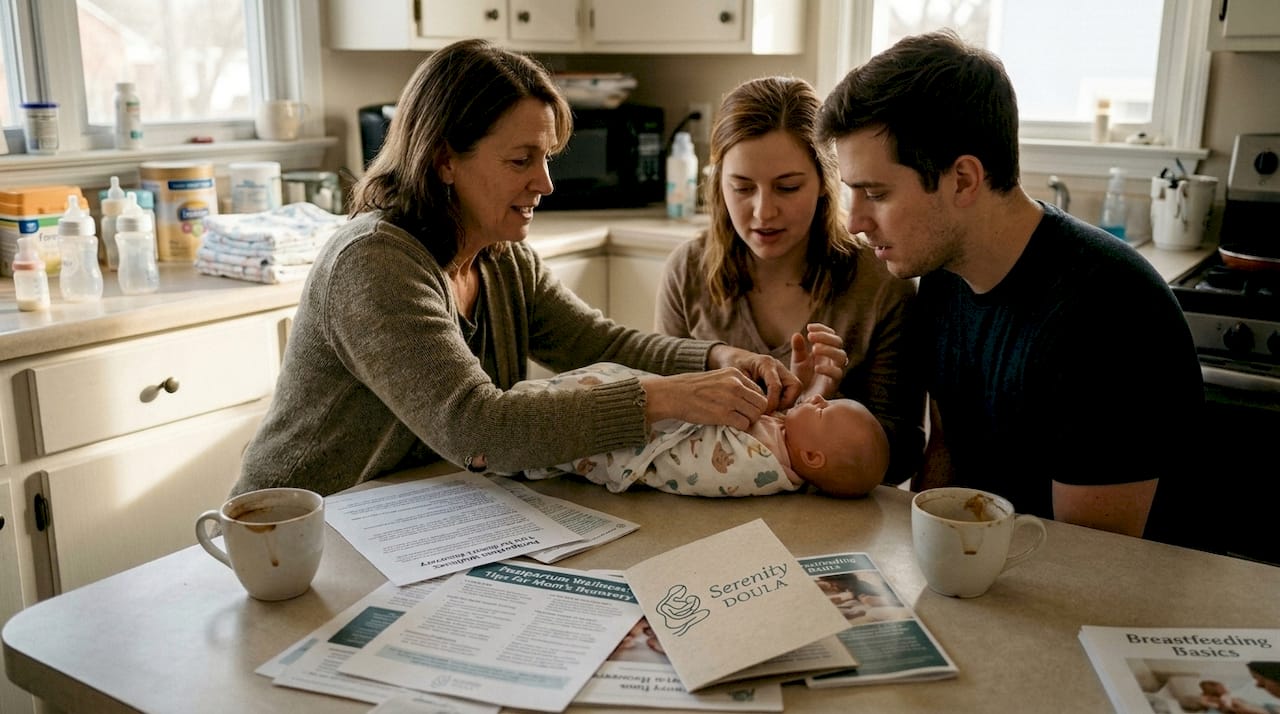
Group classes create community among expectant parents facing similar experiences. Sharing concerns and questions with others normalizes your feelings and builds a support network. Many friendships formed in childbirth classes extend into postpartum, providing ongoing peer support during early parenthood.
Follow this preparation sequence for maximum benefit:
- Start classes in your second trimester when energy returns but birth feels distant enough to absorb information without panic
- Practice techniques weekly at home with your partner so they become automatic responses during labor
- Review class materials during early labor to refresh your memory when adrenaline makes new learning difficult
- Apply learned skills during labor, adapting techniques based on what your body needs in the moment
Specialized support: culturally sensitive and high-risk doulas
Specialized doulas bring expertise that dramatically improves outcomes for specific populations. Multicultural doulas reduce cesarean rates by 41% in vulnerable groups by providing culturally aware care that builds trust and addresses unique barriers to optimal birth experiences. These doulas understand how cultural beliefs about birth, modesty, family involvement, and pain expression vary across communities, allowing them to advocate effectively while respecting traditions.
Language barriers disappear when your doula speaks your native tongue and understands cultural context beyond literal translation. She can explain medical terminology in ways that make sense within your cultural framework and help healthcare providers understand your preferences without misinterpretation. This clear communication reduces unnecessary interventions born from misunderstanding rather than medical necessity.
High-risk pregnancy doulas specialize in supporting families facing complications like gestational diabetes, preeclampsia, or previous traumatic births. They understand the emotional weight of increased monitoring, potential bed rest, and higher intervention likelihood. Doulas support higher VBAC rates and fewer preterm births through emotional support that reduces stress and physical techniques that optimize baby positioning.
VBAC-focused doulas help you navigate the complex emotions and decisions surrounding vaginal birth after cesarean. They understand the specific challenges, know which positions encourage optimal baby descent, and provide the continuous support that significantly increases VBAC success. Their experience with this journey helps you feel confident rather than fearful about attempting vaginal birth.
| Specialization | Key benefit | Ideal for |
|---|---|---|
| Multicultural doulas | 41% lower cesarean rates through culturally aware care | Immigrant families, non-English speakers, communities facing healthcare disparities |
| High-risk doulas | Emotional support reducing stress-related complications | Pregnancies with medical complications or previous trauma |
| VBAC doulas | Higher vaginal birth success after previous cesarean | Parents planning VBAC who need specialized positioning and advocacy |
| LGBTQ+ focused doulas | Affirming support respecting family structure | Same-sex couples, transgender parents, non-traditional families |
Pro Tip: When interviewing specialized doulas, ask specifically about their training and number of clients they’ve supported with your situation. Experience matters significantly for specialized care, so prioritize providers with substantial relevant background over general doula certification alone.
Comparing childbirth support types: choosing what fits your journey
Each support type offers distinct advantages depending on your priorities, learning style, and birth preferences. Understanding how they compare helps you invest time and resources where they’ll benefit you most.
| Feature | Birth doulas | Childbirth education | Specialized doulas |
|---|---|---|---|
| Timing | Continuous during labor | Weekly classes before due date | Continuous during labor plus targeted prenatal support |
| Focus | Hands-on comfort and advocacy | Knowledge and skill-building | Expertise for specific medical or cultural needs |
| Cost range | Moderate to high for private support | Low to moderate for group classes | Higher due to specialized training |
| Flexibility | Highly personalized to your needs | Structured curriculum with some customization | Personalized within specialty area |
| Partner involvement | Supports partner participation | Teaches partner support techniques | Guides partner in specialized scenarios |
Doulas excel when you want someone dedicated exclusively to your comfort and advocacy throughout labor. They adapt moment-to-moment based on what you need, whether that’s physical support, emotional reassurance, or help communicating with medical staff. The relationship built during prenatal visits creates trust that makes labor support more effective.
Childbirth education works best for parents who value structured learning and want comprehensive knowledge before labor begins. Classes reduce fear through understanding and teach skills you’ll use throughout labor. The group format costs less than private doula support while still providing valuable preparation. However, education alone doesn’t provide the continuous labor support that improves outcomes.
Specialized doulas justify higher costs when your situation requires specific expertise. If you face medical complications, cultural barriers, or previous trauma, a doula trained in your circumstances provides support that generic services cannot match. The improved outcomes, reduced interventions, and emotional security often outweigh the additional investment.
Many families combine services for comprehensive preparation. Taking childbirth education classes builds your knowledge foundation, while hiring a doula ensures you have expert support applying that knowledge during labor. Serenity Doula services integrate education with personalized doula care, offering continuity from pregnancy through postpartum.
Consider these decision factors: Budget constraints may lead you toward education classes first, adding doula support if finances allow. First-time parents typically benefit most from comprehensive education, while experienced parents might prioritize doula support having already learned labor basics. High-risk pregnancies warrant specialized doula investment regardless of budget, given the measurable outcome improvements.
Explore childbirth support services with Serenity Doula
Now that you understand different childbirth support types and how they prepare you for labor and postpartum, consider how professional guidance tailored to your unique journey can make all the difference. Serenity Doula offers comprehensive pregnancy and birth support combining emotional reassurance, physical comfort techniques, and evidence-based information throughout your experience. Our childbirth education programs empower Bucks and Montgomery County families with practical skills and confidence for labor, delivery, and early parenthood.
Whether you need continuous labor support, structured education, or specialized care for high-risk pregnancies, our experienced team provides personalized assistance that honors your preferences and prepares you thoroughly. Explore our services and discover how the right support transforms your birth experience from anxious to empowered. Visit Serenity Doula to learn more and schedule your consultation today.
FAQ
What are the different types of childbirth support available?
Expectant parents can choose from birth doulas who provide continuous emotional and physical labor support, childbirth education classes that teach coping skills and labor knowledge, and specialized doulas with expertise in cultural sensitivity or high-risk pregnancies. Each type offers unique benefits for preparing you mentally, physically, and emotionally for labor and postpartum recovery.
How does a doula support labor and postpartum?
Doulas provide continuous emotional, physical, and informational support during labor through techniques like massage, position changes, and breathing guidance that reduce pain and anxiety. They remain by your side throughout labor, offering reassurance and helping you communicate with medical staff. Many doulas extend support into postpartum, assisting with breastfeeding, recovery, and emotional adjustment to parenthood. Learn more about doula support roles and how they benefit your entire journey.
Why might specialized doulas be important for some families?
Specialized doulas improve outcomes for families facing medical complications, cultural barriers, or previous birth trauma by providing expertise that generic support cannot match. Multicultural doulas reduce cesarean rates by 41% in vulnerable groups through culturally aware care that builds trust and addresses unique needs. High-risk and VBAC-focused doulas offer tailored emotional and physical support that significantly increases positive outcomes while reducing unnecessary interventions.
Can I combine childbirth education with doula support?
Combining childbirth education with doula support offers comprehensive preparation that addresses both knowledge-building and hands-on labor assistance. Education classes teach you what to expect and how to cope, while your doula applies that knowledge during labor through continuous personalized support. This combination maximizes your confidence, comfort, and ability to advocate for your preferences throughout the birth process.
How do I choose between different childbirth support options?
Evaluate your priorities including budget, learning style, medical needs, and desired level of personalized attention. First-time parents often benefit from childbirth education to build foundational knowledge, while those with previous birth trauma or high-risk pregnancies should prioritize specialized doula support. Consider scheduling consultations with multiple providers to assess rapport and ensure their philosophy aligns with your birth preferences and values.