
TL;DR:
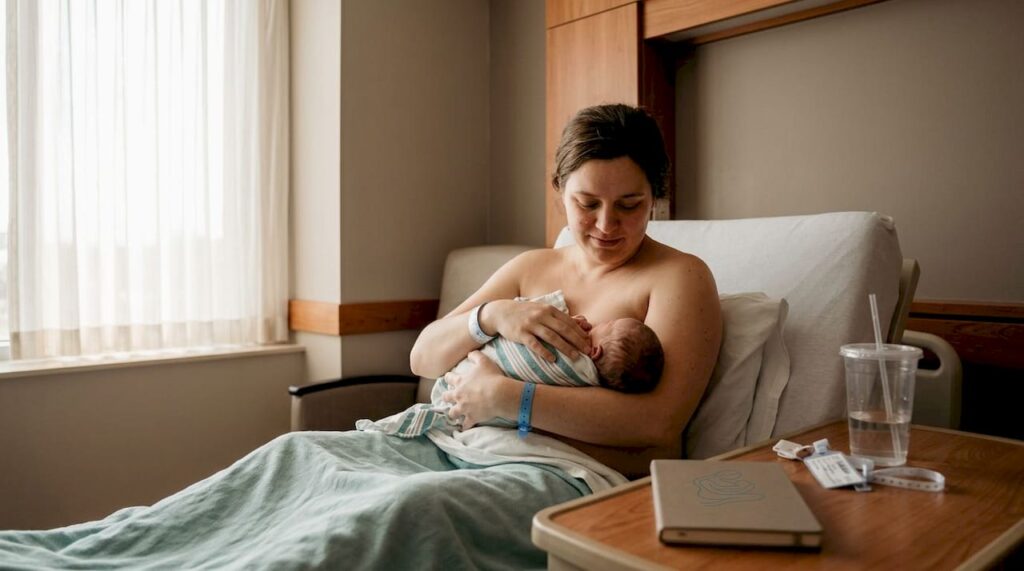
- Skin to skin contact immediately after birth involves placing your naked or diapered newborn on your bare chest to promote physiological stability and bonding. It benefits all newborns by regulating temperature, heart rate, and blood sugar, regardless of delivery method or feeding plans, with the first 60 to 90 minutes being crucial. Even if delayed, skin to skin continues to support emotional connection and developmental benefits, making it a vital practice for parents and partners alike.
You’ve probably heard the term “skin to skin after birth” mentioned at a prenatal appointment or in a birth class. Maybe you assumed it was mainly for breastfeeding. Here’s what most people don’t realize: skin to skin contact is one of the most powerful physiological tools available to your newborn in those first hours of life, and it matters whether you plan to breastfeed or not, whether you birth vaginally or by cesarean, and whether you’re the birthing parent or a partner. Immediate skin-to-skin contact is now considered the global standard of care for healthy newborns. That’s not a small statement.
Table of Contents
- Key Takeaways
- What is skin to skin after birth
- The science of skin to skin contact
- How to do skin to skin postpartum
- Benefits of skin to skin for baby and parent
- When skin to skin isn’t possible right away
- My honest take on why this moment matters so much
- How a doula can support your skin to skin experience
- FAQ
Key Takeaways
| Point | Details |
|---|---|
| What it actually is | Placing your naked or diapered newborn directly on your bare chest immediately after birth. |
| It’s not just for breastfeeding | Skin to skin stabilizes heart rate, breathing, temperature, and blood sugar for every newborn. |
| Timing matters | Aim for at least 60 to 90 minutes of uninterrupted contact starting right after delivery. |
| All birth types qualify | Cesarean births, NICU stays, and partner-led skin to skin all count and all help. |
| Delayed contact is okay | Missing the first hour does not damage bonding. Connection is a flexible, ongoing process. |
What is skin to skin after birth
Skin to skin contact after birth means placing your newborn, either naked or wearing just a diaper, directly on your bare chest. A warm blanket drapes over both of you. That’s it. Simple, yet the effects on your baby’s body are immediate and measurable.
Your baby spent nine months in a warm, regulated environment. The moment they arrive, everything changes. Separation from the mother is highly stressful for newborns, and your body is literally the solution. Your chest acts as a natural incubator, regulating your baby’s temperature through a process called thermal synchrony. Your heartbeat, your smell, the rise and fall of your breath: all of it signals safety to your newborn’s nervous system.
This is not a trend or a hospital preference. Skin to skin contact regulates your baby’s heart rate, breathing, blood sugar, and temperature while also triggering the release of oxytocin, the bonding hormone that supports both emotional connection and milk let-down. The science behind skin to skin contact importance has been building for decades, and the consensus is clear.
The science of skin to skin contact
Let’s look at what’s actually happening in your baby’s body during those first minutes on your chest.
| Physiological benefit | What it means for your baby |
|---|---|
| Temperature regulation | Your chest warms or cools to match your baby’s needs |
| Heart rate stabilization | Irregular rhythms calm and normalize against your heartbeat |
| Blood sugar balance | Reduces risk of hypoglycemia in the first hours |
| Breathing regulation | Baby mirrors your respiratory rhythm |
| Oxytocin release | Supports bonding, reduces stress, and promotes milk let-down |
For preterm and low-birth-weight babies, the stakes are even higher. A practice called Kangaroo Mother Care, which is essentially continuous skin to skin in a medical setting, reduces neonatal mortality by 36%, cuts infections by 40%, and lowers hypothermia risk by 65% compared to incubator care. In NICUs, Kangaroo Mother Care is often practiced for 8 to 24 hours per day because the outcomes are that significant.
Skin to skin is not just medical care. It’s a biological necessity rooted in mammalian behavior. Withholding it in research trials is now considered unethical because the evidence of benefit is so overwhelming.
Pro Tip: If you’re expecting a cesarean birth, ask your care team ahead of time about skin to skin in the OR. Many hospitals now accommodate this with a small adjustment to the surgical drape.
How to do skin to skin postpartum
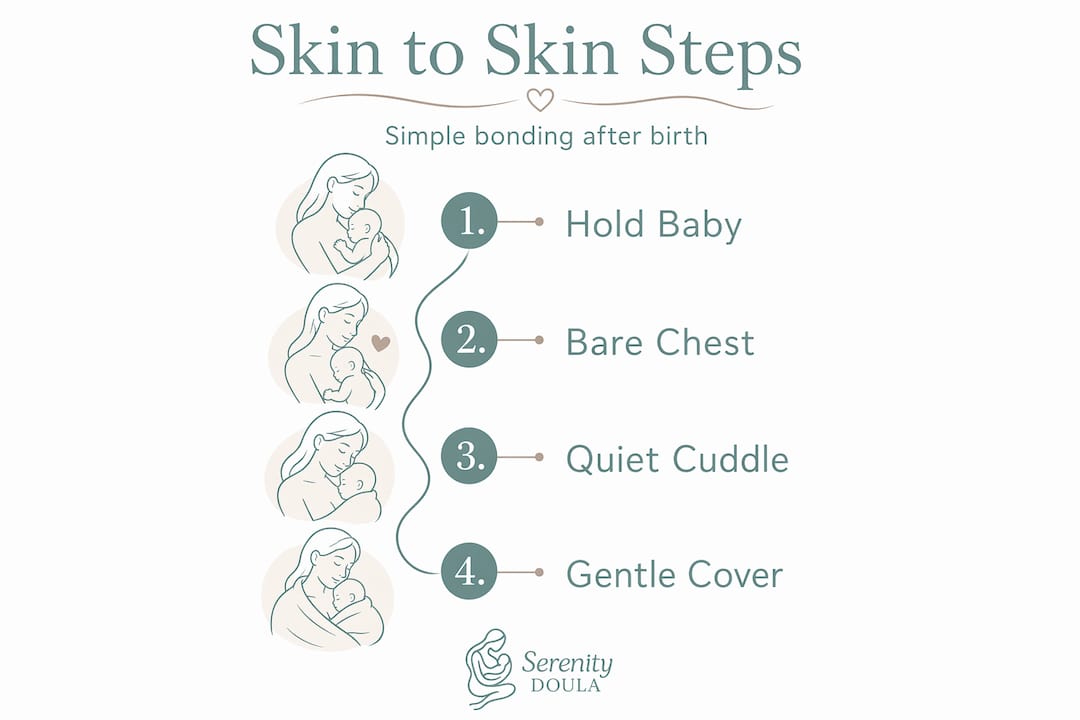
Getting started with skin to skin after delivery is more straightforward than most parents expect. Here’s a practical step-by-step approach:
- Right after birth, ask your care team to place your baby on your chest before any non-urgent procedures like weighing or measuring. Routine checks can wait.
- Position your baby chest-down on your bare skin, with their head turned to one side so their airway is clear. Their ear should rest over your heart.
- Cover you both with a warm blanket, leaving baby’s face visible at all times. Watch for any signs of breathing difficulty.
- Stay in this position for at least 60 to 90 minutes. Uninterrupted contact during this window maximizes breastfeeding readiness and physiological stability.
- For cesarean births, skin to skin can begin in the OR or recovery room depending on your facility. Partners can step in immediately if the birthing parent is not available.
- In the NICU, nurses will guide you through safe positioning for medically fragile infants. Even short sessions make a real difference.
- At home, continue skin to skin daily. There is no expiration date on this practice, and it continues supporting development and attachment for months.
Pro Tip: If you’re a partner reading this, skin to skin bonding with you is just as valid and just as beneficial for baby. Partners supporting childbirth can play a meaningful role in skin to skin from the very first hour.
Benefits of skin to skin for baby and parent
The benefits of skin to skin extend far beyond the delivery room.
For your baby:
- Improved breastfeeding success and longer duration
- Less crying and greater ability to self-soothe
- Better sleep patterns in the early weeks
- Stronger immune response through exposure to your skin’s beneficial bacteria
- More stable blood sugar and temperature in those critical first hours
For you as a parent:
- Reduced postpartum anxiety and depression risk
- Stronger sense of connection and confidence in your parenting
- Faster milk production and let-down for breastfeeding parents
- Feeling calmer, more grounded, and more present in the early postpartum period
“Skin-to-skin contact is one of the simplest and most effective ways to support a newborn’s transition to life outside the womb.” — World Health Organization
The post-birth skin to skin window is sometimes called the “golden hour,” and for good reason. Your baby is in a quiet, alert state and primed to bond. But here’s what nobody tells you: this golden hour is also a gift to you. Many parents describe the first time they held their baby skin to skin as the moment everything clicked. That connection you’ve been building for nine months suddenly becomes tangible.
If you want to deepen your understanding of how skin to skin fits into evidence-based birth practices, that broader framework can help you feel more prepared and confident going into your birth.

When skin to skin isn’t possible right away
Sometimes birth doesn’t go as planned, and immediate skin to skin isn’t possible. Maybe your baby needs medical attention. Maybe you had a complicated delivery. This does not mean you missed your window.
Bonding is a flexible, ongoing process, not a single moment that can be lost. Parents who couldn’t do immediate skin to skin go on to form deeply attached, secure relationships with their babies every single day.
| Scenario | Best practice | What to expect |
|---|---|---|
| Immediate skin to skin | Start within minutes of birth, continue 60 to 90 minutes | Maximum physiological and breastfeeding benefits |
| Delayed (medical reasons) | Begin as soon as safely possible, no pressure on timing | Benefits still significant even when delayed by hours |
| Surrogate skin to skin | Partner or trusted caregiver holds baby skin to skin | Non-parental skin to skin supports regulation just as well |
| NICU setting | Guided by nurses, may be brief at first | Even short daily sessions support development and attachment |
In cases where neither parent can be present, gentle techniques like “hand hugs,” where a caregiver places warm, still hands around the baby, provide comfort and regulation in the absence of full skin to skin contact.
Pro Tip: When you get home, skin to skin in a baby carrier counts. Wearing your baby against your bare chest during naps or feeding times continues the benefits and soothes newborns in those early weeks.
My honest take on why this moment matters so much
I’ve been in a lot of birth rooms. And I can tell you that the moment a baby is placed skin to skin on a parent’s chest is one of the quietest, most powerful moments in the human experience. The baby’s breathing settles. The parent’s eyes soften. Something shifts.
What I’ve learned from supporting families is that parents often feel pressure to do skin to skin perfectly, especially if they’ve read a lot about the golden hour. I want you to let that go. Yes, aim for it. Yes, tell your care team it matters to you. But if your birth takes a different turn, you are not behind. You are not failing.
What I’ve seen again and again is that connection doesn’t live in a single hour. It lives in every feeding, every skin to skin nap at home, every time you wear your baby against your chest in the weeks that follow. The newborn care guide for dads says it well: building confidence with your baby happens in the small moments, repeated over time.
Give yourself permission to receive this practice, not just perform it.
— Alexis Wallace
How a doula can support your skin to skin experience
Knowing about skin to skin is one thing. Having someone in the room who advocates for it, guides your positioning, and keeps the environment calm so that first hour feels sacred? That’s something else entirely.
At Myserenitydoula, our doulas work with you before your birth to make sure skin to skin is included in your birth preferences, and we stay by your side to help make it happen whether you birth vaginally, by cesarean, or with any complications along the way. We help partners step in confidently when needed and support you through those tender first hours postpartum. If you’re ready to feel informed and held throughout your birth experience, explore our birth support services or learn more through our childbirth education classes designed to prepare you for exactly these moments.
FAQ
What does skin to skin after birth actually mean?
Skin to skin after birth means placing your newborn, naked or in just a diaper, directly on your bare chest immediately after delivery. The goal is to stabilize your baby’s body and promote bonding through close physical contact.
How long should skin to skin last after delivery?
Aim for at least 60 to 90 minutes of uninterrupted contact right after birth. Research shows this window maximizes newborn physiological stability and breastfeeding readiness.
Can partners do skin to skin with a newborn?
Yes, absolutely. Skin to skin bonding with a partner is recognized as equally beneficial for baby’s regulation and attachment, especially when the birthing parent is temporarily unavailable.
What if I can’t do immediate skin to skin?
Delayed skin to skin does not damage bonding or outcomes. Bonding is a resilient, ongoing process, and you can begin skin to skin as soon as you and your baby are ready, even if that’s hours or days later.
Is skin to skin contact only for breastfeeding parents?
No. The benefits of skin to skin include temperature regulation, heart rate stabilization, and oxytocin release, all of which apply regardless of how you plan to feed your baby.