
TL;DR:
- Bone broth is a nutritious, traditional food that offers modest nutrients but is not a miracle cure.
- Scientific evidence supporting specific pregnancy benefits of bone broth is limited; it mainly provides comfort and hydration.
- Pregnant women should consider quality, sodium levels, and individual health before incorporating bone broth into their diet.
Many moms-to-be are handed a warm mug of bone broth and told it’s the ultimate prenatal superfood. And honestly? It sounds convincing. Rich, nourishing, rooted in tradition. But when you’re growing a baby and want to make every sip count, you deserve more than marketing buzzwords. Here we take a clear-eyed, evidence-based look at what bone broth actually offers during pregnancy, what the science does and doesn’t support, and how to make a confident, personalized choice. Whether you’re in Bucks County, Montgomery County, or anywhere in between, this guide is your calm, grounded starting point.
Table of Contents
- What is bone broth and why is it popular in pregnancy?
- Nutrients in bone broth: What does the science say?
- Bone broth facts vs. myths: What research really shows for pregnancy
- Potential risks and when to be cautious
- How to enjoy bone broth safely during pregnancy
- Our take: The truth most experts miss about bone broth in pregnancy
- Get holistic pregnancy support in Bucks & Montgomery counties
- Frequently asked questions
Key Takeaways
| Point | Details |
|---|---|
| Bone broth basics | Bone broth offers a blend of protein, minerals, and comfort but isn’t a miracle food for pregnancy. |
| Potential benefits | It may support hydration and provide some nutrients but does not replace balanced eating or supplements. |
| Risks to monitor | Watch for sodium, heavy metals, and allergies, especially in commercial or poor-quality products. |
| Safe use tips | Choose quality ingredients, keep portions moderate, and always discuss with your provider if unsure. |
| Personalize your approach | What matters most is how bone broth fits into your overall wellbeing, not just trends or traditions. |
What is bone broth and why is it popular in pregnancy?
Bone broth is exactly what it sounds like: a slow-simmered liquid made from animal bones, connective tissue, and often vegetables and herbs. The long cooking process (sometimes 12 to 24 hours) is meant to pull out collagen, minerals, and amino acids from the bones into the water. The result is a savory, golden liquid that feels deeply nourishing, even before you know the science behind it.
Its popularity in pregnancy circles isn’t new. Traditional cultures around the world have used bone-based soups and broths to support mothers during and after childbirth for centuries. Today, midwives, holistic nutritionists, and birth workers often recommend it as part of a whole-foods prenatal approach. It’s promoted for traditional benefits by birth centers and nutritionists across many communities.
So why does it resonate so much with expectant moms? Here are a few reasons it’s earned a loyal following:
- It’s warming and easy to sip, especially when food aversions make eating a full meal feel impossible
- It feels nourishing, which matters when your body is working overtime
- It connects to tradition, offering a sense of comfort rooted in generations of maternal care
- It’s flexible, fitting into both savory meals and simple between-meal sips
- It aligns with holistic values, which many families in our area are drawn to
“Food during pregnancy isn’t just about nutrients. It’s also about comfort, ritual, and feeling cared for. Bone broth often checks all of those boxes.”
For families already exploring holistic prenatal support, bone broth fits naturally into a broader wellness mindset. That said, popularity isn’t the same as clinical proof. Let’s look at what’s actually inside the cup.
Nutrients in bone broth: What does the science say?
Here’s where things get interesting. Bone broth does contain real nutrients. The question is how much, and whether those amounts are meaningful during pregnancy.
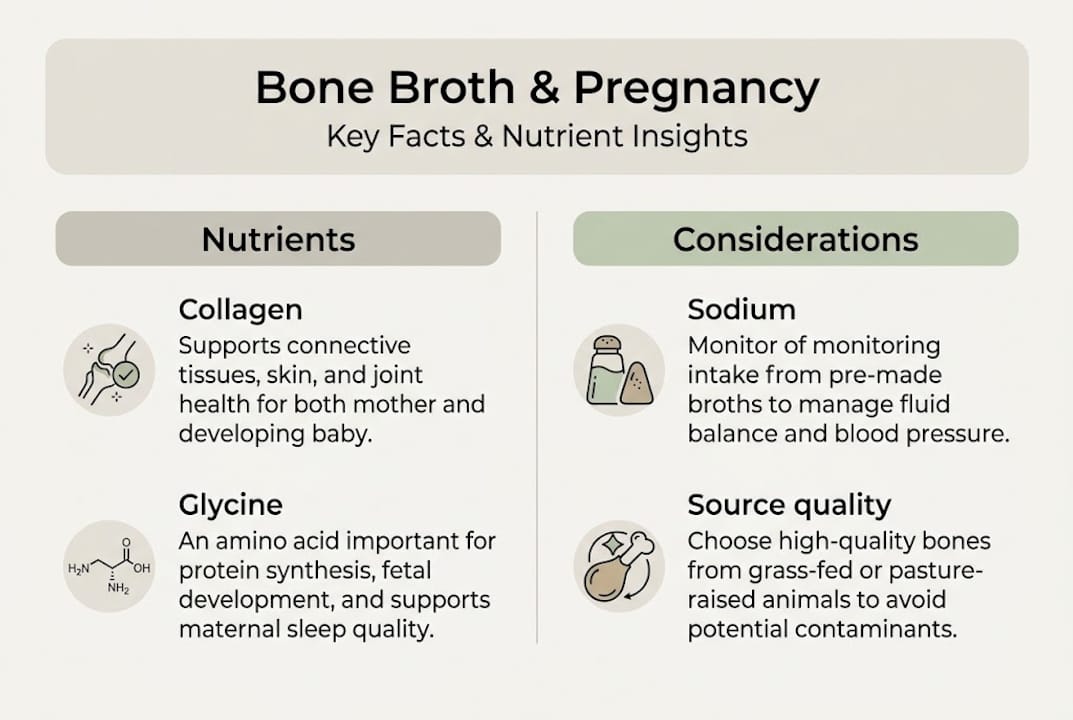
Nutritional benefits of bone broth include collagen and gelatin for joint and skin health, amino acids like glycine, proline, and glutamine, along with minerals and roughly 8 to 10 grams of protein per cup. That’s a solid snapshot. But the amounts vary widely depending on the bones used, cooking time, and whether acid (like apple cider vinegar) was added to help pull out minerals.
Here’s a simple comparison to put it in context:
| Nutrient | Bone broth (per cup) | Daily pregnancy need |
|---|---|---|
| Protein | 8 to 10g | 70 to 100g |
| Calcium | 30 to 50mg | 1,000mg |
| Magnesium | 5 to 15mg | 350 to 400mg |
| Phosphorus | Variable | 700mg |
| Collagen | Present | No set requirement |
As you can see, bone broth contributes real nutrients, but it’s a modest contributor, not a nutritional powerhouse on its own. You still need a varied, balanced diet to hit your pregnancy targets.
That said, a few benefits do stand out:
- Hydration support, especially when nausea makes plain water unappealing
- Glycine and glutamine may support gut lining health, though pregnancy-specific data is limited
- Comfort value, which genuinely matters for mental wellness during pregnancy
- Easy protein source for moms who struggle with meat textures in the first trimester
Pro Tip: If you’re unsure how bone broth fits into your overall pregnancy nutrition plan, a prenatal nutrition guide can help you see the bigger picture. A doula or childbirth educator can also help you connect food choices to your birth goals through childbirth nutrition education.
The bottom line here is that bone broth is a real, nourishing food with genuine nutrients. It just isn’t magic.
Bone broth facts vs. myths: What research really shows for pregnancy
This is the part that surprises most people. Despite all the enthusiasm around bone broth for pregnancy, there are actually no pregnancy-specific clinical trials proving its direct benefits. What we know comes from general nutritional research on its individual components, not studies on pregnant women drinking broth.
Benefits inferred from general studies show that Harvard notes modest protein and mineral content without the hype. The claims sometimes run far ahead of the evidence.
Let’s compare some common claims to what research actually shows:
| Traditional claim | What science says |
|---|---|
| Heals leaky gut in pregnancy | Amino acids support gut health generally; no pregnancy data |
| Boosts collagen for skin and joints | Collagen is present; absorption and impact vary widely |
| Reduces pregnancy inflammation | Glycine shows anti-inflammatory potential in lab studies only |
| Replaces protein needs | Contributes some protein; cannot meet daily pregnancy needs alone |
| Prevents postpartum hair loss | No evidence for this specific claim |
Before you add bone broth to your daily routine, here are some questions worth asking:
- Where is the evidence coming from? Is it a study, a testimonial, or a blog post?
- Who is making the claim? A registered dietitian, or a brand selling bone broth?
- Does it address pregnancy specifically, or general adult health?
- What are the potential downsides for your specific situation?
- Have you talked with your midwife, OB, or doula about it?
“Evidence-based care means asking good questions, not dismissing tradition. It means being curious and careful at the same time.”
At Serenity Doula, we believe in evidence-based birth practices that respect both research and the wisdom of tradition.
Potential risks and when to be cautious
We want you to feel confident, not scared. But balanced information means understanding the potential downsides too. Here’s what expectant parents in Bucks and Montgomery counties need to know.
Risks include high sodium in commercial products, heavy metal contamination from low-quality bones, histamine and glutamate sensitivity, excess protein strain on kidneys, and allergies. Let’s break each one down.
- High sodium: Many store-bought bone broths contain 500 to 900mg of sodium per cup. That adds up quickly, especially if you’re managing blood pressure or swelling during pregnancy.
- Lead and heavy metals: Low-quality bones, especially from animals raised in contaminated environments, can leach lead into the broth. This is a real concern, not a fringe worry.
- Histamine sensitivity: Slow-cooked broths are high in histamine, which can trigger headaches, skin reactions, or digestive discomfort in sensitive individuals. Some pregnant moms find they develop new food sensitivities.
- Glutamate reactions: The glutamate that develops during long cooking can cause discomfort for some people, similar to MSG sensitivity.
- Kidney considerations: If you have any kidney concerns or a history of kidney stones, the extra protein and minerals may not be right for you.
Pro Tip: If you’re also exploring herbal wellness during pregnancy or postpartum, check out guidance on herbal safety after birth to pair food and herbal choices wisely.
When in doubt, talk to your provider before making bone broth a daily habit.
How to enjoy bone broth safely during pregnancy
If you’ve decided bone broth sounds right for you, here’s how to make the smartest choices. Safety and sourcing matter enormously.
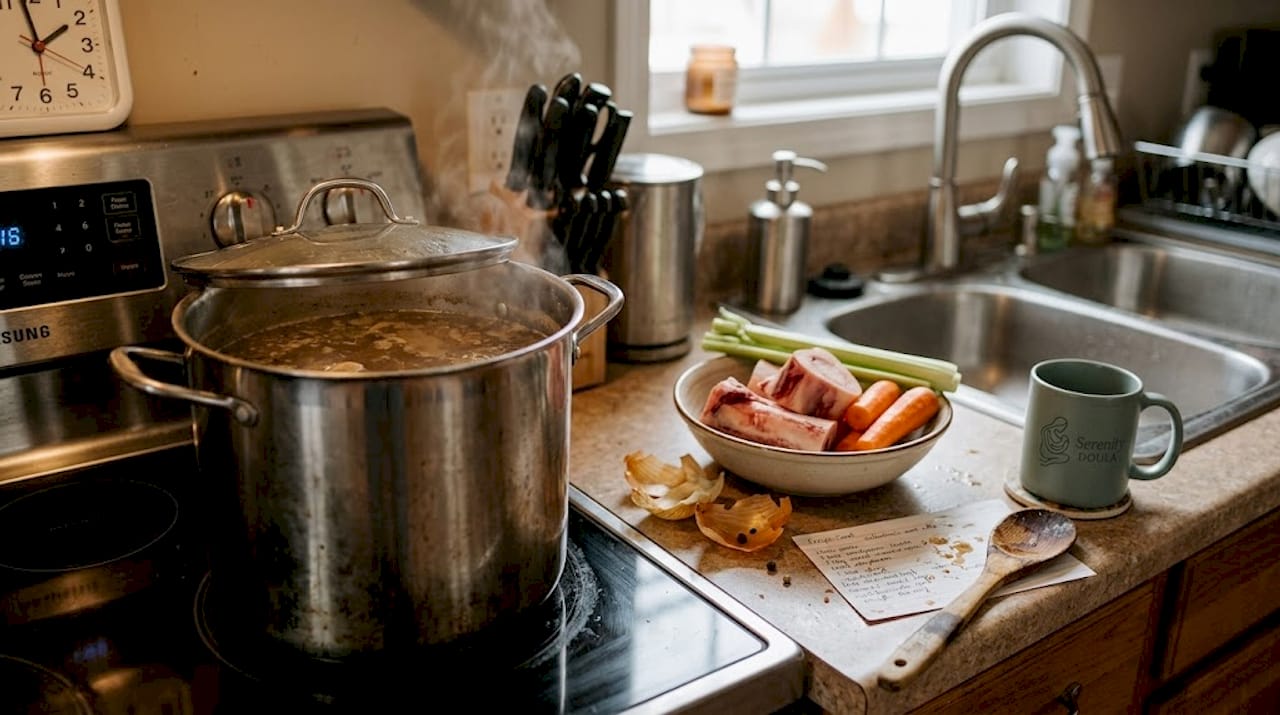
According to the evidence on broth health claims, modest protein and mineral content alongside comfort and tradition may be the real value here, without overhyping what it can do.
Follow these steps to get the most from bone broth safely:
- Choose quality bones: Look for grass-fed beef bones, pasture-raised chicken, or organic sources. The quality of the bones directly affects what ends up in your broth.
- Make it at home when possible: Homemade broth gives you control over sodium, ingredients, and cooking time. Add a splash of apple cider vinegar to help draw out minerals.
- Limit cooking time if histamine is a concern: Shorter cooking times (4 to 6 hours for chicken) produce less histamine than 24-hour slow cooks.
- Check sodium on store-bought labels: Aim for under 300mg per serving and look for low-sodium or no-salt-added versions.
- Treat it as a complement: Pair broth with a full, varied diet rather than leaning on it as a cure-all.
- Ask your provider these questions: Is my blood pressure stable? Do I have any kidney concerns? Am I at risk for lead exposure? Do I have food sensitivities?
Bone broth can be a lovely addition to a holistic pregnancy diet. It just works best when it’s one part of a bigger, personalized picture. For more practical ideas on eating well through pregnancy and beyond, browse pregnancy wellness tips on our blog.
Our take: The truth most experts miss about bone broth in pregnancy
Here’s something we don’t see said enough: the ritual of bone broth may matter just as much as the nutrients in it.
When you slow down, wrap your hands around a warm mug, and nourish yourself intentionally, that act has real value. It’s grounding. It connects you to generations of mothers who did the same. That emotional and sensory experience isn’t something a clinical study can easily measure, but it’s real.
At the same time, we see families in Bucks and Montgomery counties chase trending superfoods without stopping to ask whether they fit their specific health picture. Bone broth isn’t harmful for most people. But it’s also not a replacement for prenatal vitamins, a varied diet, or honest conversations with your care team.
Our perspective from natural birth support work is this: trust your body, question marketing claims, and personalize everything. What nourishes your neighbor might not be what you need.
Get holistic pregnancy support in Bucks & Montgomery counties
You don’t have to sort through every nutrition claim alone. We know how much information comes at you during pregnancy, and how hard it can be to know what to trust.
At Serenity Doula, we offer pregnancy and birth doula support that’s personalized to you, not a one-size-fits-all approach. We help you connect evidence-based guidance with the holistic traditions that matter to your family. From nutrition questions to birth planning, we’re here to be your calm, knowledgeable partner through every stage. Explore our birth education benefits and reach out to schedule a consultation. We’d love to support you.
Frequently asked questions
Is it safe to drink bone broth every day while pregnant?
For most people, bone broth is safe in moderation, but daily use should account for sodium and heavy metals as well as individual allergies and the quality of the bones used.
Does bone broth help with pregnancy nausea or digestion?
Warm bone broth may soothe nausea or support hydration, but no pregnancy-specific trials confirm direct digestive benefits for expectant mothers.
What’s the best way to choose or make bone broth during pregnancy?
Choose low-sodium, high-quality sourced bones and make it at home when you can. Watch out for commercial sodium levels and ask your provider if you have any specific dietary concerns.
Can bone broth replace prenatal vitamins or a balanced diet?
No. Bone broth has modest protein and minerals and is not nutritionally complete enough to replace a prenatal vitamin or a varied, balanced pregnancy diet.
Are there special risks if I have allergies or kidney problems?
Yes. Allergies and kidney strain are real considerations, so anyone with those concerns should speak with their healthcare provider before making bone broth a regular part of their diet.