TL;DR:
- Many new mothers experience identity loss due to biological, emotional, and social changes.
- Recognizing signs like fatigue, withdrawal, and emotional numbness can facilitate early support.
- Holistic support, self-care, and community help can aid mothers in reclaiming their sense of self.
You are not failing. Feeling like you’ve lost yourself somewhere between the midnight feedings and the endless diaper changes is not a sign that you’re doing motherhood wrong. It’s actually one of the most common, research-backed experiences new mothers go through. Identity loss in new mothers is intensified by factors like high-needs children, cultural invisibility, and late-life transitions into parenthood. In this article, we’ll walk through why this happens, how to recognize it early, and most importantly, how you can find your way back to yourself without guilt.
Table of Contents
- Why losing yourself in motherhood happens
- Recognizing the signs of losing yourself
- How cultural and social context shape motherhood identity
- Practical steps for reclaiming your sense of self
- A fresh perspective: Why losing yourself can be a path to self-discovery
- Personalized support for your journey
- Frequently asked questions
Key Takeaways
| Point | Details |
|---|---|
| Identity loss is common | Many mothers experience a loss of self, especially after birth or transition into motherhood. |
| Context strongly matters | Cultural, social, and family environments shape how mothers experience and recover from losing themselves. |
| Self-care supports healing | Intentional self-care and support networks are key to reclaiming identity. |
| Holistic support works best | Combining community, professional, and emotional support offers the most sustainable path to rediscovering your sense of self. |
Why losing yourself in motherhood happens
Motherhood changes everything. Your sleep, your schedule, your relationships, your body, your sense of time. And somewhere in all of that beautiful, exhausting chaos, your sense of you can quietly slip away.
This isn’t weakness. It’s a structural reality of new parenthood. When you become a mother, your brain literally rewires itself to prioritize your baby’s needs. This shift, while beautiful in purpose, can leave your own needs, desires, and identity feeling like distant memories.
Some of the most common triggers for identity loss include:
- Role overload. You go from being a partner, friend, professional, and individual to being someone’s entire world overnight.
- Invisible labor. The cooking, coordinating, emotional managing, and planning that nobody sees or credits adds up fast.
- Loss of routine. The rituals that once grounded you, like a morning workout or an evening read, often vanish in early motherhood.
- Social withdrawal. Friends without children drift. Social events feel impossible. And isolation creeps in quietly.
- Pressure to perform. Society expects you to love every moment. When you don’t, the shame compounds the loss.
Research confirms that identity erosion in mothers is often sharpened by high-needs children, intensified during later-life motherhood when a woman has a deeply established pre-baby identity, and worsened by culturally invisible labor in urban settings.
“The struggle with motherhood identity is not a personal flaw. It is a reflection of how little structural and emotional support most mothers actually receive.”
Emotional overload in new mothers is a real, documented experience that many women downplay because they believe they’re supposed to feel grateful, not overwhelmed. The truth is, you can feel both. Understanding the why behind identity loss is also central to prenatal emotional care, where we work with expecting mothers before the pressure builds.
You are not broken. You are navigating one of the most demanding transitions a human being can experience.
Recognizing the signs of losing yourself
Now that you understand why losing yourself is so common, let’s get clear on the signs. Recognizing them early means you can respond with compassion rather than self-criticism.
Here are the most telling indicators to watch for:
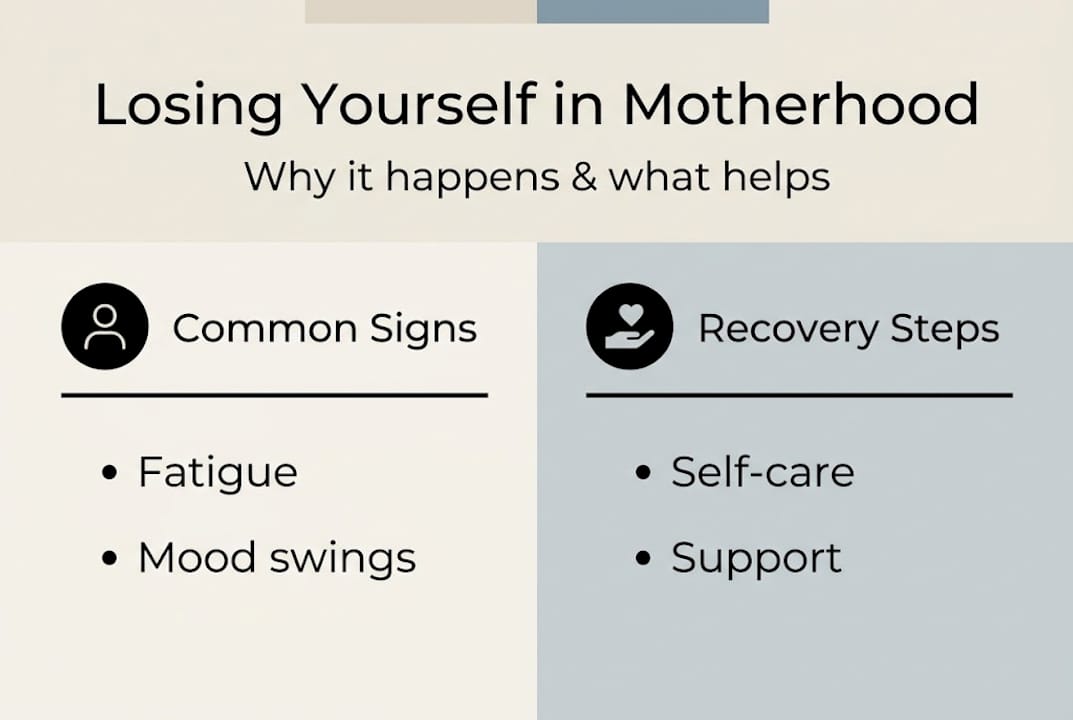
- Persistent irritability. You feel snappy or resentful, not because you’re a bad person, but because your reserves are empty.
- Fatigue that sleep doesn’t fix. This is emotional exhaustion, not just physical tiredness.
- Loss of interest in past hobbies. Things you once loved feel pointless or inaccessible.
- Difficulty making decisions. Even small choices feel overwhelming because your mental bandwidth is consumed.
- Social withdrawal. You cancel plans. You stop reaching out. You feel like no one would understand anyway.
- Disconnection from your body. You feel like a feeding and caregiving machine rather than a full human.
- Numbness or emotional flatness. Not sadness exactly. More like a fog that makes everything feel distant.
Ask yourself honestly: When did I last do something just for me? When did I last feel like myself? If those questions feel impossible to answer, that’s important information.
Later-life motherhood and intensive caregiving can significantly worsen emotional overload, making self-awareness even harder. The practice of naming your feelings is a surprisingly powerful tool here. Simply labeling what you’re feeling, whether that’s grief, resentment, or loneliness, helps your nervous system process those emotions rather than bury them.
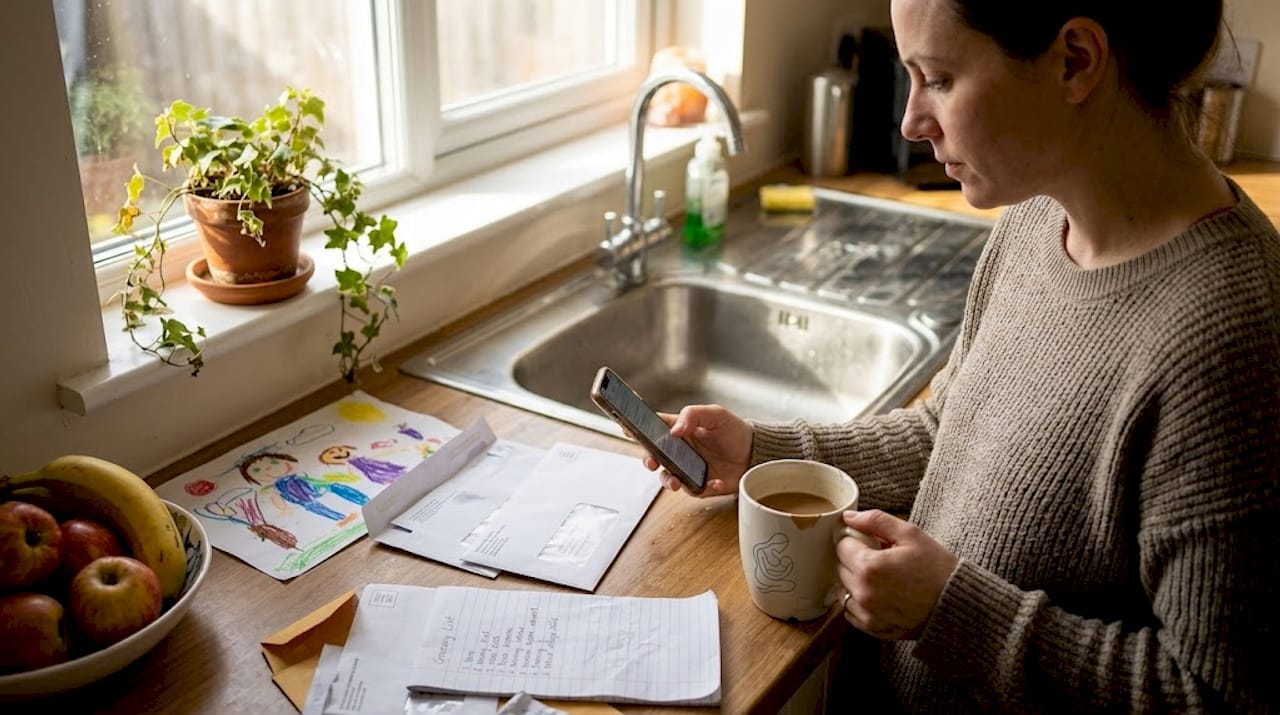
Pro Tip: Keep a simple daily journal. Write three words each morning that describe how you feel. You don’t need full sentences. This small practice builds emotional self-awareness over time and can help you notice patterns before they deepen.
If you’re experiencing several of these signs consistently, consider reaching out for support. Natural postpartum support and holistic care options can offer gentle, real relief during this season.
How cultural and social context shape motherhood identity
Once you’ve spotted the signs, it’s crucial to recognize how your environment and context can impact your journey back to self. Motherhood does not happen in a vacuum. Where you live, how you were raised, and who surrounds you all shape how much of yourself you can hold onto.
| Context | Common challenges | Protective factors |
|---|---|---|
| Urban settings | Isolation despite density, invisible labor, career pressure | Access to services, diverse support groups |
| Rural settings | Physical distance from support, fewer professional resources | Tight-knit community ties, extended family |
| Immigrant communities | Cultural role expectations, language barriers, limited peer networks | Strong family values, cultural pride |
| Single-parent households | Double the labor, reduced emotional support | Peer networks, professional doula care |
The research is clear that invisible labor in urban environments can worsen the feeling of losing oneself, particularly when a mother’s contributions go unseen by partners, employers, or the community at large.
Here’s what often goes unacknowledged:
- Immigrant mothers frequently face the tension between cultural expectations of selfless motherhood and their own need for personal identity.
- Urban mothers surrounded by perceived success and productivity can feel even more invisible when motherhood sidelines their careers.
- Mothers in rural settings may have community support but fewer professional resources for mental health or postpartum care.
Family structure matters too. When a partner is actively involved and aware, the emotional load is more evenly shared. Understanding the partner’s role in emotional support is something we emphasize early in our work with families. Partners who show up fully change the entire trajectory of a mother’s postpartum experience.
For mothers with limited access to in-person support, same-day healthcare access for busy parents can bridge critical gaps in care during the most demanding early weeks.
Your experience is shaped by your world. That means your path back to yourself will be uniquely yours too.
Practical steps for reclaiming your sense of self
With context in mind, let’s focus on what you can actually do today to start feeling like yourself again. These aren’t surface-level suggestions. These are grounded, realistic strategies.
| Strategy | Why it works | How to start |
|---|---|---|
| Micro self-care routines | Builds consistency without requiring large time blocks | Choose one 10-minute daily ritual |
| Peer support groups | Reduces isolation and normalizes your experience | Search local or online new-mom circles |
| Professional doula support | Offers practical help plus emotional validation | Schedule a consultation |
| Journaling and reflection | Strengthens self-awareness and emotional processing | Start with three words a day |
| Revisiting one personal interest | Reconnects you to your pre-baby identity | Choose one low-stakes hobby to explore |
Research emphasizes that holistic and community support are crucial for mothers recovering from identity loss. Professional resources and peer connection work together in ways that individual willpower simply cannot.
Here’s how to start building that support structure today:
- Name what you need. Not what everyone else needs from you. What you need. Even one thing.
- Set one non-negotiable daily ritual. A shower, a walk, ten minutes with a book. Protect it.
- Tell someone how you actually feel. Authenticity breaks isolation faster than anything else.
- Explore your postpartum care plan. Having a plan reduces decision fatigue and gives you structure during a formless time.
- Connect with postpartum care services that treat you as a full person, not just a new mother with a checklist.
Pro Tip: Don’t wait until you’re in crisis to reach out. The earlier you build your support network, the more resilient you’ll be when the hard days come.
And don’t overlook physical health. Things like oral health during pregnancy are easy to deprioritize but matter enormously for your overall wellbeing. Taking care of your body is part of reclaiming yourself.
A fresh perspective: Why losing yourself can be a path to self-discovery
Now, let’s step back and reframe this experience through a wider lens. Most conversations about losing yourself in motherhood frame it as a crisis to be solved. We want to offer a different view.
We believe the identity loss of early motherhood is not purely a loss. It is, in many ways, a clearing. When your old routines, roles, and self-definitions are stripped away, you get a rare and sometimes terrifying opportunity: to choose who you want to become next.
Many of the mothers we work with tell us the same thing. The version of themselves they found after the fog lifted was someone they liked more than who they were before. Someone more grounded. More intentional. More clear about what actually mattered.
What most conventional guides miss is that this discomfort has creative power. The women who come out of this phase most whole are the ones who allowed themselves to not know for a while. They didn’t rush the rebuilding.
That’s something we address deeply in childbirth education, where preparing emotionally is just as important as preparing physically. The goal was never to return to your old self. It was to meet the new one.
Personalized support for your journey
Reclaiming your identity after having a baby is real work. And no one should do it alone. At Serenity Doula, we believe every mother deserves care that sees her as a whole person, not just a caregiver.
Our holistic prenatal emotional support starts before baby arrives, helping you build the foundation you’ll need for the postpartum season. From there, our postpartum support continues that care into the early weeks and months when identity loss tends to peak. We also offer childbirth education that prepares you emotionally, not just practically. You deserve a team in your corner through every stage of this journey.
Frequently asked questions
Is it normal to feel like you’ve lost yourself as a new mom?
Yes, completely. Many mothers experience identity loss as a natural and well-documented part of the motherhood transition, shaped by biological, emotional, and social factors.
How can I start finding myself again after having a baby?
Start with small acts of self-reflection, reach out to peers or professionals who can offer real support, and build one consistent self-care ritual that is yours alone. Holistic community support is one of the most effective recovery tools available.
What are some warning signs that I’m losing myself in motherhood?
Key warning signs include persistent fatigue, emotional numbness, loss of interest in hobbies, and social withdrawal. Emotional overload and withdrawal are especially common in high-demand caregiving situations.
Can high-needs children make losing yourself more likely?
Absolutely. High-needs children intensify isolation and significantly increase the likelihood of identity loss, making community support and professional guidance even more critical.
Recommended
- How to Create a Calm Birth Space—at Home or in the Hospital – Serenity Doula
- 5 Powerful Ways to Prepare Your Mind and Body for Labor and Birth – Serenity Doula
- Newborn care guide for dads: Build confidence and bond
- Birth trauma recovery: holistic approaches for lasting healing
- Letters to Mama | Snail Mail Connection Rituals for Mothers
- A Realistic Guide to Time Management for Working Mothers | Laundry Tips