

TL;DR:
- Fathers’ active presence during labor improves outcomes and strengthens family bonds.
- Preparation, communication, and emotional support are essential for fathers during childbirth.
- Being fully present and adaptable creates the greatest impact, beyond just technical support.
Most fathers walk into the delivery room feeling like a spare part. You want to help, but nobody handed you a script. Here’s the truth: your presence is one of the most powerful things that can happen in that room. Research consistently shows that fathers who actively engage during labor improve outcomes for both mother and baby. This guide walks you through the emotional, physical, and advocacy roles you can play, with practical techniques and honest insight to help you show up as the grounded, steady partner your family needs.
Table of Contents
- Why fathers matter in childbirth
- Emotional and physical support: What makes a difference
- Preparation and communication: Laying the groundwork
- Challenges, edge cases, and expert perspectives
- A new perspective on being present: What most guides don’t tell you
- Where to find more support for your journey
- Frequently asked questions
Key Takeaways
| Point | Details |
|---|---|
| Fathers make a real difference | Being present and involved positively impacts mother and baby during childbirth. |
| Preparation is essential | Attending classes and open communication give fathers the tools to confidently support their partner. |
| Support is both emotional and physical | Actions like reassurance, hands-on comfort, and advocacy shape a better birth experience. |
| Challenges can be managed | With preparation, fathers can handle unexpected situations and recover from stressful births. |
| No perfect formula | Every birth is unique—authentic presence and adaptability are more important than getting everything right. |
Why fathers matter in childbirth
Let’s get one thing straight. Being in the delivery room is not just a formality. Your presence has real, measurable effects on how labor unfolds and how your family bonds afterward.
Continuous partner support during labor shortens labor duration, reduces the need for medical interventions, and strengthens bonding between all three of you. That’s not a small thing. That’s you actively shaping one of the most important days of your lives.
Think of yourself as your partner’s anchor when everything else feels like a whirlwind. She needs to know you’re calm, present, and fully there. That sense of security lowers her stress hormones, which directly supports the natural progression of labor.
“The father’s presence in the delivery room is not passive. It is one of the most active forms of love a man can offer.”
Bonding with your baby also begins at birth. Skin-to-skin contact, hearing your voice, and feeling your warmth in those first moments create a foundation that shapes your relationship for years. Absence risks regret and weaker early bonding, and many fathers who stepped back wish they hadn’t.
Here’s what involvement does for you as well:
- Builds your confidence as a parent from day one
- Deepens your emotional connection with your partner
- Gives you a sense of purpose and agency during a vulnerable time
- Strengthens long-term involvement in your child’s life
Understanding the partner’s role in childbirth can help you step into this moment with clarity rather than confusion. And when you understand the benefits of family-centered birth, you realize this isn’t just about being supportive. It’s about being transformed.
Emotional and physical support: What makes a difference
Knowing why you matter is one thing. Knowing what to do is another. Let’s get specific.
Supportive actions that fathers can offer during labor include holding hands, verbal encouragement, massage, reassurance during contractions, and advocating for your partner’s wishes with the medical team. Each of these has a real impact on how safe and supported your partner feels.
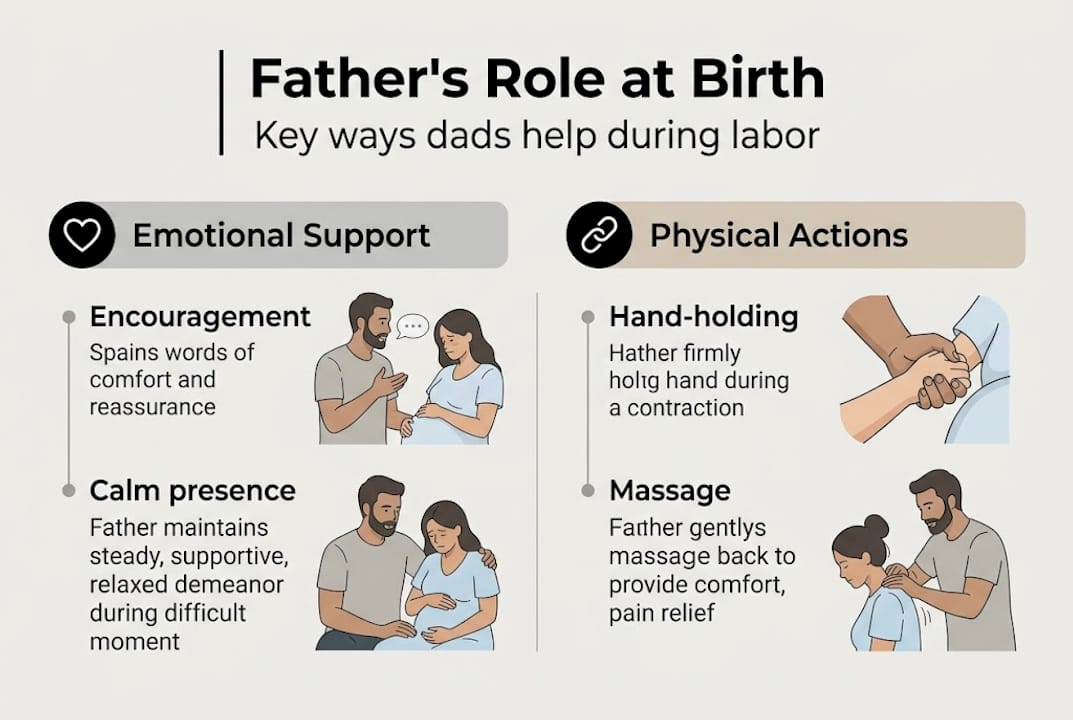
Fathers are often seen as critical emotional protectors during labor, offering a kind of security that no medical professional can fully replicate. You know your partner. You know what calms her, what annoys her, and what she needs without saying a word.
Here are the core support actions and when to use them:
| Support action | When it helps most | How to do it |
|---|---|---|
| Hand-holding | During contractions | Firm, steady grip; follow her lead |
| Verbal encouragement | Throughout labor | Short, calm phrases like “You’re doing great” |
| Massage | Between contractions | Lower back, shoulders, or feet |
| Advocacy | During medical decisions | Repeat her wishes clearly and calmly |
| Reassurance | When she doubts herself | Remind her of her strength and your trust |
Advocacy deserves special attention. When your partner is in the middle of a contraction, she may not be able to speak for herself. Your job is to make sure her voice is heard. Know her birth preferences. Ask questions on her behalf. Be respectful but clear with the care team.
Emotional support also lowers cortisol levels, which is the stress hormone that can slow labor. Your calm presence is literally helping her body do its job. Explore the different types of labor support available so you understand how your role fits alongside a doula or midwife.
Pro Tip: Ask your partner before labor what she finds most comforting. Some women want touch; others prefer space. Knowing this in advance means you won’t have to guess when it matters most.
Preparation and communication: Laying the groundwork
Showing up prepared is one of the greatest gifts you can give your partner. Confidence doesn’t come from winging it. It comes from doing the work beforehand.
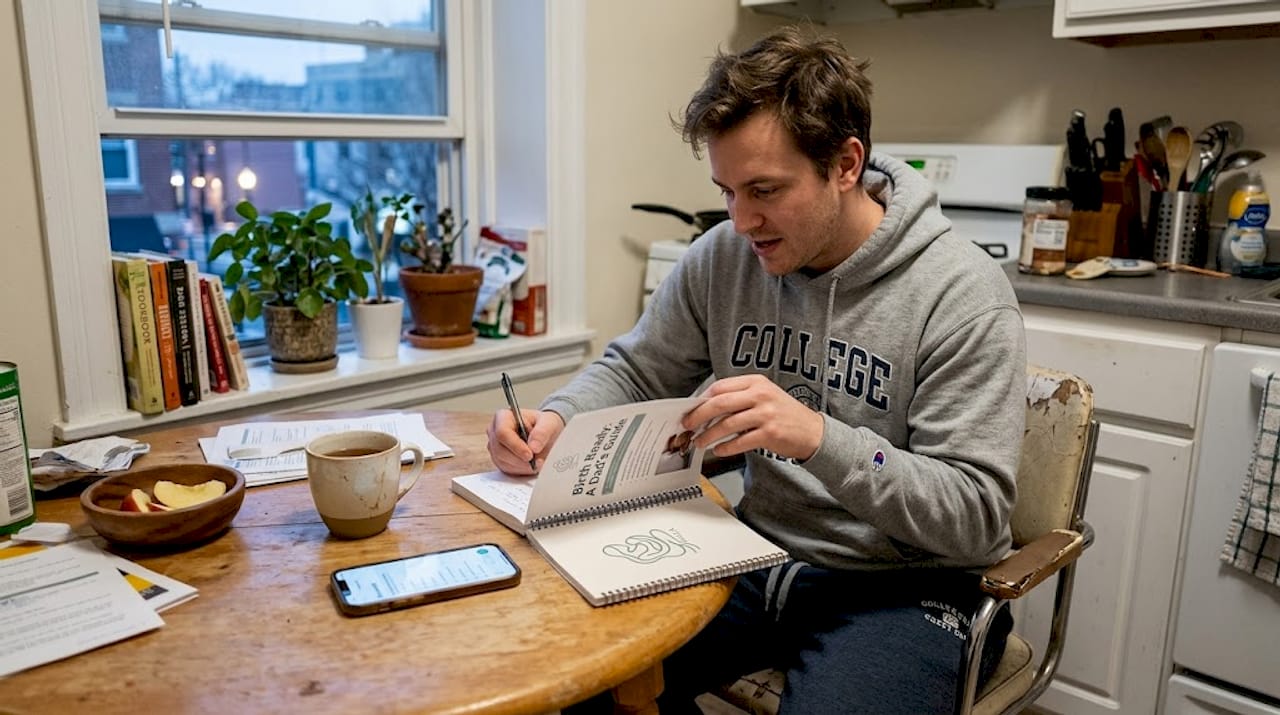
Preparation through classes and open communication builds a sense of security for fathers, which in turn helps them stay calm and effective during labor. When you understand what’s happening, you’re less likely to freeze.
Here’s a practical preparation checklist to work through before the birth:
- Attend childbirth education classes together. These classes cover the stages of labor, pain management options, and what to expect. You’ll feel far less lost when things get intense.
- Have honest conversations with your partner. Talk about her fears, her preferences, and what she needs from you. Don’t assume. Ask.
- Get familiar with the care team. Meet the midwife or OB ahead of time if possible. Know who to call, what the hospital protocols are, and where everything is.
- Learn about possible scenarios. Preparation helps fathers feel less helpless when emergencies or complications arise. Understand what a C-section involves, what fetal monitoring looks like, and what interventions might be offered.
- Pack your own bag. Include snacks, a phone charger, a change of clothes, and anything that helps you stay calm and focused for what could be a long day.
Pro Tip: Write down your partner’s top three birth preferences on a notecard and keep it in your pocket. When things move fast, having it in hand means you can advocate clearly without relying on memory.
Start preparing for labor and birth well before the due date. A solid birth preparation guide can help you and your partner build a shared plan that covers everything from pain management to postpartum recovery.
Challenges, edge cases, and expert perspectives
Not every birth goes according to plan. Knowing that ahead of time is its own form of preparation.
In complicated births, fathers may feel helpless, scared, or even traumatized. These are normal responses to an intense situation. What matters is that you’ve thought through the possibilities so you’re not completely blindsided.
There is also a nuanced debate in the expert community worth knowing about:
| Perspective | Argument | Conclusion |
|---|---|---|
| Pro-presence | Fathers reduce stress, shorten labor, improve bonding | Strongly supported by evidence |
| Cautionary view | Anxious fathers can sometimes increase tension in the room | Preparation resolves most of this risk |
| Balanced view | Prepared, emotionally regulated fathers are consistently beneficial | Preparation is the key variable |
Some experts note that an unprepared or highly anxious father can occasionally add stress to the birth environment. But this is not an argument against being present. It’s an argument for being prepared. The benefits of an engaged, calm father far outweigh the risks when preparation is in place.
“Fear is normal. Freezing is not inevitable. The fathers who prepare are the ones who rise to the moment.”
If the birth is traumatic, for either of you, please seek support afterward. Processing a difficult birth experience matters for your mental health and your relationship. Resources around addressing birth trauma can help you both heal and move forward with confidence.
It’s also okay to feel awe, grief, fear, and joy all at once. Birth is not a tidy experience. Give yourself permission to feel it.
A new perspective on being present: What most guides don’t tell you
Most guides hand you a checklist. Massage here. Encourage there. Advocate when needed. And yes, those things matter. But we want to tell you something that doesn’t make it into most articles.
The most powerful thing you can bring to that room is not a technique. It’s you. Your full, present, emotionally available self.
Birth will not go exactly as planned. Your partner may say things she doesn’t mean. You may feel completely out of your depth. That’s okay. Adaptability and humility will serve you far better than a rigid plan.
We’ve seen fathers who didn’t know a single massage technique hold their partners through the hardest moments simply by staying calm and saying, “I’m right here.” That’s enough. That’s everything.
Don’t underestimate what this experience does to you, either. Being present at your child’s birth changes you. It builds a kind of confidence and connection that no parenting book can replicate. Lean into that. Let it reshape you.
And when it’s over, keep going. Explore newborn care and bonding for dads so the support you gave in the delivery room continues into those first tender weeks at home.
Where to find more support for your journey
You don’t have to figure this out alone. At Serenity Doula, we work with fathers and partners every day who want to show up fully for their families.

Our childbirth education classes are designed for couples, giving you both the knowledge and confidence to navigate labor together. Our birth support doula services mean you’ll have an experienced guide in the room alongside you, so you’re never carrying the weight alone. And if you want to keep learning, our further reading for partners is a great place to start. Reaching out for support isn’t a sign of weakness. It’s one of the most loving things you can do for your growing family.
Frequently asked questions
How can fathers overcome anxiety about being present at birth?
Preparation through classes and honest conversations with your partner builds real confidence and reduces birth-related anxiety before the big day arrives. Knowing what to expect is the single biggest antidote to fear.
What if my partner wants privacy during labor?
Talk through privacy preferences well before labor begins. Some experts note that respecting your partner’s comfort, even if that means stepping out briefly, is itself a form of support.
Can fathers really reduce the risk of C-section by being present?
Yes. Continuous partner support has been shown to decrease the likelihood of interventions including C-sections, making your presence genuinely protective.
What are key things to do as a father in the delivery room?
Encouragement, physical comfort, advocacy, and flexibility are your four pillars. Follow your partner’s lead and adapt as her needs shift throughout labor.
How should fathers handle difficult childbirths or emergencies?
Learn about possible complications before the birth so you’re not caught off guard. Preparation reduces helplessness during emergencies, and seeking support after a traumatic birth is always the right move.