TL;DR:
- Childbirth education covers labor mechanics, comfort strategies, interventions, and postpartum care.
- Research shows that more sessions improve outcomes like reduced cesarean risk and lower pain medication use.
- Pairing education with personalized support enhances confidence, decision-making, and overall birth experience.
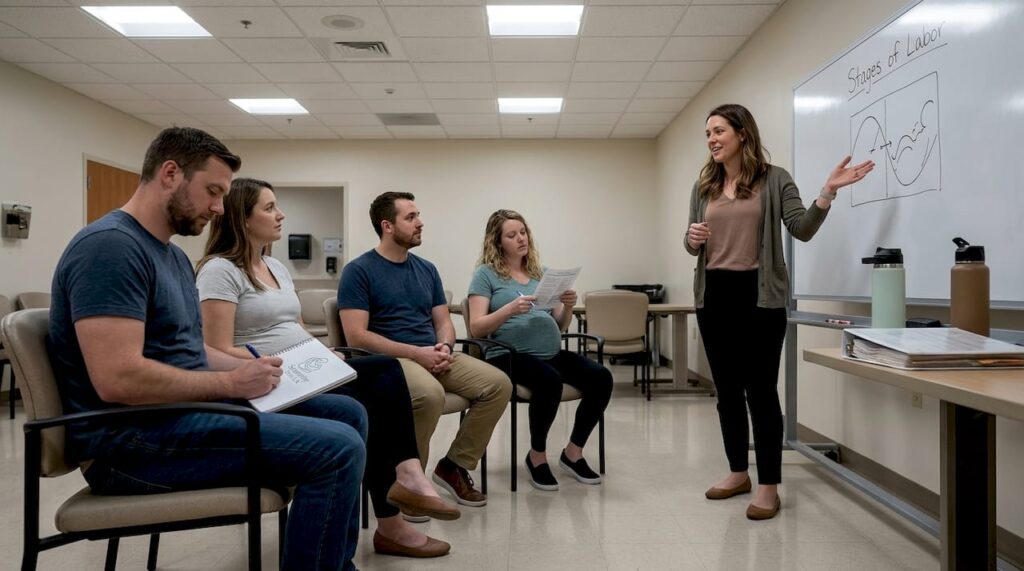
Most people picture childbirth education as a room full of pregnant couples practicing breathing exercises. That image is sweet, but it barely scratches the surface. Structured classes teach expectant parents about labor mechanics, comfort measures, pain management, interventions, newborn care, and informed decision-making. The difference between walking into labor informed versus unprepared is enormous. Your confidence, your choices, and even your recovery can all shift based on what you learn beforehand. This article breaks down what childbirth education really covers, what the research says about its impact, how different methods compare, and why pairing education with personalized support makes all the difference.
Table of Contents
- What is childbirth education?
- Comparing childbirth education methods
- Evidence for childbirth education’s impact
- Personalized support and childbirth education: Beyond the classroom
- A new approach: Why blending education and personalized support matters
- How Serenity Doula supports your childbirth education journey
- Frequently asked questions
Key Takeaways
| Point | Details |
|---|---|
| Comprehensive coverage | Childbirth education spans labor mechanics, pain management, newborn care, and informed choices. |
| Method matters | Choosing the right education methodology aligns with birth goals and comfort preferences. |
| Better outcomes | Multiple sessions and personalized support improve confidence and reduce interventions. |
| Research limitations | While benefits are clear, some effects remain debated and more research is needed. |
| Balanced support | Combining education with adaptive, individualized guidance yields the best results for parents. |
What is childbirth education?
Having shown how childbirth education is more than basic instruction, let’s clarify what it actually is and why it matters so much for you and your growing family.
At its core, childbirth education is a structured learning experience designed to prepare you for labor, birth, and life with a newborn. It is not a one-size-fits-all checklist. It is a guided journey through the physical, emotional, and practical realities of bringing a baby into the world.
Here is what most quality programs cover:
- The stages of labor: What happens in your body during early labor, active labor, transition, and pushing.
- Comfort measures: Positioning, movement, heat, massage, and breathing techniques that can ease discomfort.
- Pain management options: From epidurals to nitrous oxide to natural coping strategies, you learn what is available and how each works.
- Medical interventions: Induction, fetal monitoring, episiotomy, forceps, vacuum, and cesarean birth are explained clearly.
- Newborn care basics: Feeding, skin-to-skin contact, safe sleep, and what to expect in those first foggy days.
- Postpartum recovery: Physical healing, emotional shifts, and when to ask for help.
- Informed decision-making: How to ask questions, understand your options, and advocate for yourself in the birth room.
The benefits for parents go well beyond knowledge. When you understand what is happening in your body, fear loses some of its grip. You feel calmer, more grounded, and more capable of making decisions that align with your values and birth goals.
“Knowledge is the antidote to fear. When you know what to expect, you can meet each moment with courage instead of panic.”
Childbirth education also strengthens the partnership between you and your birth support person. Whether that is your partner, a family member, or a doula, shared learning creates a shared language. You both know the plan, the backup plan, and how to communicate when things get intense.
Think of it this way: you would not run a marathon without training. Labor is one of the most physically and emotionally demanding experiences of your life. Education is your training program.
Comparing childbirth education methods
With an understanding of childbirth education’s scope, let’s explore the different teaching methods available so you can find the one that fits your needs and personality.
Not all childbirth education looks the same. Common methodologies include Lamaze, the Bradley Method, Hypnobirthing, and general hospital classes, each with a distinct philosophy and approach.
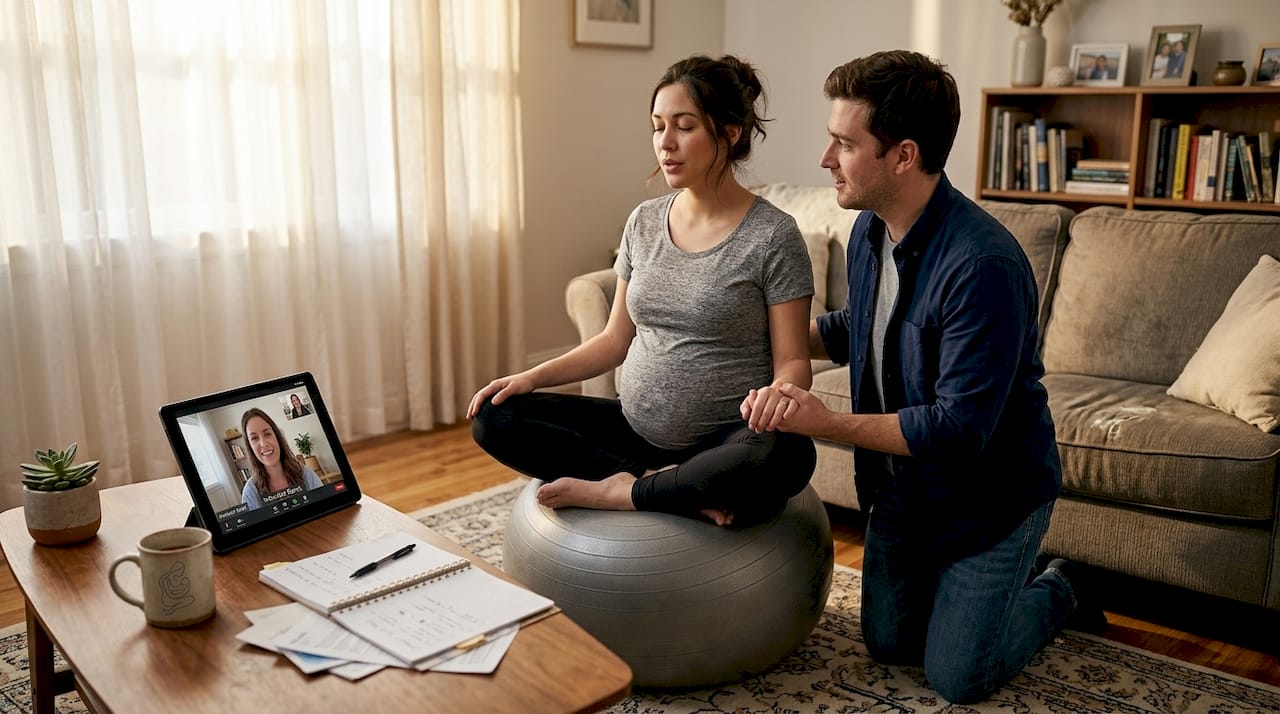
Here is a quick comparison to help you orient:
| Method | Focus | Length | Best for |
|---|---|---|---|
| Lamaze | Breathing, relaxation, movement | 6 to 8 weeks | Parents wanting active coping tools |
| Bradley Method | Natural birth, partner coaching | 12 weeks | Couples committed to unmedicated birth |
| Hypnobirthing | Self-hypnosis, visualization, calm | 5 weeks | Parents seeking deep relaxation techniques |
| Hospital classes | Procedures, interventions, newborn care | 1 to 2 days | Parents wanting a broad, facility-specific overview |
Let’s walk through each one:
- Lamaze is probably the most recognized method. It centers on breathing patterns, relaxation techniques, and movement during labor. The goal is to build your confidence in your body’s ability to birth.
- The Bradley Method is a 12-week deep dive. It emphasizes natural, unmedicated birth with heavy partner involvement, plus nutrition and exercise guidance throughout pregnancy.
- Hypnobirthing uses self-hypnosis and visualization to help you stay calm and focused during labor. Many parents find it transforms their relationship with fear around birth.
- Hospital classes offer a practical overview of what to expect at your specific facility, including procedures, interventions, and newborn care routines.
Exploring comfort measures in labor alongside any of these methods can deepen your toolkit even further.
Pro Tip: There is no single best method. The right choice depends on your birth goals, your comfort with your support person, and how much time you have. If you are preparing for labor and feeling overwhelmed by options, start with a hospital class for the basics, then layer in a specialized method that resonates with you.
Evidence for childbirth education’s impact
Let’s look at what scientific research reveals about the benefits and real-world controversies in childbirth education.
The research on childbirth education is genuinely encouraging, though it comes with some honest nuance worth knowing.
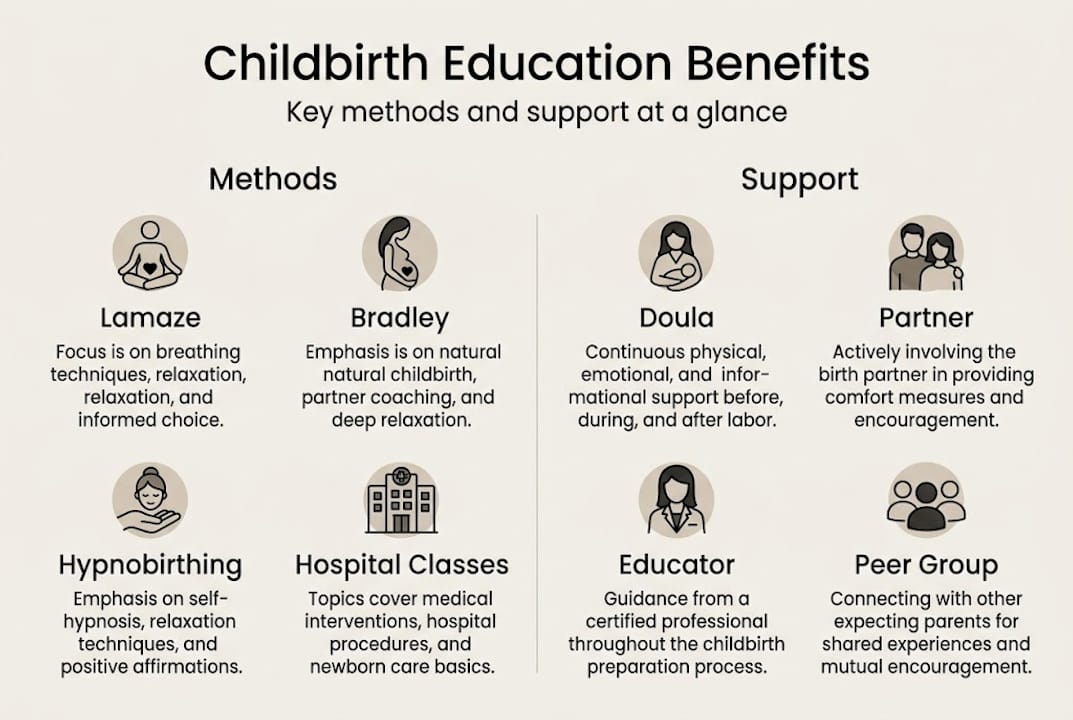
On the positive side, attending 3 or more sessions is associated with decreased planned cesarean risk and increased shared decision-making, while any education at all is linked to lower pain medication use. That is meaningful. More sessions equal better outcomes.
Here is a snapshot of what the data shows:
| Outcome | Finding |
|---|---|
| Planned cesarean risk | Decreased with 3 or more sessions |
| Shared decision-making | Increased with 3 or more sessions |
| Pain medication use | Lower with any childbirth education |
| Maternal self-efficacy | Significantly improved with nurse-led programs |
On the confidence front, nurse-led antenatal education significantly improves maternal self-efficacy, with a standardized mean difference of 0.73. In plain language: structured education, especially when led by skilled nurses, helps you genuinely believe in your ability to handle labor. That belief matters more than most people realize.
“Self-efficacy in birth is not about being fearless. It is about trusting that you can handle what comes, one contraction at a time.”
However, a Cochrane review finds insufficient high-quality evidence on the effects of antenatal education on anxiety, pain, or birth outcomes overall. More rigorous research is still needed. This does not mean education does not work. It means the science is still catching up to what many parents and providers already experience firsthand.
The benefits for parents are real, but they are most powerful when education is approached as a foundation rather than a magic fix. Pairing it with evidence-based birth practices and personalized support is where the real transformation happens.
Personalized support and childbirth education: Beyond the classroom
Effective education does not end at the classroom door. Let’s explore how personalized support shapes your experience in ways no textbook can fully replicate.
Classroom learning gives you the map. Personalized support helps you navigate the actual terrain. These two things work best together.
Here is what personalized support adds to your childbirth education foundation:
- Real-time application: A doula or knowledgeable partner can remind you of techniques you learned when you are deep in labor and your brain is foggy.
- Emotional anchoring: Having someone who knows your birth preferences and can advocate for you creates a sense of calm that no class can fully replicate.
- Gap-filling: Every birth is different. Personalized support adapts your education to your actual situation, whether that means a longer labor, a change in plans, or unexpected emotions.
- Postpartum continuity: Postpartum care support extends the benefits of education into the early weeks at home, when you need it most.
- Partner coaching: When your support person has been part of the learning process, they feel confident and useful rather than helpless in the birth room.
Empirical benchmarks show that more education sessions yield better outcomes, and integrating that education with personalized support for pregnancy, birth, and postpartum amplifies those results even further.
Exploring your childbirth support options early in pregnancy gives you time to build relationships and create a truly personalized plan.
Pro Tip: Do not wait until your third trimester to think about support. The earlier you connect with a doula or birth educator, the more time you have to build trust, ask questions, and tailor your preparation to your specific needs and hopes.
A new approach: Why blending education and personalized support matters
Now that we have detailed both education and personalized support, here is a perspective that does not always get enough airtime.
Many childbirth education programs are built around an idealized version of birth. Natural, unmedicated, complication-free. That vision is beautiful when it matches reality. But birth does not always follow the script.
Overemphasis on ‘normal’ physiological birth in some midwifery and birth education settings has been criticized for delaying interventions in higher-risk cases. Experts are now urging more balanced training that reflects modern demographics, including older mothers and those with complex health histories.
I believe the most empowering education is the kind that prepares you for your birth, not a hypothetical ideal one. That means covering cesarean birth with the same care as vaginal birth. It means talking about epidurals without judgment. It means acknowledging that things can shift and that shifting is not failure.
When education benefits are paired with adaptive, personalized support, you are not just prepared for one version of birth. You are prepared for yours.
How Serenity Doula supports your childbirth education journey
Ready for your own birth journey? Here is how Serenity Doula helps parents go beyond classroom learning and into truly personalized preparation.
At Serenity Doula, we believe that every parent deserves to feel informed, supported, and genuinely confident walking into their birth experience. Our childbirth education services are designed to meet you where you are, covering everything from labor mechanics to comfort measures to postpartum recovery.
Beyond the classroom, our pregnancy and birth support wraps you in continuous, personalized care from your first prenatal visit through those tender early weeks at home. We are your anchor when everything else feels like a whirlwind. Explore the full picture of education benefits for parents and reach out to schedule your consultation. You deserve a birth team that truly has your back.
Frequently asked questions
What topics are usually covered in childbirth education classes?
Topics include stages of labor, pain management, comfort measures, medical interventions, newborn care, and informed decision-making. Most quality programs also address postpartum recovery and emotional wellbeing.
Do childbirth education classes really impact birth outcomes?
Attending 3 or more sessions is linked to fewer planned cesareans and increased shared decision-making, while any education at all correlates with lower pain medication use. The more you engage, the greater the benefit.
How do I choose between Lamaze, Bradley Method, Hypnobirthing, or hospital classes?
Choose based on your birth goals, your comfort preferences, and whether you want deep partner coaching or relaxation-focused techniques. Each method has a distinct philosophy, so trust what resonates with you and your support person.
Is personalized support important beyond classroom education?
Absolutely. Personalized support from a doula or engaged partner helps you apply what you learned, stay calm under pressure, and ease into postpartum recovery with more confidence. More sessions paired with ongoing support consistently show better outcomes.
Are there any controversies in childbirth education?
Some programs focus too heavily on ‘normal birth,’ which can delay interventions in higher-risk cases. Experts now urge balanced, adaptive education that reflects the full range of modern birth experiences.