

TL;DR:
- Choosing a birth method depends on personal preferences, health, and support availability.
- Flexibility and support are key to ensuring a positive, empowered birth experience.
- Personalized support from doulas and midwives enhances outcomes regardless of birth location or method.
Choosing how and where you want to bring your baby into the world can feel like standing in front of a wall of doors, each one leading somewhere different. You want what’s best for you and your baby, but the options, opinions, and information can pile up fast. The good news? Understanding your choices is one of the most powerful things you can do. When you know what each path looks like, you can move forward with confidence instead of anxiety. In this article, we walk through the main types of birth experiences, how to compare them, and how to personalize your plan so it truly fits your life.
Table of Contents
- How to choose the right birth experience
- Top 6 types of birth experiences explained
- Comparing common birth experiences: Pros, cons, and trends
- Personalizing your birth: Support, mindset, and special circumstances
- When to revisit your birth plan and make informed changes
- Why a personalized birth experience matters more than labels
- Connect with expert support for your unique birth experience
- Frequently asked questions
Key Takeaways
| Point | Details |
|---|---|
| Six main birth types | You can choose from six main birth experiences, each with unique features and benefits. |
| Support impacts outcomes | Support from doulas, midwives, or birth partners leads to more empowering and positive experiences. |
| Plans should stay flexible | A flexible mindset and birth plan helps families adapt confidently to changing needs. |
| Comparison helps decide | Comparing birth types side by side makes it easier to weigh options for safety, comfort, and control. |
| Personalization is key | Tailoring your birth experience creates confidence, no matter which path you choose. |
How to choose the right birth experience
Before you land on a specific type of birth, it helps to think about what matters most to you. There is no single right answer. What works beautifully for one family may not feel right for another, and that is completely okay.
Childbirth experiences range from deeply positive and empowering to traumatic, shaped strongly by support, a sense of control, expectations, and the events that unfold. That means your preparation and your support team matter just as much as the setting or method you choose.
Here are some key factors to weigh as you explore your options:
- Your health history: Certain conditions may guide or limit your choices. Always loop in your care provider early.
- Location preferences: Are you drawn to a hospital, a birth center, or home? Each offers a different environment and level of medical access.
- Intervention comfort level: How do you feel about pain medication, monitoring, or assisted delivery tools? There is no judgment here.
- Support team: Who will be with you? A partner, family member, midwife, or doula can shape the entire experience.
- Cultural and family values: Some families have strong traditions or beliefs that influence their choices.
- Flexibility: Life is unpredictable. The benefits of childbirth education include learning how to stay grounded when plans shift.
For a broader look at childbirth support types, knowing what each support role brings can help you build the right team.
Pro Tip: Write a birth plan, but hold it loosely. Think of it as a preference sheet, not a script. The more informed and flexible you are, the more empowered you will feel no matter how things unfold.
Top 6 types of birth experiences explained
Once you know your criteria, let’s define the main options. Each type has its own rhythm, setting, and set of considerations.
The main types of birth experiences include vaginal birth (spontaneous and assisted), cesarean section, water birth, home birth, hospital birth (medicated and unmedicated), and VBAC. Here is a closer look at each:
- Vaginal birth (spontaneous): This is the most common path. Labor begins naturally, and baby is born through the birth canal. It typically allows for faster recovery and immediate skin-to-skin contact.
- Assisted vaginal birth: Sometimes forceps or a vacuum are used to help guide baby out. This is still a vaginal birth but with added medical tools when needed.
- Cesarean section (C-section): A surgical birth through an incision in the abdomen. It may be planned or happen unexpectedly. Recovery takes longer, but it is sometimes the safest option for mother or baby.
- Water birth: Laboring or delivering in a warm tub of water. Many families find it deeply calming and report that it eases contraction intensity. It can happen at home, in a birth center, or in some hospitals.
- Home birth: Giving birth in your own space with a qualified midwife. It suits low-risk pregnancies and those who want a familiar, intimate environment. Understanding the role of a doula alongside a midwife at home can add another layer of comfort.
- VBAC (Vaginal Birth After Cesarean): Many people who have had a C-section can safely labor and deliver vaginally in a subsequent pregnancy. Dedicated support for VBAC birth can make a real difference in confidence and outcomes.
“Your birth experience is not defined by the method. It is shaped by how supported, heard, and respected you feel throughout the process.”
Comparing common birth experiences: Pros, cons, and trends
Let’s make these options more tangible by comparing them side by side. Knowing the trade-offs helps you make a decision that feels grounded rather than guessed.
| Birth type | Key advantages | Things to consider |
|---|---|---|
| Vaginal (spontaneous) | Faster recovery, natural hormones, skin-to-skin | Labor length varies, pain management needed |
| C-section | Predictable timing, sometimes medically necessary | Longer recovery, surgical risks |
| Water birth | Soothing, may reduce pain perception | Not available everywhere, not for all pregnancies |
| Home birth | Familiar setting, high personalization | Requires low-risk pregnancy, transfer plan needed |
| Hospital (medicated) | Access to epidural, monitoring, emergency care | Less mobility, more interventions possible |
| VBAC | Avoids repeat surgery, faster recovery | Requires careful screening and support |
Vaginal birth accounts for roughly 80% of births globally, while the U.S. cesarean rate sits around 32%, which is notably higher than the World Health Organization’s recommended range. That gap tells us a lot about how medicalized birth has become, and why families are increasingly seeking natural birth support and family-centered birth benefits.
In Bucks, Montgomery, and nearby counties, more families are asking for personalized support during labor. Doulas and midwives are becoming central to that conversation. Birth outcomes research consistently shows that feeling supported and in control leads to more positive experiences, regardless of the method chosen.
Personalizing your birth: Support, mindset, and special circumstances
Now, let’s talk about how you can tailor any option to your needs. The type of birth you choose is just the starting point. How you prepare emotionally and who stands beside you can change everything.
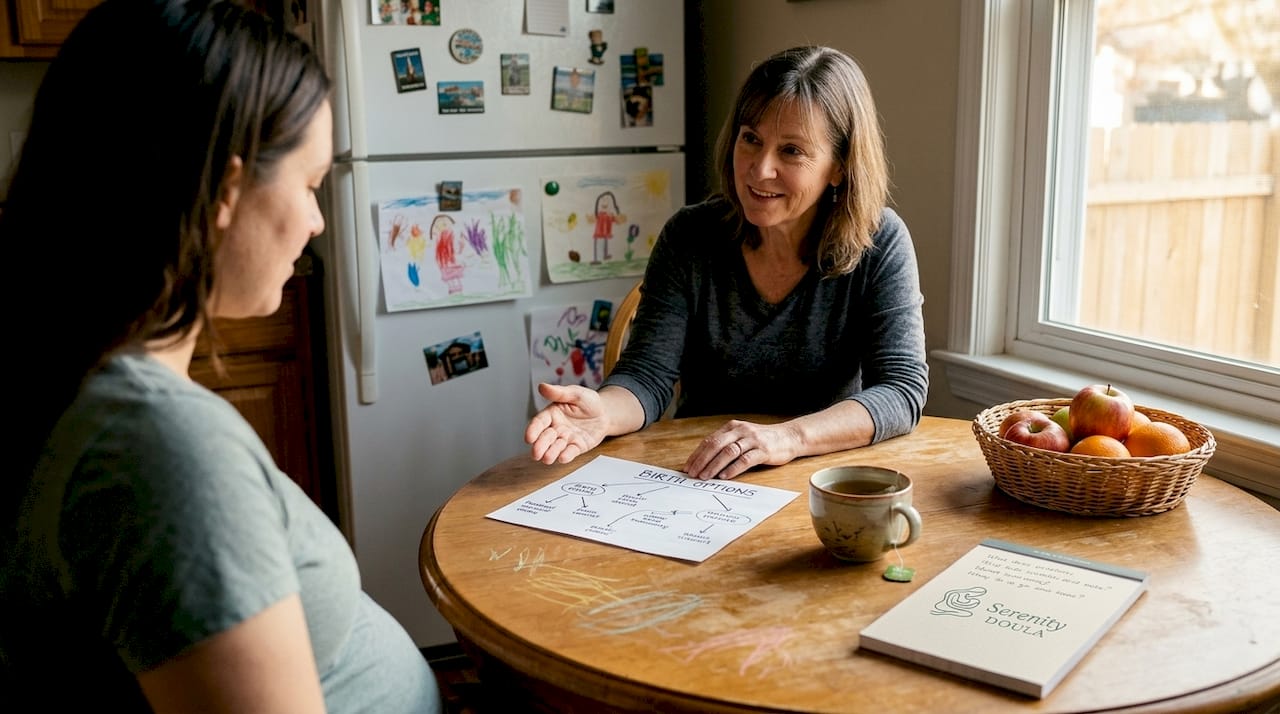
Childbirth research highlights two contrasting frameworks: one that focuses on trauma and risk (pathogenic), and one that centers on positive, empowering experiences (salutogenic). Local maternal health challenges in Pennsylvania make the value of doulas and midwives especially clear. Having someone in your corner who knows both frameworks can help you navigate either reality.
Here is how to personalize your experience:
- Previous trauma or loss: If you have experienced a difficult birth before, communicate this openly with your team. A trauma-informed doula can help you feel safe.
- High-risk pregnancy: Work closely with your OB or midwife to understand which options are still available to you and which need modification.
- Multiple births: Twins or more often require more medical support, but personalization is still possible.
- Emotional mindset: Visualization, breathing techniques, and prenatal yoga can all shift how you experience labor, no matter the setting.
- Your birth support doula: Having a dedicated support person who knows your story, your fears, and your goals is one of the most powerful choices you can make.
Pro Tip: Build your village before labor begins. Line up your emotional support, your physical comfort tools, and your information sources well in advance. You will feel the difference when the big day arrives.
When to revisit your birth plan and make informed changes
Even with solid plans, here is how to adjust intelligently if things change. And they might. That is not failure. That is life.
Birth experiences vary widely and can shift based on new information, unexpected events, or simply how you feel in the moment. Staying flexible is not giving up control. It is practicing a smarter kind of control.
Here are the top reasons to revisit your birth plan:
- New health findings: A late-pregnancy diagnosis, baby’s position, or placenta location can change what is safest. Update your plan with your provider as soon as you know.
- Shifting personal preferences: Maybe you planned an unmedicated birth but now feel differently. That is valid. Your comfort and wellbeing matter.
- Unexpected labor progression: Sometimes labor moves faster or slower than expected. Your team should know your backup preferences in advance.
- Emotional readiness: If anxiety or fear is building, talk to your doula or midwife. Emotional shifts are a legitimate reason to revisit your approach.
- Provider recommendations: If your OB or midwife suggests a change, ask questions. Understand the why before you agree. You can prepare for labor with strategies that help you stay calm and clear-headed during these conversations.
Revisiting your plan is not a sign of weakness. It is a sign that you are paying attention and advocating for yourself.
Why a personalized birth experience matters more than labels
Here is something I have seen again and again working with families across Bucks and Montgomery counties: the label rarely matters as much as people think it will. Whether someone planned a home birth or ended up with a cesarean, what they remember most is not the location or the method. It is whether they felt heard, respected, and supported.
We spend so much energy debating the “best” type of birth when the real question is: what will make you feel most empowered? The types we covered are guideposts, not rigid destinations. A hospital birth can be deeply personal. A home birth can feel chaotic without the right support. The method is the vehicle. The experience is shaped by the people in the room and the mindset you bring.
I encourage you to read personal birth stories from real families and explore the full range of birth support services available to you. The most informed choice is the one that fits your values, your body, and your life.
Connect with expert support for your unique birth experience
Ready to explore your choices further or create your personal plan? Understanding your options is a great first step, but having someone walk alongside you makes all the difference.
At Serenity Doula, we offer personalized doula support for all types of birth experiences, whether you are planning a natural delivery, a VBAC, a hospital birth with an epidural, or something in between. We also offer childbirth education benefits through classes designed to help you feel calm, informed, and ready. Serving families in Bucks, Montgomery, and nearby counties, we are here to be your anchor through every stage. Reach out today to schedule a consultation and take the next step with confidence.
Frequently asked questions
What is the most common type of birth experience?
Vaginal birth is most common, accounting for roughly 80% of births worldwide, making it the most widely experienced path to delivery.
What is a VBAC and is it safe?
VBAC means vaginal birth after cesarean, and it is considered safe for many people, though it should be carefully evaluated with your care provider based on your specific history. Many families find that dedicated support and preparation make a VBAC feel very achievable.
How often do birth plans change during labor?
Birth plans change often due to unexpected health events or shifting preferences, which is why flexibility and a trusted support team are so important going in.
What role does a doula play in different birth experiences?
A doula provides emotional, informational, and physical support to personalize and empower any type of birth experience, helping families feel grounded no matter how labor unfolds.
Can I mix elements of different birth experiences?
Yes, many families adapt or combine features, such as laboring in water at a hospital or planning an unmedicated birth with medical interventions available as a backup, making hybrid birth options more common than ever.