

TL;DR:
- The first dilation check is a brief vaginal exam that measures cervical opening, effacement, and fetal station to assess labor progress. It is typically performed around 36 to 37 weeks but is elective; you have the right to refuse or delay it at any time. The numbers obtained do not predict when labor will start, and proper preparation, consent, and support can make the experience more comfortable and less stressful.
The first dilation check is a clinical vaginal exam that measures how much your cervix has opened, giving your healthcare provider a snapshot of where you are in the labor process. Clinically called a cervical dilation assessment, this exam also evaluates effacement (how thin your cervix is becoming) and fetal station (how far your baby has descended into the pelvis). Most providers begin routine cervical checks around 36 to 37 weeks of pregnancy or earlier if signs of preterm labor appear. Knowing what this exam involves, when it happens, and what your rights are can make a real difference in how calm and confident you feel walking into that appointment.
What happens during your first dilation check appointment
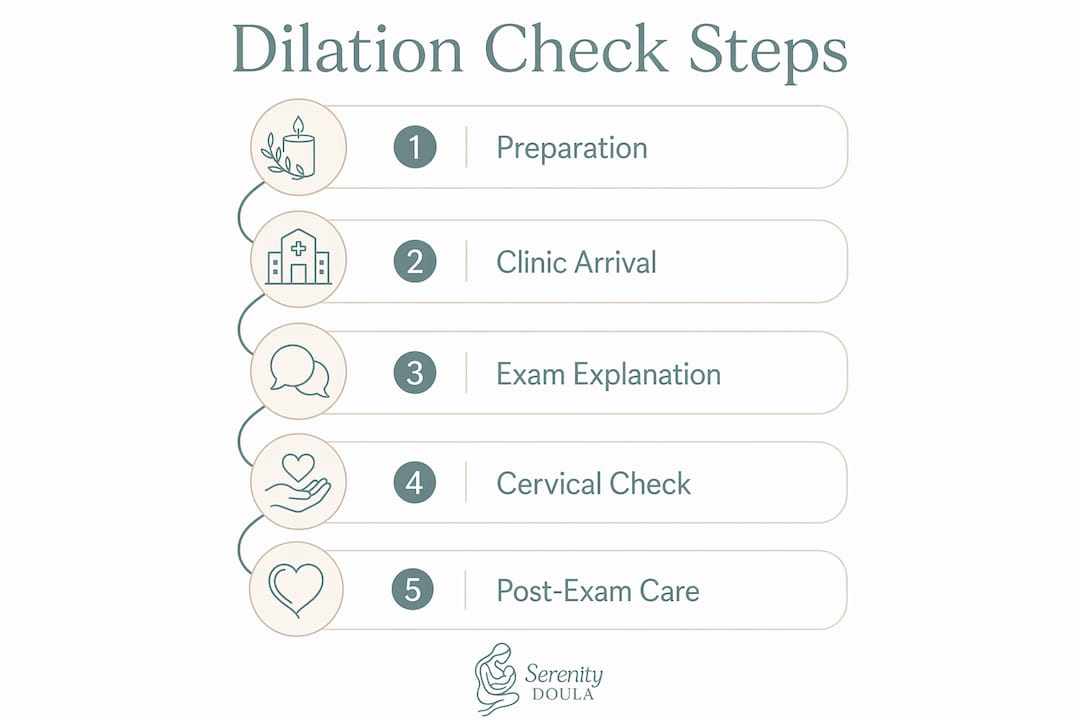
Your first dilation check is performed by your OB, midwife, or labor nurse using two gloved fingers to manually assess your cervix. The provider gently reaches through the vaginal canal to feel the cervix and estimate how many centimeters it has opened. Dilation is measured from 0 to 10 cm, with 10 cm being fully dilated and ready for pushing. That number, combined with effacement and fetal station, gives your care team a fuller picture of your labor progress.
Here is a step-by-step breakdown of what typically happens:
- Your provider explains the exam. Before anything begins, your provider should tell you what they are about to do and why. Informed consent is required before any cervical check, meaning they must explain the purpose, answer your questions, and receive your explicit permission.
- You are positioned comfortably. You will lie on your back with your knees bent, similar to a routine pelvic exam. Relaxing your legs and taking a slow breath out during the exam can help.
- The exam itself is brief. The actual assessment takes about 30 to 60 seconds. Most people feel pressure and mild discomfort, but it is generally short and manageable.
- Your provider shares the findings. After the exam, they will tell you your dilation, effacement percentage, and fetal station, then explain what those numbers mean for your situation.
- Checks repeat as labor progresses. During active labor, assessments happen every 4 to 6 hours, though your provider may adjust that based on your individual progress and preferences.
One thing worth knowing: dilation measurements are subjective. There is no standardized tool used. Two providers may estimate slightly different numbers from the same exam, and that is completely normal. It does not mean something is wrong.
Pro Tip: Ask your provider to narrate what they are finding during the exam. Hearing “your cervix is soft and about 2 cm” in real time is far less anxiety-inducing than waiting in silence.
How to prepare and feel comfortable during your first cervical dilation check
Feeling nervous before your first cervical dilation check is completely understandable. The good news is that there are real, practical ways to make the experience feel less intimidating for both you and your partner.
- Speak up before the exam starts. Tell your provider if you have had painful pelvic exams in the past, if you feel anxious, or if you want them to go slowly. A good provider will adjust their approach based on your feedback.
- Use your breath. A slow exhale right as the exam begins helps relax your pelvic floor muscles. Think of it like the breath you take before a blood draw. It genuinely reduces tension.
- Adjust your position. Placing your feet flat on the table and letting your knees fall slightly outward (rather than squeezing them together) makes the exam more comfortable. Your comfort during internal exams is something you can actively influence.
- Bring your support person. Having your partner, doula, or a trusted friend in the room gives you something to focus on and someone to hold your hand. That presence matters more than most people realize.
- Know you can pause or stop. You have the right to say “not right now” or to stop the exam at any point. This is your body and your choice, always.
After the exam, some light spotting or cramping is normal. If you want to know more about what sensations to expect afterward, Serenity Doula has a helpful resource on pain after cervical exams that walks you through what is typical and when to call your provider.
Pro Tip: If you are working with a doula, ask them to help you practice pelvic floor relaxation techniques before your 36-week appointment. Going in with that skill already practiced makes a noticeable difference.

Common questions and misconceptions about dilation checks
A lot of anxiety around dilation checks comes from misunderstandings about what the numbers actually mean. Here is a clear look at the most common myths versus the facts.
| Myth | Fact |
|---|---|
| “Being 3 cm means labor is starting soon.” | Dilation does not predict labor timing. You can stay at 3 cm for days or progress to 10 cm within hours. |
| “I can check my own dilation at home.” | Self-checking increases infection risk, especially if your membranes have ruptured. It is also unreliable. Leave this to your provider. |
| “I have to agree to every cervical check.” | Cervical checks are elective. You can refuse or delay any exam at any time without affecting the quality of your care. |
| “A higher dilation number means a faster labor.” | Dilation is just one part of the picture. How you are coping with contractions and other physical signs often tell a more complete story of progress. |
One alternative worth knowing about: the “purple line” is a non-invasive marker that appears at the base of the spine in about 75% of laboring people and can indicate dilation progression without a vaginal exam. Not all providers use it, but it exists as an option worth asking about.
When your provider might recommend your first dilation check
Understanding the timing behind a dilation check appointment helps you feel less caught off guard when your provider brings it up.
- Around 36 to 37 weeks: This is when routine cervical checks typically begin, giving your provider a baseline before labor begins.
- Earlier if preterm labor signs appear: If you experience regular contractions, pelvic pressure, or unusual discharge before 36 weeks, your provider may recommend a check sooner to rule out preterm dilation.
- When you report new symptoms: Back pain that comes in waves, a feeling of heaviness in your pelvis, or a change in discharge are all reasons your provider might want to assess your cervix.
- During active labor: Checks become more frequent as labor progresses, helping your team make decisions about timing, positioning, and interventions.
- If you decline: Your provider will note your preference and continue monitoring through other means, such as contraction patterns, fetal heart rate, and your overall coping. No cervical check is mandatory.
Your provider uses dilation information to make clinical decisions, like whether to recommend staying at the hospital or heading home to labor a bit longer. But those decisions are always made with your input, not without it.
Key takeaways
The first dilation check is a brief, elective vaginal exam that measures cervical opening, effacement, and fetal station. It is a tool to inform your care, not a verdict on your labor.
| Point | Details |
|---|---|
| Dilation is measured 0 to 10 cm | 10 cm means fully dilated and ready to push; checks typically begin around 36 to 37 weeks. |
| Informed consent is required | Your provider must explain the exam and receive your permission before proceeding. |
| Numbers do not predict timing | You can stay at the same dilation for days or progress quickly; the number is a snapshot, not a forecast. |
| You can decline or pause any check | Cervical exams are elective; your comfort and consent guide when and whether they happen. |
| Preparation reduces discomfort | Breathing techniques, positioning, and having a support person present all make the exam more manageable. |
What I really want you to know about dilation checks
Here is something I wish more people heard before their first appointment: the number your provider reads out does not define your labor. I have sat with so many families who walked out of a 36-week check feeling deflated because they were “only 1 cm,” or anxious because they were “already 3 cm.” Neither of those numbers tells you when your baby is coming.
What I find more meaningful is how you feel going into labor. Are you informed? Do you feel like you have a say in what happens to your body? Those things matter far more than a centimeter count. The dilation check is a tool, and like any tool, it is only useful when it is used with your full understanding and agreement.
I also want to name something that does not get said enough: you are allowed to say no. Not just once. Every single time. Your consent is not a one-time checkbox. It is an ongoing conversation, and any provider worth their role will honor that. If you want to explore your rights around cervical exams more deeply, the Myserenitydoula guide on refusing cervical checks is a good place to start.
You are not carrying this alone, and you deserve to feel grounded and seen at every appointment.
How Serenity Doula supports you through labor and dilation checks
Knowing what to expect is one thing. Having someone beside you who can help you breathe through it, advocate for your preferences, and keep you grounded is something else entirely.

At Myserenitydoula, our pregnancy and birth support is built around exactly this kind of personalized, hands-on care. We help you prepare for every part of labor, including dilation checks, so nothing catches you off guard. From relaxation techniques to helping you communicate your preferences to your care team, we are with you every step of the way. If you want to go into labor feeling confident and supported, explore our childbirth education programs to build that foundation before your due date arrives.
FAQ
What is a first dilation check?
A first dilation check is a vaginal exam performed by a healthcare provider to measure how open the cervix is, typically on a scale of 0 to 10 cm. It also assesses effacement and fetal station to help evaluate labor progress.
When does the first dilation check usually happen?
Routine cervical checks typically begin around 36 to 37 weeks of pregnancy, or earlier if there are signs of preterm labor such as regular contractions or pelvic pressure.
Does the first dilation check hurt?
Most people feel pressure and mild discomfort during a dilation check, but the exam is brief and generally manageable. Relaxation techniques and slow breathing during the exam can reduce discomfort significantly.
Can I refuse a dilation check?
Yes. Cervical checks are elective, and you have the right to decline or pause any exam at any time. Informed consent is required before every check, and your provider should respect your decision without affecting the quality of your care.
Does dilation tell you when labor will start?
No. Dilation is a moment-in-time measurement and cannot predict when labor will begin or how long it will last. A person can remain at the same dilation for several days or progress rapidly within hours.