

TL;DR:
- Practicing mindfulness techniques like breath awareness and body scanning during pregnancy prepares mothers to experience childbirth calmly and confidently. Consistent daily practice and partner involvement enhance the effectiveness of mindful birthing, reducing anxiety and improving outcomes in any birth setting. Starting early and integrating simple routines build automatic responses that support presence and resilience throughout labor.
Mindful birthing is the practice of using focused awareness and meditation techniques to experience childbirth with calm presence and reduced stress. Formally known as Mindfulness-Based Childbirth and Parenting (MBCP), this approach combines breath awareness, body scanning, and visualization to prepare your mind and body for labor. Research confirms that mindfulness training reduces anxiety and increases childbirth satisfaction in first-time mothers. That means you are not just coping with labor. You are actively building the mental tools to move through it with confidence.
How to practice mindful birthing: the core techniques
Mindful birthing rests on a handful of repeatable techniques that, practiced daily, become second nature by the time labor begins. Think of it like training for a marathon. You do not show up on race day without having run the course in pieces first.

Breath awareness is the foundation of every mindful birth practice. The 4-7-8 breathing pattern, where you inhale for 4 counts, hold for 7, and exhale for 8, is one of the most beginner-friendly techniques available. It activates your parasympathetic nervous system, which is the part of your body responsible for rest and calm. Even 10 to 15 minutes of daily practice builds real, measurable relief from anxiety.
Here are the core mindful birth practices to build into your routine:
- Mindful breathing: Practice slow, deliberate breath cycles during quiet moments, meals, or even while waiting in line. The goal is to make conscious breathing automatic.
- Body scanning: Lie down and move your attention slowly from your feet to your head, noticing tension without trying to fix it. This builds body awareness that helps you recognize and release tightness during contractions.
- Mindful yoga: Gentle prenatal yoga combines movement with breath, increasing physical awareness and releasing the hip and lower back tension common in late pregnancy.
- Informal mindfulness: Bring full attention to everyday activities like eating, showering, or walking. This trains your mind to stay present, which is exactly what you need during labor.
Supervised training plus consistent home practice is what makes mindfulness actually work during labor. Occasional sessions are not enough to build the automaticity you need when contractions are intense.
Pro Tip: Set a daily phone reminder for your mindfulness practice. Treat it like a prenatal vitamin. Missing one day is fine. Missing a week means starting over from scratch.
How do you structure a mindful birthing practice plan?
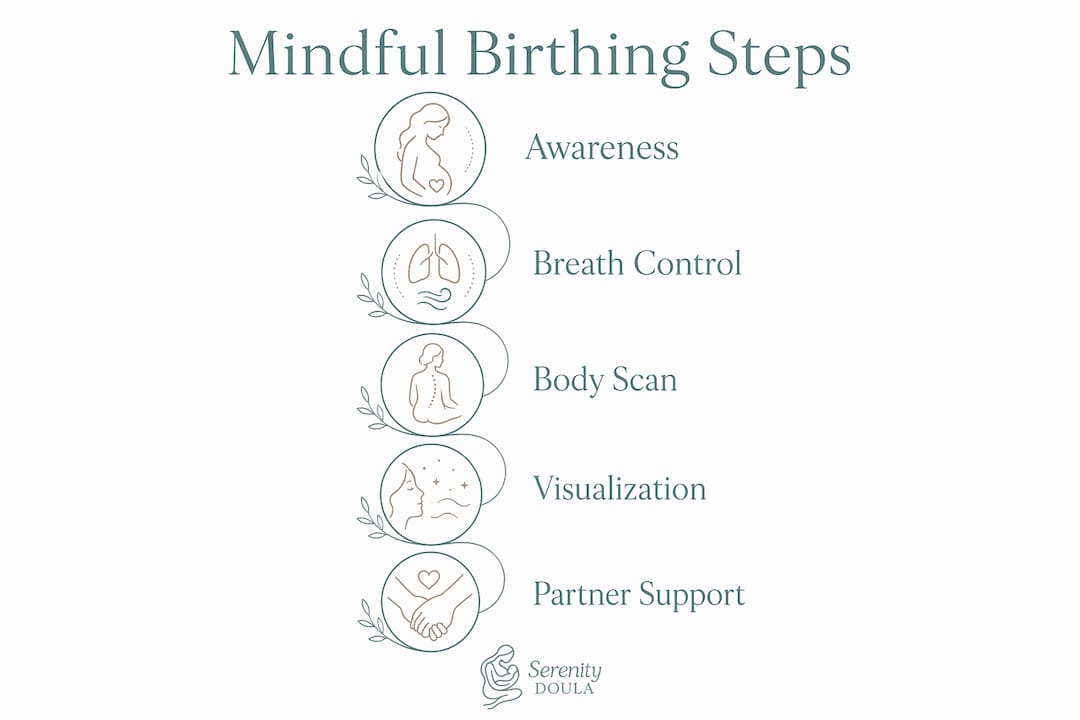
Building a practice plan before labor gives you a clear roadmap and removes the guesswork. Daily practice of 30 to 40 minutes, combining formal meditation and informal mindfulness, is the evidence-backed standard for meaningful results.
Here is a step-by-step structure you can start this week:
- Join an MBCP class or guided group. Mindfulness-Based Childbirth and Parenting programs combine focused attention, body awareness, and childbirth education in a structured format. Group settings also give you community, which matters more than most people expect.
- Schedule your daily practice. Split your 30 to 40 minutes into a 20-minute formal session (body scan or guided meditation) and 10 to 20 minutes of informal mindfulness woven into your day.
- Add visualization. Spend five minutes each day picturing your labor progressing calmly. Visualize your breath moving through contractions. Some parents use self-hypnosis scripts alongside this, which activates natural pain-relief pathways by engaging the parasympathetic nervous system and releasing endorphins.
- Set up your birth environment in advance. Coordinate with your birth team to arrange comfort accommodations like lighting and music that support your mindfulness practice during labor. Knowing your environment is ready reduces one major source of pre-labor anxiety. You can also explore ideas for creating a calm birth space whether you are birthing at home or in a hospital.
- Write your ‘if-then’ coping plans. Decide in advance: If I feel a wave of fear, then I will return to my breath. If-then coping plans remove decision-making from the middle of a contraction, which is exactly when your thinking brain is least available.
Pro Tip: Record a five-minute guided body scan in your own voice. Hearing yourself guide you through relaxation during labor is surprisingly powerful and deeply personal.
What role does partner involvement play in mindful birthing?
Your partner is not just a support person in the room. They are an active part of your mindfulness practice. Partner engagement in MBCP classes improves outcomes for both people and significantly increases birth confidence. This is not a solo sport.
Here is how partners can show up fully:
- Learn the breathing scripts. A partner who can guide you through a 4-7-8 breath cycle during a contraction is worth more than any app. Practice this together at home so it feels natural, not rehearsed.
- Use physical support techniques. Counter-pressure on the lower back, hip squeezes, and slow circular massage during contractions are all evidence-informed comfort measures. Your partner should practice these before labor begins.
- Set up sensory anchors. Choose a playlist, a specific scent like lavender or eucalyptus, and a preferred lighting level together. These sensory cues become triggers for calm during labor because your nervous system has already associated them with relaxation.
- Prepare cue cards. Write simple, short reminders for each labor stage. Something like “breathe down, soften your jaw” or “you are doing it” gives your partner a script when they are not sure what to say.
- Practice mindfulness together. Couples who meditate together before birth report stronger emotional connection and better communication during labor. Even five minutes of shared breathing each evening counts.
For more ideas on preparing your mind and body together as a team, Myserenitydoula has a dedicated resource worth bookmarking.
How do you troubleshoot common mindful birthing challenges?
The most common reason mindful birthing does not work during labor is simple: people did not practice enough beforehand. Scheduled daily practice builds automaticity, so during labor you are running a practiced routine rather than trying to remember instructions under pressure.
Here are the most frequent challenges and how to handle them:
- You cannot focus during practice. This is normal. The goal is not a blank mind. It is noticing when your mind wanders and gently returning to your breath. That act of returning is the practice.
- You feel overwhelmed during a contraction. Use a breath anchor first. If that is not enough, shift to a body scan, moving attention away from the contraction and toward a neutral body part like your hands or feet. If panic rises, use sensory grounding: name five things you can feel, hear, or see.
- You skip days and lose momentum. Restart with two minutes, not forty. Perfectionism kills consistency. Two minutes of mindful breathing today is better than a full session you keep postponing.
- You try to force relaxation. This is the biggest mistake. Mindfulness is observation, not control. During labor, the goal is to notice sensations without fighting them. Fighting a contraction increases tension and pain perception. Observing it with curiosity keeps your nervous system calmer.
- Labor does not go as planned. Mindful birthing is a flexible toolkit, not a rigid script. Breath awareness works in a cesarean suite just as well as in a birth pool. The techniques travel with you regardless of how your birth unfolds.
Explore childbirth relaxation techniques for additional strategies that complement your mindfulness practice.
Key takeaways
Consistent mindful birthing practice transforms labor from something you endure into something you move through with presence, skill, and calm.
| Point | Details |
|---|---|
| Start with breath awareness | The 4-7-8 breathing pattern practiced daily is the most accessible entry point for mindful birthing. |
| Practice 30 to 40 minutes daily | Combining formal meditation and informal mindfulness builds the automaticity needed during labor. |
| Involve your partner actively | Partners who learn breathing scripts and sensory cues significantly improve birth outcomes and confidence. |
| Write if-then coping plans | Pre-decided responses to fear or tension remove decision-making from the hardest moments of labor. |
| Mindfulness adapts to any birth | Breath anchors and body scans work regardless of birth setting, interventions, or unexpected changes. |
Why I believe mindful birthing is worth starting today
I have worked with many families preparing for birth, and the ones who feel most grounded during labor share one thing: they practiced. Not perfectly. Not every single day without fail. But consistently enough that their breath became a reflex and their body scan became a comfort they could reach for without thinking.
What I find most meaningful about mindful birthing is that it shifts the entire frame. Birth stops being something happening to you and becomes something you are actively participating in. That shift matters. Mindfulness rewires brain responses to labor sensations, supporting presence rather than panic. And the benefits do not stop at the birth room door. Penn State research shows that mindfulness built during pregnancy carries into parenting, reducing stress and building resilience for the whole family.
My honest advice: start simple. Five minutes of mindful breathing tonight. A body scan before bed this week. You do not need to be a meditator to practice mindful birthing. You just need to begin.
— Alexis Wallace
Ready to deepen your mindful birth preparation?
Mindful birthing techniques are most powerful when they are supported by skilled, compassionate people who understand your goals. At Myserenitydoula, our childbirth education classes weave mindfulness directly into practical birth preparation, so you leave each session with tools you can use that same night. Our doulas are trained to reinforce your mindfulness practice during labor, guiding your breathing, supporting your partner, and helping you stay grounded when it matters most.
If you are ready to build a birth experience rooted in calm and confidence, explore our pregnancy and birth support services and schedule a consultation. You deserve a birth team that shows up prepared, just like you.
FAQ
What is mindful birthing exactly?
Mindful birthing is the practice of applying mindfulness techniques, including breath awareness, body scanning, and visualization, specifically to the experience of labor and childbirth. The formal program is called Mindfulness-Based Childbirth and Parenting (MBCP).
How early in pregnancy should I start practicing?
Starting in the second trimester gives you enough time to build consistent habits before labor. Daily practice of 30 to 40 minutes is the evidence-backed standard, and earlier practice means stronger automaticity by the time contractions begin.
Can mindful birthing reduce pain during labor?
Mindful hypnobirthing activates the parasympathetic nervous system and triggers endorphin release, which reduces pain perception during labor. It does not eliminate sensation but changes your relationship to it, making contractions more manageable.
Does my partner need to practice mindfulness too?
Partner involvement significantly improves outcomes. Partners who learn breathing scripts and comfort techniques in MBCP classes provide more effective support and report greater confidence during labor.
Does mindful birthing only work for natural births?
Mindful birthing techniques work across all birth types, including medicated births and cesarean deliveries. Breath anchors and body scans are adaptable tools that support calm presence regardless of how your birth unfolds.