

TL;DR:
- Birth trauma involves healing emotional wounds caused by distressing childbirth experiences, classified as childbirth-related PTSD. Therapy methods like EMDR and TF-CBT effectively process traumatic memories, especially when provided by trauma-informed specialists. Holistic support, peer connection, and open communication complement clinical care to promote lasting recovery.
Processing birth trauma is the deliberate, trauma-informed work of healing emotional wounds caused by a childbirth experience that felt frightening, out of control, or deeply distressing. Clinically, this falls under the umbrella of childbirth-related PTSD (CB-PTSD), a recognized condition distinct from general postpartum mood disorders. Perinatal experts confirm that trauma is subjective. Any birth experience that felt traumatic to you is valid, regardless of medical outcomes. If you are carrying something heavy from your birth, you are not alone, and real, effective support exists.
What are the common symptoms and effects of birth trauma?
Birth-related PTSD presents through four primary symptoms: reliving the event through flashbacks or nightmares, hyperarousal (feeling constantly on edge), avoidance of reminders, and negative thoughts about yourself or the birth. These symptoms set birth trauma apart from postpartum depression or anxiety, though the conditions can overlap. Recognizing the difference matters because the treatment paths are not the same.
Certain birth circumstances raise the risk significantly. Emergency cesarean sections are linked to higher rates of acute stress responses and postpartum PTSD within three months of delivery. That finding means unplanned interventions, loss of control in the delivery room, and feeling unsupported during labor are not minor concerns. They are documented risk factors that deserve clinical attention.
One of the biggest barriers to getting help is social pressure. ACOG has noted that cultural expectations to feel grateful after birth often delay recognition and recovery from birth trauma. That pressure is real, and it is harmful. You are allowed to feel hurt, angry, or scared about your birth, even if your baby is healthy.
Common birth trauma risk factors include:
- Unplanned or emergency cesarean delivery
- Unexpected medical interventions without clear communication
- Feeling ignored, dismissed, or unsupported by care providers
- History of prior trauma or anxiety
- Loss of bodily autonomy during labor
“Trauma is not what happens to you. It is what happens inside you as a result of what happened to you. Birth trauma is no different. Your nervous system’s response is the measure, not the medical chart.”
What are the most effective therapy methods for healing from birth trauma?
Trauma-focused therapy is the gold standard for birth trauma support. Three modalities stand out: Eye Movement Desensitization and Reprocessing (EMDR), Trauma-Focused Cognitive Behavioral Therapy (TF-CBT), and Narrative Exposure Therapy. Each approach works differently, but all three target the way traumatic memories are stored and processed in the nervous system.

EMDR is particularly well-suited for birth trauma. EMDR processes trauma through sensory fragments rather than requiring a full verbal retelling of the birth story. That distinction matters enormously. Many people fear that therapy means reliving every detail out loud. With EMDR, that is not the case, which significantly reduces the risk of retraumatization.
Treatment length varies, but significant progress typically occurs within 8–12 sessions of trauma-focused therapy. That is a meaningful timeframe. It means healing is not an open-ended process with no visible finish line. Pacing is tailored to your nervous system’s regulation state, with grounding techniques used to prevent emotional flooding during sessions.
Choosing the right therapist matters as much as choosing the right method. Here is what to look for:
- Trauma-specific credentials. Perinatal mental health clinicians often hold a PMH-C certification, indicating specialized training in both trauma therapy and perinatal care.
- Experience with birth trauma specifically. General talk therapists may lack the skills to treat CB-PTSD and can unintentionally minimize your experience.
- Familiarity with EMDR or TF-CBT. Ask directly whether the therapist uses these modalities.
- A trauma-informed approach. Your therapist should never pressure you to recount details before you feel ready.
Pro Tip: When calling a potential therapist, ask: “Do you have experience treating childbirth-related PTSD?” A confident, specific answer tells you a great deal about their preparation.
How can holistic support complement birth trauma counseling?
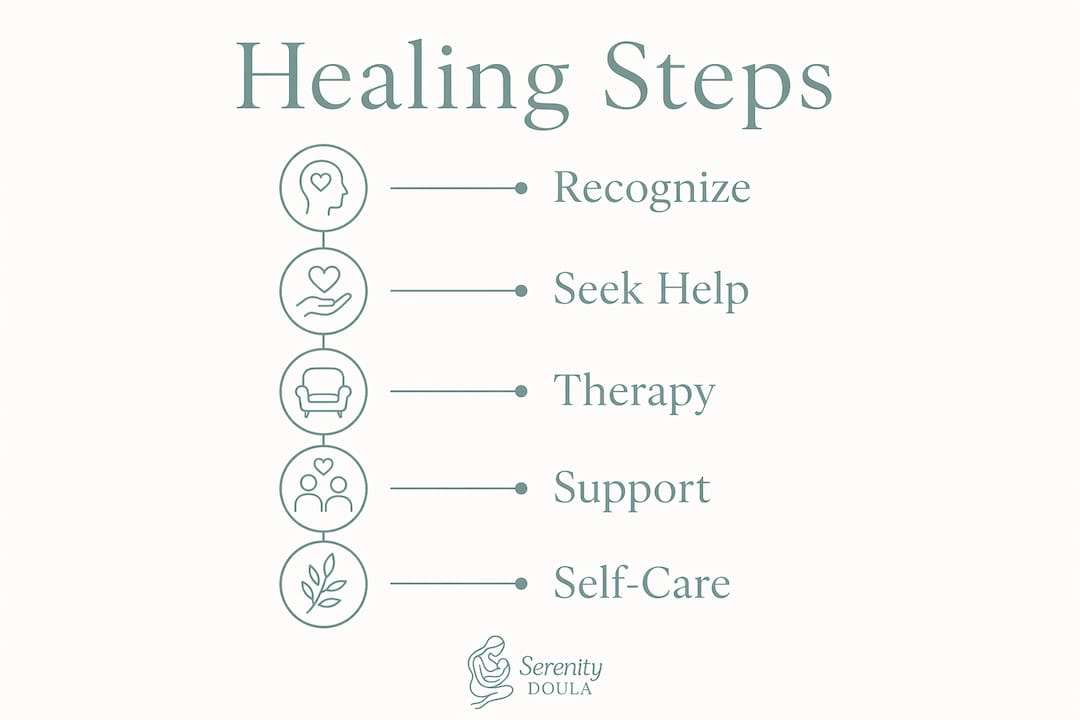
Therapy is the foundation, but lasting recovery from birth trauma also requires mindfulness, intentional rest, open communication with care providers, and peer connection to reduce isolation. These elements work alongside formal treatment, not instead of it. Think of them as the conditions that allow therapy to take root.
The postpartum period adds layers that make healing harder. Sleep deprivation, hormonal shifts, and cultural pressures create recovery barriers that do not exist in typical PTSD cases. A clinician who understands this will validate your experience without rushing you toward reframing or gratitude before you are ready.
Peer support is more powerful than most people expect. Peer support groups reduce isolation and provide lived-experience validation that professional treatment alone cannot replicate. Connecting with others who have been through similar births can make you feel seen in a way that is genuinely different from one-on-one therapy. For single parents or those without strong family networks, pregnancy community connections can be a meaningful first step toward that kind of support.
Practical holistic supports to consider alongside therapy:
- Mindfulness and grounding practices. Simple breathing exercises calm the nervous system between therapy sessions.
- Intentional rest. Sleep is not a luxury during recovery. Protecting it is a clinical priority.
- Gentle bonding practices. Skin-to-skin contact and slow, low-pressure time with your baby support attachment without forcing feelings.
- Honest conversations with your care team. Ask your OB, midwife, or pediatrician directly: “Do you screen for birth trauma or CB-PTSD?”
- Nutritional care. Postpartum nutrition affects mood and energy, both of which influence how your nervous system handles stress.
Pro Tip: You do not have to feel grateful to be a good parent. Giving yourself permission to grieve your birth experience is not selfishness. It is the beginning of real healing.
What steps should you take to start processing birth trauma?
Acknowledgment is the first step. Naming what happened to you as traumatic, without minimizing it, opens the door to real support. Many people spend months or years telling themselves they “should be over it” before seeking help. That delay costs real wellbeing.
When you are ready to find support, these steps will guide you:
- Validate your experience first. You do not need a clinical diagnosis to deserve care. If your birth felt traumatic, that is enough.
- Search for a PMH-C certified therapist in your area who lists birth trauma or perinatal PTSD as a specialty.
- Prepare for your first session by writing down two or three specific feelings or memories that bother you most. You do not need a full narrative.
- Ask about pacing. A trauma-informed care approach means your therapist follows your lead, not a fixed script.
- Access local resources. Families in Bucks County can connect with providers near Newtown, Doylestown, and Trinity Health St. Mary who are familiar with perinatal mental health needs.
- Consider doula support. A postpartum doula can hold space for your experience while you build your clinical support team.
Key Takeaways
Trauma-focused therapy combined with peer support and intentional self-care gives birth trauma survivors the most complete path to lasting recovery.
| Point | Details |
|---|---|
| Trauma is subjective | Any birth that felt traumatic is valid, regardless of medical outcomes or clinical severity. |
| Four core symptoms | CB-PTSD presents as flashbacks, hyperarousal, avoidance, and negative cognition, distinct from postpartum depression. |
| EMDR and TF-CBT lead treatment | These modalities process trauma without requiring full verbal retelling, reducing retraumatization risk. |
| Specialist credentials matter | Seek a PMH-C certified therapist with specific birth trauma experience, not a general talk therapist. |
| Holistic support accelerates healing | Peer connection, mindfulness, rest, and open provider communication work alongside formal therapy. |
What I have learned from sitting with birth trauma survivors
I have supported families through births that looked “perfect” on paper and left the parent shattered inside. That gap between the medical record and the lived experience is where birth trauma lives, and it is the part that gets dismissed most often.
What I have found, after more than a decade of this work in Bucks County, is that the parents who heal fastest are not the ones who push hardest. They are the ones who allow themselves to be believed. The moment someone says “yes, that was hard, and your feelings make sense,” something shifts. That is not therapy. That is the precondition for therapy to work.
I also want to say this plainly: doula support is not a replacement for trauma-focused clinical care. What a doula offers is presence, validation, and continuity. We can help you articulate what happened, sit with you in the hard feelings, and connect you to the right clinical resources. That combination, a skilled therapist and a consistent support person, is what I have seen move people from surviving to genuinely feeling like themselves again.
If you are reading this and wondering whether what you experienced “counts,” it does. Trust that instinct. Seek the support you deserve, and pace yourself with compassion.
— Alexis Wallace
Serenity Doula’s support for birth trauma recovery in Bucks County
Families in Newtown, Doylestown, and across Bucks County do not have to process a difficult birth alone. Serenity Doula offers trauma-informed pregnancy and birth support that centers your emotional experience alongside your physical recovery. Whether you are still pregnant after a previous traumatic birth or navigating the postpartum period right now, personalized doula care can provide the consistent, validating presence that makes clinical treatment more effective.
Serenity Doula works alongside your OB, midwife, and mental health team, not in place of them. The goal is a circle of care that sees all of you. Book a free consultation to talk through where you are and what kind of support would feel right.
FAQ
What is birth trauma, exactly?
Birth trauma is a deeply distressing childbirth experience that triggers symptoms of PTSD, including flashbacks, hyperarousal, avoidance, and negative thinking. The experience is defined by how it felt to the parent, not by clinical outcomes.
How long does it take to heal from birth trauma?
Significant progress typically occurs within 8–12 sessions of trauma-focused therapy such as EMDR or TF-CBT, though complex cases may require longer treatment.
Can a doula help with birth trauma?
A doula provides emotional validation, continuity of care, and connection to clinical resources. Doula support complements trauma-focused therapy but does not replace it.
What type of therapist should I look for?
Look for a therapist with a PMH-C certification or documented experience in perinatal mental health and trauma-specific modalities like EMDR or TF-CBT. General talk therapists often lack the specialized skills needed for CB-PTSD.
Is it normal to feel traumatized even after a “healthy” birth?
Yes. Trauma is determined by your subjective experience, not by medical outcomes. A birth can result in a healthy baby and still leave the parent with genuine PTSD symptoms that deserve professional attention.