

TL;DR:
- Postpartum nutrition involves targeted intake of calories, protein, micronutrients, and fluids to support healing and milk production. Proper nutrition and hydration, individualized based on recovery, help mothers regain energy and address unique needs like blood loss or dietary preferences.
Postpartum nutrition is defined as the targeted intake of energy, protein, micronutrients, and fluids that your body needs to heal after birth and sustain milk production. This is a distinct metabolic life stage, not simply a return to how you ate before pregnancy. Lactation sustains elevated needs for up to 12 months or longer, which means what you eat in the weeks and months after delivery matters far more than most new mothers expect. This guide to postpartum nutrition essentials walks you through what your body actually needs, how to build a realistic meal plan, and how to personalize your approach based on your recovery.
What are the key nutrient requirements for postpartum recovery and breastfeeding?
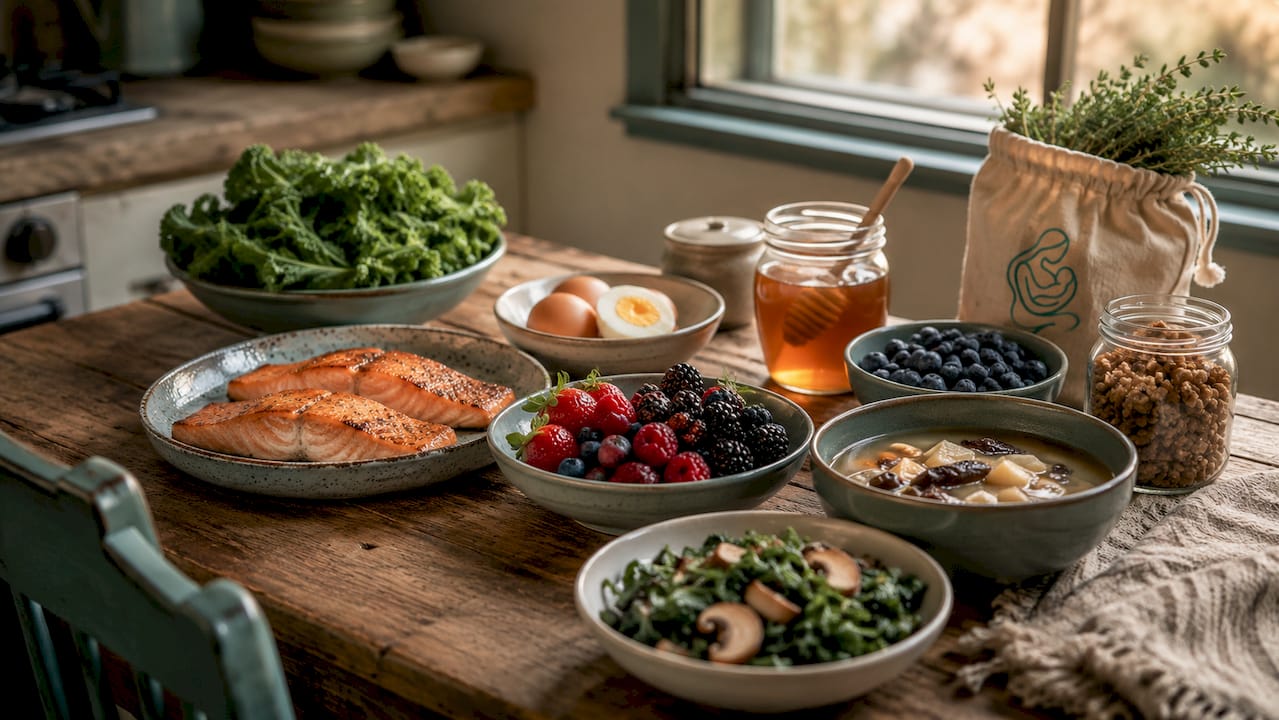
Postpartum nutrition essentials center on six core areas: calories, protein, iodine, choline, calcium, and iron. Getting each one right supports tissue repair, milk production, and your energy as a new mother.
Calories and energy
Breastfeeding mothers need an additional 330–400 kcal per day above pre-pregnancy intake. That is roughly the equivalent of a cup of Greek yogurt with fruit and a handful of nuts added to your daily eating. Skipping those calories does not protect your figure. It depletes your energy and can reduce milk supply.
Protein
Aim for 25–35 grams of protein per meal to support tissue repair and sustained energy. Practical sources include:
- Eggs (6g per egg)
- Greek yogurt (15–20g per cup)
- Legumes such as lentils and chickpeas (15–18g per cup cooked)
- Poultry and fish (25–30g per 3.5 oz serving)
Three protein-forward meals per day, plus one or two snacks, covers most mothers’ needs without complicated tracking.
Micronutrients that matter most
- Iodine: 290 mcg daily supports infant brain development through breast milk. Dairy, seafood, and iodized salt are your best food sources.
- Choline: 550 mg daily is the CDC target. Eggs and beef liver are the richest sources. Most mothers fall short.
- Calcium: ACOG recommends 1,000–1,300 mg daily to protect bone density during lactation. Dairy, fortified plant milks, and leafy greens all contribute.
- Iron: Especially critical after heavy blood loss. Red meat, lentils, and fortified cereals help, but supplementation may be necessary.
Pro Tip: Many prenatal vitamins lack adequate iodine and choline for the postpartum stage. Check your supplement label and ask your provider whether a postpartum-specific formula makes sense for you.
How to create a practical postpartum meal plan that fits your lifestyle
A realistic postpartum meal plan is built around simplicity, not perfection. Your schedule is unpredictable, your sleep is broken, and your appetite may swing wildly from day to day. The goal is consistent nourishment, not culinary achievement.
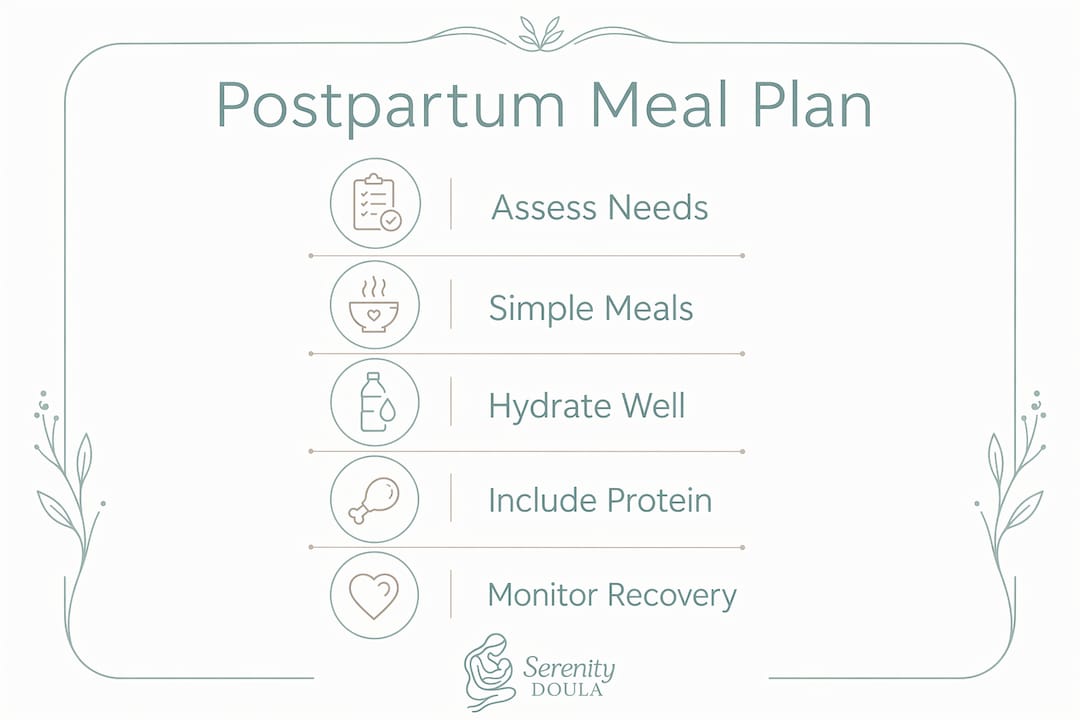
Soft, nutrient-dense foods and liquid calories outperform complex meal plans for consistent nourishment in the early weeks. Think oatmeal with nut butter, smoothies with protein powder and frozen spinach, or lentil soup that reheats in two minutes.
Here is a practical framework for structuring your days:
- Anchor breakfast with protein. A two-egg scramble with cheese, or Greek yogurt with seeds, sets your blood sugar and energy for the morning feed cycles.
- Batch cook one grain and one protein weekly. Brown rice and shredded chicken, for example, become the base for bowls, wraps, and soups without daily cooking effort.
- Keep snacks visible and within reach. Almonds, string cheese, hard-boiled eggs, and whole-grain crackers on the counter mean you eat even when you cannot sit down.
- Use liquid calories strategically. A smoothie with Greek yogurt, banana, nut butter, and milk delivers 400–500 kcal and 20–25g of protein in under five minutes.
- Eat before or during feeds, not after. Your appetite often disappears once the baby settles. Eating proactively prevents long gaps in intake.
Hydration is equally non-negotiable. Thirst cues lag during breastfeeding due to stress and fatigue, so you cannot rely on feeling thirsty to prompt drinking. A large water bottle placed at every nursing spot in your home is more effective than any scheduled intake plan.
Pro Tip: Keep a 32-oz water bottle at your nursing chair, your bedside, and your kitchen counter. You will drink more without thinking about it. For more ideas on eating well under pressure, these practical healthy eating tips translate well to the postpartum context.
How to individualize postpartum nutrition based on your recovery
Healthcare providers emphasize individualized nutrition plans postpartum because no two recoveries look the same. Your birth experience, feeding method, and dietary preferences all shape what your body needs.
After heavy blood loss or cesarean delivery
Significant blood loss during delivery requires targeted iron repletion, not just a standard diet adjustment. Hemoglobin levels may not recover automatically after heavy blood loss. Ask your provider about a blood panel at your six-week visit to evaluate whether supplemental iron is appropriate. A personalized postpartum care plan can help you track these recovery milestones alongside your nutrition goals.
For vegan and vegetarian mothers
Plant-based diets require deliberate attention to:
- Vitamin B12: Found almost exclusively in animal products. Supplementation is necessary for vegan mothers.
- Zinc: Pumpkin seeds, legumes, and fortified cereals help, but absorption is lower from plant sources.
- Omega-3 fatty acids (DHA/EPA): Algae-based supplements provide the same DHA found in fish without animal products.
- Iron: Pair plant-based iron sources like lentils and spinach with vitamin C to improve absorption.
If you are bottle feeding
Your calorie and protein needs are lower without lactation demands, but recovery nutrition still matters. Tissue repair, hormonal rebalancing, and sleep deprivation all increase your body’s need for protein and micronutrients. Do not assume you can simply return to pre-pregnancy eating patterns immediately.
Persistent fatigue that does not improve with rest and adequate food is a signal worth discussing with your provider. It may reflect dietary insufficiency, anemia, or thyroid changes, all of which are addressable with the right evaluation.
What are common postpartum nutrition challenges and how can you overcome them?
The gap between knowing what to eat and actually eating it is wide in the postpartum weeks. These are the most common obstacles and how to work around them.
- Dehydration from thirst lag. Breastfeeding suppresses reliable thirst signals. Constant water access, not willpower, solves this. Place water bottles everywhere you feed or rest.
- Low appetite after birth. Hormonal shifts, pain medication, and exhaustion all suppress hunger. Liquid calories and soft foods like smoothies, soups, and yogurt maintain intake when solid meals feel like too much effort.
- Overly complex meal plans. A plan that requires 45 minutes of cooking will not survive week two. Simplify to five or six repeatable meals you can make on autopilot.
- Skipping meals due to fatigue. Routine eating, even small amounts on a loose schedule, prevents the energy crashes that make everything harder. Set a gentle phone reminder if needed.
- Emotional eating or loss of appetite from mood changes. Postpartum mood shifts affect appetite in both directions. If you notice consistent disinterest in food alongside low mood, raise it with your provider. Nutrition and mental health are connected, and both deserve attention.
Pro Tip: Ask a partner, family member, or friend to prep one batch meal per week for the first six weeks. Receiving food is not a weakness. It is one of the most practical forms of postpartum support.
You can find more ideas for building a postpartum recovery foundation that includes nutrition, rest, and emotional care in one place.
Key takeaways
Postpartum nutrition requires sustained, targeted intake of calories, protein, iodine, choline, calcium, and iron to support both recovery and breastfeeding for up to 12 months after birth.
| Point | Details |
|---|---|
| Calorie increase for breastfeeding | Add 330–400 kcal daily above pre-pregnancy intake to sustain milk production and energy. |
| Protein at every meal | Target 25–35g per meal using eggs, Greek yogurt, legumes, poultry, or fish. |
| Check your supplement label | Many prenatal vitamins lack adequate iodine and choline for the postpartum stage. |
| Individualize for your recovery | Cesarean birth, heavy blood loss, and plant-based diets each require specific nutrient adjustments. |
| Simplify your meal plan | Repeatable, protein-forward meals and constant water access outperform complex plans in the early weeks. |
What I have learned supporting postpartum mothers in Bucks County
Working with families across Newtown, Doylestown, and the broader Bucks County area, I have seen the same pattern repeat: mothers who plan their postpartum nutrition before birth recover with noticeably more energy and confidence than those who try to figure it out in week two with a newborn in their arms.
The biggest misconception I encounter is that postpartum eating is about “bouncing back.” It is not. It is about fueling a body that just did something extraordinary and is now doing something equally demanding. The mothers I support who eat enough protein, stay hydrated, and keep their supplement routine consistent are the ones who tell me at six weeks that they feel like themselves again. That is not a coincidence.
My honest advice: build your meal plan before your due date, stock your freezer, and ask your provider specific questions about iron and iodine at your postpartum visit. You deserve that level of care.
— Alexis Wallace
Serenity Doula’s approach to postpartum nutrition support
Knowing what to eat is one thing. Having someone in your corner to help you actually do it, especially in those first exhausting weeks, is another.
At Serenity Doula, postpartum support goes beyond birth. The pregnancy and birth support services include personalized guidance on recovery nutrition, supplement planning, and building realistic routines that fit your life. Whether you delivered at Trinity Health St. Mary or at home, the support is tailored to your specific recovery. Serenity Doula serves families across Bucks County who want evidence-based, compassionate care from someone who has seen what actually works. Book a free consultation to talk through your postpartum plan before your baby arrives.
FAQ
What are postpartum nutrition essentials for breastfeeding mothers?
Breastfeeding mothers need an additional 330–400 kcal per day, 25–35g of protein per meal, 290 mcg of iodine, 550 mg of choline, and 1,000–1,300 mg of calcium daily. These targets support both milk production and maternal recovery.
How long do elevated postpartum nutrition needs last?
Lactation sustains elevated nutritional needs for up to 12 months or longer, making postpartum a distinct and extended metabolic life stage. Even after weaning, recovery nutrition remains important for several months.
Do I need a different supplement after birth?
Many prenatal vitamins do not contain adequate iodine or choline for the postpartum stage. Ask your provider to review your current supplement and consider whether a postpartum-specific formula better meets your needs.
What should I eat if I have a low appetite after birth?
Soft, nutrient-dense foods and liquid calories, such as smoothies, soups, and yogurt, are the most effective strategy when appetite is low. Small, frequent meals with protein at each sitting maintain energy without requiring large portions.
How do I know if fatigue is a nutrition problem or something else?
Fatigue that does not improve with rest and adequate food may signal anemia, thyroid changes, or dietary insufficiency. Ask your provider for a blood panel at your six-week postpartum visit to rule out treatable causes.