
TL;DR:
- Research indicates that staying upright and shifting positions during labor can improve outcomes, reduce pain, and shorten labor.
- Modern, adjustable labor beds and supportive tools like birth balls enable mobility, which is crucial for a positive birth experience, especially when combined with doula support and informed advocacy.
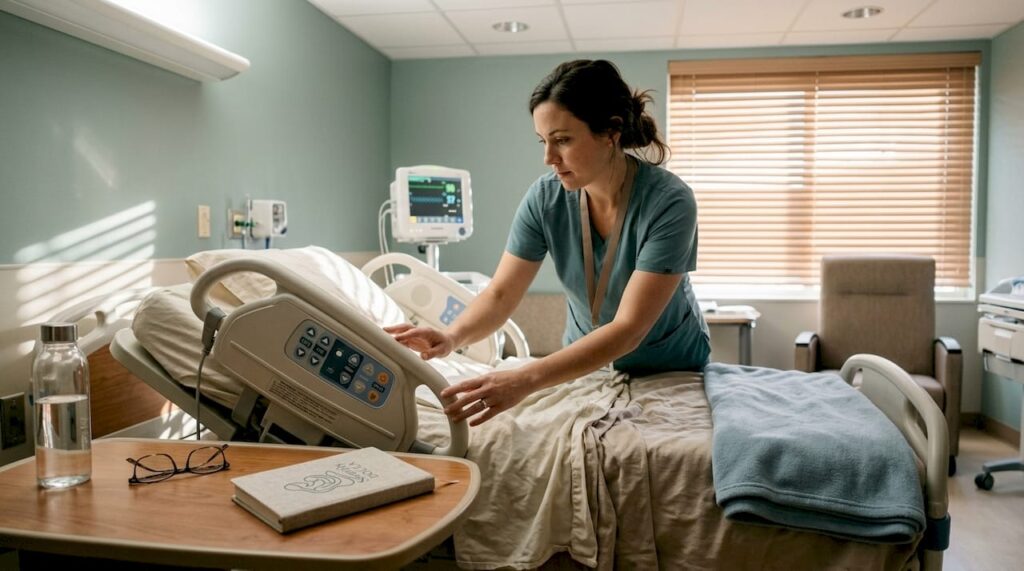
Most parents picture a hospital labor delivery bed and assume it means lying flat on their back for hours, surrounded by beeping monitors. That picture is outdated and, frankly, limiting. Research shows that staying upright, shifting positions, and keeping your body moving during labor can genuinely improve your experience and your outcomes. Your labor bed is a tool, not a sentence. Understanding how to use it, what features to request, and who to bring into your corner can turn an unfamiliar hospital room into a space where you feel grounded, heard, and in control.
Table of Contents
- Rethinking the labor delivery bed: What evidence tells us
- Why mobility matters: Labor bed configurations and flexibility
- Personalizing your labor experience: Doula support and bed choices
- Putting it together: How to advocate for your ideal labor bed setup
- Why labor bed choices are just the beginning: Hard-won lessons from holistic support
- Support your birth journey with holistic guidance
- Frequently asked questions
Key Takeaways
| Point | Details |
|---|---|
| Movement matters | Staying mobile and using upright positions during labor can lead to better outcomes for many people. |
| Bed flexibility | A modern labor bed and clear communication with your team enable more comfort and choices. |
| Doula support | Continuous doula support can help reduce interventions and personalize your labor experience. |
| Collaborate early | Discuss your labor bed preferences early with your provider and support team to ensure your needs are met. |
Rethinking the labor delivery bed: What evidence tells us
It is easy to assume that hospital protocol means lying still until it is time to push. But that assumption has not kept up with the evidence. Researchers and midwives have known for decades that movement and position changes during labor can reduce pain, shorten the first stage, and lower the likelihood of unnecessary interventions.
“Positioning and mobility during labor are not just comfort preferences; they have empirical support for outcomes in low-risk labor, which affects what ‘best’ labor/delivery bed setup looks like in practice.” Cochrane Review on maternal position during the first stage of labor
Walking, swaying, sitting upright, leaning forward on a birth ball, or kneeling can all encourage your baby to descend more efficiently. These are not fringe ideas. They are backed by systematic reviews and endorsed by leading maternity care organizations.
When you work with evidence-based birth frameworks, you start to see the labor bed differently. It is not a destination. It is one option among many. You might spend parts of your labor sitting on the edge of the bed, standing beside it, or using it as a prop to lean against during contractions. That flexibility is yours to claim.
Key points to carry with you:
- Upright positions during the first stage are associated with shorter labors and fewer cesareans
- Walking and swaying can ease back labor and help the baby rotate into a better position
- Flat-on-back positioning (called the supine position) is actually one of the least efficient choices for many laboring people
- Your care team should be open to adjusting the bed rails, repositioning pillows, and making space for you to move
The labor bed, when used thoughtfully, becomes a flexible foundation rather than a fixed constraint.
Why mobility matters: Labor bed configurations and flexibility
Knowing the evidence, let’s explore how bed features and setup affect your choices during labor.
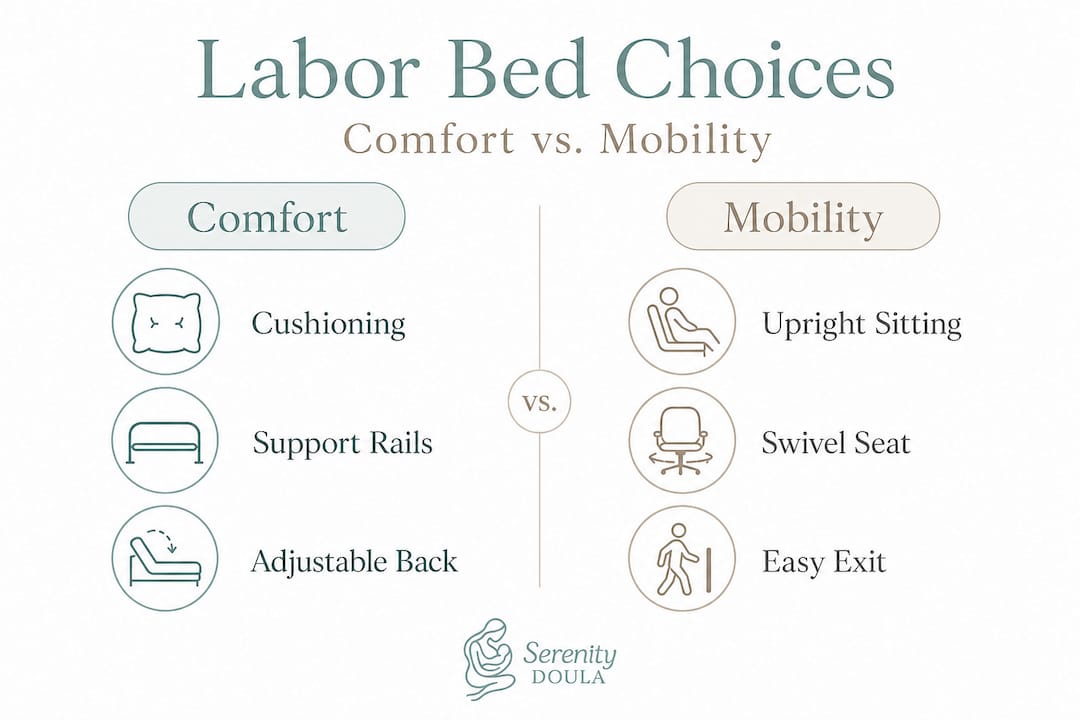
Modern labor and delivery beds are more adaptable than they look. Many can be broken down into multiple sections, raised or lowered electronically, and adjusted so you can sit fully upright, kneel forward, or support yourself with raised rails. Some facilities also offer peanut balls (inflatable positioning tools shaped like a peanut), birth balls, and floor mats.
Here is a quick comparison of your likely options:
| Option | Mobility level | Best for |
|---|---|---|
| Fully adjustable labor bed | High | Upright sitting, kneeling, side-lying |
| Traditional hospital bed | Moderate | Semi-reclined, supine |
| Floor mat or birth ball | Very high | Active labor, low-intervention births |
| Epidural with peanut ball | Moderate | Position changes with limited mobility |
If you choose an epidural, which is absolutely a valid choice, your mobility will be reduced because you will not be able to walk safely. But that does not mean you are stuck in one position. Epidural positioning during the second stage can be flexible with staff support. Side-lying, supported semi-sitting, and peanut ball use between contractions can still encourage baby’s descent and reduce pressure on your tailbone.
Here are four practical steps you can take to maximize mobility at your facility:
- Ask early. Find out during a hospital tour whether their beds adjust to kneeling or forward-leaning positions.
- Request the tools. Ask nurses about peanut balls, birth balls, and squat bars when you arrive.
- Loop in your support team. Your partner and doula can help you shift positions safely, especially with an epidural. Partner labor support is incredibly valuable here.
- Communicate your preferences in writing. A simple birth preferences note shared with your nurse at admission sets the tone immediately.
Pro Tip: If you are planning to labor without an epidural for as long as possible, spend the first stage of labor off the bed as much as you comfortably can. Use the bed for rest between contractions and save it for when you truly need its support. Knowing the types of childbirth support available helps you plan ahead.
Personalizing your labor experience: Doula support and bed choices
Having covered bed options, let’s unpack how a doula and a supportive team make those options truly work for you.
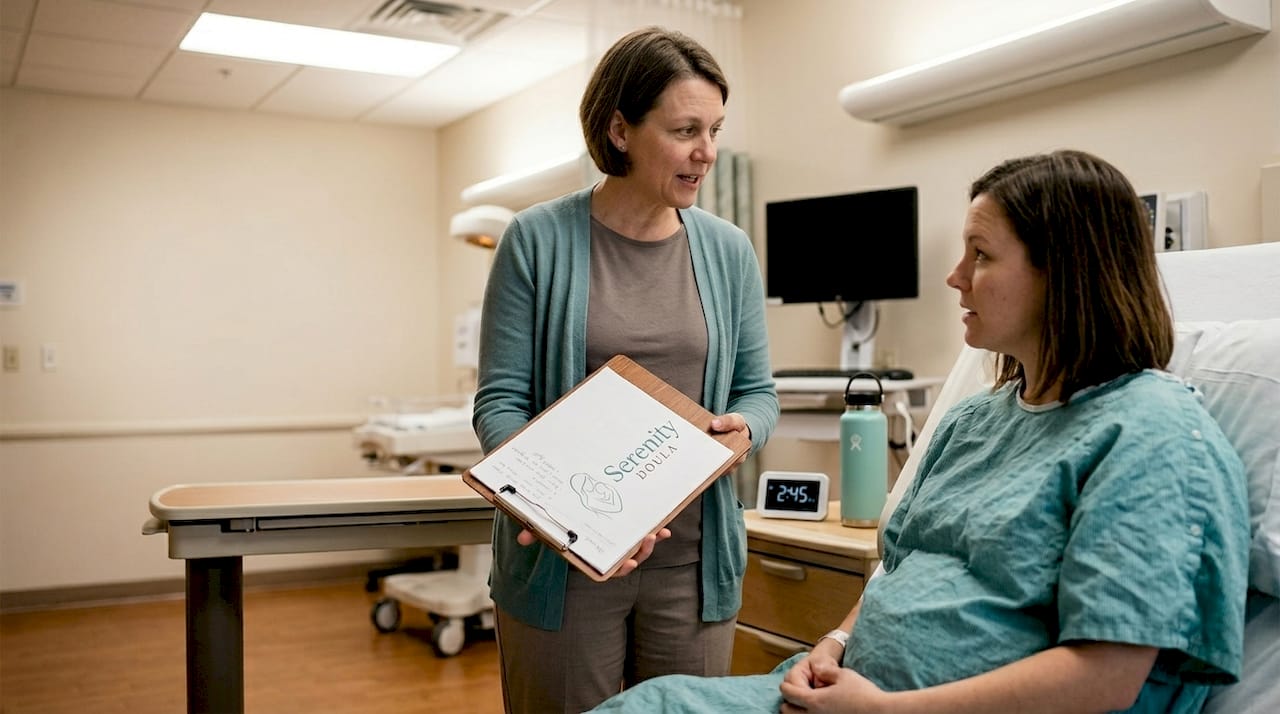
You can read every study on labor positioning, but knowing what to ask for and feeling confident enough to ask for it in the middle of active labor are two different things. That is where continuous doula support becomes genuinely powerful.
A doula is a trained birth companion who provides physical, emotional, and informational support throughout your labor and delivery. They do not replace your medical team. Instead, they help bridge the gap between what you know you want and what actually happens in the room.
| What a doula does | How it connects to bed and mobility choices |
|---|---|
| Helps you communicate preferences to nurses and providers | Advocates for position changes when you are in pain or exhausted |
| Suggests comfort positions and timing | Knows when to try side-lying vs. kneeling vs. standing |
| Provides hands-on physical support | Helps you safely shift positions, especially with an epidural |
| Offers emotional reassurance | Reduces fear that keeps muscles tense and labor stalled |
Research backs this up in meaningful ways. Systematic reviews on doula support show that continuous intrapartum (during labor) doula support is associated with lower cesarean rates compared to standard care alone, though results vary across studies and settings.
Here is what makes that support feel different in practice:
- Your doula arrives knowing your preferences, including your hopes for mobility and positioning
- They help you feel seen and supported through each phase, even when plans change
- They speak up for you when you are too tired or overwhelmed to advocate for yourself
- They keep the focus on your evolving needs, not a rigid plan
Understanding the role of a doula goes well beyond birth-day logistics. It includes building a relationship throughout your pregnancy so you feel truly held when it counts. For families exploring options in Pennsylvania, doula care benefits are especially relevant for those navigating hospital systems that may not have a strong culture of movement-friendly labor practices. If you are planning a VBAC (vaginal birth after cesarean), that advocacy becomes even more important, and VBAC doula support deserves its own thoughtful conversation.
Putting it together: How to advocate for your ideal labor bed setup
You have seen how research, bed features, and support interact. Now let’s make it actionable for you.
Advocacy in labor does not require confrontation. It requires clarity and preparation. If you walk into your delivery room knowing what to ask for, your care team is far more likely to accommodate you.
- Schedule a hospital tour or pre-admission call. Ask specifically about bed features, available positioning tools, and movement policies. Some units are more flexible than others.
- Write a brief birth preferences note. Include your top three positioning priorities. Keep it positive and concise. “I’d like to try upright positions during labor” lands better than a long list of demands.
- Practice position changes at home. Your doula or childbirth educator can walk you through how different positions feel before labor begins. This makes them easier to use when contractions are intense.
- Build in a plan for reassessment. Labor changes quickly. Review your preferences every few hours and stay open to adjusting. A side-lying position with a peanut ball might feel perfect at 6 centimeters, even if you planned to stand.
- Use simple scripts. Something like, “Can we adjust the bed so I can kneel forward?” or “I’d love to try the peanut ball. Can you show me how?” gives your nurse a clear, easy ask.
Pro Tip: Invest time in childbirth education before your due date. Knowing your options in advance helps you make calmer, more confident decisions during labor itself, even when things feel intense.
Keep in mind that while doula support and cesarean outcomes show promising associations in research, results vary depending on your setting, your risk profile, and the specific kind of support you receive. The goal is always a safe birth, and your definition of success matters most.
Why labor bed choices are just the beginning: Hard-won lessons from holistic support
Here is something we have learned working alongside hundreds of families: the families who feel most satisfied with their birth experiences are rarely the ones who had their exact plan execute perfectly. They are the ones who felt supported through every unexpected turn.
The labor bed is a symbol of a larger conversation about control, trust, and environment. Parents sometimes spend weeks researching the perfect positioning strategy, then arrive at the hospital and feel powerless the moment something deviates. That is not a failure of preparation. That is the unpredictable nature of birth itself.
What we have seen work, time and again, is building a foundation of collaboration. When you arrive with a flexible mindset rooted in informed preferences, when your doula knows your values and your provider respects your voice, the specific bed configuration becomes secondary. The room feels safer because the people in it are on your team.
Holistic support means holding space for your evolving needs without pressure to perform or prove anything. You do not need to labor without medication to validate your commitment. You do not need a picture-perfect birth to call it a success. True empowerment, the kind that stays with you long after delivery, comes from feeling respected, heard, and cared for, regardless of how the details unfold.
Your personalized birth planning matters not because it locks in every outcome, but because it starts a conversation. And that conversation, held between you, your partner, your doula, and your care team, is where real birth support begins.
Support your birth journey with holistic guidance
You deserve more than a handout about hospital bed positions. You deserve a support team that knows you, advocates for you, and helps you feel confident before, during, and after your birth.
At Serenity Doula, we offer birth support doula services tailored to your unique birth vision, whether you are planning an unmedicated birth, using an epidural, or preparing for a cesarean. We also offer childbirth education classes to help you walk into your delivery room feeling grounded and ready. Every family we serve gets personalized, compassionate guidance rooted in evidence, not one-size-fits-all advice. Reach out to schedule a consultation and let’s start building your support plan together.
Frequently asked questions
Can I move around during labor if I’m using a hospital bed?
Yes, in most cases you can vary your positions and even get off the bed entirely, especially before an epidural. Upright positions and walking during the first stage can lower labor duration and reduce cesarean risk, so talk to your care team about movement-friendly options when you arrive.
How does an epidural affect my ability to move or change positions?
An epidural limits walking because your legs may feel numb or heavy, but you can still shift between supported positions. Flexible positioning with epidurals in the second stage is often possible with staff assistance, and tools like a peanut ball can help encourage baby’s descent even when you cannot walk.
Do doulas really lower cesarean rates, or is that a myth?
It is not a myth, but it is also not a guarantee. A systematic review on doula support found that continuous doula care during labor is associated with lower cesarean rates compared to standard care, though outcomes vary depending on the setting and type of support provided.
What should I ask my hospital about their labor bed policies?
Ask about their flexibility around position changes, what positioning tools like peanut balls or squat bars they have available, and whether their protocols support upright or side-lying labor positions for low-risk births.
How early should I discuss my labor bed preferences with my provider or doula?
Bring it up during your prenatal visits, ideally in the second trimester. Early conversations give your team time to understand your priorities, advocate on your behalf, and help you build a realistic and personalized birth plan.