
TL;DR:
- Not all contractions indicate labor; dehydration can cause false contractions called Braxton Hicks.
- Hydration affects uterine irritability by influencing blood volume, electrolyte balance, and hormone activity.
- Staying well-hydrated and recognizing warning signs helps prevent dehydration-related pregnancy complications.
Not every contraction means your baby is on the way. That’s one of the most common surprises for expecting parents, and it can send families rushing to the hospital when all they really needed was a tall glass of water. Hydration plays a surprisingly powerful role in how your body experiences contractions throughout pregnancy. When fluid levels drop, your uterus can become irritable and start tightening in ways that mimic labor. Understanding this connection can save you stress, unnecessary interventions, and a lot of confusion. In this article, we’ll walk through what’s really happening in your body, when to act, and how to stay ahead of it all.
Table of Contents
- Understanding contractions: Braxton Hicks vs. true labor
- The science: How dehydration triggers contractions
- Dehydration risks: When contractions signal something serious
- Practical hydration strategies for pregnancy and labor
- What most parents aren’t told about hydration and contractions
- Get expert support for a healthier pregnancy
- Frequently asked questions
Key Takeaways
| Point | Details |
|---|---|
| Dehydration triggers contractions | Even mild fluid loss can cause Braxton Hicks contractions that resolve with rest and fluids. |
| Serious risks with severe dehydration | Severe dehydration increases the risk of preterm labor and low amniotic fluid. |
| Hydration is a simple prevention | Drinking enough water is the easiest way to reduce unnecessary contractions in pregnancy. |
| Individual monitoring is key | Track your symptoms and consult your care provider if contractions persist despite fluids. |
Understanding contractions: Braxton Hicks vs. true labor
Not all contractions are created equal. During pregnancy, your body practices and prepares in ways that can feel alarming but are often completely normal. Knowing the difference between Braxton Hicks contractions and true labor is one of the most grounding pieces of knowledge you can carry.
Braxton Hicks contractions are sometimes called “false labor.” They’re irregular tightenings of the uterus that come and go without a predictable pattern. They don’t get stronger over time, and they don’t lead to your cervix opening. Most importantly, they often stop when you change positions, rest, or drink fluids. Dehydration commonly triggers Braxton Hicks contractions, which are irregular, non-progressive uterine tightenings that do not lead to cervical change.
True labor contractions, on the other hand, follow a rhythm. They start farther apart and gradually get closer together, stronger, and longer. Drinking water won’t slow them down. Lying on your side won’t make them stop. They keep coming, and they keep intensifying.
Here’s a quick comparison to help you and your partner stay calm and informed:
| Feature | Braxton Hicks | True labor |
|---|---|---|
| Pattern | Irregular | Regular, intensifying |
| Duration | Short, inconsistent | Lengthens over time |
| Response to fluids | Often stops | Continues regardless |
| Cervical change | No | Yes |
| Pain level | Mild to moderate | Increasing |
So why does dehydration trigger Braxton Hicks in the first place? When your blood volume drops, your body responds in ways that can make the uterus more excitable. There are also recurring dehydration causes that many pregnant women don’t realize apply to them, like increased sweating, morning sickness, or simply not drinking enough as their body’s demands grow.
Here are key signs that contractions may be dehydration-related:
- They began after physical activity or being out in the heat
- You haven’t had much to drink in the past few hours
- They ease up after you rest and hydrate
- There’s no clear, increasing pattern
“If you’re feeling tightenings and you’re not sure what’s happening, drink 2-3 glasses of water, lie on your left side, and time them for an hour. If they fade, it was likely your body asking for more fluids.”
For more ways to stay comfortable as your pregnancy progresses, explore comfort measures during labor for practical, personalized strategies.
The science: How dehydration triggers contractions
With those differences in mind, the next step is to explore exactly why a lack of fluids causes these physical changes. The answer is rooted in some fascinating body chemistry, and once you understand it, it all clicks into place.
When you’re dehydrated, your blood volume decreases. Your body responds by releasing a hormone called antidiuretic hormone, or ADH. ADH’s job is to help your kidneys hold onto water. But here’s the part that surprises most people: ADH has a structure very similar to oxytocin, the hormone that actually triggers labor contractions. Dehydration can contribute to preterm contractions via mechanisms like reduced blood volume leading to ADH release, which mimics oxytocin, along with electrolyte imbalances and prostaglandin stimulation.
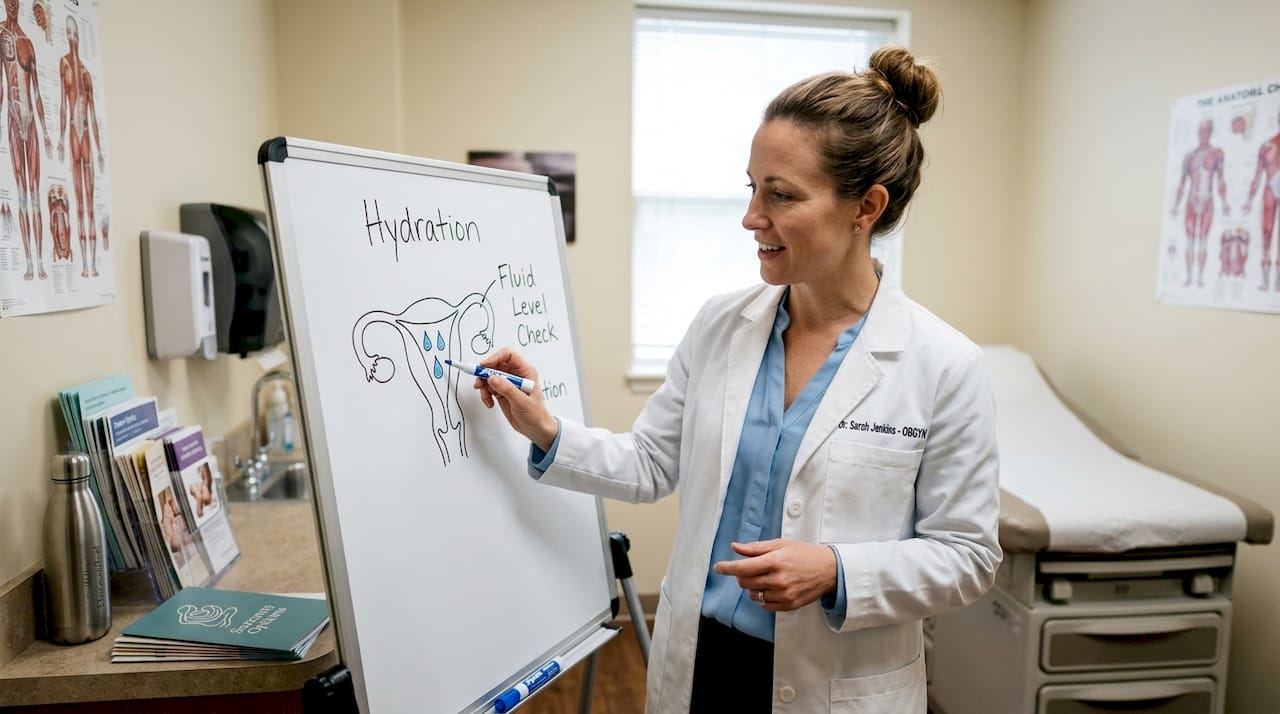
That’s not the only pathway. Your electrolytes, things like potassium and magnesium, play a major role in muscle function. When they’re out of balance due to dehydration, your uterine muscle becomes more irritable. It’s similar to a muscle cramp in your leg after a hard workout without enough water. ADH binds oxytocin receptors, low electrolytes cause muscle irritability, and the good news is that this often resolves with IV fluids in clinical settings.
This is exactly why, when you arrive at a hospital or birth center with contractions that aren’t clearly active labor, one of the first things your care team often does is offer you fluids. It’s a low-risk, high-value first step.
Here’s what’s happening in your body when dehydration sets in:
- Blood volume drops, stressing the uterus
- ADH is released, activating the same receptors as oxytocin
- Electrolyte levels shift, making muscles more reactive
- Prostaglandins may be released, adding to uterine irritability
The body is remarkably smart. When it’s running low on fluids, it sends signals in every direction, including to the uterus. Understanding this can turn a frightening moment into a manageable one.
For a deeper look at staying hydrated through all stages of birth, our labor hydration guide covers everything from what to sip to when. And if your partner wants to play a more active role, check out how partner support during labor can make a real difference, including keeping track of your fluid intake.
For more on uterine contraction physiology, the science is clear: hydration status is directly tied to uterine activity, and managing it is one of the most accessible tools you have.
Dehydration risks: When contractions signal something serious
Understanding the science is key, but knowing the risks and how to act when contractions are concerning is essential. Most dehydration-related contractions are benign and manageable. But in some cases, they can point to something that needs prompt attention.
Severe dehydration risks preterm labor via reduced amniotic fluid and placental hypoperfusion, and in case reports, it has been associated with low birth weight and stillbirth. That’s not meant to frighten you. It’s meant to help you take your hydration seriously and know when to call your provider.
One significant complication is oligohydramnios, a condition where amniotic fluid levels drop too low. Amniotic fluid is partly made up of your baby’s urine, and when you’re dehydrated, fetal kidney output decreases. The result can be reduced fluid cushioning your baby. Oral hydration increases amniotic fluid index significantly, with 72% improvement seen in one clinical trial of 25 women, making simple drinking one of the most powerful tools available.
Warning signs that need medical attention:
- Contractions that are regular, 5 minutes apart or closer, for more than an hour
- Contractions that don’t slow after drinking fluids and resting
- Decreased fetal movement
- Dark urine, dizziness, or extreme thirst
- Inability to keep fluids down due to vomiting
| Dehydration level | Likely impact | Recommended action |
|---|---|---|
| Mild | Braxton Hicks, discomfort | Drink water, rest |
| Moderate | More frequent contractions | Contact your provider |
| Severe | Risk of preterm labor, low AFI | Seek immediate care |
Pro Tip: Use the urine color check as your daily hydration gauge. Pale yellow means you’re doing well. Dark yellow or amber means your body is asking for more fluids now, not later.
Make sure you’re building healthy habits early. Our third trimester checklist includes hydration milestones alongside everything else you need to feel prepared as your due date approaches.
Practical hydration strategies for pregnancy and labor
Addressing risks is vital, but let’s look at practical changes you and your support team can make right now. Prevention really is the kindest thing you can do for yourself during pregnancy.
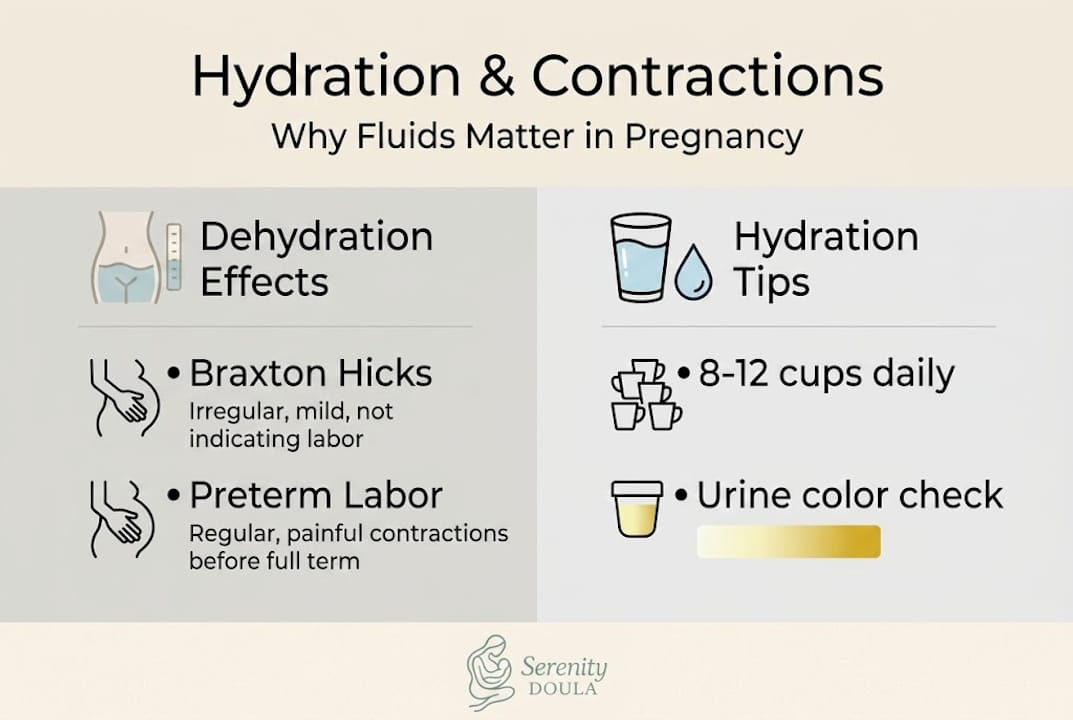
Prioritizing hydration is especially important during hot weather or physical activity, and monitoring for regular or painful contractions that don’t stop with rest and fluids is a key part of self-care during pregnancy.
Here’s how to stay on top of it, day by day:
- Aim for 8 to 12 cups (about 2 to 3 liters) of fluids daily. Water is best, but herbal teas and diluted juice count too.
- Set a phone reminder every 1 to 2 hours to take a few sips, especially if you’re busy or distracted.
- Increase your intake during hot days, after walks, or if you’ve been sick.
- Eat water-rich foods like watermelon, cucumber, and oranges to supplement your fluid intake.
- If you’ve been vomiting or feeling nauseous, sip small amounts frequently rather than large amounts at once. Learn more about the importance of fluids to understand why consistent intake matters more than big bursts.
Partners, you’re not just a cheerleader here. You can set hydration reminders, keep a water bottle filled and nearby, and gently check in without being overbearing. That kind of quiet, consistent support makes a real difference over the course of a long pregnancy.
When to call your provider:
- Contractions are happening more than 4 times per hour before 37 weeks
- They haven’t calmed down after an hour of rest and fluids
- You notice reduced fetal movement alongside contractions
- You’re unable to keep fluids down
Pro Tip: Keep a small journal or use an app to track how much you’re drinking each day. It sounds simple, but many women are surprised to discover they’re only hitting half their daily goal.
For holistic approaches to caring for yourself throughout your whole pregnancy, explore our first trimester self-care guide and our resource on mental and physical preparation for labor. Both are full of grounded, practical tools.
What most parents aren’t told about hydration and contractions
Before you set out to drink more water, here’s our take on what truly matters regarding hydration and contractions. Hydration is important. Genuinely. But it’s not a magic shield against labor complications, and we think it’s worth being honest about that.
Hydration therapy is a standard initial step for preterm contractions, despite limited randomized controlled trial evidence. Correcting dehydration makes logical sense, but it hasn’t been conclusively proven to change broad labor outcomes.
What this means for you: drinking water is a wonderful first step, not a replacement for communication with your care provider. If contractions are worrying you, fluids are a great starting point. But reaching out to your midwife, doctor, or doula matters just as much.
We’ve seen families feel guilty for calling their providers, thinking they “should have just drunk more water.” Please don’t carry that guilt. The bigger picture includes benefits of childbirth education, personalized support, and a care team who knows your body’s unique story. Hydration is one piece of a much richer puzzle.
Get expert support for a healthier pregnancy
Knowing the facts about dehydration and contractions is a great foundation. But nothing replaces having someone in your corner who can help you interpret what your body is saying in real time.

At Serenity Doula, we offer pregnancy and birth support that goes far beyond general advice. Our doulas help you track patterns, stay calm during uncertain moments, and know when to escalate. We also offer resources on the benefits of childbirth education so you and your partner can walk into labor feeling grounded and prepared. If you’re ready to feel truly supported from pregnancy through postpartum, we’d love to connect. Visit Serenity Doula and let’s talk about how we can walk this journey with you.
Frequently asked questions
How can I tell if contractions are due to dehydration?
Dehydration-triggered contractions often resolve with drinking fluids and resting, while true labor contractions persist and intensify no matter what you do.
Can dehydration really cause preterm labor?
Severe dehydration can increase the risk of preterm labor through reduced amniotic fluid and placental stress, but mild dehydration usually causes benign contractions that stop with fluids.
Is IV hydration better than just drinking water for stopping contractions?
For most people, drinking water is effective in calming dehydration-triggered contractions. IV fluids are reserved for severe cases or when oral hydration isn’t possible.
How much should I drink daily during pregnancy to prevent dehydration?
Aim for 8 to 12 cups (2 to 3 liters) of fluids daily, adjusting upward for heat, exercise, and any specific guidance from your healthcare provider.
What should I do if I can’t keep fluids down and have contractions?
Seek medical care right away. Persistent vomiting with contractions can threaten your pregnancy health and requires urgent evaluation.
Recommended
- Can you eat while in labor? Nutrition and hydration guide
- How to support your partner during labor: step-by-step guide
- 5 Powerful Ways to Prepare Your Mind and Body for Labor and Birth – Serenity Doula
- Prepare for childbirth in Doylestown: Holistic steps
- The Importance of Oral Health for Pregnant Women