

TL;DR:
- Continuous labor support improves birth outcomes and increases maternal satisfaction.
- Preparation and understanding your partner’s preferences enhance emotional and physical support.
- Collaborating with a doula and care team provides comprehensive, effective childbirth support.
Labor is one of the most intense experiences a family can share. You want to help, but it’s completely normal to feel uncertain about what to do or say. Here’s the reassuring truth: continuous labor support leads to higher spontaneous vaginal birth rates, lower cesarean rates, reduced pain medication use, and greater satisfaction for both partners. You don’t need to be a medical professional to make a real difference. This guide walks you through everything, from preparation to hands-on techniques, so you can show up as a calm, grounded presence when it matters most.
Table of Contents
- What you need to know before labor begins
- Step-by-step: How to provide effective emotional support
- Physical support: Comfort measures, touch, and environment
- Partnering with doulas and the care team for holistic support
- Our perspective: What really works (and what doesn’t)
- Get personalized support for your birth journey
- Frequently asked questions
Key Takeaways
| Point | Details |
|---|---|
| Continuous support matters | Staying present and engaged during labor improves birth outcomes and emotional satisfaction. |
| Personalize your approach | Follow your partner’s cues for touch, encouragement, and support to meet their unique needs. |
| Combine emotional and physical care | Use both comforting words and practical measures like massage and environmental adjustments to help during labor. |
| Collaborate with professionals | Partnering with doulas and care teams enhances overall support and reduces interventions. |
What you need to know before labor begins
Now that you understand why partner support makes a difference, let’s get prepared for labor.
Many partners walk into the delivery room with the best intentions but no real plan. That gap between wanting to help and knowing how to help is where anxiety lives. The good news is that preparation closes that gap fast.
Start with the evidence. ACOG endorses continuous one-on-one support as a way to improve maternal outcomes and reduce cesarean rates. This isn’t just a nice idea. It’s a clinical recommendation. Your presence and engagement genuinely matter.
Before labor begins, get clear on your partner’s support role and what that looks like in practice. Talk with your birthing partner ahead of time. Ask them what they want more of and what they want less of. Write it down if it helps.
Things to prepare in advance:
- A copy of the birth preferences or birth plan
- Comfort items your partner has requested (lip balm, a favorite pillow, warm socks)
- Snacks and water for yourself so you can stay energized
- A list of questions for the care team
- Knowledge of the hospital or birth center layout
- Understanding of the types of childbirth support available, including doulas, nurses, and midwives
| Preparation area | Why it matters |
|---|---|
| Birth preferences review | Keeps you aligned with your partner’s wishes |
| Comfort item packing | Reduces stress in the moment |
| Care team communication | Ensures everyone is on the same page |
| Self-care planning | You can’t pour from an empty cup |
One thing many guides skip: emotional preparation for you. Labor can be long, unpredictable, and emotionally charged. Give yourself permission to feel nervous. Then remind yourself that your job isn’t to fix anything. It’s to stay present.
Pro Tip: Attend a childbirth education class together before your due date. Knowing what to expect during each stage of labor makes you a far more confident support person.
Every birthing individual is different. What worked for a friend’s labor may not work for yours. Keep an open mind and follow your partner’s lead above all else.
Step-by-step: How to provide effective emotional support
With the right mindset and preparation, it’s time to focus on emotional support techniques you can use during labor.

Emotional support isn’t just hand-holding. It’s a dynamic, responsive practice. Research shows that 84 to 92% of women with companions feel calmer and more comfortable during labor, and 91.9% of companions use encouraging words as their primary support tool. Your voice matters more than you might think.
Here’s a step-by-step approach to emotional support during labor:
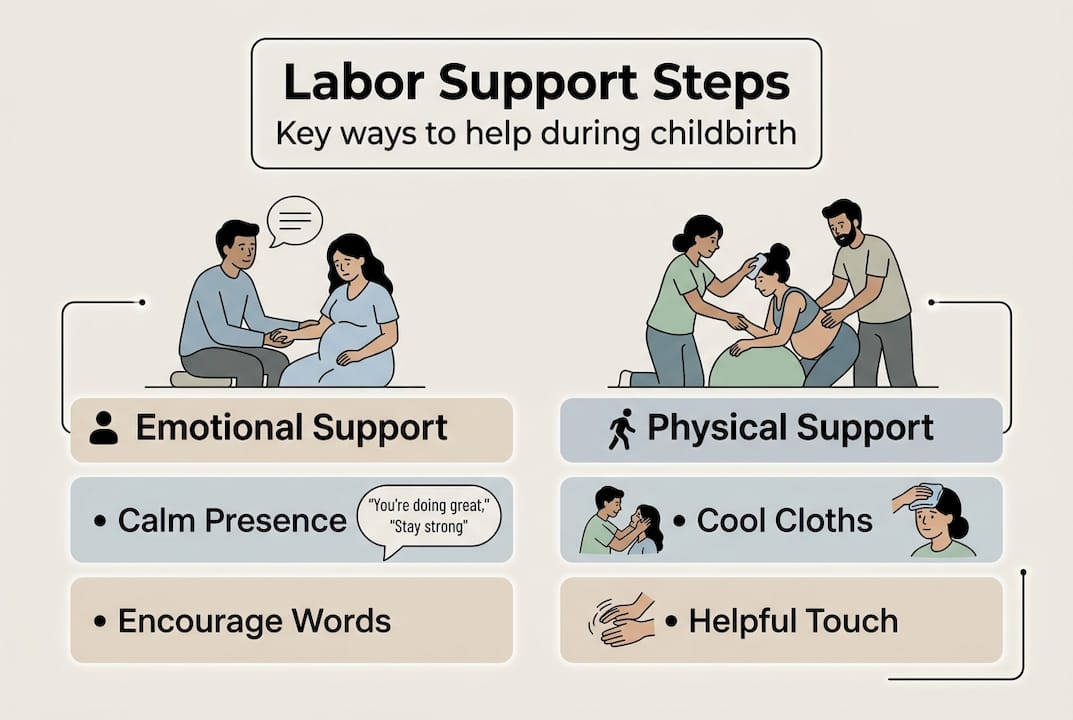
- Stay present and attentive. Put your phone away. Make eye contact. Let your partner know you’re fully there with them.
- Use affirming language. Simple phrases like “You’re doing so well” or “I’m right here” carry enormous weight during contractions.
- Practice active listening. If your partner says they’re scared or overwhelmed, don’t rush to fix it. Acknowledge it first. “I hear you. That sounds really hard.”
- Respect their need for space. Some people want constant reassurance. Others need quiet. Watch for cues and adjust without taking it personally.
- Offer comfort measures during labor proactively. Ask “Would you like me to rub your back?” rather than assuming.
- Stay flexible. What your partner wants in early labor may shift completely by active labor. That’s normal. Follow their lead.
- Manage your own anxiety. Take slow breaths. If you feel panicked, step out briefly and reset. Your calm is contagious.
“The most powerful thing you can do during labor is simply refuse to leave. Your steady presence is the anchor when everything else feels like a whirlwind.”
Using effective support methods means reading the room constantly. Labor is not a static event. It shifts, intensifies, and surprises everyone involved. Your ability to adapt is your greatest asset.
Pro Tip: Before labor, agree on a simple signal your partner can use when they need quiet. A raised hand or a specific word can prevent miscommunication during intense moments.
Physical support: Comfort measures, touch, and environment
Alongside emotional support, physical comfort measures are important and should be tailored to your partner’s preferences.
Hands-on support can be incredibly powerful. It can also be unwanted. The key is always to ask first and follow your partner’s cues throughout.
Hands-on comfort techniques to try:
- Counter-pressure: Apply firm pressure to the lower back during contractions to ease back labor pain.
- Hip squeezes: Place both hands on the hip bones and squeeze inward during a contraction. Many people find this deeply relieving.
- Massage: Light strokes on the arms, shoulders, or legs can reduce tension between contractions.
- Guided breathing: Breathe with your partner. Inhale together, exhale together. This keeps them grounded and regulated.
- Position changes: Help your partner shift positions every 30 to 45 minutes to encourage baby’s movement and reduce discomfort.
Setting up the environment matters too. Dim lighting, a calming playlist, a cool cloth on the forehead, and a familiar scent can all shift the atmosphere from clinical to calm. These small adjustments signal safety to the nervous system.
Continuous partner presence has been shown to reduce negative feelings during labor, with a relative risk of 0.69, and can even shorten labor duration. That’s not a small effect. Your physical presence alone is therapeutic.
| Support type | Best used when | Notes |
|---|---|---|
| Counter-pressure | Back labor, strong contractions | Ask first; adjust pressure based on feedback |
| Massage | Between contractions | Light touch; avoid if touch sensitivity increases |
| Guided breathing | Any stage of labor | Breathe together to model the rhythm |
| Environmental adjustments | Throughout labor | Lighting, music, temperature, scent |
| Verbal encouragement | Always | Never underestimate the power of your words |
If your partner asks you to stop touching them, don’t panic. Shift to verbal support or simply sit close. Explore natural birth support strategies and comfort measures for labor to build a wider toolkit before the big day.
Partnering with doulas and the care team for holistic support
Physical and emotional support are vital, but collaborating with doulas and care teams can make the experience even smoother.
You don’t have to do this alone. In fact, the most effective labor support usually involves a team. Understanding who does what helps everyone work together without confusion.
What a doula brings to the table:
- Evidence-based comfort techniques and positioning knowledge
- Continuous presence throughout labor, including shift changes among nurses
- Emotional support for both partners
- Help with communication between the birthing person and the care team
- Postpartum guidance and breastfeeding support
Doulas complement partners by providing clinical expertise, which frees you to focus on emotional connection. Research also shows that having both a doula and a partner present reduces cesarean rates more than having a partner alone. That’s a meaningful difference.
Learn more about what does a doula do and how their role fits alongside yours. You’re not being replaced. You’re being supported.
Healthcare providers (doctors, midwives, nurses) are responsible for:
- Monitoring the health of the birthing person and baby
- Managing medical interventions when needed
- Providing clinical guidance and answering medical questions
Your role as a partner is distinct from both. You’re the emotional anchor. You’re the familiar face. You’re the person who knows your partner’s fears, hopes, and preferences better than anyone in that room.
Pro Tip: Before labor, meet with your doula and discuss your birth preferences together. Knowing each other’s roles reduces confusion and builds a cohesive support team.
Explore pregnancy birth support options early so you can make informed decisions about your team before labor begins.
Our perspective: What really works (and what doesn’t)
After outlining all the evidence-based strategies, let’s talk honestly about what really makes labor support effective.
Most guides focus on techniques. Massage this way. Say these words. Set up the room like this. And those things do help. But in our experience, the partners who make the biggest difference aren’t the ones with the most elaborate plans. They’re the ones who listen.
Labor rarely goes exactly as planned. Preferences shift. Pain levels change. What felt comforting an hour ago might feel unbearable now. The partners who stay flexible, who check in constantly, who don’t take it personally when the plan changes, those are the ones who truly shine.
Small gestures matter enormously. A cold cloth offered at the right moment. Sitting quietly without filling the silence. Holding a hand without squeezing too hard. These aren’t grand acts. They’re attentive ones.
We’ve seen partners freeze because they felt like they weren’t doing enough. But presence, genuine and steady presence, is doing something. Read more about support insights for partners to build your confidence before the day arrives.
Get personalized support for your birth journey
Understanding what works for labor support, here’s how Serenity Doula can help you prepare for and navigate childbirth.
At Serenity Doula, we believe every family deserves a birth experience that feels supported, informed, and empowered. Whether you’re preparing for your first birth or navigating a new experience, we’re here to walk alongside you.

Our partner’s role support guide is a great starting point for expectant partners who want to feel ready. Our birth support doula service pairs you with an experienced doula who works alongside you as a team. And our childbirth education benefits page outlines how education transforms anxiety into confidence. Reach out today to schedule a consultation and take the first step toward a calmer, more connected birth experience.
Frequently asked questions
How can I support my partner if they don’t want physical touch during labor?
If touch isn’t wanted, shift to verbal encouragement, adjust the room environment, or simply sit close and stay present. Follow your partner’s cues throughout labor, as preferences can change from one contraction to the next.
What’s the benefit of having both a partner and a doula during labor?
Having both means your partner gets emotional support from someone who loves them and expert guidance from a trained professional. Doula and partner together reduces cesarean rates more effectively than partner support alone.
Are there specific comfort measures partners can use that are evidence-based?
Yes. Massage, guided breathing, counter-pressure, and environmental adjustments like lighting and music are all proven to improve comfort. Continuous partner presence also reduces negative feelings and can shorten overall labor duration.
How can I prepare emotionally to support my partner during labor?
Learn your partner’s preferences before labor begins, take a childbirth education class together, and give yourself permission to feel nervous. ACOG recommends continuous support as a proven way to improve outcomes, so your preparation genuinely matters.