
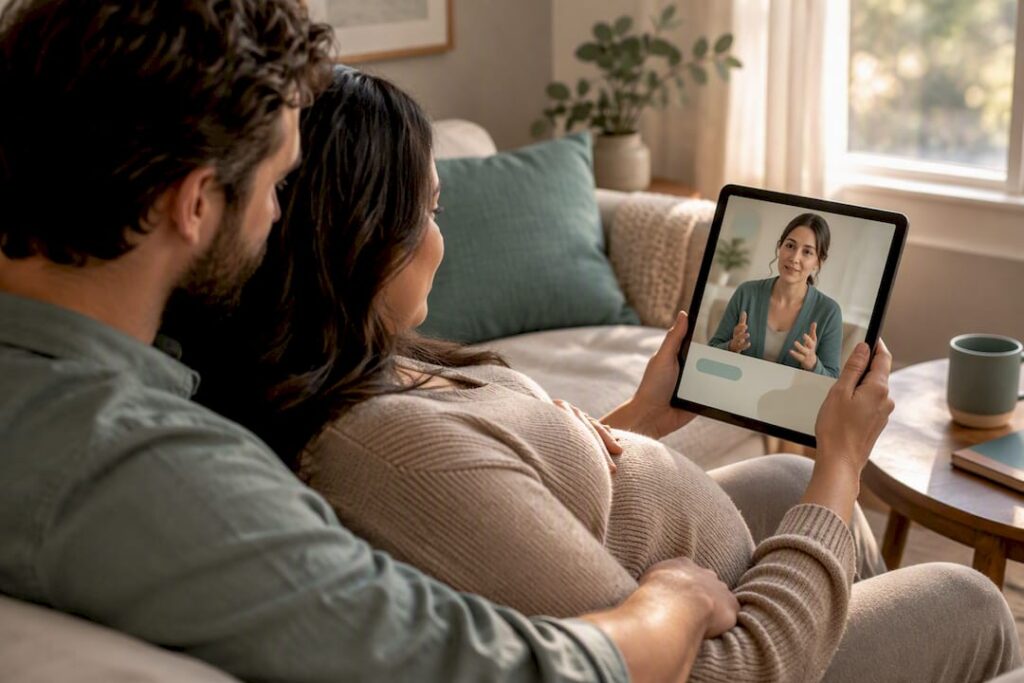
Yes. Virtual doula support is linked to a better birth experience and lower odds of cesarean birth for many parents, while also lowering cost and expanding access to care that used to require living near a doula’s service area. The evidence is still growing and mostly observational, not from large randomized trials, so treat these findings as promising rather than settled. The next section walks through the research behind these claims.
TL;DR:
- Families should aim for at least two virtual doula sessions to see meaningful reductions in cesarean rates, especially among Black birthing people.
- Virtual doula support improves birth preparation, advocacy, and confidence for partners, with savings and scheduling flexibility compared to in-person support.
- Access to virtual doulas benefits families in rural areas, with cultural matching, planning for VBAC, or limited budgets, but lacks physical support during active labor.
- Ongoing research shows a 20% overall decrease in cesarean odds with multiple virtual visits, though existing data remains observational and subject to bias.
- Building a consistent relationship with a virtual doula and practicing comfort measures before labor enhances experience and outcomes effectively.
Table of Contents
- Virtual Doula Benefits: What You Actually Get
- What the Research Shows About Virtual Doula Care
- How Virtual Doula Care Actually Works Day to Day
- Is Virtual Doula Support Right for You?
- Weighing the Trade-Offs Honestly
- Getting the Most Out of Virtual Doula Support
- A Doula’s Perspective on Virtual Coaching
- What the Evidence Actually Tells Us to Prioritize
- Serenity Doula’s Virtual and Hybrid Support
- Where This Evidence Comes From
- Sources
- FAQ
Virtual Doula Benefits: What You Actually Get
The core promise of virtual doula support is simple: the same relationship, guidance, and advocacy training you’d get in person, delivered through video calls, texting, and phone check-ins instead of home visits. For many Bucks County families juggling demanding schedules, that shift in delivery method turns out to matter less than you’d think, and the benefits show up in measurable ways.
Here’s what virtual doula benefits look like in practice:
- Improved birth experience. Parents report feeling more prepared to advocate for themselves and communicate preferences to their care team, largely because virtual prenatal sessions leave more room for repeated practice of that language.
- Lower odds of cesarean birth. Multiple visits with a virtual doula are associated with meaningfully reduced cesarean rates, a pattern explored in detail in the next section.
- Broader access and better fit. You’re no longer limited to doulas within driving distance. Families can choose someone whose communication style, values, or cultural background matches their own, even if that doula lives an hour away.
- Lower cost with more scheduling flexibility. Virtual packages typically cost less than in-person-only support, and sessions can happen during a lunch break or after the kids are asleep.
- Stronger partner coaching. Your partner becomes the hands-on support person, coached in real time by a doula watching over video, which builds real confidence before labor day arrives.
- Postpartum and breastfeeding help without the driving. Late-night latch questions or diaper rash worries don’t have to wait for a scheduled visit when support is a text or video call away.
Each of these benefits reinforces the others. A parent who feels prepared going into labor tends to make decisions more calmly, and calmer decision-making is part of what shows up in the outcome data below.
What the Research Shows About Virtual Doula Care
The clearest evidence comes from a study of a digital health platform where birthing people completed two or more virtual doula appointments. Those parents showed a 20% reduction in the odds of cesarean birth overall, and the effect was far larger for Black users specifically.
Statistic Spotlight: Among Black users who completed two or more virtual doula visits, the adjusted odds of cesarean birth dropped by 68% compared with those who did not use the service. Overall users saw an adjusted odds ratio of 0.80, meaning a 20% reduction in the odds of a cesarean birth.
That’s a dose-response pattern: more virtual visits, better outcomes. It’s also consistent with what we already know from decades of in-person doula research. A systematic review and meta-analysis published in the American Journal of Obstetrics and Gynecology found substantially lower cesarean rates among doula-supported births compared with standard prenatal care alone, primarily drawing on in-person support models. Virtual care appears to be tapping into some of the same mechanisms, likely the advocacy training, the anxiety reduction, and the continuity of a trusted relationship through pregnancy.
A few things worth knowing before you treat these numbers as guarantees:
- The digital platform study and similar work are observational, meaning parents chose to use virtual doula services rather than being randomly assigned to them. That opens the door to selection bias: people motivated enough to seek out and use two or more sessions may differ in other ways from those who don’t.
- Randomized controlled trials are now being planned and run specifically to test virtual doula services in rural communities, which should sharpen these findings considerably over the next few years.
- Subgroup findings, especially the outcomes for Black birthing people and for those pursuing a vaginal birth after cesarean, deserve attention but also caution. Larger effects in smaller subgroups can reflect real advantage or statistical noise, and more research will help settle which.
On the policy side, doula coverage under Medicaid has been expanding across a growing number of states, though reimbursement rules for virtual visits specifically still vary widely from one state program to the next. If cost or coverage is a factor in your decision, ask your insurance plan or your provider’s office directly what’s currently reimbursable in your state.
How Virtual Doula Care Actually Works Day to Day
Wondering what a virtual doula package looks like once you’re actually living it? Here’s the typical shape of care:
- Prenatal planning sessions. Early video visits cover your birth preferences, medical history, fears, and hopes, and they’re where the working relationship gets built.
- On-call check-ins as your due date nears. Text or phone availability increases in the final weeks, so questions about contractions, fetal movement, or hospital timing get answered quickly.
- Live labor coaching over video. When labor starts, your doula joins by video, walking your partner through comfort measures and helping you both recognize what stage of labor you’re in.
- Postpartum consults. Follow-up sessions address feeding, emotional adjustment, and physical recovery in the days and weeks after birth.
The mechanics matter more than people expect. A Pennsylvania-focused review of doula outcomes shows that continuity of care, not just physical presence, drives much of the benefit families report. Because virtual doulas spend no time commuting between births, they’re often more available for quick check-ins than a doula juggling an in-person caseload.
Most families run a hybrid model without even planning it that way: virtual for prenatal education and postpartum follow-up, with an in-person visit or two layered in if budget and location allow. Before labor day, confirm your hospital’s policy on phones and tablets in the delivery room, and have a backup connectivity plan (a partner’s phone as hotspot, for instance) in case the hospital Wi-Fi is unreliable.
Is Virtual Doula Support Right for You?
Virtual doula care tends to work best for certain situations, though plenty of families outside these categories benefit too.
- Families in maternity care deserts. If you live outside a major metro area, virtual support may be your only realistic access to trained doula care at all.
- Parents seeking racially or culturally concordant care. Removing geography from the equation means you can choose a doula who shares your background or understands your specific concerns, which matters given the larger effect sizes seen among Black birthing people using virtual platforms.
- Those planning a VBAC. If you’re considering a vaginal birth after cesarean, the advocacy coaching a virtual doula provides can help you prepare specific language for that conversation with your care team.
- Budget-conscious families who still want expert guidance. Lower per-session costs mean more support without stretching the budget as far.
In-person care still holds an edge when you need physical comfort measures, hip squeezes, counter-pressure, hands-on repositioning, delivered by someone standing beside you, or when your birth plan involves complex hospital advocacy that benefits from a body in the room.
Weighing the Trade-Offs Honestly
No option is perfect for every family, and virtual doula support comes with real limitations alongside its advantages.
The upside:
- Lower cost than most in-person-only packages
- Access to doulas regardless of your zip code
- Scheduling that fits around work and other kids
- A wider pool of doulas to choose from, so you can prioritize fit and communication style
The trade-offs:
- No hands-on physical support, like massage or manual repositioning, during active labor
- Depends on reliable internet and a working device at the exact moment you need it most
- Hospital policies on phones and video in labor rooms vary and aren’t always doula-friendly
- Less useful if you’re not comfortable coaching your partner or being coached yourself
If physical touch and in-room presence are non-negotiable for you, a hybrid arrangement, virtual for the bulk of prenatal and postpartum care, in-person for labor itself, often makes more sense than an all-virtual plan.
Getting the Most Out of Virtual Doula Support
Here’s how to structure your virtual doula care based on what the outcome data actually supports:
- Book at least two prenatal sessions before labor. The dose-response pattern in the research points to two or more visits as the threshold associated with meaningfully better outcomes.
- Rehearse comfort measures on camera before labor day. Have your partner practice counter-pressure on your lower back, hip squeezes, and position changes during a video session, not for the first time mid-contraction.
- Time contractions together as a dry run. Ask your doula to walk your partner through timing contractions and recognizing labor patterns during a prenatal call.
- Build your tech checklist early. Charge your device the night before your due date window opens, confirm your hospital’s phone and video policy, and set up a backup hotspot plan.
- Bring a written list to your final prenatal session. Cover your birth preferences, specific comfort measures you want tried first, and language you can use to ask your provider questions in the moment.
Pro Tip: Practice your advocacy phrases out loud during a prenatal video session, not just in your head. Saying “Can you walk me through my options before we decide?” out loud to your doula beforehand makes it far easier to say to your care team during labor.
A Doula’s Perspective on Virtual Coaching
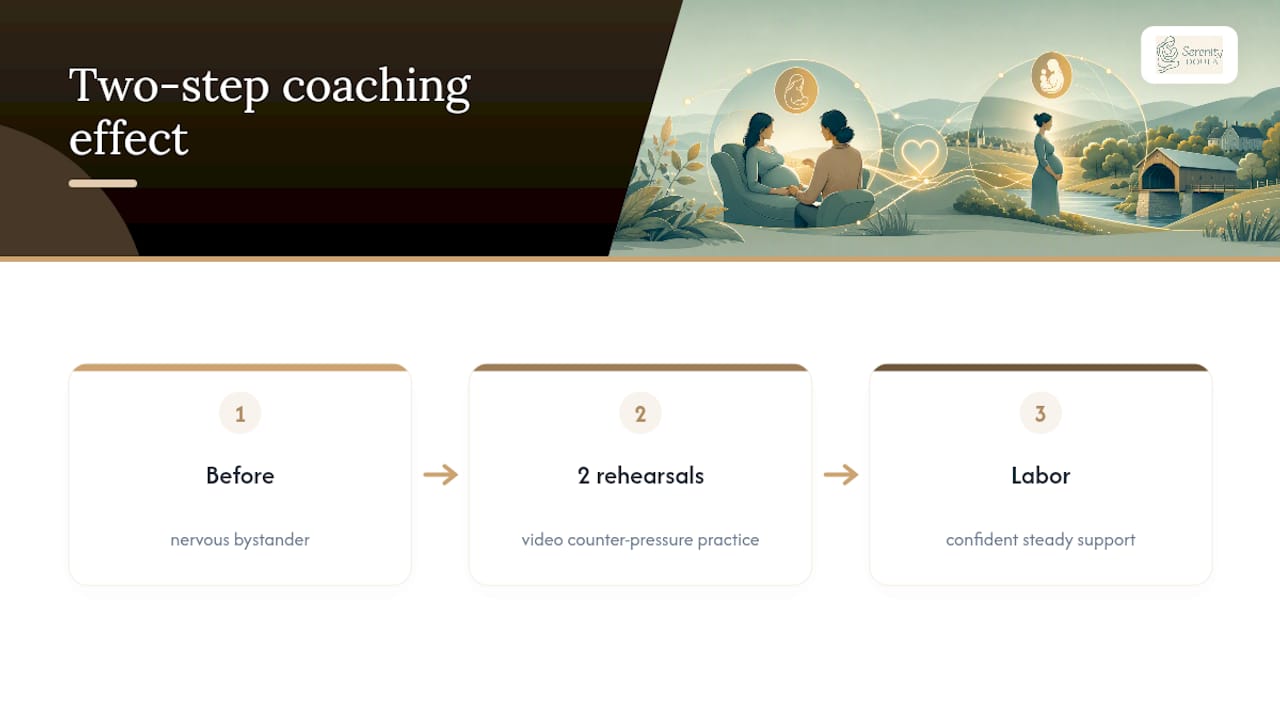
I’ve watched a partner go from nervous bystander to confident, steady support person after just two video rehearsals of counter-pressure technique. That shift, watching someone go from “I don’t know what to do with my hands” to calmly guiding their partner through transition, is one of the most rewarding parts of virtual coaching.
I’ve also seen families choose a doula three counties away because her communication style matched theirs better than anyone local. That’s the quiet advantage of removing geography from the equation.
When you’re choosing a doula, virtual or otherwise, pay attention to how she answers your questions during a consultation. Does she explain the “why” behind her suggestions? Does she ask about your specific fears? Fit matters more than format.
— Alexis Wallace
What the Evidence Actually Tells Us to Prioritize
The research supports a specific claim, not a sweeping one: virtual doula visits, plural, are linked to better outcomes. One session doesn’t move the needle much. Two or more does. That’s a meaningfully different message than the vague “doulas improve outcomes” framing most articles lead with, and it changes how you should plan your care.
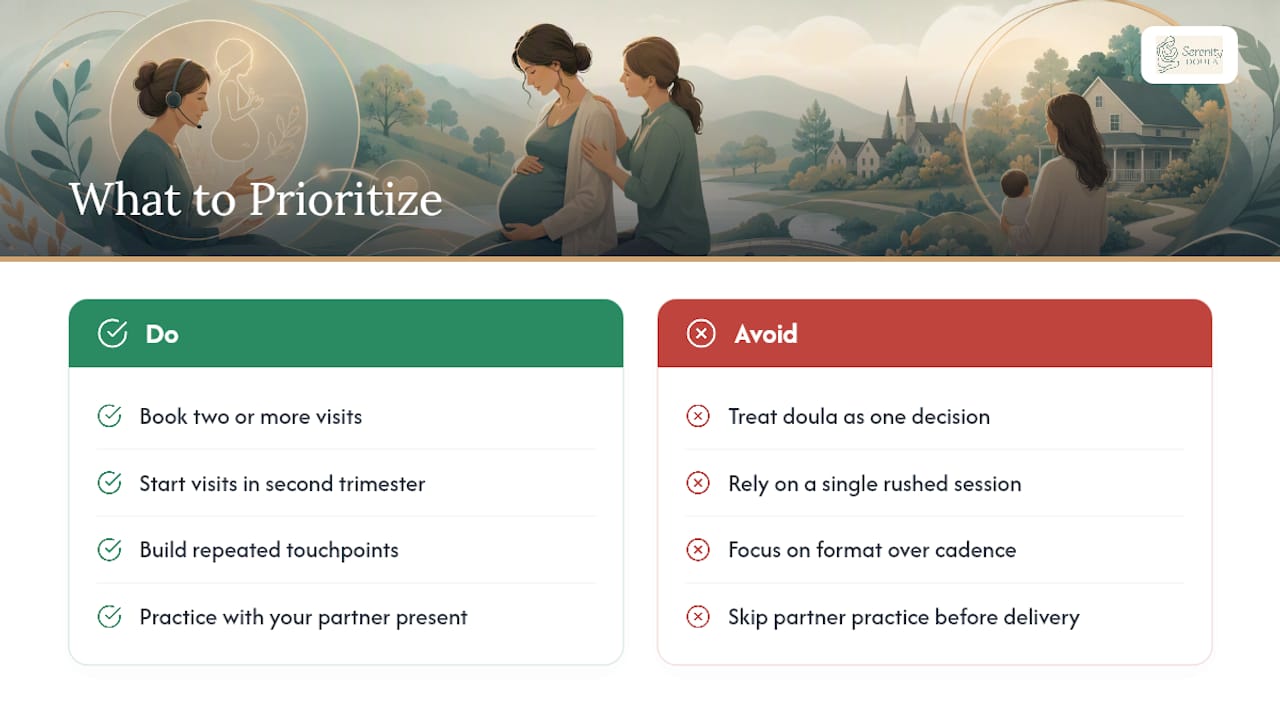
Conventional advice tends to treat doula support as a single decision point: hire one or don’t. The dose-response finding suggests the more useful decision is about cadence. A family that books one rushed session in month eight gets a different experience than one that builds a relationship across five or six touchpoints starting in the second trimester.
If you take one thing from this, prioritize frequency and partner involvement over the format debate. Whether your doula visits your living room or joins by video matters less than whether your partner walks into that delivery room having actually practiced the comfort measures they’ll need to perform under pressure.
— Alexis Wallace
Serenity Doula’s Virtual and Hybrid Support
Virtual and hybrid doula packages can be designed around the pattern the research points to: relationship, repetition, and partner readiness, delivered on flexible schedules to fit busy households. Our pregnancy and birth doula support includes the prenatal planning, labor coaching, and advocacy rehearsal described above, paired with personalized childbirth education and postpartum care that follows you home.
An experienced doula service can support families across various counties, from Newtown to Doylestown and local hospitals, offering care tailored to each family’s birth preferences, whether natural, medicated, or surgical birth. If you’re weighing virtual, hybrid, or in-person support, the best next step is a conversation. Book a free consultation to talk through your due date, your hospital, and what kind of support actually fits your family.
Where This Evidence Comes From
The findings in this article draw on the following primary sources:
- Advancing Equity in Maternal Health with Virtual Doula Care
- Association Between Doula Use on a Digital Health Platform and Birth Outcomes
- Systematic review and meta-analysis on doula services and caesarean delivery (AJOG)
- Digital randomized controlled trial assessing virtual doula services in rural mothers
- CDC maternal mortality resources
Talk through what these findings mean for your specific pregnancy with your OB, midwife, or doula, since your medical history and birth plan shape which factors matter most.
This article is general information, not a substitute for advice from a qualified doctor. Consult a qualified healthcare professional about your own circumstances before acting on anything here.
Sources
- Advancing Equity in Maternal Health with Virtual Doula Care
- Association Between Doula Use on a Digital Health Platform and Birth Outcomes (Carolina Population Center)
- Systematic review and meta-analysis on doula services and caesarean delivery (AJOG)
FAQ
Can you write off doula care on your taxes?
Doula services often qualify as a deductible medical expense under IRS guidelines if you itemize deductions and your total qualifying medical costs exceed the required threshold of your adjusted gross income. Ask your tax preparer whether your specific doula fees qualify, since documentation requirements can vary.
Are doulas against epidurals or other pain medication?
No. A trained doula supports whatever birth plan you choose, whether that includes an epidural, other pain medication, or an unmedicated approach. Ask a prospective doula directly how she supports medicated births to make sure her approach matches your preferences.
Can becoming a doula work as a side hustle?
Many doulas start part-time while building a client base, and virtual doula work in particular has lowered the barrier to entry since it removes travel and on-call geographic limits. Full-time income potential varies widely based on location, caseload, and specialization.
Do virtual doulas really lower the odds of a C-section?
Research on a digital health platform found that completing two or more virtual doula visits was associated with a 20% reduction in the odds of cesarean birth, with a much larger reduction observed among Black users specifically. These findings come from observational research, so ask your provider how your personal risk factors might affect your own likelihood of needing a cesarean.