
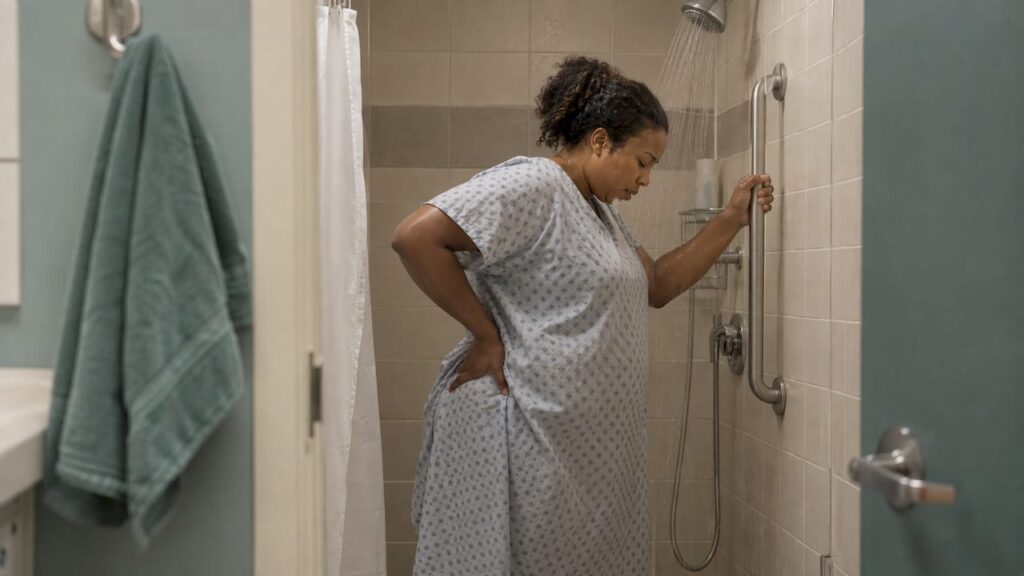
You can ease labor pain without an epidural, and the options with the strongest evidence are the ones that work together: continuous one-to-one support, movement and upright positions, warm water, breathing, and touch. The plan matters as much as the technique. Parents who learn these tools before labor, and have someone steady beside them using the tools in the moment, tend to feel more grounded when contractions build. That is the heart of what we do as doulas, and it is why we start with preparation rather than the delivery room.
TL;DR
- Continuous labor support, water immersion, and upright positions or movement are the three approaches Childbirth Connection rates as clearly helpful.
- Breathing, massage, counterpressure, warm compresses, and a shower or bath are practical comfort tools you can learn before labor.
- ACOG suggests thinking about your pain preferences by about 28 weeks, earlier if you hope to give birth without medication.
- Ask your provider which tools your hospital or birth center offers, and remember it is always okay to change your mind.
Table of Contents
- Why a plan beats a technique
- The methods with the strongest evidence
- Breathing and relaxation
- Movement and positions
- Touch, warmth and water
- The role of the person beside you
- Build your plan: questions for your provider
- How we prepare families
- What we believe about comfort in labor
- Bring this support home
- FAQ
- Sources
Why a plan beats a technique
Labor pain is real, and it varies. ACOG’s Dr. Sara Petruska notes that pain depends on things like your baby’s size and how rested you are, and that no one can predict exactly what your experience will be. She uses the word “preferences” rather than “plan” because every birth is different and plans must stay flexible to keep you and your baby safe.
So the goal is not one perfect method. It is a toolkit, practiced ahead of time, with a person who knows you holding it with you.
The methods with the strongest evidence
Childbirth Connection’s review of systematic reviews groups methods by how well research supports them. Three come out as clearly helpful for labor pain, each linked to less use of epidurals or other pain medication:
- Continuous labor support from someone who stays with you.
- Immersion in water during labor.
- Upright positions and moving about.
Relaxation or yoga, acupuncture or acupressure, massage, birth balls, and sterile water injections were rated at least somewhat helpful. ACOG Committee Opinion No. 766 adds that none of the non-drug techniques have been found to harm the mother, the baby, or labor progress, and that water immersion in the first stage lowers pain scores without evidence of harm.
Other approaches, such as hypnosis, music, and TENS, may help you cope even where studies do not show a big change in pain scores. ACOG’s opinion notes that childbirth education, TENS, and audio techniques may help women cope with labor. If a TENS unit appeals to you, we explain how TENS units are used in labor.
Breathing and relaxation
Controlled breathing lowers anxiety, promotes relaxation, and can decrease pain. OpenStax’s maternal newborn nursing text describes patterns that change as labor does:
- Cleansing breath: a slow, deep inhale through the nose and exhale through the mouth, before and after each contraction.
- Early labor: deep abdominal breathing.
- Active labor: higher, chest-level breathing.
- As contractions intensify: panting or chanting with open vowel sounds to keep the throat relaxed.
Pro tip: Practice for five minutes a day in your third trimester, with your partner timing “contractions” by squeezing your hand. Breathing you have rehearsed is far easier to reach for at 3 a.m. than breathing you read about once.
Movement and positions
Staying mobile helps the baby settle into a good position. OpenStax explains that squatting opens the pelvic outlet, and that hands-and-knees can relieve back pain and may help reposition the baby. Mayo Clinic adds that in active labor, unless a position is needed for close monitoring, changing positions, showering or bathing, and walking while pausing to breathe through contractions can be more comfortable.
If your back takes the brunt of the pain, our guide to back labor positions and comfort measures walks through them in detail. And if you are wondering how to keep things moving, see how to help labor progress.
Touch, warmth and water
ACOG lists these physical comfort measures, which can be used alone or alongside medication:
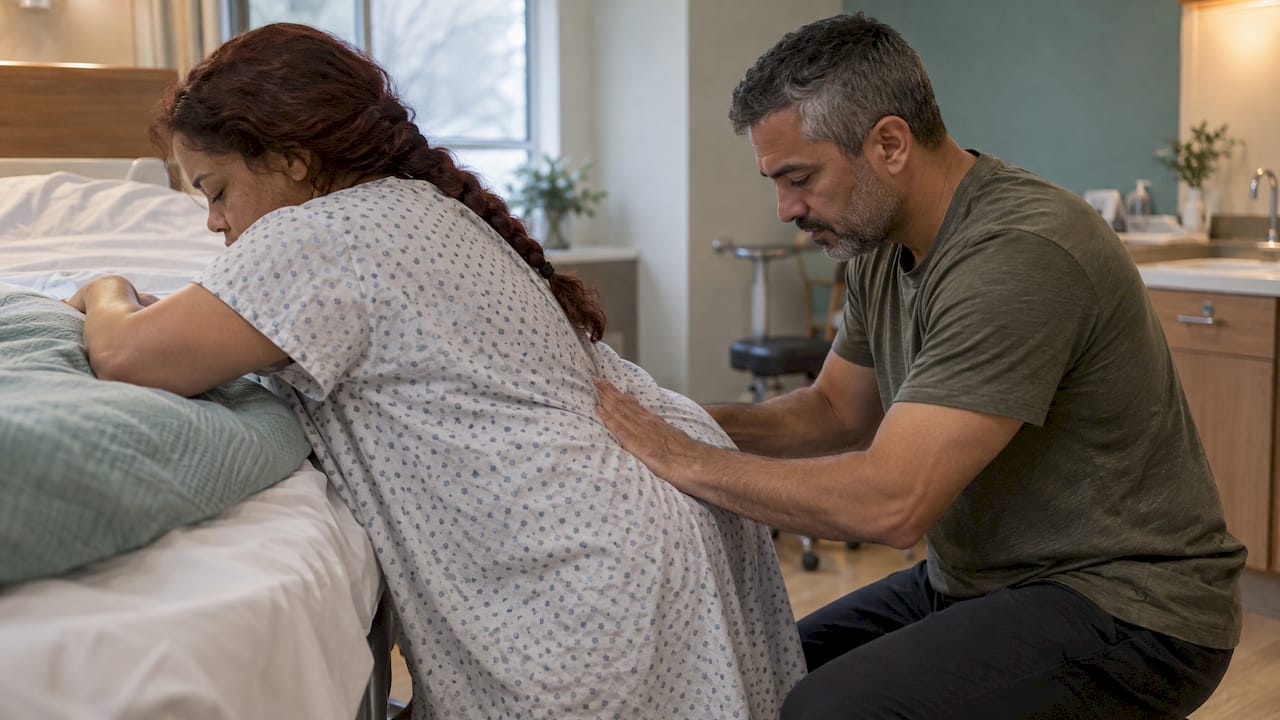
- Massage or firm pressure on the lower back from your partner
- Foot or tennis-ball massage
- A shower or bath, where permitted
- An ice pack or warm compress on the back, or cool moist cloths
- Rest between contractions with slow, deep breaths
Two more are worth knowing. Sterile water injections give the lower back a little nerve stimulation, and the VA’s Whole Health Library describes relief that can last two to three hours. The same page cites a trial of 717 women in which warm packs on the perineum late in the second stage reduced severe tearing and pain during birth. Both are things to ask your provider about, since they are not offered everywhere.
Aromatherapy is popular too. If you want scent in your birth space, read up on pregnancy-safe essential oil dilution and run your choices past your provider first.
The role of the person beside you
ACOG’s 2019 Committee Opinion states that continuous one-to-one emotional support, such as from a doula, in addition to regular nursing care, is associated with improved outcomes for women in labor. The American Academy of Family Physicians reports that continuous support throughout labor decreases assisted vaginal and cesarean delivery rates and pharmacologic analgesia use.
ACOG’s Dr. Christine Isaacs describes a support person as someone who can advocate for you, remind staff of your wishes, coach you, and help with relaxation and massage. Partners can do much of this, and a doula helps them do it with confidence. See how to support your partner during labor for a step-by-step version.
Build your plan: questions for your provider
NICHD advises discussing the options, risks, and benefits of pain relief with your provider well before labor begins, and putting your decisions in writing. Here are questions to bring to your appointment, whether you deliver at Trinity Health St. Mary in Langhorne or elsewhere in the Bucks, Montgomery, or Mercer County area:
- Which comfort tools does your hospital or birth center offer, such as birthing balls, tubs, or showers?
- Is water immersion available for labor, and who is eligible?
- Can I move freely and change positions, and when would monitoring limit that?
- Are sterile water injections or TENS available?
- What would you want me to know if I change my mind during labor?
That last question matters. ACOG says you should not feel pressured toward any option by a partner, friends, family, or clinicians, and that changing your mind is okay. In the hospital setting, ACOG notes that medication should be available to every woman who wants it. Having your whole toolkit and your options both in view is what empowered birth looks like.
How we prepare families
Our private childbirth education is personalized to your preferences and your birth setting. Our pregnancy and birth doula support covers natural, medicated, and cesarean births, so your plan holds up however labor unfolds. If you are weighing support types, this overview helps.
What we believe about comfort in labor
In my ten-plus years as a Bucks County doula, the families who feel most at peace are rarely the ones with the longest list of techniques. They are the ones who feel seen. They have practiced a few tools together, they know who will be in the room, and they have talked honestly with their provider about what is available.
My job is to hold the thread between appointments and through the long hours of labor: a hand on your back, a reminder to drop your shoulders, a quiet word to your partner when they need to rest, and a calm voice that helps you speak up for your own preferences. Whether your birth is unmedicated, medicated, or a cesarean, you deserve to feel supported and unhurried, and never alone with it.
Alexis Wallace
Bring this support home
If you would like someone to help you build and practice your toolkit, with your partner included, we would love to talk. Our Pregnancy & Birth Doula service offers high-touch, evidence-based support for families in Newtown, Doylestown, and across Bucks, Montgomery, Mercer, and Burlington Counties.
When you are ready, book a free consultation and tell us what you are hoping for. There is no pressure, just a conversation.
FAQ
When should I start planning for a birth without an epidural?
ACOG’s Dr. Sara Petruska suggests thinking about pain management preferences by about the 28th week of pregnancy, and earlier if you plan to give birth without medication. That leaves time to take a class, practice, and discuss options with your care team.
Do natural pain relief methods really work?
Research rates continuous support, water immersion, and upright movement as clearly helpful. ACOG notes that none of the non-drug techniques have been found to harm mother, baby, or labor progress, and that some, like education and music, help many women cope. Pain varies from person to person, so a range of tools gives you more to draw on.
What can my partner do during contractions?
They can apply firm pressure or massage to your lower back, bring water or a cool cloth, guide your breathing, and speak up for your wishes. Taking a childbirth class together makes this feel natural rather than awkward.
What if I change my mind during labor?
That is completely fine. ACOG says it is okay to change your mind about pain relief and that you should not feel pressured either way. A doula helps you weigh the options calmly and ask your provider the right questions in the moment.
Sources
- NICHD: Pain relief during labor
- ACOG: Thinking about childbirth without pain medication
- ACOG: Making sense of childbirth pain relief options
- ACOG: Medications for pain relief during labor and delivery
- ACOG Committee Opinion: Approaches to limit intervention during labor and birth
- ACOG Committee Opinion No. 766, February 2019
- ACOG Committee Opinion No. 766, full text
- Childbirth Connection: Giving Birth, Labor Pain
- OpenStax: Nonpharmacological pain management
- Mayo Clinic: Stages of labor and birth
- VA Whole Health Library: Tools for supporting natural childbirth
- American Family Physician: Pain management in labor