
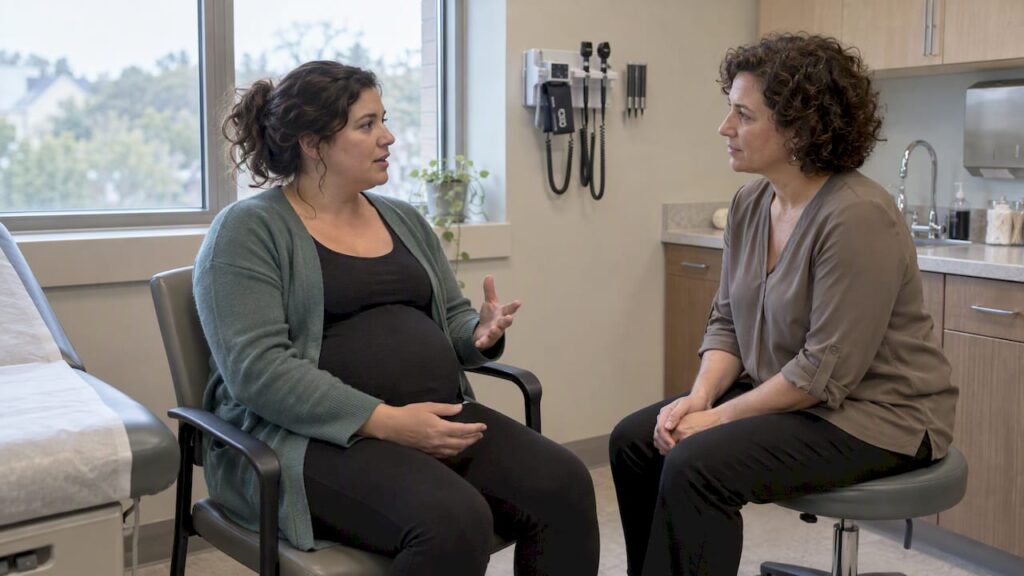
If you had a prior cesarean with a low-transverse incision, you can often prepare to attempt a trial of labor after cesarean, known as TOLAC, and meaningfully improve your odds of a vaginal birth. The path runs through three pillars: a supportive provider and shared decision-making, targeted physical preparation, and real mental rehearsal. Start by requesting your prior operative report and booking a conversation with your provider about your personal likelihood of VBAC success.
TL;DR:
- Request your operative report early; a low transverse incision generally supports eligibility, while a classical incision or prior uterine rupture may rule out VBAC.
- Confirm continuous fetal monitoring, anesthesia at all hours, and rapid operating room access; providers generally avoid misoprostol and assess other induction methods individually.
- The pooled estimate places uterine rupture at 5 to 9 per 1,000 TOLAC attempts; induction and oxytocin augmentation showed higher rates in some studies.
- Therapy can address cesarean scar mobility and pelvic floor relaxation; begin in the second trimester if appropriate, with exercises tailored by your provider.
- Practice a daily breathing drill and agree on a partner cue before labor; seek counseling that addresses trauma if prior birth memories or anxiety persist.
Table of Contents
- How to find and vet a VBAC-supportive provider and birth setting
- Practical pelvic health and exercise plan to prepare your body for VBAC
- Nervous-system tools, rehearsal practices, and processing prior birth experiences
- Build a VBAC-specific birth plan: induction, monitoring, and escalation steps
- Trimester-by-trimester timeline and a concise checklist to complete before term
- How a doula and tailored childbirth education improve VBAC preparedness
- A note from Alexis Wallace: your next three steps this week
- Prepare for your VBAC with personalized support in Bucks County
- FAQ
- Sources
How to find and vet a VBAC-supportive provider and birth setting
Not every practice offers the same comfort level with TOLAC, and that difference matters more than almost anything else in your preparation. A truly VBAC-supportive provider is willing to offer TOLAC, practices in a hospital equipped to respond quickly if an emergency cesarean becomes necessary, and treats counseling as a two-way conversation rather than a one-line policy. ACOG guidance frames VBAC counseling as individualized, weighing your specific likelihood of success against your specific risks, so a provider who gives you a blanket yes or no without reviewing your history is skipping a step.
Bring these questions to your prenatal visits:
- How many TOLACs have you supported in the past year, and what was the outcome?
- What is your induction and augmentation policy for VBAC candidates?
- How quickly can your facility get a patient to the OR if an emergency cesarean is needed?
- Is anesthesia available around the clock, or only during certain hours?
- Will you request my prior operative note to confirm incision type?
That last question matters because incision type determines eligibility. A low-transverse incision is generally associated with lower rupture risk, while other incision types change the risk calculation entirely. Requesting your records now, rather than during a late prenatal visit, gives your provider time to review them and gives you time to ask follow-up questions.
If your current hospital cannot confirm 24/7 OR access, in-house anesthesia, and neonatal resuscitation capability, that is worth discussing honestly with your care team, and some families choose to explore doula support for VBAC as an added layer of advocacy during those conversations.
Pro Tip: Ask your provider to write your personalized VBAC likelihood estimate in your chart so it travels with you if you change practices or hospitals.
Practical pelvic health and exercise plan to prepare your body for VBAC
Your body did real work during your first birth and your cesarean recovery, and some of that work left tissue that benefits from attention before you labor again. Pelvic floor physical therapy can address scar mobility around your cesarean incision, help your pelvic floor relax functionally rather than just strengthen, and build comfort with the positions you may use in labor. Many doulas and physical therapists suggest starting this work in the second trimester, once early pregnancy symptoms ease.
A simple weekly rehearsal plan:
- Practice diaphragmatic breathing for five minutes, twice daily, to build a habit you can return to under stress.
- Add ten slow, supported deep squats, three times a week, building pelvic mobility.
- Move through cat and cow stretches daily to ease spinal and hip tension.
- Practice upright labor positions, like kneeling over a birth ball, for a few minutes each day starting in the third trimester.
- Walk briskly for twenty to thirty minutes most days, which observational reports link to better labor stamina.
Alongside this, light strengthening twice a week supports the stamina labor demands.
- Ask a prospective pelvic floor physical therapist about their specific experience with cesarean scar work and VBAC preparation.
- Confirm they hold a relevant physical therapy license and ask how many pregnant clients they currently treat.
Any exercise plan should be adjusted to your pregnancy, so bring contraindication questions, like whether deep squats are appropriate given your anatomy or prior complications, directly to your provider rather than assuming a generic plan fits your case. For more mind and body groundwork, our guide on preparing your mind and body for labor offers additional practices to layer in.
Pro Tip: Keep a simple log of which exercises you did each week. It becomes a helpful conversation starter at prenatal visits.

Nervous-system tools, rehearsal practices, and processing prior birth experiences
Labor asks a lot of your nervous system, and fatigue or anxiety can drain the energy you need for a long TOLAC. A patient-facing guide from Sentara highlights that coping strategies and mental readiness shape the birth experience as much as physical readiness does, and recommends rehearsing coping tools ahead of time rather than improvising them mid-labor.
Build these into your weeks leading up to birth:
- Practice a short breathing drill daily, even just ninety seconds, so it becomes automatic under stress.
- Rehearse a simple script with your partner for how they will cue you back to your breath if you get overwhelmed.
- Try visualization: picture yourself moving through a contraction calmly, then picture the moment you meet your baby.
- Choose one or two anchor phrases you can repeat in labor to conserve mental energy instead of spiraling into decision fatigue.
If your prior cesarean left you with lingering anxiety, intrusive memories, or a sense of dread about labor, that deserves real attention, not just willpower; you might consider learning more about cannabis and pregnancy as part of making informed, pregnancy-safe decisions. Ask your provider about trauma-informed counseling before birth, and request screening for postpartum mood or trauma symptoms at your postpartum visit if anything feels unresolved afterward. Our guide to navigating birth trauma walks through concrete next steps, and our piece on managing birth anxiety offers grounding techniques you can start now.
Write down your rehearsal notes and preferences and hand a copy to your doula and partner so everyone supporting you knows your anchors going in.
Pro Tip: Practice your breathing drill in a moderately stressful moment, like traffic, not just while relaxed on the couch. That is closer to what labor will ask of you.
Build a VBAC-specific birth plan: induction, monitoring, and escalation steps
Some labor management decisions shift your risk profile more than others, and your birth plan should reflect that. A systematic review and meta-analysis found uterine rupture prevalence during TOLAC runs roughly 5 to 9 per 1,000, with higher rates observed alongside oxytocin augmentation and induction in some of the studies reviewed. ACOG’s Practice Bulletin No. 184 notes that VBAC is linked to lower maternal morbidity for many patients, but that a failed TOLAC carries higher morbidity than a planned repeat cesarean, which is why individualized counseling matters so much before you commit to a plan.

A pooled estimate from the systematic review puts uterine rupture during TOLAC at roughly 5 to 9 per 1,000 attempts, a figure worth discussing directly with your provider as you weigh induction timing.
Discuss these specifics with your provider well before your due date:
- Which induction agents they consider appropriate for TOLAC, since misoprostol is generally avoided due to rupture risk, while oxytocin or mechanical methods may be considered case by case.
- What continuous fetal monitoring looks like during your labor and how often it will be reviewed.
- The defined time threshold for escalating to the OR if something changes, and who makes that call.
- Confirmation that anesthesia is available around the clock at your birth setting.
Put these in writing. A simple line like “We understand continuous monitoring will be used, and we ask to be informed of any change in plan before augmentation begins” sets clear, shared expectations and gives your support team language to use if things move quickly.
Trimester-by-trimester timeline and a concise checklist to complete before term
Spreading your preparation across pregnancy, instead of cramming it into the final weeks, keeps every piece manageable.
- First trimester: request your prior operative report, schedule an early conversation with your provider about VBAC candidacy, and ask about a pelvic floor physical therapy referral.
- Second trimester: begin your exercise and breathing routine, start vetting your hospital and provider against the questions above, and enroll in childbirth education that includes VBAC-specific rehearsal.
- Third trimester: finalize your written birth plan, rehearse roles with your partner and doula, and confirm hospital paperwork and pre-registration.
Before you hit 36 weeks, confirm you have: your operative records in hand, at least one pelvic floor PT visit completed, your birth plan shared with your full care team, your doula booked, and a clear answer on anesthesia availability at your chosen facility. Our parenthood preparation checklist can help you track the broader list alongside these VBAC-specific items.
How a doula and tailored childbirth education improve VBAC preparedness
A doula’s role in VBAC preparation is concrete, not just emotional. We help you prepare questions before prenatal visits, coach positioning that supports a VBAC attempt, train your partner on rehearsed scripts, and stay present across any escalation in care so you are never navigating a sudden change alone.
- VBAC-focused childbirth education includes hands-on rehearsal of positions and breathing, not just lecture slides.
- Strong classes walk you through hospital systems so you know what to expect if your plan shifts mid-labor.
- Before hiring a doula, ask directly how they coordinate with your provider’s existing plan and how many VBAC clients they have supported.
Doula support works best layered onto, never instead of, your clinical care team’s guidance.
A note from Alexis Wallace: your next three steps this week
After supporting many VBAC families through this exact process, the pattern I see most often is simple: families who start early feel calmer by the time labor begins. This week, do three things: request your operative records, schedule a provider conversation about your personal VBAC likelihood, and book one pelvic floor PT consultation. Preparation builds agency, and you do not have to carry it alone.
— Alexis Wallace
Prepare for your VBAC with personalized support in Bucks County
Preparing for a VBAC touches every part of pregnancy, and we built our services to match that. Our Childbirth Education classes include VBAC-specific rehearsal, our Pregnancy & Birth Doula support walks beside you from your first provider conversation through labor itself, and our Postpartum Care continues that support once your baby arrives.

- We serve families across several local counties, including areas around Newtown and Doylestown.
- A free consultation lets us talk through your history, your hospital, and what hands-on support could look like for your VBAC.
- Many families coordinate directly with local hospital providers as part of this planning.
Book your free consultation and let’s build your VBAC preparation plan together.
This article is general information, not a substitute for advice from a qualified doctor. Consult a qualified healthcare professional about your own circumstances before acting on anything here.
FAQ
How to increase chances of a successful VBAC?
The strongest levers are choosing a provider who actively supports TOLAC, preparing your body through pelvic floor therapy and movement, and rehearsing coping strategies before labor begins. ACOG guidance emphasizes that individualized counseling, based on your specific history, gives the clearest picture of your personal likelihood.
What to do to prepare my body for a VBAC?
Start pelvic floor physical therapy in the second trimester to address scar mobility and functional relaxation, and build a weekly routine of gentle squats, hip mobility work, and daily walking. Bring any specific exercise questions to your provider so your plan fits your own pregnancy and history.
What disqualifies you from VBAC?
Mayo Clinic lists a classical or vertical uterine incision and a prior uterine rupture as common reasons someone may not be a VBAC candidate. Eligibility always depends on your individual history, so this is a conversation to have directly with your provider.
Why do most VBACs fail?
Most unsuccessful TOLAC attempts relate to factors like the reason for the original cesarean, lack of a prior vaginal birth, or the need for induction or augmentation, which a systematic review links to higher uterine rupture rates in some studies. Working with a provider who reviews these predictors with you early gives you the clearest, most honest picture of your odds.