

In-home breastfeeding support means a lactation professional, often an IBCLC, comes to you, watches a real feeding in your own space, and leaves you with a written plan you can actually use. It fixes the immediate problem in front of you rather than a description of it over the phone. For most new parents wrestling with latch pain, supply worry, or a baby who will not settle, this is the fastest way to feel steady again.
TL;DR:
- In-home lactation visits typically last 60 to 90 minutes and include assessment, weighted feeds, and a personalized written care plan.
- Certified lactation consultants with IBCLC credentials are best suited for complex issues like tongue tie or slow weight gain, while CLCs and peer counselors handle common latch and positioning concerns.
- Accurate weighted feeds require consistent scale use and diaper handling, and most providers do not bill insurance directly but offer superbills for reimbursement.
- Early support, especially within the first week after discharge, helps prevent issues from escalating, and in-home observation reveals setup problems that clinic visits often miss.
- Non-clinical providers should explain their weighing protocol and provide follow-up plans; hesitation on these points indicates a less thorough service.
Table of Contents
- What Breastfeeding Support at Home Actually Looks Like
- Who Provides In-Home Support and What Credentials Matter
- What Happens During a Home Visit, Step by Step
- How Do I Choose the Right In-Home Lactation Support?
- Timing, Costs, and Insurance for Home Visits
- Why Watching Feeding at Home Changes the Plan
- How Serenity Doula Supports Breastfeeding at Home
- Key Resources for Breastfeeding Support
- Sources
- FAQ
What Breastfeeding Support at Home Actually Looks Like
A home lactation visit usually starts with an initial consult, then one or two follow-ups as things settle. Some practices now offer a hybrid model: an in-person first visit followed by a quick virtual check-in a few days later, so you are not troubleshooting alone at 3 a.m.
Home context changes what a consultant actually sees. Your real chair, your real pillows, your toddler wandering in, your partner hovering with worry. A consultant watching you feed on your own couch catches things a fifteen-minute clinic slot never will, because in-home observation reveals setup-specific issues that clinic visits routinely miss.
The evidence backs this up. In the SILC trial, home visits ran about 60 to 70 minutes and covered:
- Reassurance about normal newborn feeding patterns
- Positioning and latch adjustments
- Feeding frequency and supply concerns
- Referrals when something needed a closer medical look
Community organizations like La Leche League add another layer, offering peer support built on the same core idea: reassurance and practical education keep breastfeeding going.
Who Provides In-Home Support and What Credentials Matter
Not every lactation title means the same level of training, and knowing the difference saves you time and money.
- IBCLC (International Board Certified Lactation Consultant): the highest clinical credential, requiring supervised clinical hours and a board exam. Best for medical complexity like tongue tie, slow weight gain, or persistent pain.
- CLC (Certified Lactation Counselor): trained for common feeding challenges, often a good fit for straightforward latch and positioning support.
- Peer counselors: parents trained to offer encouragement and basic guidance, frequently through La Leche League or hospital programs.
- Postpartum doulas with lactation training: blend hands-on newborn care with feeding support, useful when you want broader postpartum help alongside breastfeeding guidance.
If your baby’s weight gain, a tongue tie, or a medical complication is in question, an IBCLC is the right call. For general reassurance and positioning tweaks, a CLC or peer counselor may be plenty.
Pro Tip: Ask any provider whether they bring an infant scale and whether they’ll send a written plan after the visit. Both are strong signs you’re working with someone thorough.
What Happens During a Home Visit, Step by Step
A typical visit moves through four stages, and knowing them ahead of time helps you relax into the appointment instead of bracing for it.
- Intake and history. The consultant asks about your pregnancy, birth, feeding history, and any pain or supply concerns. This usually takes 10 to 15 minutes.
- Feeding observation. You feed your baby as you normally would while the consultant watches latch, positioning, and swallowing patterns, then offers hands-on adjustments.
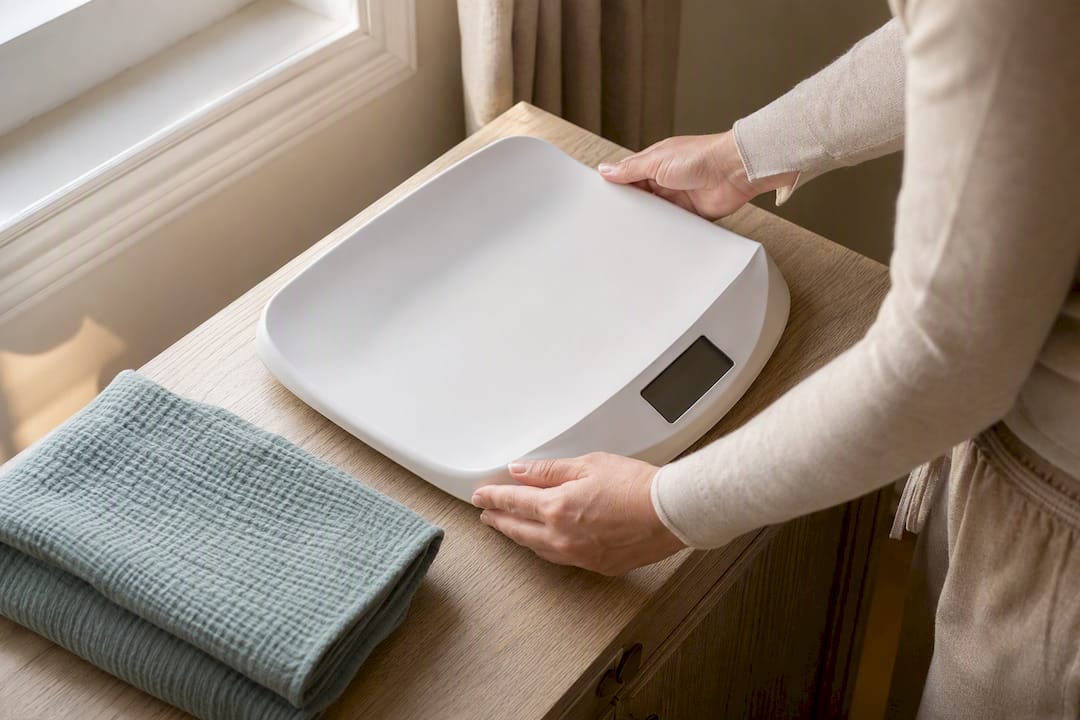
- Weighted feed and basic exam. Many in-home IBCLCs bring a scale to weigh the baby before and after a feed, checking real milk transfer rather than guessing. This step matters: accurate weighted feeds depend on consistent scale placement and diaper handling, so a careful consultant will explain their weighing protocol upfront.
- Care plan and follow-up. You leave with a written plan, demonstrations you can repeat later, and a follow-up window, often 24 to 48 hours of messaging support.
Statistic Spotlight: In the SILC trial, home visits addressed reassurance in 91 percent of visits and positioning in 79 percent, confirming that most sessions focus on confidence and technique rather than crisis management.
No need to tidy up before the consultant arrives. Practitioners consistently ask families to feed as they normally would, not to stage a picture-perfect scene, because an authentic routine gives them the clearest read on what’s actually happening.
How Do I Choose the Right In-Home Lactation Support?
Start with credentials, then match the provider’s experience to your specific concern. A provider who has handled dozens of tongue tie referrals is a different fit than one who mostly supports first time latch coaching.
Before booking, ask:
- How long is the visit, and is a follow-up included?
- Do you bring an infant scale for weighted feeds?
- What happens if my baby needs a medical referral?
- What is your cancellation and rescheduling policy?
Pro Tip: If a provider hesitates when you ask about weighing feeds or written care plans, keep looking. Both should be standard, not an upsell.
Red flags worth noting: no clear follow-up window, no willingness to coordinate with your pediatrician, or pressure to commit to a long package before your first visit. Any concern involving fever, dehydration signs, or a baby who won’t wake to feed needs same-day medical attention, not a scheduled lactation visit.
Timing, Costs, and Insurance for Home Visits
Initial visits commonly run 60 to 90 minutes, sometimes stretching to 75 to 90 minutes for a thorough first consult with intake, exam, and care plan. Travel fees may apply depending on distance.
Most private in-home consultants do not bill insurance directly, but many provide a superbill you can submit for possible reimbursement.
- Ask for CPT codes so your insurer can process the superbill correctly.
- Check whether your HSA or FSA covers lactation visits, since many do.
- Book your first visit as early as possible after discharge. Earlier support tends to prevent small issues from becoming bigger ones.
- Schedule a follow-up within a week if supply or weight gain was a concern at the first visit.
Why Watching Feeding at Home Changes the Plan
I once visited a mom who had been told at the hospital that her latch “looked fine.” At home, I watched her feed in the recliner she actually used every night, not a hospital bed, and the footrest tilt was pulling her baby’s chin down just enough to make the latch shallow. Fifteen minutes with a different pillow setup changed everything.
Three small things that help most families: raise the baby to breast height instead of leaning down to the baby, feed on demand rather than the clock during the first weeks, and keep a simple log of wet diapers instead of trying to remember everything.
If something about your feeding routine feels harder than it should, that is worth a conversation. Reach out for a consultation and let’s look at it together.
— Alexis Wallace
How Serenity Doula Supports Breastfeeding at Home
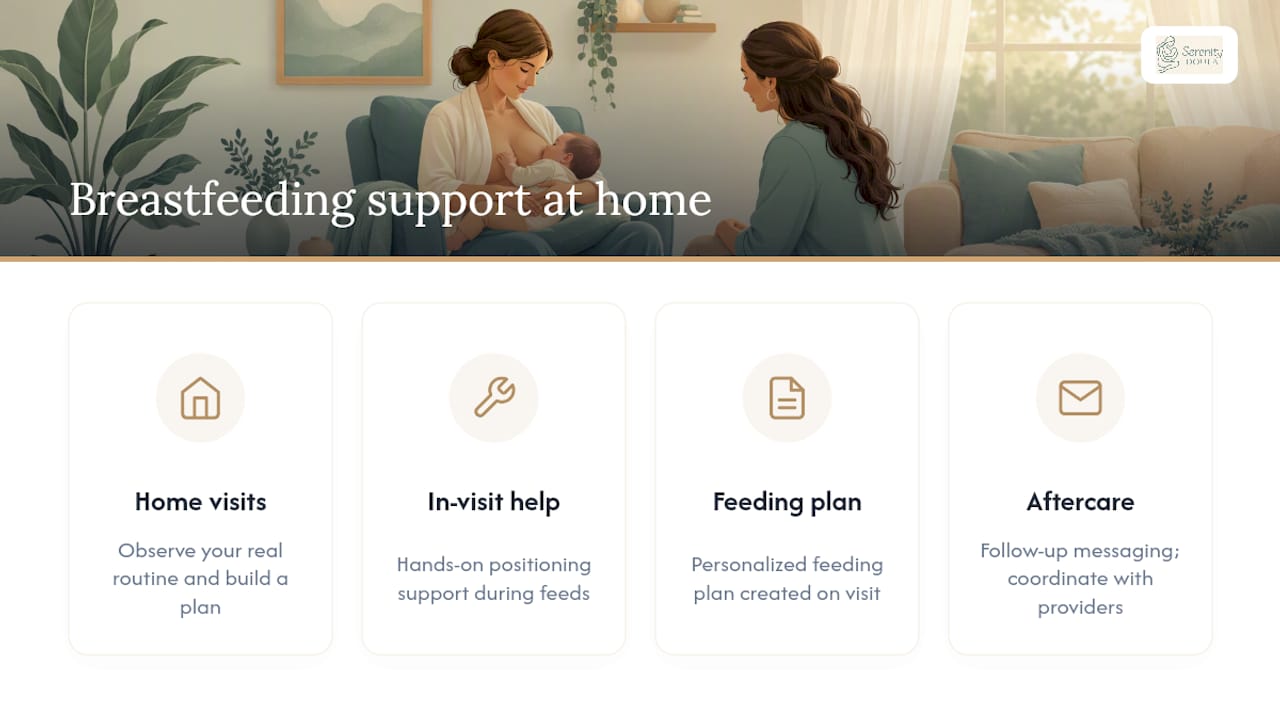
Serenity Doula’s Postpartum Care is a genuinely local alternative to piecing together a clinic visit, a phone hotline, and a search engine at 2 a.m. Visits happen in clients’ homes, allowing the team to observe the real routine and build a plan around it.

A visit includes a personalized feeding plan, hands-on positioning support, and follow-up messaging so you are never left guessing between appointments. When something falls outside our scope, we coordinate directly with your provider, whether that’s your midwife or the team at Trinity Health St. Mary. Families preparing earlier in pregnancy often pair this with our Pregnancy & Birth Doula support or a childbirth education class that covers feeding basics before baby arrives.
If you’re a Bucks County family who wants evidence-informed, high-touch care instead of a rushed clinic slot, book a free consultation with Serenity Doula and let’s talk about what your first weeks could look like.
Key Resources for Breastfeeding Support
These are trustworthy places to keep learning beyond this article:
- La Leche League International: volunteer-led peer support and extensive resources on milk supply and normal newborn feeding behavior.
- SILC Trial: the randomized trial behind much of what we know about proactive home visit timing and content.
- In-Home Lactation Support vs. Clinic Visits: a practitioner’s breakdown of what home observation catches that clinics miss.
- Prenatal Lactation Consultation Guide: helpful if you want to prepare before your baby even arrives.
- Cluster feeding in bottle-fed newborns: useful context on normal newborn feeding behavior that applies to breastfed babies too.
This article is general information, not a substitute for advice from a qualified doctor. Consult a qualified healthcare professional about your own circumstances before acting on anything here.
Sources
- Supporting breastfeeding In Local Communities (SILC) trial description
- La Leche League International – Breastfeeding Support
- In-Home Lactation Support vs. Clinic Visits: Why Seeing You in Your Own Environment Matters
- What’s different about in-home lactation care with ILC?
- In-home lactation visits | an IBCLC comes to you | BCB
FAQ
What Is the 3-3-3 Rule for Breast Milk?
The “3-3-3 rule” generally refers to storage guidance many parents use as a rough memory aid: freshly expressed milk is often fine around 3 hours at room temperature, roughly 3 days in the refrigerator, and about 3 months in a standard freezer. Guidelines vary by source and by freezer type, so ask your lactation consultant or pediatrician for the specific storage guidance they recommend for your situation.
What Is the Hardest Week of Breastfeeding?
Many parents find week two the hardest, once the adrenaline of birth fades and cluster feeding, cracked nipples, or supply worries set in at the same time as exhaustion. This is exactly the window where an early in-home visit tends to help most, since reassurance is the top thing addressed in most home consultations.
How Do I Know My Baby Is Getting Enough Milk?
Steady weight gain, consistent wet and dirty diapers, and audible swallowing during feeds are the clearest signs. A weighted feed during an in-home visit gives you an actual number instead of a guess, since consultants weigh the baby before and after feeding using a consistent protocol.
Does Insurance Cover In-Home Breastfeeding Support?
Many private in-home consultants do not bill insurance directly but provide a superbill with CPT codes you can submit for possible reimbursement. HSA and FSA funds frequently cover lactation visits, so check your plan before booking.
What Does Serenity Doula’s Postpartum Care Include for Breastfeeding?
Serenity Doula’s Postpartum Care includes in-home visits with hands-on feeding support, a personalized care plan, and follow-up messaging, coordinated with your medical provider when needed. Current pricing details are available on the service page itself.