

The first thing to do after hospital discharge is compare your written medication list against what you were taking before admission, then confirm you have a follow-up appointment within 48 hours and know exactly who to call if something feels wrong. Most early readmissions trace back to a missed medication change, a delayed follow-up, or confusion about warning signs. Getting those three things locked down before you leave the building (or within hours of getting home) is the single best predictor of a smooth recovery.
TL;DR:
- Most early readmissions result from missed medication changes, delayed follow-up appointments, or confusion about warning signs, so verifying these before discharge is crucial.
- Discharge planning should include a clear follow-up schedule within 48 hours, medication reconciliation, hands-on care teaching, and confirmation of equipment and prescriptions.
- The first 48 hours after leaving the hospital are vital, with early outpatient follow-up significantly reducing the risk of complications and readmission.
- Proper management of medications through side-by-side comparison and clear instructions can prevent common post-discharge errors and unnecessary calls.
- Establishing home support, confirming equipment delivery, and knowing red-flag symptoms help ensure a safer, smoother transition for recovery.
Table of Contents
- What Hospital Discharge Actually Means
- The Discharge Day Checklist Hospital Staff Should Walk You Through
- The First 48 to 72 Hours: What to Prioritize
- Managing Medications Without the Guesswork
- Setting Up Home Support and Equipment
- Warning Signs That Mean It’s Time to Call or Go In
- Your Caregiver Discharge-Day Checklist
- A Working Doula’s Take on Discharge Day
- How Serenity Doula Helps You Transition Home With Confidence
- Trusted Resources Worth Saving
- Sources
- FAQ
What Hospital Discharge Actually Means
Discharge is not just “going home.” It might mean home, a skilled nursing facility, or an inpatient rehab stay, depending on what care you still need. A proper discharge plan spells out your diagnosis, a summary of what was treated, your complete medication list, scheduled follow-up appointments, any equipment you’ll need, red-flag symptoms to watch for, and named contacts for questions. A discharge planner, nurse, or hospital social worker usually manages this process, and per the Medicare discharge planning checklist, you’re entitled to a written copy of all of it before you go.
The Discharge Day Checklist Hospital Staff Should Walk You Through
Discharge day moves fast, and it’s easy to get swept out the door before everything is settled. Before you leave, make sure these four things happen:
- Medication reconciliation. A nurse or pharmacist should walk through every drug, flagging what’s new, what’s changed, and what’s been stopped, since the AARP guide to hospital discharge notes this comparison step is where most errors hide.
- Teach-back on hands-on care. If you need to change a dressing, give an injection, or help with transfers, ask a nurse to watch you do it once before you leave, not just tell you how.
- Equipment and pharmacy confirmation. Verify that any ordered equipment is arriving and that your prescriptions are filled through a meds-to-beds program or a pharmacy you can reach that day.
- A named contact. Get one person’s name and a phone number that works around the clock for post-discharge questions.
The First 48 to 72 Hours: What to Prioritize
This window matters more than almost anything else in your recovery. CDC and AHRQ transitional care data shows that early outpatient follow-up, particularly within 48 hours, meaningfully lowers readmission risk for complex and respiratory conditions. Waiting a week to “see how things go” is exactly the gap that sends people back to the emergency room.
Here’s how the first three days typically break down:
- Hours 0 to 24: Get home safely, take medications exactly as reconciled, arrange rest, and avoid deciding anything new is “probably fine” without checking your instructions.
- Hours 24 to 48: Many hospitals call to check in during this window, and home health services, if ordered, usually start their first visit here.
- **Around Around 48 hours after discharge, your first clinic visit, telehealth check-in, or therapy session should happen.
Statistic Spotlight: Suboptimal transitions from hospital to home raise the odds of readmission and complications, while early, well-planned follow-up measurably reduces both, according to AHRQ’s review of readmissions after discharge. If no follow-up appointment is on the calendar when you leave the hospital, ask the discharge nurse to schedule one before you walk out. Do not wait for a callback that may never come.
Managing Medications Without the Guesswork
Medication mix-ups are one of the most common, and most preventable, causes of post-discharge trouble. The fix starts with a side-by-side comparison of what you were taking before admission against your new discharge list, so nothing gets accidentally doubled up or dropped.
- Ask specifically what’s new, what’s discontinued, and why, for every drug on the list.
- Fill critical prescriptions before you leave the hospital through a meds-to-beds program, or confirm your pharmacy has them in stock and know the out-of-pocket cost.
- Set up a pillbox or phone alarm system, and have a caregiver double-check the first few doses.
- Get written instructions for what to do if a dose is missed or a side effect appears.
Pro Tip: Ask the discharge pharmacist to write, in plain language, what a “normal” side effect looks like versus one that means you should call. That single distinction prevents a lot of unnecessary 2 a.m. panic calls.
Setting Up Home Support and Equipment
A hospital bed doesn’t help much if it’s still sitting in a warehouse when you get home. Common durable medical equipment needs to include a walker, shower chair, raised toilet seat, oxygen setup, or hospital bed, and these are usually arranged by the hospital’s discharge planner or case manager before you leave.
- Confirm delivery timing for any equipment before discharge day, not after.
- Ask whether you qualify for home health nursing, physical therapy, occupational therapy, or aide visits, and who schedules the first one.
- Check with your insurance or Medicare on what’s covered, and loop in the hospital social worker if coverage is unclear.
Building a written postpartum or home care plan before you need it takes a lot of the scramble out of this step.
Warning Signs That Mean It’s Time to Call or Go In
Know these red flags before you leave the hospital, not after a symptom shows up and you’re scrambling to remember what’s normal.
- Fever above 100.4°F
- Worsening shortness of breath or chest pain
- Uncontrolled bleeding
- Sudden confusion or unusual drowsiness
- Wound drainage that increases, thickens, or develops an odor
Call your named discharge contact first for anything that feels concerning but not immediately life-threatening. Go straight to the emergency department for chest pain, severe breathing trouble, or sudden confusion. Medication errors, infection, and flare-ups of an existing chronic condition account for a large share of early readmissions, which is exactly why the checklist habits above matter so much.
Your Caregiver Discharge-Day Checklist
If you’re the one managing someone else’s discharge, print this and bring it with you.
- Verify the medication list matches what was taken before admission, item by item.
- Confirm the follow-up appointment date, time, and transportation plan.
- Arrange any equipment delivery and confirm it’s actually scheduled.
- Collect written discharge instructions and the discharge summary in hand.
- Get the name and number of your designated point person for questions.
Three questions are worth asking out loud before you leave: Who is my 24-hour contact? Who is responsible for scheduling my follow-ups? And what services have been ordered, and who bills for them?
Pro Tip: Create a simple “transition folder,” a single envelope or folder with the discharge summary, medication list, and appointment dates. Hand it to every new provider, home health nurse, or specialist you see in the following weeks. It keeps everyone working from the same page instead of piecing together your story from memory. Coordinating who does what is easier when partners split the load deliberately instead of assuming the other person has it covered.
A Working Doula’s Take on Discharge Day
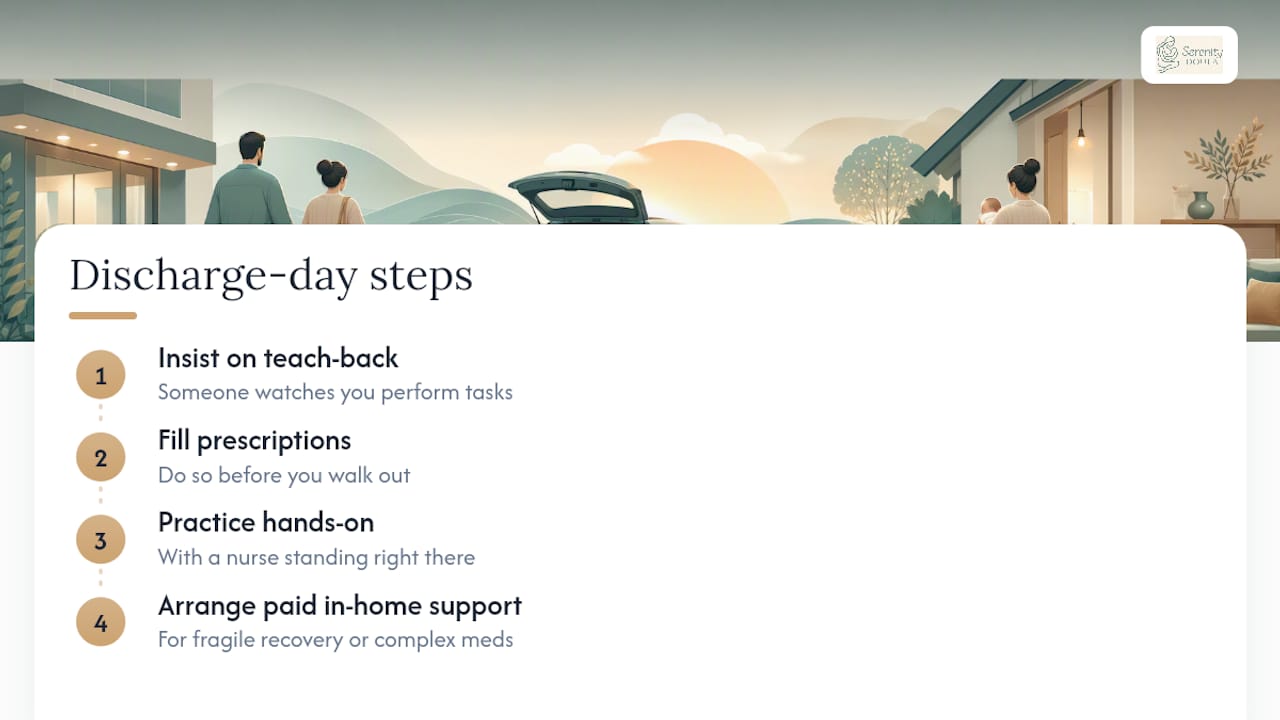
Families almost always underestimate how much they’ll forget within an hour of leaving the hospital. That’s not a character flaw. It’s what happens when you’re exhausted, relieved, and handed a stack of paperwork all at once. I tell every client to insist on a real teach-back, someone watching you change a dressing or handle a newborn task before you leave, not just narrating it to you.
Fill prescriptions before you walk out if you can. Practice the hands-on stuff with a nurse standing right there. And if you’re navigating a fragile recovery, whether that’s a medically complex birth or a new medication regimen, paid in-home support in those first weeks isn’t a luxury. It’s often the difference between a smooth transition and a frightening call to the pediatrician or your OB at 3 a.m.
— Alexis Wallace
How Serenity Doula Helps You Transition Home With Confidence
Discharge instructions tell you what to do. They rarely tell you how to actually manage it at home when you’re exhausted, sore, and running on no sleep. Serenity Doula fills that exact gap for Bucks County families: in-home postpartum support that helps you track medication schedules, coordinate with any home health nurses already coming to your door, and simply have another set of trained hands during those critical first days.

This kind of support tends to matter most for first-time parents, families without nearby relatives to lean on, and anyone managing a new medication routine after a cesarean birth or a complicated delivery. A postpartum doula’s in-home care can also help partners understand their role during those first 72 hours, so nobody is guessing who’s responsible for what. If you’re in Newtown, Doylestown, or anywhere else in Bucks County and want a plan in place before you ever leave Trinity Health St. Mary or another local hospital, book a free consultation and let’s map out your transition home together.
Trusted Resources Worth Saving
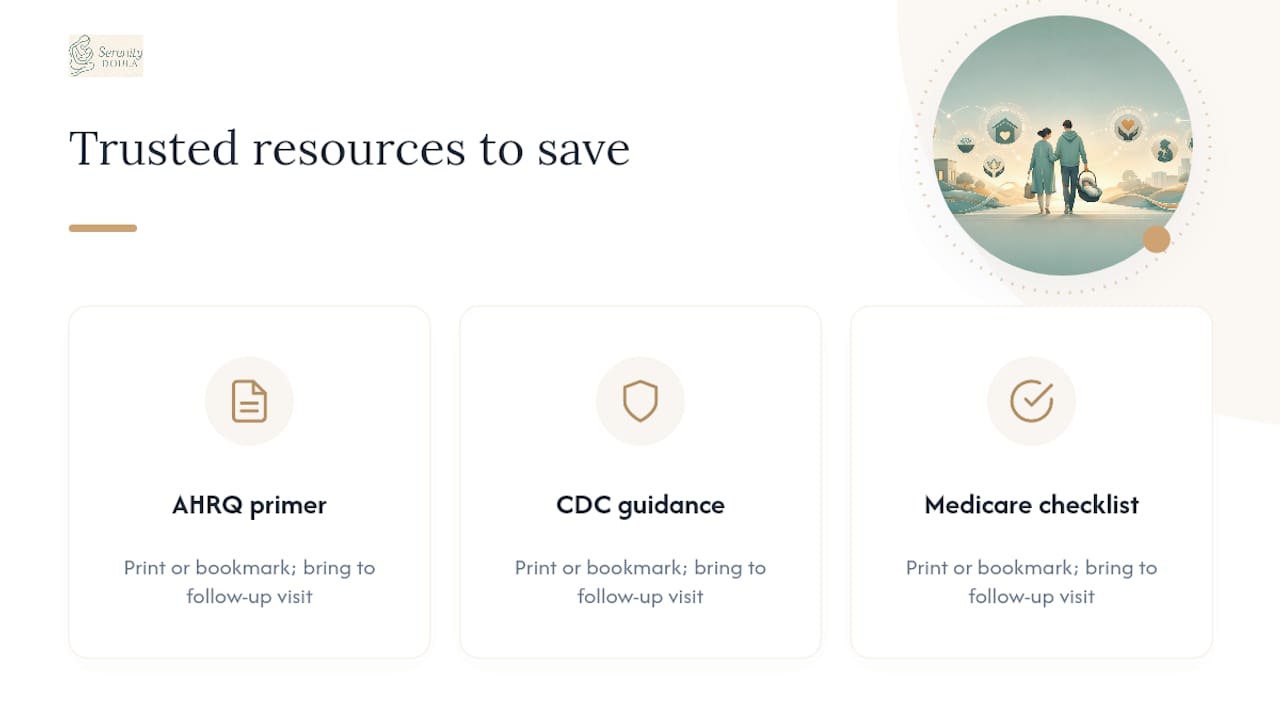
Print or bookmark these before you need them: the AHRQ discharge planning primer, CDC’s transitional care guidance, and the Medicare discharge checklist. Bring them to your follow-up visit so your questions match what the evidence actually recommends.
This article is general information, not a substitute for advice from a qualified doctor. Consult a qualified healthcare professional about your own circumstances before acting on anything here.
Sources
- CDC MMWR: Transitional care (example report)
- AARP: Hospital discharge tips for older adults
- Medicare: Your discharge planning checklist
FAQ
What Is the 3-Day Rule in a Hospital?
The “3-day rule” typically refers to Medicare’s former requirement of a 3-day inpatient stay before covering skilled nursing facility care, though recent policy changes have altered this in some Medicare Advantage plans. Ask your discharge planner directly whether this rule applies to your coverage before assuming it does.
Who Decides When You Are Discharged From the Hospital?
Your attending physician makes the final discharge decision, based on whether you’re medically stable enough to leave, but nurses, case managers, and social workers all help prepare the plan. If you feel unready, you can ask your care team to review that decision before you go.
How Long Do Hospital Discharges Take?
Discharge can take anywhere from a couple of hours to most of a day, depending on how many steps are involved, such as medication reconciliation, equipment coordination, and transportation arrangements. Complex cases with home health orders or equipment deliveries tend to take longer than a straightforward discharge home.
How Long Does It Take Your Body to Recover From a Hospital Stay?
Recovery timelines vary widely by diagnosis and procedure, but many people notice meaningful improvement within the first one to two weeks if follow-up care and medications go as planned. For a deeper look at what a realistic postpartum timeline looks like, Serenity Doula’s recovery guide breaks down what to expect week by week.