
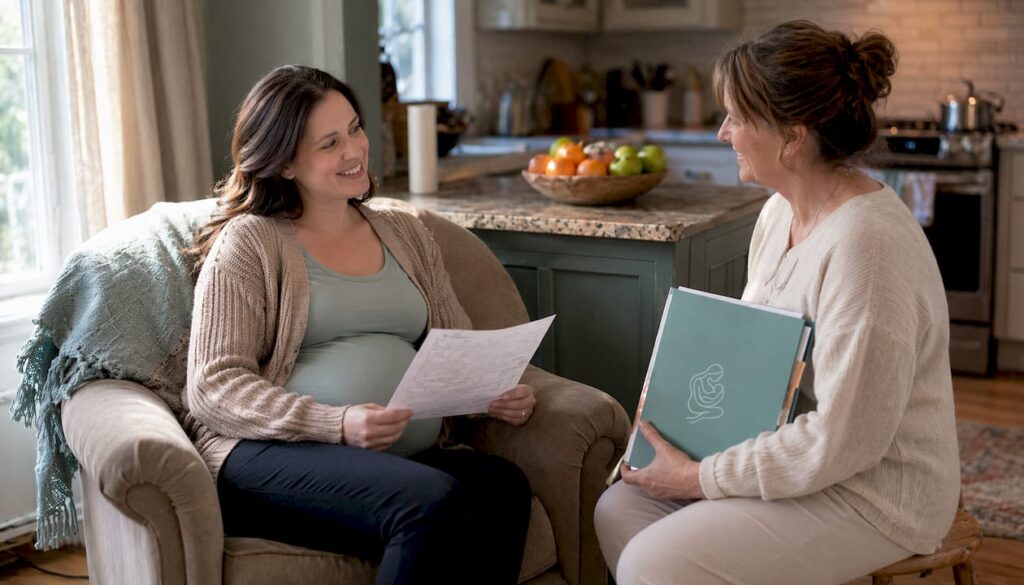
A positive birth experience is not about everything going according to plan. It’s about feeling safe, supported, respected, and genuinely involved in what’s happening to your body. The World Health Organization defines a positive childbirth experience as one that meets or exceeds a woman’s personal and sociocultural expectations, including giving birth in a psychologically safe environment with continuous emotional support and kind, competent care. Medical interventions, a change in birth plans, or an unexpected cesarean do not automatically take that away from you.
What shapes how you feel about your birth is far more about the people in the room and the way you were treated than about the clinical path your labor took. Research consistently shows that emotional and interpersonal factors dominate a mother’s perception of birth positivity over clinical outcomes. That means the conversation you had with your nurse at 3 AM, whether your partner was present and calm, whether someone held your hand and explained what was happening — those details carry more weight than whether you got an epidural or delivered vaginally.
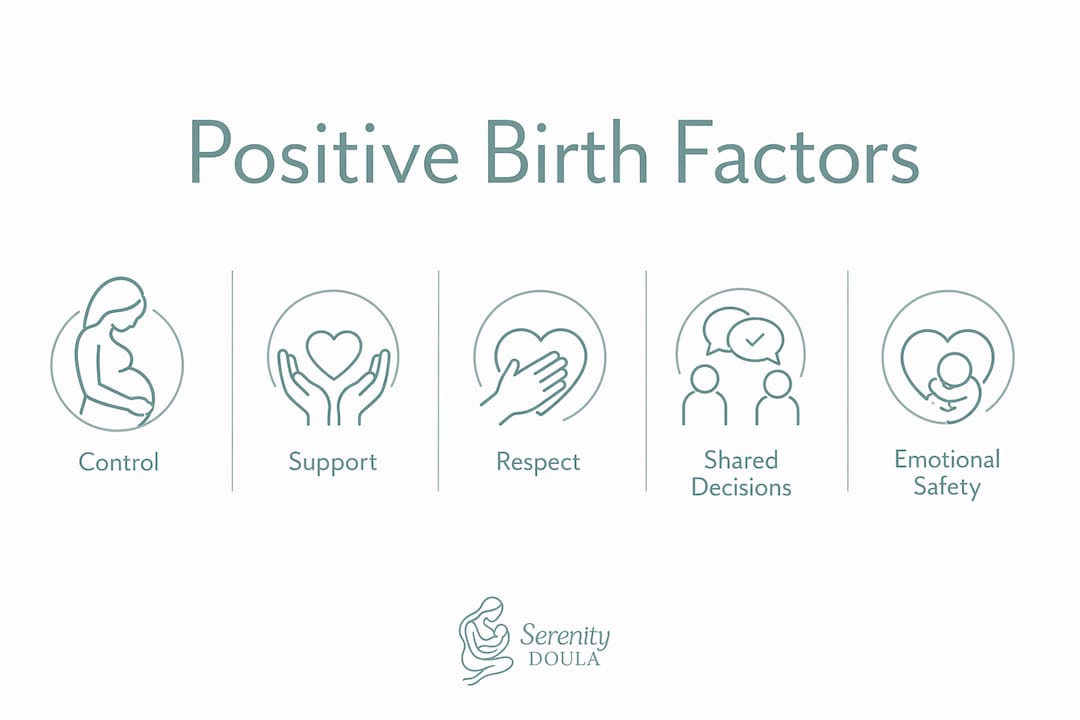
Here’s what actually shapes a positive birth experience:
- Feeling safe in your physical and emotional environment
- Feeling seen and respected by your care team
- Being involved in decisions, even when plans change
- Having continuous support from a partner, doula, or trusted companion
- Receiving clear, honest communication from your providers throughout labor
Pro Tip: Build your birth plan around values, not a script. Instead of listing every intervention you want to avoid, write down what matters most to you emotionally: “I want to feel informed,” “I want my partner present for every decision,” “I want someone to explain each step before it happens.” That kind of plan holds up beautifully even when labor takes a different road.
Why the pressure for a “perfect” birth can hurt you
Social media has made the “perfect birth” feel like something you can plan, curate, and achieve if you just prepare hard enough. The images are everywhere: a serene water birth, a drug-free delivery with a glowing mother holding her newborn seconds later, a birth story told in golden-hour photos. These portrayals are real for some people. But they represent a narrow slice of the full spectrum of birth, and when they become the standard you measure yourself against, the damage can be real.
The cultural ideal of a “perfect” birth typically looks like this: spontaneous labor, no epidural, vaginal delivery, short pushing stage, immediate skin-to-skin, and a mother who feels powerful and at peace. When birth deviates from that script — and it often does — parents can feel like they failed. That feeling is not a personal weakness. It’s the predictable result of holding an unrealistic standard.
Here are the most common pressures parents face, and what each one can cost emotionally:
- “Natural is better”: The belief that unmedicated birth is superior can leave mothers who chose or needed pain relief feeling ashamed or inadequate.
- “Your birth plan is your birth”: Treating a birth plan as a contract sets up a painful collision when labor moves differently than expected.
- “Cesarean is a last resort”: Framing surgical birth as a failure ignores that 32.2% of U.S. births in 2022 were cesarean deliveries, many of them life-saving and deeply meaningful.
- “You should feel empowered”: Telling someone they must feel strong and triumphant after birth adds another layer of pressure when they feel scared, exhausted, or grief-stricken.
- Social comparison: Scrolling through curated birth stories before your own can quietly set expectations that no real birth can match.
The pressure to have a perfect birth does not come from nowhere. It’s woven into parenting culture, birth communities, and even well-meaning advice from friends and family. Recognizing it for what it is — a cultural construct, not a clinical standard — is the first step toward releasing it.
What actually makes a birth experience feel positive
The evidence here is clear and worth sitting with. A mother’s sense of control, the quality of her interactions with care providers, and the presence of continuous support predict her satisfaction with birth far more reliably than whether she had an epidural, labored for six hours or twenty-four, or delivered vaginally or by cesarean.

The American College of Obstetricians and Gynecologists (ACOG) emphasizes that shared decision-making during labor reduces feelings of powerlessness and improves satisfaction, even when medical interventions become necessary. Women who feel genuinely consulted — not just informed after the fact — report better psychological outcomes across the board. The mode of delivery matters far less than whether she felt like a participant in her own care.
Research also confirms that empathy, kindness, and continuity of care by familiar providers strongly influence birth satisfaction beyond clinical outcomes. A provider who makes eye contact, explains what’s happening, and asks rather than tells creates a fundamentally different experience than one who is technically skilled but emotionally absent. Both can deliver a healthy baby. Only one leaves the mother feeling held.
Key factors that contribute to a positive birth experience:
- Continuous emotional support from a doula, partner, or companion throughout labor
- Respectful, clear communication from nurses, midwives, and physicians
- Involvement in decision-making, including when plans change unexpectedly
- A sense of personal control, even in a medically complex birth
- Feeling affirmed and heard by the people caring for you
Pro Tip: Before your due date, ask your provider directly: “If my birth plan needs to change, how will you involve me in that decision?” That one question tells you a great deal about the kind of care you’ll receive — and it opens a conversation that can shape your whole experience.
How to reframe common birth scenarios that don’t match the plan
Birth rarely follows the script. Inductions, epidurals, prolonged labor, instrumental delivery, and cesarean births are not rare exceptions — they are part of the everyday reality of labor and delivery at hospitals like Trinity Health St. Mary in Langhorne, or any birth center across Bucks County. What changes the emotional impact of these scenarios is not the intervention itself, but how it’s handled and how you’re supported through it.
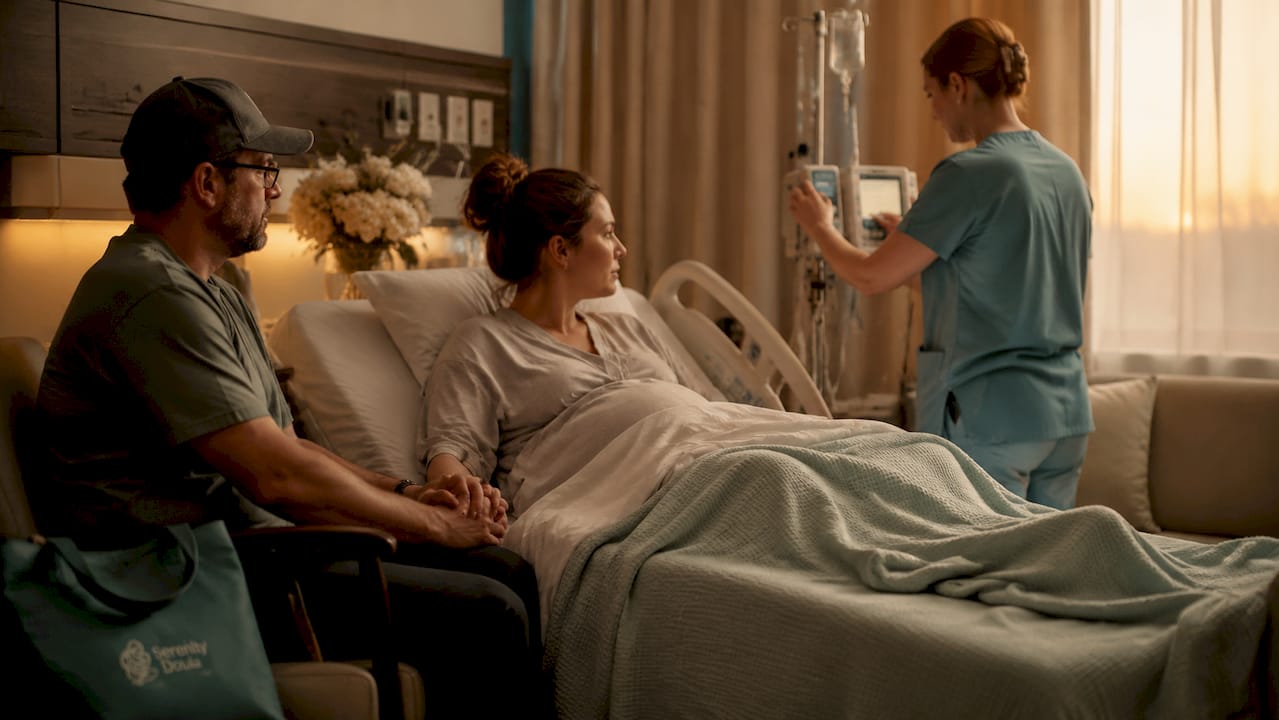
ACOG’s guidance on limiting unnecessary interventions also acknowledges that family-centered elements can and should be offered regardless of delivery mode. A cesarean birth, for example, can include a clear drape so you see your baby emerge, immediate skin-to-skin on the operating table, and your partner present and involved throughout. These are not consolation prizes. They are genuine, meaningful experiences that many families in Bucks County and beyond describe as the most powerful moments of their lives.
Common birth variations and how to reframe them:
- Induction: Not a sign that your body failed. Ask your provider what the medical indication is, and ask how you can stay involved and mobile during the process.
- Epidural: Pain relief is not weakness. Choosing comfort so you can be present and engaged is a valid, thoughtful decision.
- Prolonged labor: A long labor is not a failed labor. Ask your team what “normal progress” looks like for your specific situation.
- Instrumental delivery (forceps or vacuum): These tools exist to help you and your baby. Ask your provider to explain what’s happening and why before they proceed.
- Cesarean birth: Whether planned or unplanned, a cesarean can be a calm, family-centered experience. Ask about a gentle or family-centered cesarean protocol at your hospital.
- NICU admission: Having your baby taken to the NICU is one of the hardest unexpected turns. Ask the team how you can stay connected, touch your baby, and be involved in their care from the start.
The thread running through all of these: asking questions keeps you in the room, emotionally and practically. You don’t have to accept what’s happening passively. You can understand it, participate in it, and find meaning in it.
How to find empowerment in your own birth story
After more than a decade supporting families through birth in Bucks County, I’ve sat with parents in every kind of birth room imaginable. I’ve been present for fast, uncomplicated labors that left mothers feeling shaken, and I’ve been present for long, medically complex births that left mothers feeling fierce and proud. The clinical path and the emotional experience do not always move in the same direction.
What I’ve seen consistently is this: the parents who feel most at peace with their birth stories are the ones who went in with flexibility built into their expectations. Not low expectations. Flexible ones. They knew what mattered most to them, they communicated it clearly, and they stayed open to the reality that birth has its own timeline and logic.
Flexible birth planning is one of the most effective psychological strategies for reducing what researchers call “birth dissonance” — the gap between what you expected and what actually happened. A process-focused plan (“I want to feel informed and supported at every step”) holds up far better than an outcome-focused one (“I will not have an epidural, I will push for less than an hour, I will have immediate skin-to-skin”).
Steps to cultivate empowerment and find joy in your birth story:
- Write a values-based birth plan that names your emotional priorities, not just your clinical preferences.
- Talk openly with your doula and provider about what you’re most anxious about, so they can address it in real time.
- Prepare your partner to be your advocate and your anchor. A well-prepared partner changes the room. Learn more about supporting your partner during labor before the big day.
- Release the highlight reel you’ve been watching on social media. Your birth will be its own story.
- Plan one family-centered moment you want regardless of how birth unfolds: a song playing, a specific person in the room, a photo taken in the first minutes.
Pro Tip: For families planning a cesarean or anticipating one, ask your hospital about a family-centered cesarean protocol. This can include a clear or lowered drape, immediate skin-to-skin in the OR, and delayed cord clamping. These elements are increasingly available at hospitals across the Philadelphia region, including in Bucks County, and they transform the experience.
— Alexis Wallace
Managing birth expectations and your emotional well-being postpartum
Unmet birth expectations carry a real emotional cost. A systematic review found that a mismatch between birth expectations and actual experiences is associated with reduced birth satisfaction and may increase the risk of postnatal PTSD. This doesn’t mean every difficult birth leads to trauma — it means the gap between what you hoped for and what happened deserves attention, not dismissal.
The postpartum period is when that gap often surfaces most sharply. You’re sleep-deprived, your body is recovering, and you’re processing an experience that may have felt nothing like what you imagined. Feeling grief, anger, or disappointment about your birth is not ingratitude for a healthy baby. Both things can be true at once: your baby is here and healthy, and your birth was hard in ways you’re still working through.
Respectful communication and shared decision-making during labor lowers the risk of postpartum stress and PTSD. That means the quality of your care during birth has a direct line to how you feel weeks and months later. If your birth felt disrespectful or out of your control, that experience is worth talking about with a mental health professional who specializes in perinatal care.
Practical steps for emotional self-care after birth include seeking quick help at home for kids with sudden ear pain when unexpected health challenges arise, ensuring family-centered care and support.
- Name what you’re feeling without judgment. Disappointment, grief, and relief can all coexist.
- Talk to your doula or midwife about your birth story. A postpartum debrief can help you process what happened and why.
- Seek a perinatal mental health therapist if you’re experiencing intrusive thoughts, flashbacks, or persistent sadness about your birth.
- Lean on your support network — your partner, family, and friends — and let them know specifically what you need.
- Give yourself time. How you feel about your birth at two weeks postpartum is rarely how you’ll feel at six months.
Pro Tip: Before your birth, ask your provider: “If my birth doesn’t go as planned, what postpartum support resources do you recommend?” Having that conversation early means you already know where to turn if you need it. Your OB, midwife, or doula can connect you with perinatal mental health resources in the Doylestown and Newtown areas.
Real birth stories: finding the positive when things don’t go as planned
The most honest thing I can tell you is that the births I’ve witnessed that families describe most lovingly are not always the ones that went smoothly. They’re the ones where someone felt genuinely cared for, even in the middle of chaos.
One family I supported in Bucks County had planned a low-intervention birth and ended up with an emergency cesarean after a long labor. The mother told me afterward that what she remembered most was not the surgery. It was that her nurse held her hand and explained every single step, that her partner was right beside her the whole time, and that her baby was placed on her chest within minutes of delivery. She said she felt like the most important person in that room. That’s a positive birth experience. The clinical path was not what she wanted. The emotional experience was everything she needed.
Another family I worked with had a very different story. Their birth was medically uncomplicated, but they felt rushed, unheard, and sidelined in decisions. They described their birth as one of the hardest experiences of their lives, despite a healthy outcome. The baby was perfect. The experience left wounds that took months to heal.
These two stories sit side by side in my memory because they illustrate exactly what the research confirms: a mother’s subjective perception of childbirth has a lasting impact on her psychosocial well-being. Clinical outcomes and emotional outcomes are not the same thing. You deserve both, and when the clinical path takes an unexpected turn, the emotional experience can still be everything you hoped for.
What families in these stories had in common when their births felt positive despite complications:
- A care team that communicated clearly and treated them with respect
- A support person who stayed calm, present, and advocating
- At least one moment of connection with their baby that felt sacred
- The sense that they were a participant, not a bystander
If you’re preparing for birth and carrying anxiety about what might go wrong, the signs of a positive birth experience are worth understanding before you go in. Knowing what to look for helps you recognize it when it’s happening.
Ready to feel supported, no matter how your birth unfolds?
At Serenity Doula, we work with families across Bucks County — from Newtown to Doylestown and beyond — to build the kind of support that holds up through every kind of birth. Whether you’re planning a low-intervention birth, preparing for a scheduled cesarean, or simply carrying the weight of not knowing what’s coming, we’re here to help you feel grounded, informed, and genuinely cared for.
Our pregnancy and birth support services are built around the evidence: continuous emotional support, shared decision-making, and respectful care make birth better, regardless of how it unfolds clinically. We’d love to talk with you about what that looks like for your family.
Book a free consultation with Serenity Doula and let’s start the conversation before your birth, not after.
Key Takeaways
A positive birth experience is defined by feeling safe, supported, and involved in decisions — not by a perfect clinical outcome or an unmedicated delivery.
| Point | Details |
|---|---|
| Emotional factors outweigh clinical ones | WHO and research confirm that support, respect, and involvement in decisions predict birth satisfaction more than delivery mode. |
| Unmet expectations carry real risk | A mismatch between birth expectations and actual experiences is linked to reduced satisfaction and may increase postnatal PTSD risk. |
| Cesarean births can be deeply positive | 32.2% of U.S. births in 2022 were cesarean deliveries; family-centered elements like skin-to-skin in the OR make these births meaningful. |
| Flexible planning protects you emotionally | Process-focused birth plans reduce “birth dissonance” and support emotional resilience when labor takes an unexpected turn. |
| Postpartum support matters as much as birth support | Respectful care during labor lowers postpartum stress risk; a debrief with your doula or a perinatal therapist can help you process a difficult birth. |
FAQ
What makes a birth experience positive if it doesn’t go as planned?
A positive birth experience centers on feeling safe, respected, and involved in decisions, not on a specific clinical outcome. WHO guidelines confirm that continuous emotional support and respectful care are the defining factors, regardless of whether interventions were needed.
Can a cesarean birth still be a positive experience?
Yes. ACOG guidance supports family-centered cesarean care, including skin-to-skin contact in the operating room and partner presence throughout, which allows families to feel connected and included even in a surgical birth.
Does having an epidural or other intervention reduce birth satisfaction?
Not on its own. Research shows that women who feel involved in the decision to use interventions report strong satisfaction and positive outcomes; it’s the loss of control and poor communication, not the intervention itself, that tends to reduce satisfaction.
How do unmet birth expectations affect mental health after birth?
A systematic review found that a mismatch between birth expectations and actual experiences is associated with lower birth satisfaction and may increase the risk of postnatal PTSD, making realistic expectations and strong support systems genuinely protective.
What can I do if I feel grief or disappointment about my birth?
Talking with your doula, midwife, or a perinatal mental health therapist is a good first step. Feelings of disappointment after a difficult birth are normal and deserve care, not dismissal — and early support significantly improves long-term emotional recovery.