TL;DR:
- Plus-size pregnancy can be healthy with supportive, size-inclusive care and emotional support.
- Doula care reduces interventions, shortens labor, and boosts confidence, especially for high-risk pregnancies.
- Building a strong support team and practicing self-advocacy enhances emotional wellbeing and joyful birth experiences.
Plus-size pregnancy carries a reputation for being risky and overwhelming. But here’s the truth: the right support changes everything. Doula care reduces cesarean rates and improves outcomes even in high-BMI pregnancies, and the data backs that up. This guide is here to walk you through the real risks, the real solutions, and the real joy that’s possible when you’re surrounded by a team that sees all of you. From physical comfort strategies to emotional wellness and self-advocacy scripts, consider this your grounded, honest starting point for a pregnancy that feels supported and celebrated.
Table of Contents
- Understanding plus-size pregnancy risks and realities
- How doula support transforms plus-size pregnancy and birth
- Emotional wellness and body confidence during pregnancy
- Navigating physical comfort, care, and common challenges
- A fresh perspective: flipping the plus-size pregnancy script
- Get holistic, inclusive support for your plus-size pregnancy
- Frequently asked questions
Key Takeaways
| Point | Details |
|---|---|
| Care team matters | Inclusive, size-friendly providers and doulas lead to healthier outcomes in plus-size pregnancy. |
| Evidence-based support | Continuous doula care reduces interventions, boosts confidence, and improves birth satisfaction. |
| Wellness is holistic | Emotional health, self-advocacy, and practical comfort strategies make a positive difference for expectant parents. |
| Stigma can be overcome | Facing bias head-on and building a supportive network strengthens your pregnancy experience. |
Understanding plus-size pregnancy risks and realities
When a provider labels a pregnancy “high-risk” due to BMI (body mass index, a measurement of weight relative to height), it can feel like a verdict. It isn’t. It’s a flag to monitor certain conditions more closely. And knowing exactly what those conditions are puts the power back in your hands.
Here are the most commonly discussed risks associated with higher BMI in pregnancy:
- Gestational diabetes: A temporary form of diabetes that develops during pregnancy, affecting blood sugar levels.
- Hypertensive disorders: This includes preeclampsia, a condition involving high blood pressure that needs careful monitoring.
- Cesarean birth: Higher rates of C-section are documented, though inclusive care reduces interventions significantly.
- Extended labor: Some plus-size individuals experience longer labor, which can increase fatigue.
Now, here’s what often gets left out of those conversations. Most of these risks are manageable, especially with a compassionate, knowledgeable care team. The difference between a scary experience and a supported one usually comes down to who’s in your corner.
“Your weight does not define the quality of care you deserve. You have the right to a respectful, informed, and joyful birth experience.”
One of the biggest misconceptions is that plus-size pregnancy automatically means poor outcomes. That’s simply not true. What the research actually shows is that doula support benefits high-risk pregnancies by reducing unnecessary interventions and increasing confidence throughout labor.
Size-friendly care means providers who use appropriate equipment, communicate without bias, and respect your choices. It means having emotional support during pregnancy that goes beyond clinical checkups. And it means understanding that you are the expert on your own body.
If your current provider makes you feel shamed rather than supported, that’s important information. You are allowed to seek a second opinion. You are allowed to ask questions. And you are absolutely allowed to build a team that treats you with dignity.
How doula support transforms plus-size pregnancy and birth
Understanding the risks makes one thing clear: who supports you during pregnancy and labor matters enormously. A doula (a trained professional who provides continuous emotional, physical, and educational support during birth) is one of the most powerful members of that team.
Let’s look at what the research actually shows:
| Outcome | Without doula support | With doula support |
|---|---|---|
| Cesarean rate | Higher average | 19% reduction overall |
| Labor length | Longer average | Shorter with continuous support |
| Breastfeeding initiation | Lower rates | Significantly increased |
| Emotional wellbeing | Higher anxiety | More grounded and confident |
Those numbers are meaningful. And for Black plus-size parents, the impact is even greater, with doula support improving outcomes and helping close long-standing gaps in maternal care.
Here’s how a doula typically works alongside your medical team during a plus-size pregnancy:
- Prenatal preparation: Your doula helps you understand your specific risk factors, create a birth plan, and practice childbirth class techniques that apply to your body and goals.
- Labor support: They provide hands-on comfort measures, position suggestions, breathing guidance, and calm reassurance throughout every stage.
- Advocacy during birth: Your doula helps you communicate your wishes to the medical team, ensuring your voice is heard even when things feel overwhelming.
- Postpartum follow-up: Many doulas check in after birth, supporting breastfeeding and emotional recovery.
Pro Tip: When interviewing a potential doula, ask directly: “What experience do you have supporting plus-size parents?” A confident, detailed answer tells you a lot. You can also explore natural birth doula support options to see if that philosophy fits your vision.
A doula isn’t a replacement for your OB or midwife. Think of them as your anchor when everything else feels like a whirlwind. They remember what you said you wanted when you’re too deep in labor to speak for yourself.
Emotional wellness and body confidence during pregnancy
Beyond birth outcomes, emotional resilience and confidence are just as crucial. And for plus-size pregnant women, those emotional layers can be especially complex.
Common emotional struggles during plus-size pregnancy include:
- Body image anxiety: Watching your body change while already navigating complicated feelings about size.
- Medical anxiety: Worrying about risks every appointment, especially after scary statistics are mentioned without context.
- Depression: Exercise reduces anxiety and depression in pregnancy, and self-efficacy (your belief in your ability to manage challenges) is a key protective factor.
- Weight stigma from providers: Weight stigma reduces wellness adherence, meaning that when you feel judged, you’re less likely to follow through on care. Compassionate support isn’t just kind. It’s clinically important.
Building your emotional support system starts before labor. Here’s what actually helps:
- Connect with other plus-size parents through online communities or local groups.
- Practice daily affirmations. It sounds small, but “my body knows how to do this” repeated out loud rewires how you show up.
- Explore holistic emotional support options like prenatal counseling, mindfulness, and breathwork.
- Add gentle movement. Even a 20-minute walk shifts mood and builds physical confidence.
- Look into first trimester self-care practices that set a positive tone early.
“You are allowed to feel joyful about this pregnancy. Your size doesn’t disqualify you from that.”
Pro Tip: If a provider says something that feels dismissive or shaming, you don’t have to absorb it silently. Try this script: “I hear your concern. Can you help me understand what specific actions I can take?” It redirects the conversation toward solutions and signals that you’re an active participant in your care.
You might also benefit from pregnancy physiotherapy options that address both physical discomfort and confidence in your moving body. Movement, done gently and intentionally, is one of the most powerful tools you have.
Navigating physical comfort, care, and common challenges
Physical comfort and practical planning make a tangible difference for plus-size parents. Let’s make your care plan hands-on.

Here are the most common physical challenges and what actually helps:
| Challenge | What helps |
|---|---|
| Epidural placement | Request an experienced anesthesiologist; positioning aids matter |
| Fetal monitoring | Wireless or waterproof monitors allow movement during labor |
| Labor positions | Upright, hands-and-knees, or side-lying often work best |
| Back and hip pain | Prenatal massage, pelvic girdle support belts, and physiotherapy |
| Swelling and circulation | Compression socks, elevation, and hydration breaks |
Size-friendly care teams use appropriately sized blood pressure cuffs, wider beds, and bariatric equipment when needed. Asking about these tools in advance is not demanding. It’s smart planning.
Here’s a step-by-step approach to preparing for labor with your team:
- Schedule a pre-labor walkthrough: Visit your birth location and ask about available equipment, including wider beds, positioning aids, and monitoring options.
- Build your comfort kit: Include a firm pillow for positioning support, size-inclusive labor gowns, your favorite snacks, and electrolyte drinks. Learn more about labor nutrition and hydration to prep your body.
- Prepare your birth partner: Share this information with them so they can advocate alongside you. A partner support guide can help them feel confident in that role.
- Discuss your birth plan with your doula: Make sure your preferences are documented and your doula knows your top priorities.
- Ask about oral health: Research links oral health during pregnancy to lower rates of preterm birth, which is relevant for all pregnancies, including high-BMI ones.
Pro Tip: Build what I call your “comfort kit” in the third trimester, not the week before your due date. Include a long, supportive peanut ball (used during labor to open the pelvis), a fan for temperature control, and a playlist that genuinely calms you. Your doula can help you customize this based on your specific needs.
A fresh perspective: flipping the plus-size pregnancy script
Here’s something I genuinely believe, and it’s not something most pregnancy resources say clearly enough: the focus on risk in plus-size pregnancy has gone too far.
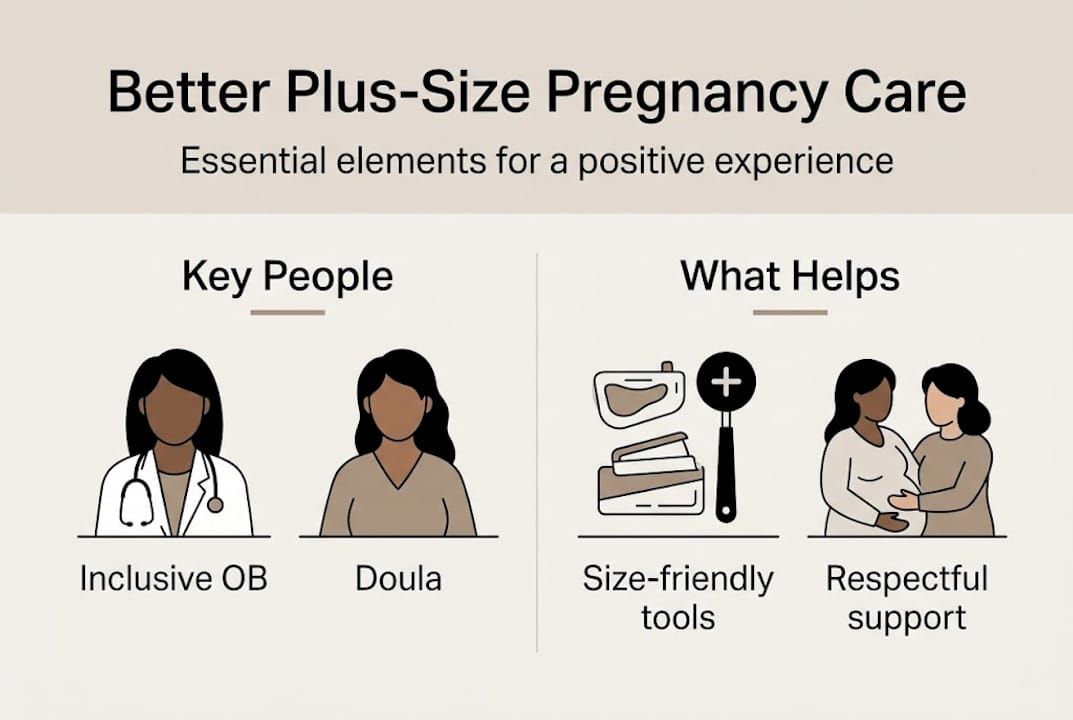
Yes, certain conditions warrant extra monitoring. We take those seriously. But when every appointment starts with your BMI and ends with warnings, something important gets lost. Your joy. Your confidence. Your sense that this pregnancy is yours to own and celebrate.
The most resilient outcomes we see don’t come from fear-based management. They come from self-advocacy, informed choice, and a support team that centers the whole person, not just the data points. Families who walk into birth feeling grounded and supported tend to navigate unexpected challenges more calmly because they trust themselves and they trust their team.
The real shift in plus-size pregnancy care isn’t happening in delivery rooms. It’s happening in how we talk about these pregnancies at all. I’d love for you to read through personal birth stories from families who’ve been exactly where you are. Seeing that joyful, celebrated birth is possible, at any size, changes something.
You deserve a care experience built on respect, not just risk reduction.
Get holistic, inclusive support for your plus-size pregnancy
You’ve done the reading. You know the risks, the tools, the emotional landscape. Now it’s time to build your team.
At Serenity Doula, we offer personalized doula support designed to meet you where you are, with zero judgment and full hearts. Whether you’re looking for hands-on labor support, want to explore childbirth education benefits before your due date, or simply need someone to help you process the emotional weight of pregnancy, we’re here. Our approach is evidence-based, size-friendly, and rooted in the belief that every family deserves a birth story they feel proud of. Reach out to learn more about prenatal holistic care and schedule your free consultation today.
Frequently asked questions
Is it safe to be pregnant and plus size?
Yes, with the right support and size-inclusive providers, plus-size pregnancies can be healthy and deeply positive. Doula care improves outcomes even in higher-risk pregnancies, making support one of the most important choices you’ll make.
How can I find a size-friendly doula?
Look for a doula who has direct experience supporting plus-size clients and who asks about your preferences without centering your weight. Doulas provide advocacy-driven care that’s especially valuable for high-BMI pregnancies.
What should I pack for labor as a plus-size parent?
Bring comfort tools like a peanut ball, supportive pillow, size-inclusive labor gown, hydration drinks, and easy snacks. Ask your doula to help you personalize your kit based on your birth plan and preferences.
How does weight stigma affect plus-size pregnancy?
Weight stigma reduces wellness adherence, meaning that feeling judged by providers can directly impact your health behaviors. Choosing compassionate, bias-free care protects both your emotional and physical wellbeing.