
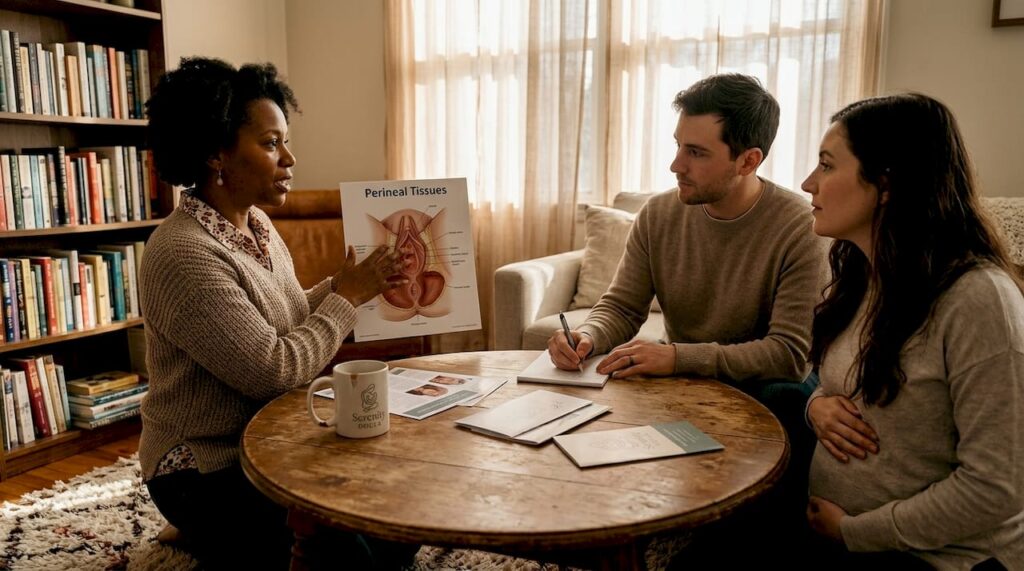
That burning, stinging sensation right as your baby’s head crowns is one of the most talked-about moments in childbirth. It’s called the ring of fire, and it’s completely normal. Many expectant parents spend weeks dreading it, but here’s the truth: it’s brief, it’s manageable, and with the right preparation and support, you can move through it with far more calm than you might expect. This guide walks you through what it is, why it happens, and the holistic strategies that you and your birth team can use together to ease the experience.
Table of Contents
- What is the ring of fire and when does it happen?
- Why does the sensation vary and who feels it most?
- Evidence-based holistic strategies for easing the ring of fire
- Antenatal prep: how perineal massage reduces pain and trauma
- The real power of preparation: what most birth guides miss
- Experience holistic support for your birth journey
- Frequently asked questions
Key Takeaways
| Point | Details |
|---|---|
| Normal childbirth stage | The ring of fire is a brief, predictable part of crowning and not cause for alarm. |
| Discomfort varies | How the sensation feels depends on factors like previous births, baby’s size, and pain management. |
| Holistic comfort works | Non-medical techniques, such as breathing, massage, and warm compresses, can make a big difference. |
| Preparation pays off | Simple third-trimester practices greatly reduce trauma and boost birth confidence. |
| Expert support matters | A doula and prepared partner are valuable guides for navigating intense sensations during birth. |
What is the ring of fire and when does it happen?
Let’s get clear on what we’re actually talking about. The ring of fire is the intense burning or stinging sensation felt during crowning in the second stage of labor, when your baby’s head becomes visible at the vaginal opening and stretches the perineum. It’s not a complication. It’s a signal that your baby is almost here.
This sensation occurs due to significant stretching of the perineal tissue and activation of nerve endings as the baby’s head descends. Think of it as your body doing exactly what it was designed to do, even if it doesn’t feel comfortable in the moment.
Here’s a quick overview of where the ring of fire fits in the labor timeline:
| Stage | What’s happening | Ring of fire present? |
|---|---|---|
| First stage (early labor) | Cervix dilates to 10 cm | No |
| Second stage (pushing) | Baby descends through birth canal | Begins at crowning |
| Crowning | Baby’s head visible at vaginal opening | Yes, most intense here |
| Birth | Baby fully delivered | Resolves immediately |
Some key things to know about this moment:
- It typically lasts a few minutes, though it can feel longer during a first birth
- It resolves the moment your baby is born
- It is not a sign that something is wrong
- The intensity varies widely from person to person
“The ring of fire is one of the most anticipated and feared moments in birth, yet it is one of the shortest. Knowing it’s coming and having a plan makes all the difference.”
Taking a childbirth education class is one of the best ways to prepare your mind and body for this moment before it arrives.
Why does the sensation vary and who feels it most?
Not everyone experiences the ring of fire the same way. That’s important to understand, because fear often comes from imagining the worst-case version of something. The reality is far more nuanced.
Intensity varies by baby’s size, position, previous deliveries, and pain tolerance. A first-time parent with a larger baby and no epidural will likely feel it more strongly than someone on their second birth with pain relief in place.
Here’s a comparison to help set realistic expectations:
| Factor | More intense experience | Less intense experience |
|---|---|---|
| Birth number | First birth (primiparous) | Second or later birth (multiparous) |
| Baby size | Larger baby | Smaller baby |
| Baby position | Malposition (e.g., occiput posterior) | Optimal position |
| Pain relief | No epidural | Epidural in place |
| Perineal prep | No prior massage | Antenatal perineal massage done |
It’s also worth noting that more intense sensation occurs with larger babies, malposition, or a first birth, while prior vaginal births and epidurals tend to reduce it significantly.
Here are the key factors that shape your individual experience:
- Your birth history. First-time parents generally feel it more because the perineal tissue hasn’t stretched before.
- Your baby’s position. A baby who isn’t in an ideal position creates uneven pressure, which can intensify the sensation.
- Your support system. Having a calm, skilled person guiding your breathing and pushing makes a measurable difference.
- Your mindset going in. Fear tightens muscles. Preparation and trust in your body can genuinely reduce perceived pain.
- Whether you’ve had perineal massage. This is one of the most underused tools in birth prep.
Understanding informed birth care means knowing that your experience is valid no matter where it falls on the spectrum. And knowing that postpartum recovery support is available afterward can also ease the mental load during labor.
Evidence-based holistic strategies for easing the ring of fire
Some experience the ring of fire more than others, but everyone can benefit from these holistic techniques. The good news is that research strongly supports several non-medical comfort measures that your doula and partner can help you use in real time.
Holistic management techniques include controlled breathing (Lamaze), slow and controlled pushing, warm compresses, partner or doula counter-pressure, water immersion, and perineal massage. These aren’t just feel-good suggestions. They’re backed by evidence.
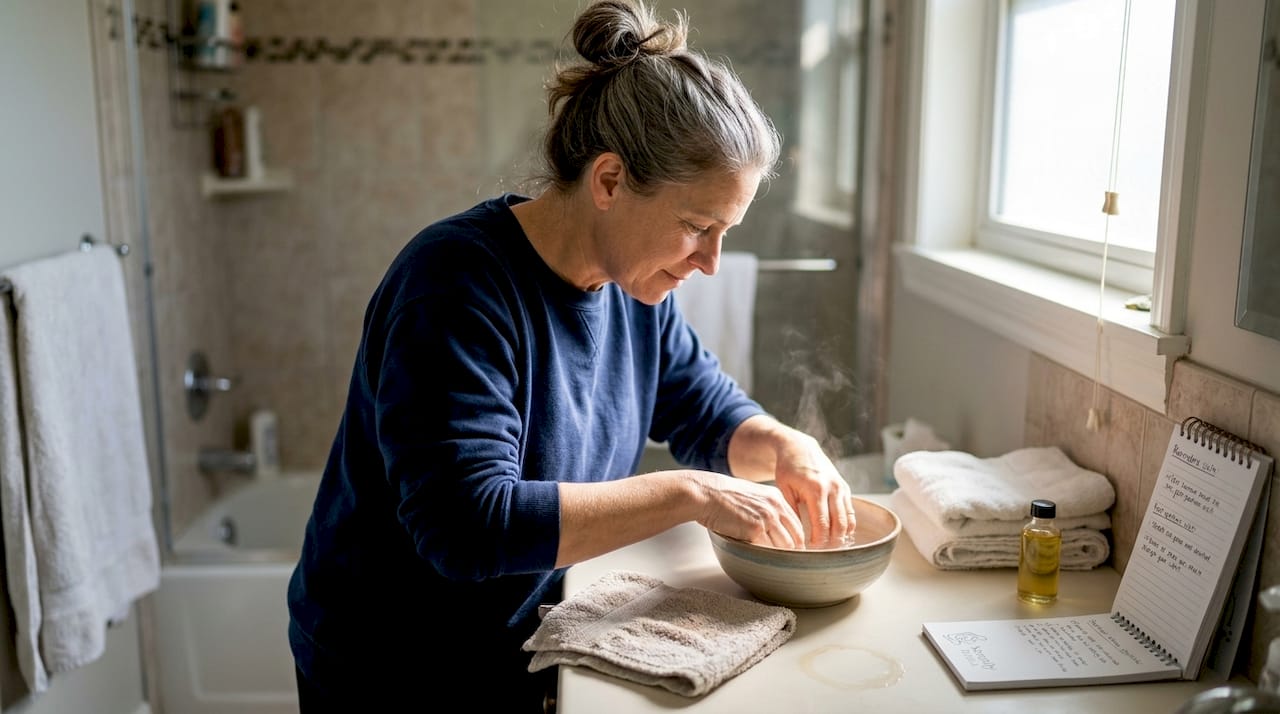
In fact, hands-poised pushing reduces episiotomy risk (RR 0.65), and perineal massage with warm compresses lowers severe tear rates (RR 0.49 for massage). That’s a significant reduction in trauma, and it comes from technique, not medication.
Here’s your comfort toolkit for crowning:
- Warm compress on the perineum. Applied by your doula or midwife, this softens tissue and reduces tearing risk.
- Slow, controlled pushing. Resist the urge to push hard and fast. Gentle, steady pressure gives tissue time to stretch.
- Panting or breathing through contractions. This slows the baby’s descent and protects the perineum.
- Counter-pressure from your partner or doula. Firm, steady pressure on the lower back or perineum can ease the sensation.
- Water immersion. Laboring or birthing in water softens the perineum and naturally slows crowning.
- Verbal coaching. Your doula’s calm voice guiding your breath is more powerful than you might think.
Pro Tip: Practice panting now. Seriously. Panting short, shallow breaths through your mouth is a skill that slows your pushing reflex and gives your perineum time to stretch. Practice it with your partner or doula before your due date.
“Slow, supported pushing with a warm compress and steady breathing is one of the most effective combinations we have for reducing perineal trauma at crowning. It’s simple, free, and it works.”
Learn more about comfort measures during labor and explore childbirth support options to understand how what doulas do fits into this picture. You can also review the Cleveland Clinic guide to perineal massage for a clear, practical overview.
Antenatal prep: how perineal massage reduces pain and trauma
Managing the sensation during labor works best when you start preparing before birth. Antenatal perineal massage is one of the most evidence-backed things you can do in your third trimester to reduce discomfort at crowning.
Antenatal perineal massage from 35 weeks, done one to two times per week, reduces episiotomy risk (RR 0.84, NNTB 21) and trauma requiring sutures (RR 0.91, NNTB 15), especially for first-time mothers. It also reduces postpartum perineal pain. That’s a meaningful benefit from a simple, low-cost practice.
Here’s how to get started:
- Start at 35 weeks. Earlier isn’t necessary, and later is still helpful.
- Use a safe oil. Vitamin E oil, coconut oil, or a dedicated perineal massage oil all work well.
- Find a comfortable position. Sitting propped up or with one foot elevated works for most people.
- Use your thumbs or ask your partner. Insert thumbs about an inch inside the vaginal opening and apply gentle downward and sideward pressure.
- Hold for 1 to 2 minutes. You should feel a stretching sensation, not pain. Breathe through it.
- Repeat 1 to 2 times per week. Consistency matters more than frequency.
“Perineal massage before birth is like training for a marathon. You’re preparing your tissue for the stretch it will experience, so when the moment comes, your body is ready.”
A few people should check with their care provider before starting. If you have placenta previa, vaginal infections, or premature labor risk, get clearance first. For most people, it’s safe and genuinely helpful.
Explore the childbirth education benefits of learning this technique in a supported setting, and find out how to prepare for labor holistically. Your postpartum care will also be smoother when perineal trauma is minimized from the start. The full Cochrane review on antenatal perineal massage is worth reading if you want to go deeper into the research.
The real power of preparation: what most birth guides miss
Here’s something I want you to sit with for a moment. Most birth guides give you a list of techniques and send you on your way. But what they often miss is this: how you feel going into that moment matters as much as what you do in it.
Fear creates tension. Tension tightens muscles. Tight muscles make the ring of fire more intense. It’s a cycle, and it’s one that preparation and skilled support can genuinely interrupt.
When you’ve practiced your breathing, done your perineal massage, and built trust with your doula, something shifts. The ring of fire stops being a terrifying unknown and becomes a predictable, finite moment. You know it’s coming. You know it ends. And you know you’re not alone in it.
I’ve seen this reframe change everything for birthing parents. The sensation doesn’t disappear, but the fear does. And without fear amplifying every nerve signal, the experience becomes something you can move through rather than something that happens to you.
Pro Tip: Practice your panting breath with your support team before your due date. Run through the scenario out loud. Familiarity builds calm, and calm builds resilience.
That’s the kind of natural doula support we believe in. Not just techniques, but trust, preparation, and a grounded presence beside you when it matters most.
Experience holistic support for your birth journey
You’ve just learned a lot. Now let’s talk about what it looks like to have someone in your corner who knows all of this and can guide you through it in real time.
At Serenity Doula, we offer birth support doula services designed to help you feel calm, informed, and genuinely supported from early labor all the way through crowning and beyond. Our childbirth education for parents covers everything in this article and more, including hands-on practice with breathing techniques and perineal massage guidance. Want to understand exactly how doulas help during moments like the ring of fire? We’d love to connect. Reach out to schedule a consultation and let’s build your birth plan together.
Frequently asked questions
How long does the ring of fire last during labor?
The ring of fire sensation usually lasts just a few minutes, though it can stretch longer during a first birth’s second stage. It resolves completely once your baby is born.
Can you prevent the ring of fire during childbirth?
You can’t fully prevent it, but slow pushing and warm compresses combined with antenatal perineal massage can significantly reduce the intensity and lower your risk of tearing.
Is the ring of fire dangerous or a sign of tearing?
The ring of fire is a normal, transient part of labor, not a danger signal. It means your baby is crowning, and with skilled support, tearing risk can be meaningfully reduced.
Does everyone feel the ring of fire equally?
No. First-time parents, those with larger babies or malposition, and those without epidurals tend to feel it more strongly than those in subsequent births or with pain relief.