

TL;DR:
- A rebozo is a traditional Mexican woven shawl used to support the body during pregnancy, labor, and postpartum recovery. It provides gentle abdominal support, relaxes tension during labor, and helps with emotional and physical healing after birth through rhythmic movements and wrapping techniques. Choosing the right size and fabric ensures versatility and comfort for each stage of childbirth and recovery.
A rebozo is a traditional Mexican woven shawl used to support your body during pregnancy, ease labor, and help you heal after birth. This single piece of fabric has been trusted by midwives and families across generations, and for good reason. You can wrap it around your belly for back relief, use it during contractions to help your baby find a better position, and let it hold you close in the tender weeks after birth. This guide walks you through every stage so you feel confident picking one up and using it.
What can you do with a rebozo during pregnancy?
Belly support is one of the most immediate and satisfying uses of a rebozo during pregnancy. When your belly grows, the extra weight pulls on your lower back and hips. A rebozo wrapped snugly around your abdomen reduces lower back pressure and supports your abdomen, making standing and walking feel much more comfortable. Unlike a rigid synthetic pregnancy belt, the rebozo’s woven, breathable structure molds to your body and lets your skin breathe.
How to wrap your belly step by step
- Fold the rebozo lengthwise into a band about 8–10 inches wide.
- Center the band under your belly, with equal lengths on each side.
- Cross the ends over the top of your belly and bring them around to your back.
- Tie or tuck the ends securely at your lower back or side, firm but not tight.
- Check comfort by taking a few steps. You should feel lifted, not squeezed.
For belly wrapping, a 98-inch rebozo gives you enough length to wrap and tie without straining. Shorter lengths work for smaller frames, but most people find 98 inches to be the sweet spot for pregnancy support.
Key benefits of rebozo belly wrapping:
- Relieves hip and lower back strain during the third trimester
- Improves posture and body alignment while standing
- Provides gentle, consistent abdominal support without restricting movement
- Offers a natural alternative to synthetic support belts
Pro Tip: Choose a rebozo made from natural cotton or wool. These fabrics are breathable and strong enough to hold the wrap securely without stretching out of shape after a few uses.
If you want to pair rebozo support with other comfort strategies, holistic childbirth preparation covers a range of practices that work well together during pregnancy.

How does a rebozo help during labor?
Rebozo techniques during labor work by creating space and releasing tension, not by forcing anything. The true power of the rebozo in labor lies in relaxing the pelvic floor and uterine ligaments, which gives your baby more room to shift into a good position. This is a meaningful distinction. The rebozo does not mechanically move your baby. It helps your body let go of the tension that may be holding things in place.
The sifting technique
The most well-known labor technique is called sifting. Your birth partner or doula drapes the rebozo under your hips while you are on all fours. They then hold one end in each hand and create a gentle, rhythmic jiggle that rocks your pelvis side to side. This motion is deeply relaxing during active labor and helps release tightness in the hips and lower back.
Other effective labor techniques include:
- Pelvic release standing: Your partner wraps the rebozo around your hips from behind and sways gently while you lean forward on a surface.
- Contraction support: Draping the rebozo across your shoulders gives you something to grip and lean into during a wave.
- Side-lying hip release: While you rest on your side, your partner uses the rebozo under your top hip to rock it gently forward and back.
- Upright support: Your partner holds both ends of the rebozo in front of you so you can hang your weight forward between contractions.
Pro Tip: Avoid applying too much pressure with the rebozo during labor. The most effective technique is a soft, rhythmic motion. If it feels forceful, ease up. Gentleness is what makes it work.
Partners, this is a skill you can absolutely learn. A step-by-step labor support guide can help you practice these movements before the big day so you feel prepared and confident in the room.
Rebozo techniques for postpartum healing
Postpartum rebozo care is one of the most nurturing things you can do for yourself after birth. The most recognized practice is called “Closing the Bones,” a traditional ceremony in which the rebozo is used to wrap and rock the birthing person from head to toe. The intention is to signal to your body and nervous system that the intensity of birth is complete and that you are held and safe.
Timing matters here. Postpartum rebozo work is generally recommended starting 4–6 weeks after a vaginal birth and around 3 weeks after a cesarean. Starting too soon can interfere with physical healing, so give your body the time it needs first.
What a postpartum rebozo session looks like
- Lie comfortably on a soft surface with pillows supporting your head and knees.
- Your partner or doula places the rebozo under your feet and rocks them gently side to side.
- They move slowly up the body, wrapping and rocking each section: calves, hips, belly, shoulders.
- The session ends with a gentle full-body wrap, holding you snugly for a few quiet minutes.
This is not a traditional massage. The rhythmic containment and rocking work directly on your nervous system, helping you feel grounded and physically held after the enormous experience of birth. Many people describe it as deeply emotional, releasing feelings they did not realize they were carrying.
“The rebozo doesn’t just wrap your body. It wraps your whole experience.”
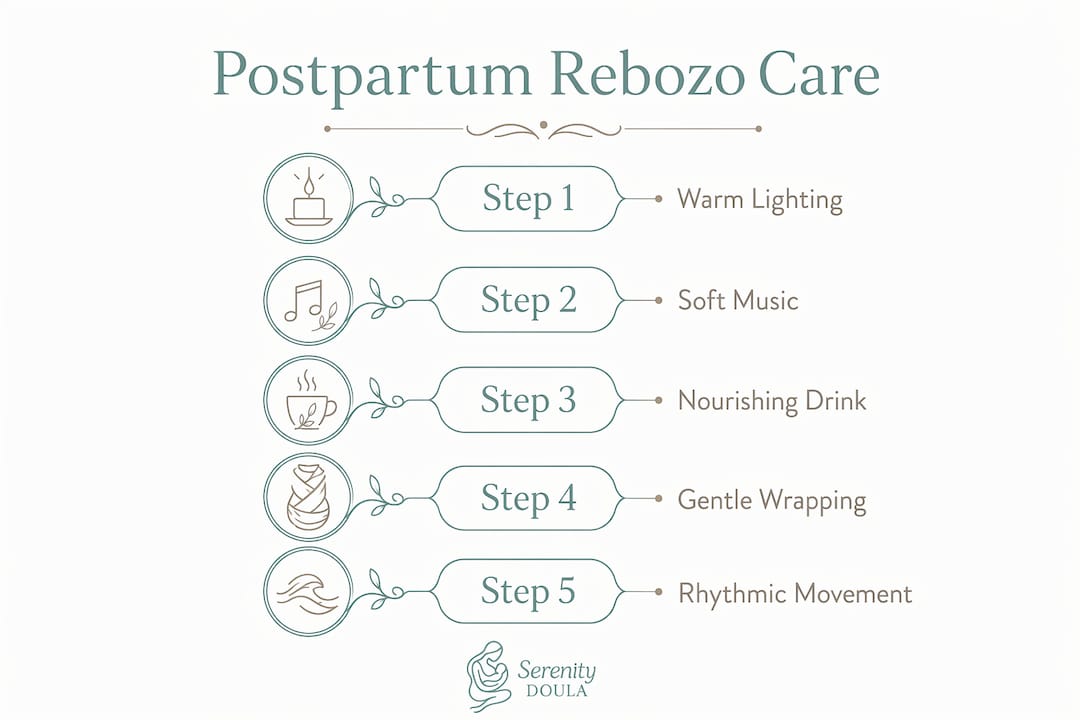
Pro Tip: Pair your postpartum rebozo session with warm lighting, soft music, and a nourishing drink beforehand. Treating it as a dedicated ritual, rather than a quick task, deepens the calming effect. You can also explore Ayurvedic postpartum recovery practices that complement rebozo care beautifully.
Choosing the right rebozo: size and fabric
The rebozo you choose shapes what you can do with it. Length is the most important factor, and the right choice depends on your plans for using it.
| Length | Best For |
|---|---|
| 78 inches | Basic labor support, sifting techniques |
| 98 inches | Pregnancy belly wrapping, most labor techniques |
| 118 inches | Full postpartum wrapping, babywearing after birth |
A 118-inch rebozo is the best choice if you want one rebozo that carries you through pregnancy, labor, postpartum, and then transitions into babywearing. It is a genuine investment in a tool that grows with your family.
What to look for in fabric:
- Natural cotton: Soft, breathable, and easy to wash. Great for all stages.
- Wool blends: Warmer and more structured, ideal for postpartum wrapping in cooler months.
- Avoid synthetics: They stretch unevenly, lose shape quickly, and do not breathe well against skin.
Care is simple. Hand wash or use a gentle machine cycle in cold water. Lay flat to dry to preserve the weave. A well-cared-for rebozo lasts for years and can be passed on.
Key takeaways
A rebozo supports pregnancy, labor, and postpartum recovery through gentle wrapping and rhythmic movement techniques rooted in traditional Mexican midwifery practice.
| Point | Details |
|---|---|
| Pregnancy belly support | A 98-inch rebozo reduces lower back pressure and supports the abdomen during daily movement. |
| Labor relaxation | Gentle sifting and pelvic release techniques ease tension and encourage better fetal positioning. |
| Postpartum healing | Closing the Bones wrapping soothes the nervous system and helps you feel grounded after birth. |
| Size matters | Choose 118 inches for full versatility including babywearing; 98 inches for pregnancy and labor. |
| Fabric choice | Natural cotton or wool holds its shape, breathes well, and is safe against your skin. |
Why i think every expecting parent should learn this
I have seen a lot of birth tools come and go, but the rebozo keeps showing up because it actually works. What strikes me most is how it shifts the energy in a labor room. When a partner picks up a rebozo and starts sifting, something changes. The birthing person visibly softens. That is not magic. That is the nervous system responding to rhythmic, intentional touch.
What I also appreciate is that the rebozo asks nothing complicated of you. You do not need training to wrap a belly or sway your hips. You need presence and gentleness. That is something any partner can offer. And in the postpartum weeks, when everything feels raw and wide open, being wrapped and rocked is one of the most quietly powerful things I have witnessed. It tells your body the story is not over. You are still being cared for.
My honest encouragement to you: do not wait until labor to try it. Practice the belly wrap now. Let your partner try the sifting motion before your due date. Familiarity makes it feel natural when it counts most.
— Alexis Wallace
How Myserenitydoula supports rebozo use at every stage
At Myserenitydoula, rebozo techniques are woven into the support we offer from the first trimester through the postpartum weeks. You deserve someone in your corner who knows how to use these tools well and can guide your partner in real time.

Whether you are hoping for a natural birth, a medicated birth, or a cesarean, a doula trained in rebozo methods can make a real difference in how supported and calm you feel. Explore pregnancy and birth doula services at Myserenitydoula to see how personalized, hands-on care can carry you through every stage of this experience. You do not have to figure this out alone.
FAQ
What is a rebozo used for in pregnancy?
A rebozo is used to wrap and support the belly during pregnancy, reducing lower back and hip pain. It improves body alignment and provides gentle abdominal support during standing and walking.
Is a rebozo safe for infants and babywearing?
A rebozo that is at least 118 inches long can be used safely for babywearing after birth. Always follow proper babywearing guidelines to support your baby’s airway and hip position.
How do rebozo techniques help during labor?
Rebozo techniques like sifting release tension in the pelvic floor and uterine ligaments, helping your baby find a better position. The gentle rhythmic motion also provides significant pain relief and relaxation during contractions.
When can i start postpartum rebozo care?
Postpartum rebozo work is recommended starting 4–6 weeks after a vaginal birth and around 3 weeks after a cesarean. Starting earlier may interfere with physical healing.
Can my partner use a rebozo without training?
Yes, basic techniques like belly wrapping and sifting are accessible for partners with minimal practice. Focus on gentle, rhythmic movements and avoid applying force, which is the most common mistake in home use.