

TL;DR:
- Partner support during childbirth, including informational, advocacy, practical, and emotional actions, significantly improves birth outcomes. Active involvement reduces cesarean rates, shortens labor, and enhances postpartum satisfaction and recovery. Preparation, flexibility, and collaboration with doulas foster a personalized, confident, and effective support experience.
You want to show up fully for your birthing partner. You just aren’t sure what that looks like when you’re standing in that delivery room, watching someone you love go through something intense and unpredictable. That feeling is more common than you might think, and the good news is that your presence and your actions genuinely matter. Continuous support from partners reduces cesarean rates, improves satisfaction, and leads to measurably better birth outcomes. Knowing which actions have real impact makes all the difference.
Table of Contents
- Understand the four main types of childbirth support
- Evidence-backed benefits of active partner involvement
- Six actionable ways partners can support during childbirth
- Partners vs. doulas: Complementary roles in childbirth support
- Why personalized support matters most: Lessons from local practice
- Get holistic, evidence-based support for your childbirth journey
- Frequently asked questions
Key Takeaways
| Point | Details |
|---|---|
| Types of support matter | Informational, advocacy, practical, and emotional support all play unique roles in childbirth. |
| Greater involvement, better outcomes | Active partner support lowers risks and increases birth satisfaction for parents. |
| Preparation is key | Advance education and clear communication empower partners and reduce anxiety. |
| Partners and doulas complement | Combining partner presence with doula expertise delivers holistic and personalized birth support. |
| Local, personalized care | Tailored support strategies make the biggest impact for families in Bucks, Montgomery, and surrounding counties. |
Understand the four main types of childbirth support
With the impact of partner involvement clear, let’s break down the core categories of effective support so you can identify where your strengths lie.
Research confirms that four main types of support shape the labor experience: informational, advocacy, practical, and emotional. Each plays a distinct role, and most partners naturally gravitate toward one or two. The goal is to build awareness in all four.
Here’s a quick comparison to help you understand each type:
| Type | What it looks like | Why it matters |
|---|---|---|
| Informational | Explaining what’s happening, sharing progress updates | Reduces fear and confusion |
| Advocacy | Speaking up for your partner’s preferences with staff | Protects choices and builds trust |
| Practical | Comfort measures, positioning, water, snacks | Eases physical discomfort |
| Emotional | Holding hands, praise, reassurance, continuous presence | Reduces anxiety and fear |
A few specific examples within each category:
- Informational: Reminding your partner which stage of labor they’re in, or asking the nurse to explain what a monitor reading means so you can share it calmly.
- Advocacy: Saying clearly to the care team, “We talked about wanting to try repositioning before any intervention. Can we do that first?”
- Practical: Learning a lower back massage technique before birth, offering a cold cloth, helping your partner try a hands-and-knees position.
- Emotional: Staying close, making eye contact during contractions, saying “You’re doing so well” without minimizing what they’re feeling.
Pro Tip: Review the partner support guide before your due date to practice comfort techniques so they feel natural in the moment.
Understanding the types of childbirth support available gives you a mental map. When things get intense, you won’t be guessing. You’ll know which tool to reach for.
Evidence-backed benefits of active partner involvement
Having defined the types of support, let’s explore what the research actually says about their effects on birth outcomes. The data is worth knowing.
Studies consistently show that continuous partner support reduces cesarean rates, lowers the likelihood of instrumental births (like forceps or vacuum), and leads to less negative feelings about the birth experience overall. These aren’t minor differences.
“Women who received continuous support during labor were more likely to have a spontaneous vaginal birth, less likely to use pain medications, and more likely to rate their childbirth experience positively.”
Here’s a summary of what the evidence shows:
| Outcome | Effect of active partner support |
|---|---|
| Cesarean rate | Significantly reduced |
| Labor duration | Shorter on average |
| Pain medication use | Lower |
| Birth satisfaction | Higher |
| Postpartum depression risk | Lower |
One finding that surprises many people: low partner involvement and support gaps are strong predictors of postpartum birth trauma. That means a partner who checks out emotionally or physically during labor, even for understandable reasons like anxiety, can contribute to a harder recovery for the birthing parent.
Statistic spotlight: Partners who actively participate in support during labor are associated with higher rates of positive birth memories months and years later, not just in the immediate postpartum period.
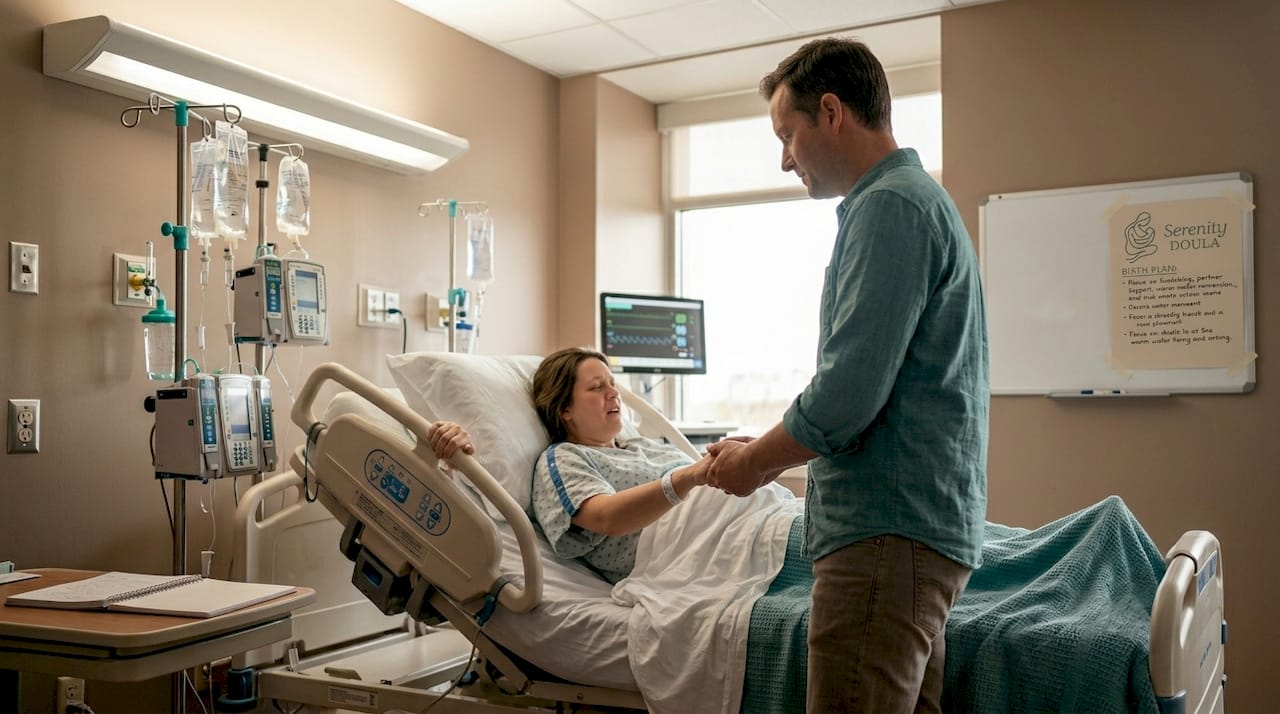
This matters locally too. Families in Bucks and Montgomery counties have access to birth settings ranging from hospital births at Grand View and Doylestown Health to birth center options, and the evidence applies across all of them. Your support is not setting-specific. It travels with you.
Six actionable ways partners can support during childbirth
With the benefits established, here are six practical ways you can offer meaningful support when it counts most.
-
Learn together before labor begins. Attend childbirth classes, read birth books, and prepare for labor together. When both of you understand what’s happening physiologically, you’re not reacting out of fear. You’re responding with calm.
-
Advocate clearly and respectfully during labor. Know your partner’s preferences before you arrive. If they want to try different positions before accepting an epidural, say so. If they feel unheard by a care provider, it’s okay to say, “Can we take a moment to talk through our options?” You are allowed to speak up.
-
Provide hands-on physical comfort. Counter pressure on the lower back during contractions, warm compresses, light touch or firm touch depending on preference, and helping your partner move into positions that feel better are all genuinely effective. Practice before the day.
-
Offer consistent emotional support. This is not about having the perfect thing to say. It’s about being present. Hold their hand. Look them in the eyes. Breathe with them. Say their name. Sometimes that simple act of steady presence is the most powerful thing in the room.
-
Have your documentation organized. Know where the birth preferences are. Have your hospital bag packed. Keep a list of emergency contacts and important questions. This reduces chaos and lets you stay focused on your partner rather than scrambling for paperwork.
-
Prepare for postpartum before the birth. Arrange meal support, ask family or friends to step up, and think ahead about newborn care responsibilities. Informational support from companions has the strongest protective effect against postpartum anxiety and depression, and that protection extends into the weeks after birth.
Pro Tip: Talk to the fathers and partners resource section on our site for guidance specific to your role in the birth room, including what to do if you feel overwhelmed.
Partners vs. doulas: Complementary roles in childbirth support
Many couples wonder whether hiring a doula means the partner takes a back seat. The answer is actually the opposite.
Research shows that chosen birth companions boost satisfaction in ways that differ from professional support providers alone. Partners bring something a doula can’t fully replicate: a personal bond, shared history, and deep emotional investment. Doulas bring something partners often don’t have going in: training, experience across many births, and the ability to stay calm under clinical pressure.
Here’s how the roles compare:
| Role | Unique strengths | Potential gaps |
|---|---|---|
| Partner | Emotional bond, advocacy, presence | May feel anxious, inexperienced |
| Doula | Training, comfort techniques, clinical knowledge | Not the person the birthing parent loves most |
| Together | Holistic, layered, personalized support | Requires coordination and communication |
A doula works alongside the partner, not instead of them. Many partners who felt lost and unsure going into a birth describe feeling much more grounded when a doula was present to guide them. They knew what to do because someone experienced was helping them in real time.
“Having support from someone you know and trust, combined with professional expertise, creates the most satisfying and empowering birth environment.”
If you’re weighing options, exploring the doula vs midwife comparison can help clarify what each professional offers and how they fit with your birth team.
Why personalized support matters most: Lessons from local practice
Here’s something that doesn’t always get said directly: generic advice about partner support can actually backfire.
We’ve worked with families across Bucks and Montgomery counties, and one pattern stands out. When partners come into the birth room with a rigid script, “I’ll do the massage, I’ll say these words, I’ll handle everything,” they often freeze when reality doesn’t match the plan. Birth is unpredictable. What your partner needs at 4 centimeters may be completely different from what they need at 9 centimeters.
The partners who show up most effectively are the ones who prepared enough to feel confident, but stayed curious and flexible once labor started. They asked questions. They watched their partner’s face. They adjusted.
Anxiety is real for many partners, especially first-timers. Feeling sidelined is also real, particularly when a room fills with clinical staff. The most meaningful childbirth preparation steps we encourage include direct conversations between partners before the birth: What are you most afraid of? What does support look like to you? What should I do if you can’t speak for yourself?
Those conversations change everything. They turn a partner from a bystander into an active, trusted presence. And that shift protects both parents well beyond the birth day itself.
Get holistic, evidence-based support for your childbirth journey
If you’ve been reading this and thinking, “I want all of this, but I don’t know where to start,” that’s exactly where Serenity Doula comes in.
Serenity Doula serves families throughout Bucks, Montgomery, and surrounding counties with pregnancy and birth support that is holistic, evidence-based, and built around your specific needs. We work with partners too, not just birthing parents, because we believe the whole family benefits from preparation and connection. From tailored childbirth education options to one-on-one doula support during labor and postpartum care, we help you feel grounded, informed, and ready. Schedule a free consultation to explore how we can support your unique birth journey.
Frequently asked questions
What is the most effective way partners support childbirth?
Informational support has the strongest protective effect, helping the birthing parent understand their choices and progress while advocating for their preferences with care providers.
Can support from a partner reduce birth trauma?
Yes. Low partner involvement is a strong predictor of postpartum birth trauma, meaning active, engaged support during labor meaningfully lowers that risk.
Should partners prepare in advance for childbirth support?
Absolutely. Labour companionship research shows that partners who feel unprepared or anxious are less effective, while preparation and integration into the birth plan significantly improves their impact.
How do doulas and partners work together?
Doulas bring clinical experience and comfort techniques, while partners offer emotional presence and personal advocacy. Together, as continuous support research shows, they create the most satisfying and protective birth environment available.