
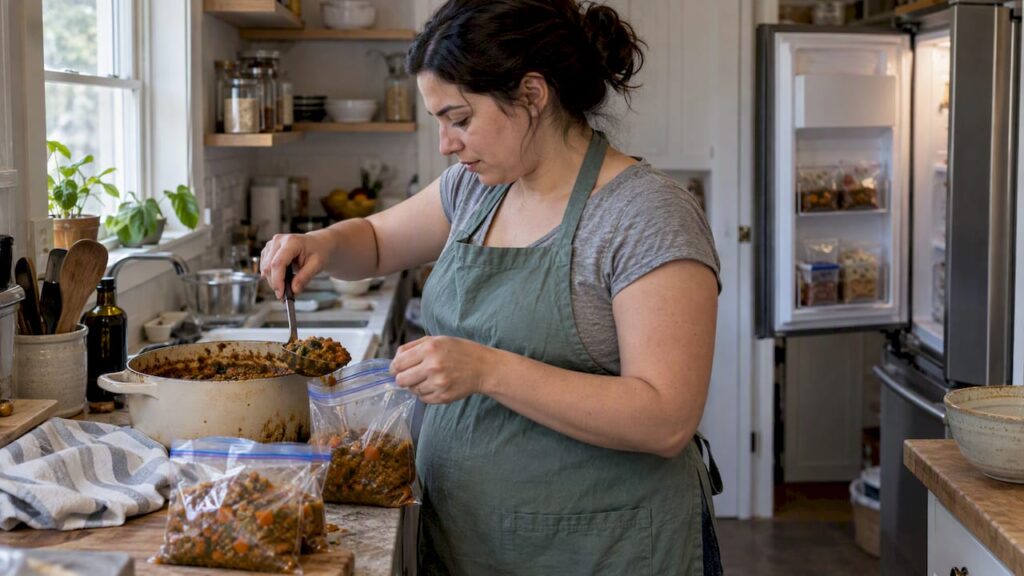
The fastest way to stay fed after birth is to stock your freezer with nutrient-dense, individually portioned meals plus grab-and-go snacks before your baby arrives. Prioritize one-pot dinners, protein-packed breakfasts, and lactation-friendly snacks since they reheat fast and ask nothing of you on the hardest days. Below, we walk through timelines, shopping strategies, storage rules, and simple recipes so you can build your plan now.
TL;DR:
- Start prepping in your final month, aim for 8 to 12 meals to cover roughly two weeks, and spread cooking across several sessions.
- Cool cooked food in shallow containers and refrigerate it within two hours; freeze at 0°F or below, and reheat leftovers to 165°F.
- Breastfeeding raises calorie needs and increases iodine and choline needs; vegetarian or vegan households should discuss iron, choline, and omega 3 sources with a clinician.
- Thaw meals overnight in the refrigerator when possible; microwave single portions for two to three minutes, stirring halfway, or warm soups on the stove.
Table of Contents
- Quick shortlist: what to prep first
- When to start and a simple planning checklist
- Shopping and batch-cook plan that actually fits your schedule
- Storage, thawing, and food safety for your freezer stash
- Meal ideas and recipe starters worth batching
- Postpartum nutrition essentials worth knowing
- Quick reheating and staging tricks for exhausted days
- A few small wins that made the biggest difference
- How we support your postpartum feeding and planning
- FAQ
- Sources
Quick shortlist: what to prep first
When your energy and time are both in short supply, a handful of meal categories do the heaviest lifting. These are the ones we recommend families tackle first, because they freeze well, reheat quickly, and actually taste good a few weeks later.
- One-pot dinners and soups: Lentil stew, chicken and vegetable soup, and chili hold up beautifully in the freezer and reheat on the stovetop in about 15 minutes.
- Freezer-friendly breakfasts: Egg-and-veggie muffins, breakfast burritos, and overnight oat jars give you protein without any morning decisions.
- Lactation-support snacks: Energy bites, lactation cookies, and portable protein packs keep you fueled through cluster feeds and late-night wake-ups.
One-pot meals work because they pack protein, vegetables, and carbohydrates into a single container, which means less assembly later and fewer dishes now. Soups and stews also freeze with minimal texture loss compared to, say, cream-based sauces or fried foods, which can separate or turn rubbery after thawing.
Breakfasts deserve special attention because mornings after birth tend to be chaotic. Egg muffins can go from freezer to microwave in under two minutes, and oat jars just need a splash of milk and a quick stir. Burritos wrapped individually in foil or parchment reheat in the oven or a toaster oven if you want a crispier result.
Snacks matter more than most people expect in the postpartum stretch, especially when you consider how easy it is to build a healthy snack pantry stocked with grab-and-go options. If you are breastfeeding, you may find yourself hungry at odd hours, often mid-feed with only one hand free. Pre-portioned energy bites or lactation cookies solve that problem without requiring any prep at 2 a.m.
When to start and a simple planning checklist
Most families find the sweet spot for batch cooking falls in the final month before their due date. ACOG guidance supports stocking the freezer during this window, which frees up your time and energy for breastfeeding and newborn care once your baby arrives rather than squeezing in cooking marathons with a newborn in the house.
A simple cadence works better than trying to cook everything in one exhausting weekend. Consider one larger batch-cooking day paired with two smaller midweek prep sessions over the following weeks.
- Clear freezer space a week or two before you start cooking, since postpartum meals need real room to stack and organize.
- Confirm your container inventory, including lids that actually seal, so you are not hunting for matches mid-prep.
- Plan for 8 to 12 meals as a starting goal, which covers roughly the first two weeks without constant restocking.
- Recruit a helper such as a partner, parent, or friend for at least one cooking session.
- Label and date everything with contents, portion size, and reheating instructions before it goes in the freezer.
Pro Tip: Write reheating instructions directly on the container lid in dry-erase marker so whoever grabs it, partner, grandparent, or you at 3 a.m., knows exactly what to do.
This cadence spreads the work out instead of front-loading it all into one overwhelming day, which matters more than it might seem when you are already managing late-pregnancy fatigue.
Shopping and batch-cook plan that actually fits your schedule
A focused shopping list keeps batch-cook day from turning into three separate grocery runs. Build your list around the meals you have chosen, then layer in pantry staples that stretch across multiple recipes.
- Proteins: eggs, chicken thighs, ground turkey, canned beans, lentils, and a firm white fish for variety.
- Produce: onions, carrots, celery, spinach or kale, and frozen vegetable blends for faster prep.
- Pantry staples: rolled oats, brown rice, canned tomatoes, low-sodium broth, and your preferred nut butter.
- Freezer supplies: quart-size freezer bags, shallow freezer-safe containers, foil, and a permanent marker.
Shallow containers are worth the small investment because they cool food faster than deep ones, which matters for both food safety and quality. Cooling food quickly reduces the time it spends in the temperature range where bacteria multiply, a point echoed by the American Heart Association’s food-safety guidance on clearing freezer space and using shallow storage for rapid cooling.
For portioning, think in single-serving or family-serving sizes depending on your household. Soups and stews divide neatly into quart bags laid flat, which also saves freezer space once frozen solid. Muffin-style breakfasts and energy bites portion naturally and need little more than a sealed bag or small container.
A sample batch-cook timeline might look like this: two hours in the kitchen on a Sunday afternoon can realistically yield a handful of breakfast portions, several dinner portions, and a batch of energy bites, illustrative examples meant to show the kind of output a focused session produces, not a fixed target. Shop on Saturday, prep and freeze on Sunday, and you walk into the week with a stocked freezer and very little cleanup left behind.
Pro Tip: Cook double the rice, beans, or roasted vegetables you need for one recipe, then split the extra into a separate container for a totally different meal later in the week.
Storage, thawing, and food safety for your freezer stash
Food safety rules are not optional extras, they are what keeps your freezer stash actually usable. According to USDA/FSIS guidance on leftovers, cooked leftovers stay safe in the refrigerator for 3 to 4 days, and for best quality in the freezer, plan on 2 to 6 months when stored at 0°F or below.
Frozen food kept at 0°F stays safe indefinitely, though quality gradually declines, according to Foodsafety, which is why labeling with a date matters even when the food itself remains technically safe to eat well past that window.
A few storage habits make the biggest difference:
- Refrigerate within two hours of cooking to limit bacterial growth before freezing.
- Thaw safely in the refrigerator overnight, in a sealed bag under cold running water, or in the microwave if you plan to cook or reheat immediately afterward.
- Reheat to 165°F internal temperature, checked with a food thermometer when you want certainty rather than a guess.
- Avoid refreezing thawed food unless it was thawed in the refrigerator and has not sat out past safe time limits, and discard anything questionable after a power outage or extended partial thaw.
Labeling each container with the date, contents, and portion count turns your freezer from a mystery drawer into a system you can actually rely on during the exhausting early weeks.
Meal ideas and recipe starters worth batching
A few adaptable templates go a long way, since you can rotate ingredients without reinventing your whole plan each week.
For breakfast, egg-and-veggie muffins made with whisked eggs, spinach, and shredded cheese bake in a muffin tin and freeze individually in a bag, then reheat in the microwave in about 60 seconds. Breakfast burritos filled with scrambled eggs, black beans, and cheese wrap well in foil and reheat in the oven at 350°F for 15 to 20 minutes, or in the microwave for a faster option. Overnight oat jars combine oats, milk, chia seeds, and fruit directly in a mason jar and need only a quick stir before eating cold or warmed.
For dinner, a lentil stew built from lentils, carrots, onions, and vegetable broth freezes in quart bags laid flat for easy stacking and thaws quickly under cold water when you need it fast. Chicken and vegetable soup with shredded chicken, mixed vegetables, and a light broth is gentle on the stomach, which can matter in the first week or two postpartum. A simple chili made with ground turkey, beans, and canned tomatoes portions easily into family-size or single-serving containers depending on your household size.
For snacks, energy bites made from oats, nut butter, honey, and mini chocolate chips need no baking and freeze well in a single layer before transferring to a bag. A lactation cookie mix combining oats, flaxseed, and brewer’s yeast can be baked ahead and frozen, or prepped as a dry mix for a helper to bake fresh later. Yogurt parfait ingredients like granola, berries, and plain yogurt can be portioned into jars for assembly in under a minute.

For vegetarian households, swap ground turkey for extra lentils or a plant-based crumble in chili and soups. For dairy-free needs, swap shredded cheese for a dairy-free alternative in egg muffins and burritos, and use a plant-based milk in oat jars. Gluten-free families can swap any wrap or bread component for a certified gluten-free version without changing the rest of the recipe.
Postpartum nutrition essentials worth knowing
Breastfeeding increases your body’s need for calories and specific nutrients, including iodine and choline, according to research on nutrition recommendations in pregnancy and lactation. Meal planning that leans on nutrient-dense foods rather than empty calories supports both your recovery and your milk supply.
A few practical swaps help you hit those nutrient targets without overhauling your whole diet:
- Add eggs to breakfasts and grain bowls for a protein and choline boost.
- Include legumes like lentils and black beans for iron and fiber.
- Work in fatty fish such as salmon when possible for omega-3s.
- Add dark leafy greens like spinach or kale to soups and egg dishes for iron and folate.
Breastfeeding mothers generally need additional calories and increased intake of nutrients such as iodine and choline during lactation.
Vegetarian and vegan families may need to pay particular attention to iron, choline, and omega-3 sources, which is worth raising directly with your provider rather than guessing. Our guide to postpartum nutrition essentials goes deeper into recovery-specific nutrition if you want to build out your plan further. Treat these points as conversation starters with your OB or midwife rather than a prescription, since your individual needs may differ.
Quick reheating and staging tricks for exhausted days
On your hardest days, a repeatable routine beats decision-making every single time.
- Microwave: two to three minutes on medium power for most single portions, stirring halfway through.
- Oven: 350°F for 20 to 25 minutes for burritos or casseroles that benefit from a crisper finish.
- Stovetop: medium-low heat for 10 to 15 minutes for soups and stews, stirring occasionally.
Keep snack packs visible and within reach, on the counter or nightstand, so you are not digging through the freezer one-handed during a feed.
Pro Tip: Each evening, pull tomorrow’s breakfast and one dinner from the freezer into the fridge so they are ready to heat without any extra thinking in the morning.
A few small wins that made the biggest difference
In more than ten years supporting families through the fourth trimester, I have noticed that the smallest systems tend to matter most. One family in Doylestown organized their meal train around labeled freezer bags with reheating instructions written right on them, which meant any visitor could restock the freezer without asking a single question. Another family kept a simple whiteboard listing what was thawed and ready, which cut down on the “what do we eat” conversation during the newborn haze. These are not complicated fixes, just small habits that free up a little more of your attention for your baby.
— Alexis Wallace
How we support your postpartum feeding and planning
Beyond the freezer stash, our postpartum care services bring in-home and virtual support directly to your family, including personalized meal-planning guidance built around your recovery and feeding goals. We also offer pregnancy and birth doula support and childbirth education for families across Bucks, Montgomery, Philadelphia, and Burlington Counties who want a steady hand through every stage.
- Postpartum Care: in-home and virtual support for you and your newborn during the early weeks.
- Personalized planning: meal and recovery checklists tailored to your household and feeding choices.
- Pregnancy & Birth Doula support: continuity of care from labor through those first postpartum days.
If you want a plan built around your actual life instead of a generic checklist, reach out to book a free consultation and let’s talk through what your postpartum season could look like.
This article is general information, not a substitute for advice from a qualified doctor. Consult a qualified healthcare professional about your own circumstances before acting on anything here.
FAQ
When should I start meal prepping for postpartum?
Most families begin bulk freezer prep in their last month of pregnancy, which lines up with ACOG’s guidance to stock the freezer before birth. Starting earlier with smaller batches, spread across a few weeks, tends to feel more manageable than one large cooking marathon.
What is the 5-5-5 rule in postpartum?
The 5-5-5 rule refers to a recovery guideline suggesting 5 days in bed, 5 days on the bed, and 5 days near the bed after birth, giving your body structured rest in the early weeks. It is a general framework rather than a medical rule, so it is worth discussing your own recovery timeline with your provider.
Is postpartum meal prep worth it?
Yes, having meals ready ahead of time reduces decision fatigue and frees up energy for recovery and bonding with your baby during the most demanding early weeks. Families who batch cook before birth consistently report that it removes one major daily stressor when everything else feels new.
What kind of meals are best for mothers after giving birth?
Nutrient-dense, protein-rich meals that reheat quickly tend to work best, think one-pot soups, egg-based breakfasts, and portable snacks. Prioritizing foods rich in protein, iron, and choline supports both physical recovery and breastfeeding, according to nutrition research on lactation needs.
How long can postpartum freezer meals be stored safely?
Cooked meals stay safe in the refrigerator for 3 to 4 days and, for best quality, in the freezer for 2 to 6 months when kept at 0°F or below, per USDA/FSIS guidance. Labeling each container with the freeze date helps you track freshness and rotate your stash.
Sources
- Leftovers and Food Safety | FoodSafety and Inspection Service
- Foodsafety
- Nutrition Recommendations in Pregnancy and Lactation – PMC