

TL;DR:
- Family involvement in childbirth provides emotional, physical, and practical support, with roles tailored to individual needs. Proper preparation and respecting maternal autonomy ensure family members support confidently without overstepping boundaries. Cultural context influences family presence; clear communication and environment management enhance positive experience.
Involving family in the birth process means actively welcoming loved ones into the labor and delivery experience to provide emotional, physical, and practical support centered on the birthing person’s needs. Family-centered childbirth, the recognized model in modern maternity care, goes beyond simply having people in the room. It gives each person a clear, meaningful role. Research shows that 73.2% of women want family present during labor, and organizations like the World Health Organization (WHO) formally recommend continuous companionship as a standard of care. Whether you are planning your birth support network now or helping a loved one prepare, this guide covers every layer of family involvement in delivery.
What roles can family members play during labor and delivery?
Family roles in childbirth fall into three clear categories: emotional, physical, and practical. Each one matters, and each one looks different depending on the person and the stage of labor.
Emotional support is the foundation. A calm, reassuring presence reduces anxiety and helps the birthing person feel grounded. This means holding a hand, making eye contact, speaking softly, and simply staying close without filling every quiet moment with words.
Physical support is more active. Family members can assist with positioning, apply counter-pressure to the lower back during contractions, offer a cool cloth, or guide breathing. Partner support in childbirth has been shown to improve comfort and reduce the perception of pain during labor.
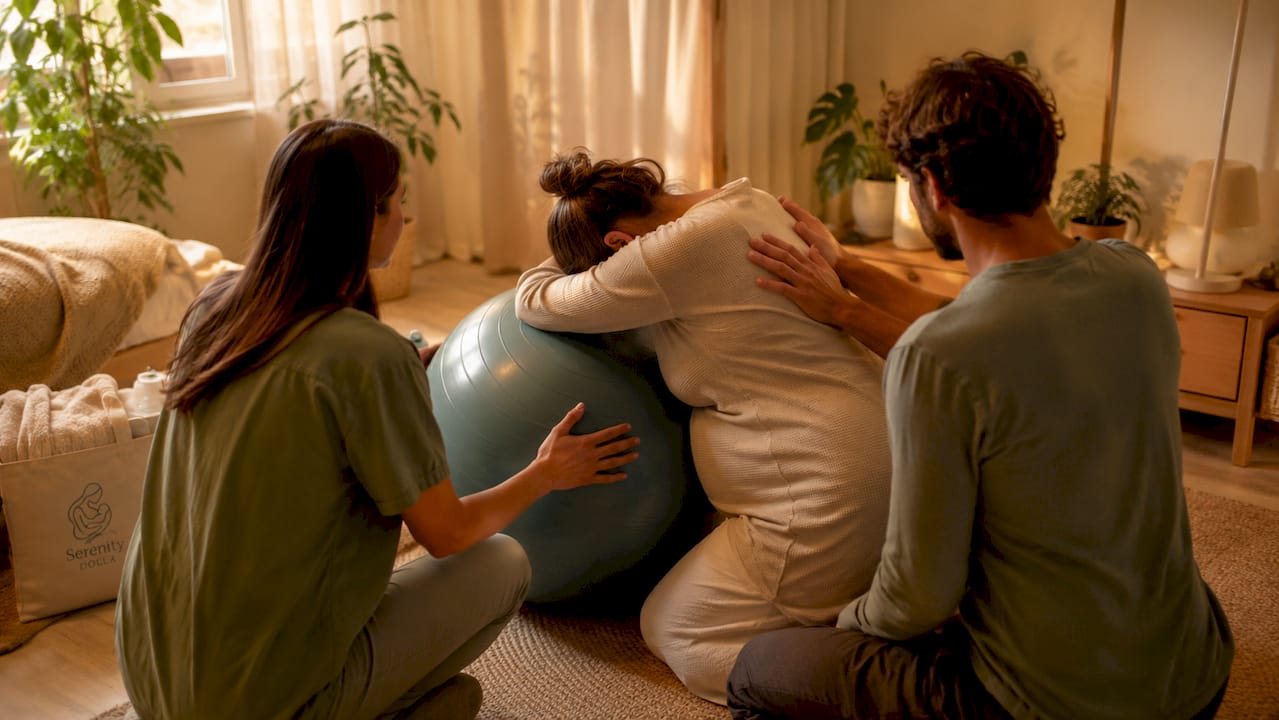
Practical support keeps things running smoothly. This includes communicating with nurses, tracking contraction timing, managing the room environment, and helping the birthing person advocate for their preferences with the care team.
Research on birth companion roles shows that mothers or sisters serve as birth companions in 68.7% of cases, while partners fill that role in only 19.4% of cases. That gap is significant. It tells us that the most common birth companion is not a partner but a trusted female relative, which means preparation needs to extend beyond just the couple.
- Reassure without minimizing (“You are doing so well” vs. “It’s almost over”)
- Ask before touching, especially during active labor
- Step back when medical staff need space
- Keep the room calm: dim lights, lower voices, reduce foot traffic
- Know the birth preferences in advance so you can speak up if needed
Pro Tip: Write out the birth preferences together before the due date. When everyone knows the plan, no one has to guess under pressure.
First-time mothers are 2.54 times more likely to have a birth companion than mothers who have given birth before. That statistic reflects how much new parents lean on their support network when everything feels unfamiliar.
How do family-centered models differ internationally and culturally?
Family involvement in delivery does not look the same everywhere. Cultural context shapes who is in the room, what role they play, and how much say they have in decisions.
The WHO recommends a woman-centered model where the birthing person chooses her own companion and that companion provides continuous labor support. In practice, many communities follow a family-driven model instead, where older female relatives or husbands make decisions on behalf of the birthing person. These two models are often in direct tension.
“There is a meaningful gap between WHO’s woman-centered birth companionship model and traditional family-driven involvement, requiring sensitive navigation to uphold maternal autonomy.” — BMJ Open, 2026
Research on family dynamics in childbirth shows that in many communities, older female relatives and husbands exert strong influence on younger women’s birth choices. This sometimes leads to pressure to follow traditional practices, which can complicate the birthing person’s ability to make her own decisions.
Here is how different models tend to play out:
- WHO woman-centered model: The birthing person selects her companion. Continuous presence is encouraged. The companion’s role is to support, not decide.
- Traditional family-driven model: Companions are often chosen by the family. Presence may be limited to certain stages. Decision-making authority may rest with elders or a spouse.
- Hospital-based family-first model: California hospitals have begun adopting 24/7 family presence policies, adding private rooms and sensory-controlled recovery spaces to integrate family as active caregivers from birth through discharge.
- Hybrid models: Many families blend cultural tradition with modern hospital policies, negotiating who is present and when based on both values and space constraints.
The most respectful approach honors the birthing person’s preferences first, while acknowledging the cultural context her family brings.
How to prepare family members for effective, sensitive participation
Preparing family for birth is not a one-time conversation. It is an ongoing process that starts weeks before the due date.
The single most important step is sharing the birth preferences early. Every person who will be in the room should know what the birthing person wants, including her preferences on pain management, who speaks to the medical team, and when she needs quiet. Childbirth education gives families a structured way to learn these things together, rather than piecing it together from social media or well-meaning relatives.
- Attend a childbirth education class as a group when possible
- Review the birth preferences document together at least two weeks before the due date
- Practice comfort measures at home: breathing techniques, counter-pressure, positioning
- Discuss what “stepping back” looks like and agree on a signal if the birthing person needs space
- Clarify who communicates with the medical team and who stays focused on the birthing person
Environmental management is one of the most underrated roles a family member can take on. Managing lighting, temperature, sound, and clutter in the labor room directly reduces stress and improves comfort. This is a concrete, practical job that does not require any medical knowledge.
Pro Tip: Assign one family member the specific job of managing the room environment. Give them a checklist: dim the lights when active labor begins, keep the door closed, silence phones, and limit visitors without asking the birthing person each time.
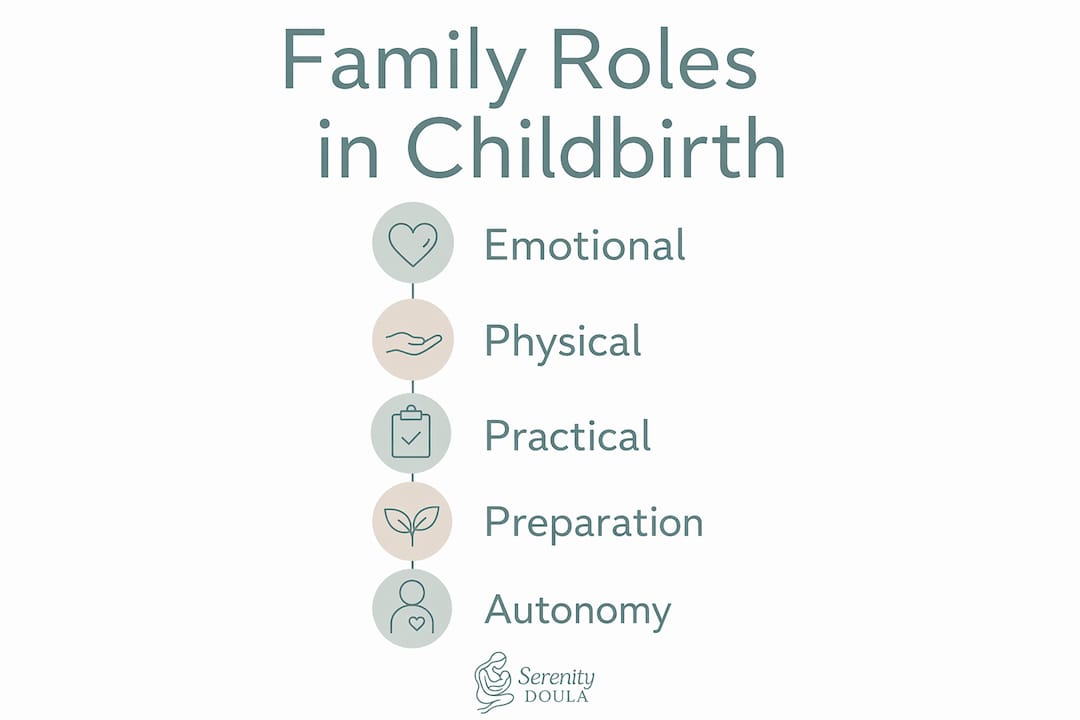
Families who prepare together feel calmer and more confident. The family-first model adopted by California hospitals shows that when families are trained and given clear roles, parental confidence and newborn care readiness both improve significantly.
Balancing family involvement with the birthing person’s autonomy
The most common tension in family-centered childbirth is this: loved ones want to help, but their version of helping can sometimes override the birthing person’s voice. Keeping that balance right requires clear boundaries and active awareness.
Effective family support does not mean speaking for the birthing person. It means protecting her space, communicating with medical staff on her behalf only when she asks, and providing emotional presence rather than direction. Family members who take over decision-making, even with the best intentions, can undermine the birthing person’s confidence and satisfaction with her care.
Research on birth companions and cesarean decisions shows that companions, especially spouses, often view interventions like cesarean delivery as protective measures focused on safety and comfort. That protective instinct is real and valid. The key is channeling it into support rather than control.
| Role type | What it looks like in practice |
|---|---|
| Active support | Asking “What do you need right now?” and responding to the answer |
| Passive presence | Sitting quietly, holding a hand, staying available without directing |
| Overreach | Making decisions without being asked, speaking over the birthing person |
| Advocacy | Relaying the birthing person’s stated preferences to the care team |
| Boundary setting | Limiting visitors, managing the room, keeping the space calm |
Engaging family as active participants rather than passive observers builds informed decision-making and amplifies the mother’s autonomy. The goal is a birth support network where everyone knows their lane and stays in it.
Key Takeaways
Involving family in the birth process works best when each person has a defined role, clear boundaries, and preparation that centers the birthing person’s preferences above all else.
| Point | Details |
|---|---|
| Define roles before labor | Assign emotional, physical, and practical roles to each family member in advance. |
| Prepare together formally | Attend childbirth education classes as a group to align expectations and build skills. |
| Respect maternal autonomy | Family members support and relay preferences; they do not make decisions for the birthing person. |
| Manage the environment | Assign one person to control lighting, sound, and room access during active labor. |
| Know the cultural context | Balance family traditions with the birthing person’s right to choose her own companions and care. |
What I’ve learned about family involvement after years at the bedside
I have seen birth rooms with too many people and birth rooms with just one quiet, steady presence. Both can work. What never works is a room full of people who have not talked about their roles beforehand.
The families who show up most effectively are the ones who did the preparation work. They attended a class together, read the birth preferences, and had the honest conversation about what “support” actually means in that room. They know that their job is not to fix anything. Their job is to be present, calm, and ready to follow the birthing person’s lead.
What I find most families underestimate is how much the environment matters. Dimming the lights, keeping voices low, and limiting foot traffic are not small things. They change the entire tone of the room. A calm room produces a calmer labor. That is not a feeling. That is physiology.
The hardest part of supporting a loved one in labor is resisting the urge to do more. The most powerful thing a family member can do is stay grounded, stay quiet when quiet is needed, and trust that their presence alone is doing something real.
— Justin
How Myserenitydoula supports families through every stage of birth
Myserenitydoula works with expectant parents and their families to build the kind of birth support network that actually holds up under pressure.
From one-on-one pregnancy and birth support to structured childbirth education programs, Myserenitydoula helps every member of your birth team understand their role before labor begins. Classes cover comfort measures, communication with medical staff, birth preferences, and how to support without overstepping. Families leave feeling prepared, not anxious. If you want your loved ones to show up confident and ready, guided preparation is the clearest path to get there.
FAQ
Who is most commonly a birth companion?
Mothers or sisters serve as birth companions in 68.7% of cases, making female relatives the most common source of labor support, ahead of partners.
How many people can be in the delivery room?
Hospital policies vary, but most facilities limit the delivery room to two or three support people. Check with your care provider and birth location well before your due date.
What does the WHO recommend about birth companions?
The WHO recommends continuous companionship during labor with the birthing person choosing her own companion, prioritizing her preferences over family or institutional tradition.
Should siblings be present at birth?
Sibling involvement in the birth process depends on the child’s age, maturity, and the parents’ preferences. When siblings attend, a dedicated adult should be present solely to support and manage the child, separate from the birth support team.
How does childbirth education help family members prepare?
Childbirth education teaches family members specific comfort measures, communication skills, and boundary awareness so they can support effectively without overstepping during labor and delivery.