

TL;DR:
- Labor induction involves starting contractions before they begin naturally, and it is more common than most expect.
- Medical, mechanical, and natural methods are used to induce labor, each with different risks and benefits.
Labor induction is defined as the medical or natural process of starting contractions before they begin on their own. One in four pregnancies in Western countries involves some form of induction, which means this is far more common than most parents expect. Induction of labor methods fall into three main categories: medical, mechanical, and natural. Each works differently, carries its own risks and benefits, and fits different clinical situations. Understanding your options before your provider brings them up puts you in a much stronger position to ask the right questions and make choices that feel right for your family.
What are the common medical induction methods?
Medical labor induction uses medications to either soften the cervix, trigger contractions, or both. The three most commonly used drugs are oxytocin, misoprostol, and dinoprostone.
Oxytocin is given through an IV and directly stimulates uterine contractions. Misoprostol is placed vaginally and works by ripening the cervix while also encouraging contractions to start. Dinoprostone, another prostaglandin medication, is applied directly to the cervix as a gel or insert and is often used when the cervix needs softening before contractions begin.
Research shows no method outperforms low-dose vaginal misoprostol (50 micrograms or less) for preventing failed vaginal delivery at or after 37 weeks. That makes it one of the most studied and trusted options in clinical practice today.
Providers sometimes combine methods for better results. Oxytocin paired with amniotomy (artificial rupture of the membranes) is a well-established combination that can speed up the induction process. The main risks of medical methods include uterine hyperstimulation (contractions that come too fast or too strong) and fetal distress from reduced oxygen flow.
Pro Tip: Medical induction is typically recommended when your provider determines that continuing the pregnancy poses more risk than delivery. Ask your provider specifically what clinical reason is driving the recommendation before agreeing.
Key medical methods at a glance:
- Oxytocin (Pitocin): IV medication that stimulates contractions directly
- Vaginal misoprostol: Highly effective for cervical ripening and labor start at or after 37 weeks
- Dinoprostone: Cervical gel or insert used to soften the cervix before contractions
- Amniotomy: Artificial membrane rupture, often combined with oxytocin
How do mechanical methods work for cervical ripening?
Mechanical induction methods use physical tools rather than medications to open and soften the cervix. The two most common are balloon catheters and osmotic cervical dilators.
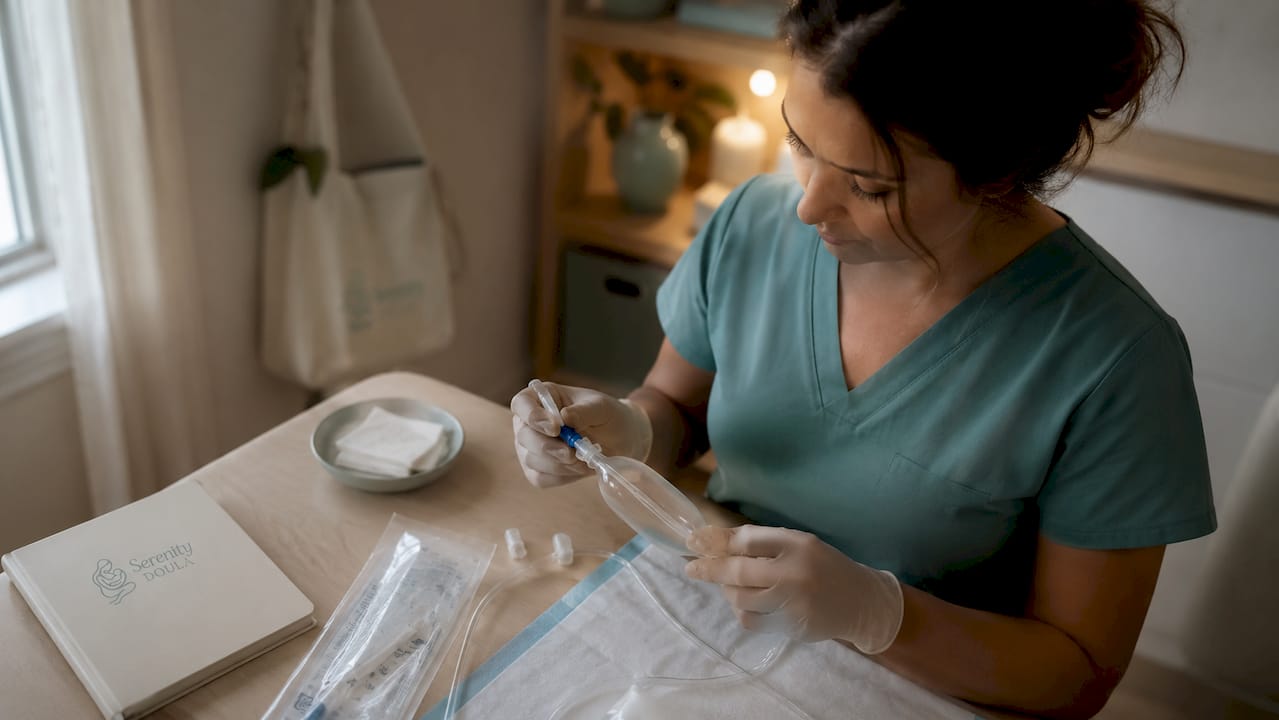
A balloon catheter is inserted into the cervix and then filled with saline. The gentle pressure physically stretches the cervix open and also triggers the body to release its own prostaglandins, which further soften the tissue. Osmotic dilators are small rods placed inside the cervix that absorb moisture and slowly expand over several hours, creating gradual dilation.
Mechanical methods carry a lower risk of uterine hyperstimulation compared to medications like misoprostol. That lower risk profile makes them a preferred choice for parents who have had a previous cesarean or who are considered higher risk for overstimulation.
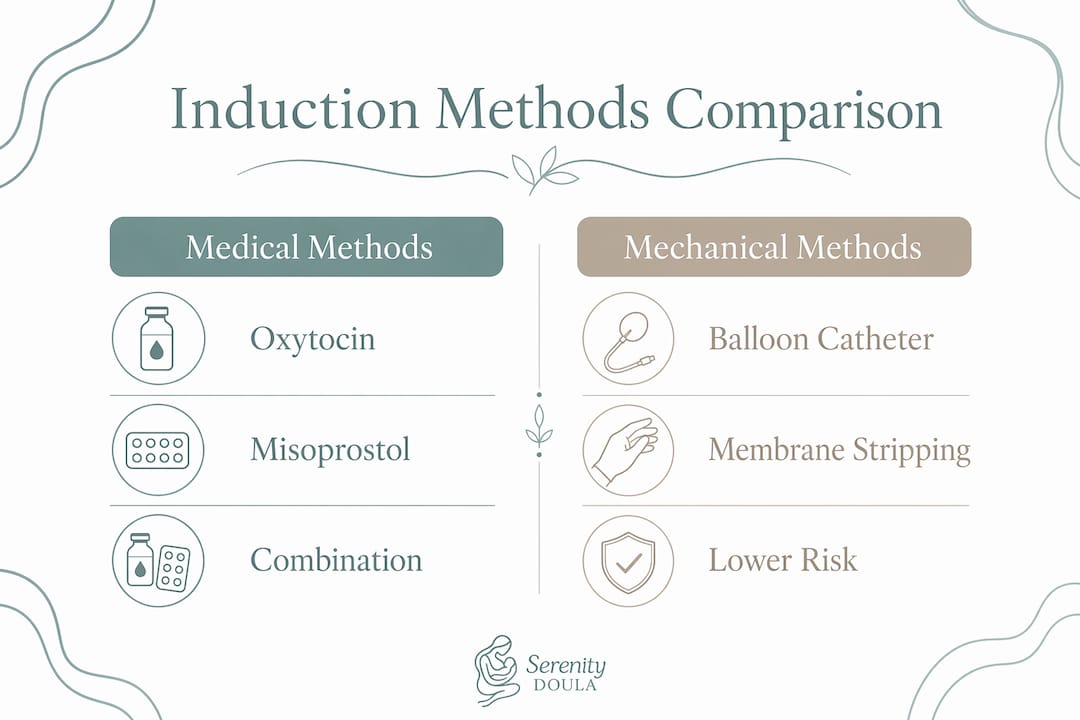
| Feature | Medical methods | Mechanical methods |
|---|---|---|
| How it works | Medications trigger contractions or ripen cervix | Physical tools dilate cervix and stimulate prostaglandins |
| Hyperstimulation risk | Higher with misoprostol | Lower overall |
| Best for | Most inductions at or after 37 weeks | High-risk patients, previous cesarean |
| Speed | Can act quickly | Gradual, controlled process |
Pro Tip: If you have concerns about strong contractions or have had a prior cesarean, ask your provider whether a balloon catheter is an option. It gives your body a more controlled start.
Are natural induction techniques effective and safe?
Natural induction techniques are non-medical approaches that parents often try at home or with provider guidance to encourage labor to start. Most of these methods lack strong clinical evidence, but some have more research support than others.
Walking 30 minutes, three times a week at a moderate pace starting at 38 weeks has been shown to support natural labor onset and reduce the need for interventions. Walking helps the baby move into an optimal position and uses gravity to encourage the cervix to soften. It is one of the safest and most accessible options available.
Here is a practical breakdown of common natural methods and what you should know about each:
- Walking: Supported by a 2022 study; safe, low-impact, and helps with fetal positioning
- Nipple stimulation: Can trigger contractions as strong as synthetic oxytocin; requires provider supervision to avoid hyperstimulation
- Sexual intercourse: Semen contains prostaglandins that may help soften the cervix; generally safe with an uncomplicated pregnancy
- Eating dates: Some studies suggest regular date consumption in late pregnancy may support cervical ripening; low risk
- Acupuncture: Used by some practitioners to encourage labor readiness; evidence is limited but side effects are minimal
- Castor oil: Often causes diarrhea and vomiting, which can deplete your energy before labor even begins; not recommended
- Herbal remedies: Lack consistent clinical evidence and some carry real risks; always consult your provider before trying any herb
Pro Tip: Before trying any natural method at home, check out Myserenitydoula’s guide on safe natural induction to understand what is actually supported by evidence.
Most natural methods are popular because they feel empowering and non-invasive. That is completely valid. Just go in with realistic expectations and a clear conversation with your care team.
What are the risks and benefits of different induction methods?
Every induction method carries a trade-off. Understanding both sides helps you have a more grounded conversation with your provider.
ACOG advises that induction should be reserved for situations where continuing the pregnancy poses more risk than delivery, particularly before 39 weeks. Elective induction before that point is generally discouraged because the baby’s lungs and brain are still maturing. After 39 weeks, the risk-benefit calculation often shifts, and induction can be the safer path for both parent and baby.
| Method | Key benefits | Key risks |
|---|---|---|
| Medical (oxytocin, misoprostol) | Highly effective, well-studied | Hyperstimulation, fetal distress |
| Mechanical (balloon catheter) | Lower hyperstimulation risk, controlled | Slower process, discomfort during placement |
| Natural (walking, dates) | Non-invasive, low risk | Limited evidence, unpredictable results |
The risk of cesarean delivery is a real concern with any induction, particularly when the cervix is not yet ready. Providers use a scoring system called the Bishop score to assess cervical readiness before recommending a method. A low score often means the cervix needs ripening first, which is where mechanical methods or prostaglandins come in. Understanding the evidence-based birth framework behind these decisions helps you ask better questions and feel more confident in the room.
Key takeaways
Choosing the right induction method depends on your clinical situation, cervical readiness, and personal birth preferences, not a one-size-fits-all protocol.
| Point | Details |
|---|---|
| Medical methods are well-studied | Vaginal misoprostol is among the most effective options for induction at or after 37 weeks. |
| Mechanical methods lower one key risk | Balloon catheters reduce hyperstimulation risk, making them better for high-risk patients. |
| Natural methods need realistic expectations | Walking has the most evidence; castor oil and herbal remedies carry real downsides. |
| Timing matters for safety | ACOG advises against elective induction before 39 weeks without a clear medical reason. |
| Informed consent is non-negotiable | Ask your provider for the specific clinical reason behind any induction recommendation. |
What I’ve learned about induction decisions after years of birth support
Induction conversations are some of the most emotionally loaded moments I see in birth work. Parents often feel pressure to say yes quickly, without fully understanding what they are agreeing to or why.
What I have found is that the parents who feel best about their induction experience are the ones who asked one simple question: “What happens if we wait?” That question opens a real conversation. It tells you whether the recommendation is urgent, whether there is flexibility, and what the actual risks are on both sides.
I have also seen parents arrive at induction day without knowing which method their provider planned to use. That gap matters. Knowing whether you are getting a balloon catheter or misoprostol, and why, changes how you prepare mentally and physically. You can read more about how to help labor progress to feel more prepared going in.
My honest take: induction is not a failure, and it is not something to fear. It is a tool. Like any tool, it works best when used for the right reason, at the right time, with a team that has explained it clearly to you.
— Alexis Wallace
How Myserenitydoula supports you through induction and birth
Facing an induction can feel like a lot to process, especially when the information comes fast and the decisions feel urgent. Myserenitydoula offers personalized pregnancy and birth support to help you feel grounded and prepared, whatever path your birth takes.

A doula does not replace your medical team. What a doula does is help you understand your options, process information clearly, and advocate for the birth experience you want. Whether your birth involves medical induction, a mechanical method, or a natural approach, Myserenitydoula’s pregnancy and birth support services are built around your specific needs and values. You do not have to carry this alone.
FAQ
What is the most effective medical method for labor induction?
Vaginal misoprostol at or below 50 micrograms is among the most effective options for preventing failed vaginal delivery at or after 37 weeks, based on Cochrane review findings.
Are natural induction methods safe to try at home?
Most natural methods like walking and eating dates are low-risk, but nipple stimulation and castor oil carry real risks including hyperstimulation and gastrointestinal distress. Always check with your provider first.
When does ACOG recommend labor induction?
ACOG recommends induction when continuing the pregnancy poses more risk to the parent or baby than delivery, and advises against elective induction before 39 weeks without a medical reason.
What is a balloon catheter used for in labor induction?
A balloon catheter is a mechanical device inserted into the cervix and filled with saline to physically dilate it. It carries a lower risk of uterine hyperstimulation than medication-based methods.
How do I know if my cervix is ready for induction?
Your provider uses a scoring system called the Bishop score to assess cervical readiness. A low score means the cervix needs ripening first, which influences which induction method your provider will recommend.