

TL;DR:
- Applying antibiotic eye ointment at birth prevents serious bacterial eye infections and potential vision loss in newborns. While most side effects are mild and temporary, parents can decline treatment after discussing it with their healthcare provider before delivery. Proper understanding and planning ensure confident decision-making and effective newborn eye care.
Antibiotic eye ointment at birth is a standard preventive treatment applied to your newborn’s eyes within the first hour after delivery to protect against serious bacterial eye infections. The medical term for this practice is neonatal ocular prophylaxis, and the antibiotic most commonly used in the United States is erythromycin. The American Academy of Pediatrics supports this treatment as a critical safeguard, particularly because bacteria like gonorrhea and chlamydia can be transmitted to your baby during a vaginal delivery without any visible warning signs. Understanding what this treatment is, why it matters, and what to expect can help you feel grounded and confident as you prepare for your baby’s arrival.
What antibiotic eye ointment at birth actually does
Neonatal ocular prophylaxis works by creating a protective antibiotic barrier in your newborn’s eyes immediately after birth. During delivery, your baby passes through the birth canal and can be exposed to bacteria present in the vaginal tract, even when a mother has no symptoms and has tested negative during prenatal screening. Routine prophylaxis using erythromycin ointment involves applying about a 1 cm ribbon of ointment into each lower eyelid within 24 hours of birth. That small application does a significant job.

The condition it prevents, ophthalmia neonatorum, is a bacterial conjunctivitis in newborns that can escalate quickly. Untreated neonatal eye infections can cause redness, swelling, thick discharge, corneal damage, and permanent vision loss. That is not a small risk. It is the reason major medical organizations have made this a standard part of newborn care for decades.
One nuance worth knowing: erythromycin is highly effective against gonococcal infections but not effective for chlamydia, which requires systemic antibiotic treatment. This means the ointment is one layer of protection, not a complete shield against every possible infection.
| Scenario | Potential outcome |
|---|---|
| Ointment applied at birth | Gonococcal infection prevented; mild temporary irritation possible |
| No ointment, undetected gonorrhea | Risk of corneal damage and vision loss within days |
| Chlamydia exposure at birth | Requires separate systemic treatment regardless of ointment |
| Prenatal screening only, no ointment | Late or undetected infections remain a risk |
Pro Tip: Ask your care team to apply the ointment after your initial skin-to-skin time if your hospital allows it. Many hospitals now support a brief delay to protect that first bonding window.
What side effects are normal and what to watch for
Most parents notice their baby’s eyes look a little puffy or watery right after the ointment is applied. This is called chemical conjunctivitis, and it is a completely normal, temporary reaction. Mild eye swelling or irritation typically resolves on its own within 24 to 48 hours without any treatment. The ointment is also single-use per infant, which means sterility is maintained and cross-contamination is not a concern.
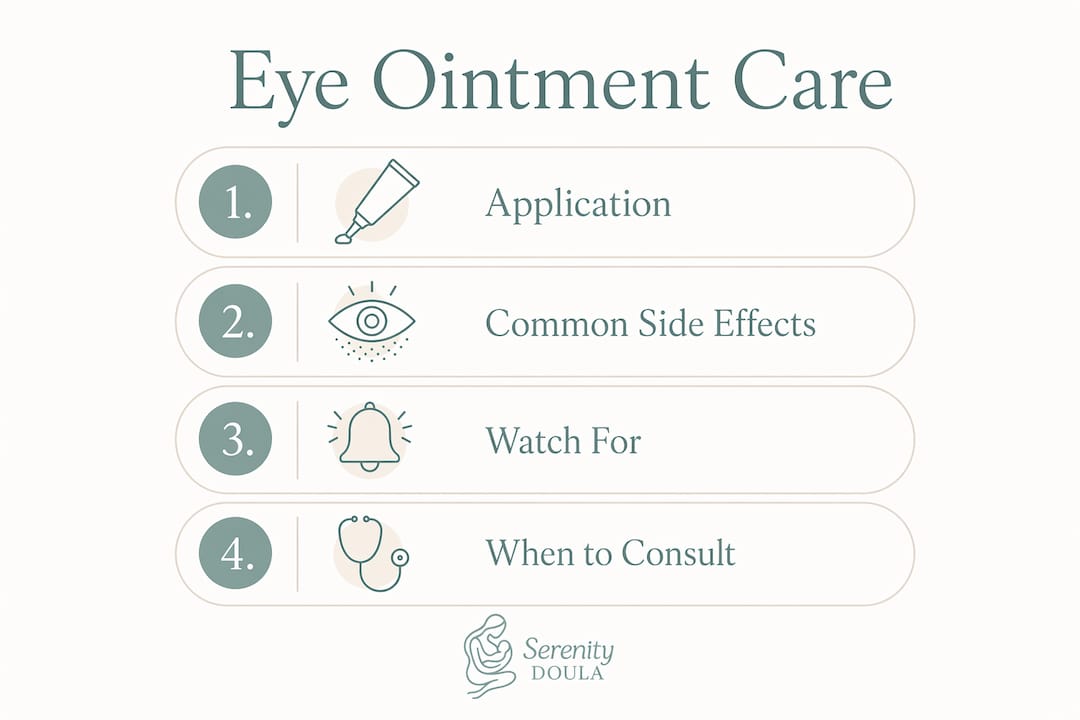
Your baby may also seem to have blurry or hazy vision right after application. This is temporary. Transient vision blurring clears quickly and has no long-term effects on your baby’s vision development. It can feel unsettling to see your newborn’s eyes looking glassy or irritated in those first hours, but this is the ointment doing its job and then clearing away.
Here is what is normal versus what needs a call to your pediatrician:
- Normal: Mild puffiness, watery eyes, slight redness in the first 24 to 48 hours
- Normal: A small amount of clear or slightly cloudy discharge in the first day or two
- Call your provider: Thick yellow or green discharge that persists beyond 48 hours
- Call your provider: Significant swelling of the eyelids that does not improve
- Call your provider: Any eye symptoms that appear or worsen after the first week
Persistent sticky eyes after prophylaxis require clinical evaluation because blocked tear ducts and viral infections are common in newborns and need different treatment entirely. Ongoing discharge does not mean the ointment failed. It means something else may need attention.
Pro Tip: To gently clean your baby’s eyes in the first few days, use a clean, damp cotton ball and wipe from the inner corner outward. Use a fresh cotton ball for each eye to avoid spreading any irritation.
Can you decline the ointment, and what are the alternatives?
Yes, you can decline the ointment. Parental consent matters, and your voice in your baby’s care is real and respected. That said, parents who choose to decline should discuss this with their healthcare provider well before delivery and document the decision clearly in their birth plan. This is not a decision to make in the delivery room under pressure.
A few things to understand before making that choice:
- Many states legally require eye antibiotic application at birth, reflecting decades of public health policy aimed at preventing preventable blindness. Your provider can tell you the law in your state.
- Prenatal STI screening is not a substitute for prophylaxis. Some infections go undetected or occur late in pregnancy after a negative test, which is exactly why health authorities continue to recommend the ointment even for low-risk pregnancies.
- There is currently no widely accepted alternative to erythromycin ointment in the United States for routine neonatal prophylaxis. Some countries use povidone-iodine drops, but this is not standard practice in American hospitals.
- If you have concerns about the ointment, the most productive step is a conversation with your OB, midwife, or pediatrician before your due date. You can also explore prenatal education resources to feel more prepared going into that conversation.
Documenting your preferences in your birth plan gives your care team clear guidance and reduces the chance of miscommunication in a busy delivery room.
What to expect during and after the application
The application itself takes about 30 seconds. Here is what typically happens:
- Your baby is born and initial assessments begin, usually including Apgar scoring and drying.
- A nurse or midwife gently holds your baby’s lower eyelid open and applies a thin ribbon of erythromycin ointment along the inside of the lid.
- The same process is repeated for the other eye.
- Your baby may blink, squint, or fuss briefly. This is normal and passes quickly.
- The ointment spreads across the eye surface naturally as your baby blinks.
Most hospitals now allow a brief delay in applying the ointment so you can have uninterrupted skin-to-skin time right after birth. If this matters to you, mention it in your birth plan and confirm it with your care team on arrival. You can also read more about newborn eye care to feel fully prepared before your due date.
In the days that follow, keep your baby’s face clean and avoid rubbing or wiping the eyes unnecessarily. If you notice any of the concerning symptoms listed earlier, contact your pediatrician rather than waiting for a scheduled visit.
Pro Tip: Before your delivery, let your doula or labor nurse know your preferences about the timing of the ointment. A good doula will advocate for your birth plan and help you communicate your wishes clearly to the medical team.
Key takeaways
Antibiotic eye ointment at birth is a proven, low-risk preventive treatment that protects newborns from bacterial infections that can cause permanent vision loss if left untreated.
| Point | Details |
|---|---|
| Standard treatment | Erythromycin ointment is applied within 24 hours of birth to prevent ophthalmia neonatorum. |
| Serious risks prevented | Untreated bacterial infections can cause corneal damage and permanent vision loss. |
| Side effects are temporary | Mild irritation and blurred vision resolve within 24 to 48 hours with no lasting effects. |
| Know the limits | Erythromycin prevents gonococcal infection but does not protect against chlamydia. |
| Declining is possible | Parents can refuse the ointment, but should discuss this with their provider before delivery. |
A word from Justin: what I’ve seen parents get wrong about this
Most of the anxiety I see around neonatal eye ointment comes from one place: parents hear “antibiotic” and immediately picture something aggressive or risky. The reality is the opposite. This is one of the gentlest, most well-established interventions in newborn care, and the risk of skipping it is far greater than the risk of using it.
What I have noticed over the years is that parents who feel informed going into the delivery room handle this moment with so much more calm. They see the brief fussing, the slightly puffy eyes, and they recognize it for what it is: normal. The parents who did not know what to expect are the ones who feel alarmed and sometimes feel like something went wrong.
My honest perspective is this: the ointment is worth it. The side effects are real but minor. The protection it offers is real and significant. And if you have specific concerns, the best time to work through them is before labor, not during it. Talk to your provider, write it into your birth plan, and walk into that delivery room feeling grounded in your decision. That peace of mind matters more than people realize.
— Justin
How Myserenitydoula supports you through decisions like this one

Decisions about newborn care, including antibiotic eye ointment, can feel overwhelming when you are already managing so much in pregnancy. Myserenitydoula is here to help you feel informed, supported, and confident before you ever set foot in the delivery room. From one-on-one birth support to childbirth education that covers newborn care basics, Myserenitydoula walks alongside you through every question and every choice. If you want personalized guidance and a steady presence through labor and beyond, explore pregnancy and birth support to learn how a doula can make your birth experience feel calmer and more empowered.
FAQ
What is the antibiotic eye ointment given at birth?
The ointment is erythromycin, applied as a thin ribbon inside each lower eyelid within 24 hours of birth to prevent ophthalmia neonatorum, a serious bacterial eye infection.
Do all newborns need antibiotic eye ointment?
Major medical organizations recommend it for all newborns because some bacterial infections go undetected during prenatal screening and can be transmitted during delivery without symptoms.
How long do side effects from the eye ointment last?
Mild puffiness, redness, and temporary blurred vision typically resolve within 24 to 48 hours and cause no long-term effects on your baby’s vision.
Can parents refuse the newborn eye ointment?
Yes, parents can decline, but many states legally require it. Discuss your preferences with your provider before delivery and document your decision in your birth plan.
Does the ointment protect against all newborn eye infections?
No. Erythromycin prevents gonococcal infections but is not effective against chlamydia, which requires separate systemic antibiotic treatment if exposure occurs.