
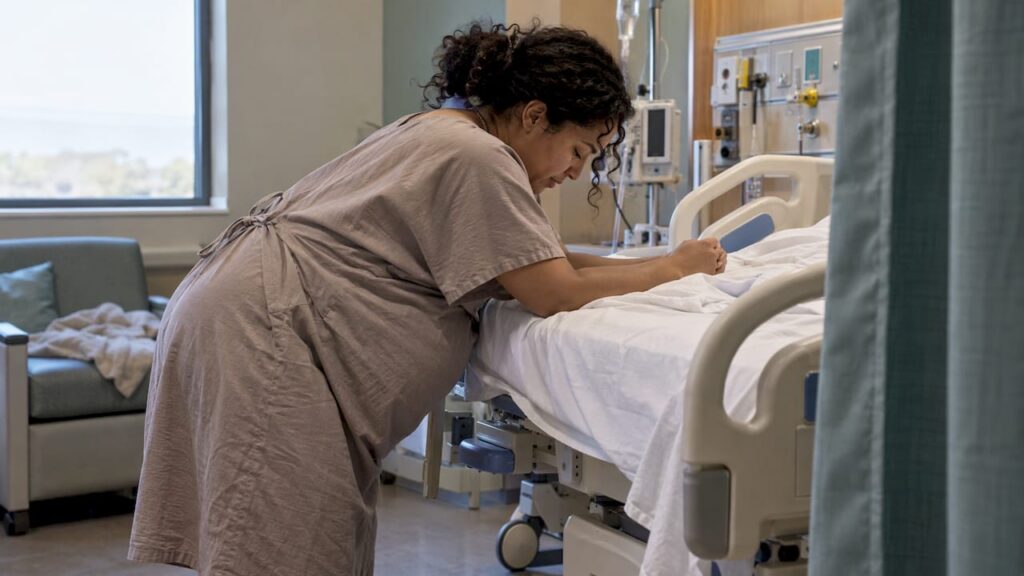
If your lower back is carrying most of the pain in labor, you are not doing anything wrong, and you are not alone. The most helpful things to try are changing positions, applying counter-pressure, using heat or cool compresses, getting into water, and having your partner massage your lower back. Below, I walk you through why back labor happens, what to try first, how your partner can help, and which questions to bring to your provider.
TL;DR
- Back labor is intense lower back pain during labor, often linked to the baby’s head pressing on your spine and tailbone.
- Getting off your back is the first move: hands and knees, leaning forward, lunging, walking, and using a birth ball are common starting points.
- Heat, cool compresses, shower or tub water, and firm counter-pressure from your partner can take the edge off.
- If comfort measures are not enough, ask your provider about TENS, sterile water injections, and medication ahead of time.
- Practicing these techniques in a class before labor makes them easier to use when you are tired.
Table of Contents
- What back labor is and how it feels
- Why back labor happens
- Positions that may help back labor
- Comfort measures between and during contractions
- How your partner can help
- If comfort measures are not enough
- Our perspective
- Prepare before labor begins
- When to call your care team
- FAQ
- One gentle next step
- Sources
What back labor is and how it feels
The American College of Obstetricians and Gynecologists describes back labor as intense lower back pain that many women feel during labor, sometimes even between contractions. Cleveland Clinic notes that people describe it as constant, intensely painful, and different from regular abdominal labor pain, sometimes building with each contraction and not easing in between.
It can also make early labor harder to read. When contractions are felt mostly in the back, it is harder to know whether labor has truly begun, and the pushing stage can take longer while the baby rotates. Many babies in this position are still born safely.
How common is it? WebMD reports that 5% to 8% of women who have back pain before labor go on to have back labor through delivery. So if this is happening to you, it is a recognized part of the range of labor experiences.

Why back labor happens
Providers believe the pain comes from the baby’s position. When the baby is head down but facing your abdomen (called occiput posterior, or “sunny side up”), the back of the baby’s head presses against your lower spine and tailbone, according to Cleveland Clinic. The same page lists other possible contributors: pelvic size and shape, tight or weak muscles and ligaments around the pelvis, and posture that tilts the pelvis.

Here is some reassurance. Parents.com reports that 15% to 20% of head-down babies start out in the posterior position, but only about 5% to 8% stay there. Most rotate on their own by the time it is time to push.
Pro tip: Ask your provider at a prenatal visit in Newtown, Doylestown, or wherever you are receiving care how they would help if your baby were in a posterior position. Knowing the plan ahead of time is calming in itself.
Positions that may help back labor
The single most repeated piece of advice is to get off your back. Here are positions worth rehearsing before labor:
- Hands and knees. Cleveland Clinic’s providers say this position can relieve back pressure and encourage the baby to rotate to face downward.
- Leaning forward. Mayo Clinic suggests straddling a chair or leaning over a table or countertop if your back hurts.
- Lunging. Placing one foot on a sturdy chair and gently leaning toward it can ease the lower back, per the same Mayo Clinic page.
- Walking and sideways stairs. Cleveland Clinic notes that walking stairs sideways may help the baby drop.
- Birth ball, squatting, and pelvic tilts. These are among the movements the American Pregnancy Association lists for improving fetal position and easing pressure.
Those gentle, rocking movements do not have to end at delivery. Many parents find the same posture awareness helps with feeding later, and standing breastfeeding positions are one example of keeping your back comfortable while you hold your baby.
For more on movement during labor, our guide to how to move labor along walks through common methods.
Comfort measures between and during contractions
Positions are only one tool. Cleveland Clinic recommends warm or cool compresses on the lower back, sitting in warm bathwater or standing in the shower with water aimed at your back, rolling a water bottle or tennis balls along your lower back, and partner massage. The American Pregnancy Association adds strong counter-pressure and a heated rice sock.
Every body responds differently. One person wants firm pressure on the sacrum; another cannot bear to be touched. That is why I encourage families to build a menu rather than a single plan. Our article on comfort measures for a personalized birth can help you start one, and childbirth relaxation techniques add breathing and calm to the mix.
| Comfort measure | What it can feel like | Who can help |
|---|---|---|
| Counter-pressure on the lower back | Firm relief right through a contraction | Partner or doula |
| Warm or cool compress | Soothing, steady comfort between contractions | Partner |
| Shower or tub | Warmth that lets muscles soften | You, with support nearby |
| Hands and knees | Less pressure on the spine | You, with a partner nearby |
| Rolling a tennis ball or bottle | Targeted pressure on sore spots | Partner |
How your partner can help
Partners often tell me they feel helpless when they see back labor. You are not helpless. Your hands are one of the best comfort tools in the room. A labor partner’s cheat sheet from a university OB-GYN practice lists counter-pressure, the double hip squeeze, knee presses, hot and cold compresses, and helping with position changes.
A few practical habits help:
- Ask what pressure feels right, and ask again as labor changes.
- Keep a compress warm and a water bottle full.
- Offer a new position every so often, and move slowly.
- Remind her to breathe and to rest between contractions.
Our step-by-step guide on how to support your partner during labor goes deeper, and so does the partner’s role in childbirth.
If comfort measures are not enough
Sometimes the pain stays intense despite your best efforts. That is not a failure. Cleveland Clinic suggests you ask your provider about TENS, sterile water injections, and pain medications. Good questions to bring to a prenatal visit:
- Which of these options does my hospital or birth center offer? Is it available at Trinity Health St. Mary or where I plan to deliver?
- How would we decide together if I wanted a different option?
- What would you suggest if the baby is posterior?
Here is what the evidence says about a few of them:
- TENS. A Cochrane review of 17 trials found little overall difference in pain ratings, though women receiving TENS at acupuncture points were less likely to report severe pain. It is widely available, and women should have the choice.
- Sterile water injections. NICE guidance summarized in the BMJ says they can relieve back pain from about 10 minutes after injection for up to three hours, with an initial stinging sensation.
- Epidural. A Cochrane review reported lower pain intensity and less need for additional pain relief, based on low-quality evidence.
Whatever you choose, a medicated birth is still your birth. I support natural, medicated, and cesarean births with the same care.
Our perspective
In my years as a doula in Bucks County, back labor is the situation where families most feel the difference between reading about comfort measures and having someone in the room who has done it many times.
We believe the best preparation is practice. In our private childbirth education, we rehearse positions, counter-pressure, and the way a partner can move with you, so none of it feels new at 3 a.m. During labor, we stay with you, adjust as things change, and help you weigh options with your care team, without judgment about the path you choose.
Our approach is built to be personal and evidence-based. We work with you on what soothes you, and we help your partner feel confident instead of sidelined.
Alexis Wallace
Prepare before labor begins
Positions are easier to use when you have tried them. In our childbirth education classes, we practice the movements in this article with you and your partner, tailored to your birth preferences. Our Pregnancy & Birth Doula support means someone experienced is beside you, offering counter-pressure, position changes, and steady reassurance through labor.

If you are still deciding, our overview of what a doula does explains how doula support works alongside your doctor or midwife. For wider preparation ideas, see our holistic childbirth preparation tips.
When to call your care team
Back pain can also signal something other than active labor, so call your provider if it comes with certain symptoms. Cleveland Clinic lists contractions every five minutes lasting a minute for an hour, bloody discharge or bleeding, a gush or trickle of fluid, or sudden diarrhea. Before 37 weeks, UCSF Health lists a low, dull backache, pelvic pressure, and regular contractions among the warning signs of premature labor. If you are unsure, call. That is what your provider’s line is for.
FAQ
Is back labor dangerous?
The American Pregnancy Association says back labor by itself cannot harm you or your baby. A baby in a less favorable position may have more difficulty descending, which can lengthen labor. Talk with your provider about how they would monitor and support you.
Can I prevent back labor?
No one can promise prevention, because causes include pelvic shape and the baby’s position. Ask your provider whether gentle prenatal movement and posture are right for you. Many families practice upright positions and pelvic tilts in class to be ready.
What helps most when the pain will not ease between contractions?
Many people find that a combination works best: hands and knees or leaning forward, firm counter-pressure, and warm water. Your partner or doula can rotate through these. If the pain stays overwhelming, ask your provider about TENS, sterile water injections, or medication.
What should my partner do?
Start with counter-pressure on the lower back and ask what feels right. Then offer compresses, water, and position changes. Practicing together before labor makes this far smoother.
One gentle next step
If you would like a calm, experienced presence for your birth, we would love to talk. Book a free consultation and we will talk through your hopes, your questions, and how to prepare for back labor if it comes.
Sources
- Back Labor: Signs, How It Feels, Causes & Relief, Cleveland Clinic
- What is back labor? ACOG
- What Is Back Labor? WebMD
- Variations of Labor, Sutter Health
- Back Labor: Causes, Symptoms, and Relieving the Pain, Parents.com
- Labor and Birthing Positions, Cleveland Clinic
- Labor positions, Mayo Clinic
- Back Labor, American Pregnancy Association
- Labor Partner’s Cheat Sheet
- TENS for pain management in labour, Cochrane
- Sterile water injections for back pain in labour, BMJ
- Cochrane Review: Epidural analgesia in labor, The ObG Project
- Recognizing Premature Labor, UCSF Health