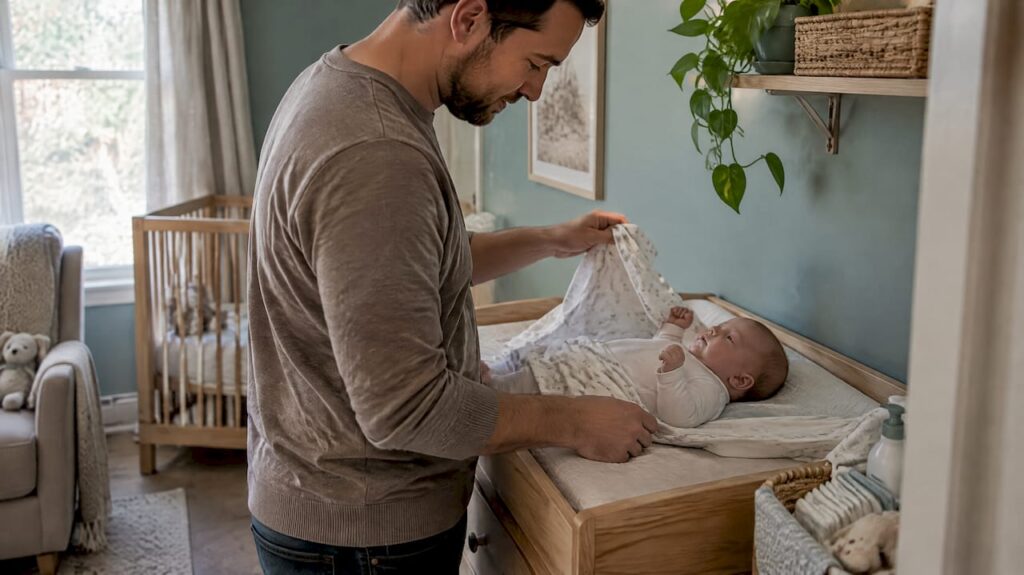
Stop swaddling as soon as your baby shows any sign of trying to roll over. For many babies that is somewhere between 2 and 4 months, so watch your baby’s movements rather than the calendar. If you’re feeling a little sad about retiring the swaddle, that’s normal. It has probably been your best friend through some very long nights.
TL;DR
- Stop at the first signs of rolling, not at a birthday. The AAP advises that some babies begin working on rolling as early as 2 months.
- Rocking side to side, pushing up on the tummy and lifting the head to look around are the cues to watch for.
- A gradual switch (one arm out for a few nights, then both) is gentle for most babies. Expect a temporary sleep wobble.
- After the swaddle, a wearable blanket or sleep sack replaces loose blankets. Always place your baby on their back on a flat, firm surface.
- Newborn days and nights mixed up is a separate, very common phase, and it usually eases on its own as your baby’s body clock matures.
Table of Contents
- When to stop swaddling: age versus signs
- Signs your baby is ready to come out of the swaddle
- How to stop swaddling: a gentle one-arm-out plan
- What to dress your baby in after the swaddle
- Newborn days and nights mixed up: what’s going on
- Our perspective on swaddling, sleep and support
- Support when the nights feel long
- FAQ
- Sources
When to stop swaddling: age versus signs
Parents often want a single number. The honest answer is a range, and the signs matter more than the age.
The NICHD Safe to Sleep campaign says to avoid swaddling once a baby starts to roll over, which is usually around 3 months. The Minnesota Department of Health notes that babies usually show rolling attempts around three to four months, though it can happen sooner, and that swaddling should end as soon as those attempts begin.

So a baby who is rolling at 9 weeks is done with the swaddle at 9 weeks. A baby who shows no sign at 10 weeks is still worth watching closely, because rolling can appear suddenly.
Why does it matter? A swaddled baby who ends up on their tummy may not be able to push up or flip back. The CDC safe sleep resource states that a baby is at risk if swaddled and then placed on their stomach or rolling onto it, and that the AAP has no evidence supporting swaddling as a way to reduce SIDS.
Signs your baby is ready to come out of the swaddle
You don’t need to catch a full roll. Pathways.org lists the early signs that a baby is getting ready to roll:
- Lifting the head during tummy time
- Reaching for toys while on the tummy
- Crossing the midline of the body
- Rocking or shifting weight on the back, side or tummy
A NICU nurse quoted by The Bump adds a few more: wiggling from side to side in a rocking motion, lifting the head to track objects, and a swimming motion or pushing up during tummy time.
Pro tip: If your baby wriggles an arm free every night, that is worth noticing too. A loosened swaddle can leave fabric near the face, so ask your pediatrician whether it is time to move on.
How to stop swaddling: a gentle one-arm-out plan
Some babies adapt in a night. Others need a slower path. Here is the gradual approach that Pathways.org describes, and it’s the one I walk my clients through.
- Start at night. Pathways suggests beginning at bedtime, when your baby is sleepiest and may settle more easily.
- One arm out. Swaddle with a single arm free for a few nights. A NICU nurse in The Bump’s guide suggests freeing the arm your baby uses more.
- Both arms out. Once that feels familiar, free both arms.
- Add a sleep sack. Move into a wearable blanket with arms free.
- Expect a wobble. A temporary backslide in sleep is expected during the change, so keep your routine steady and your expectations kind.
If your baby is already rolling, skip the gradual plan. Go straight to arms-free sleep, because safety comes first. Your baby will adjust, and so will you.
What to dress your baby in after the swaddle
Once the swaddle goes, loose blankets should not take its place. The AAP’s 2022 policy statement says a wearable blanket or layers of clothing are preferable to blankets, because they keep a baby warm while lowering the chance of head covering or entrapment.

The Minnesota Department of Health explains that a sleep sack with arms free and hips and legs able to move is generally safe once a baby starts to roll.
A few safe-sleep basics to keep close:
- Back to sleep, every sleep, on a firm, flat surface.
- Keep the sleep space bare. No pillows, quilts, comforters or loose bedding. If you’re curious about why soft items matter, this overview of baby pillow safety explains the risks.
- Skip weighted swaddles and sleepwear. The NICHD notes there are no safety standards for them and no studies showing that weight on a baby’s developing chest is safe.
- Watch for overheating. HealthyChildren.org lists sweating, damp hair, flushed cheeks, heat rash and rapid breathing as signs.
- Room share. The AAP recommends your baby sleep in your room on a separate infant surface, ideally for at least the first 6 months.
For a step-by-step setup, see our guide to setting up a safe sleep space. And if you have questions about your own baby’s hips, sleep position or sleepwear, bring them to your pediatrician.
Newborn days and nights mixed up: what’s going on
Many parents searching for swaddle advice are really exhausted by a baby who is wide awake at 2 a.m. That has a name: day-night confusion, or reversal. HealthyChildren.org describes it as a newborn sleeping more by day and wanting to be fed, changed and entertained through the night.
It makes sense. A pediatrician at Stanford Medicine Children’s Health explains that it takes time for a developing brain to adjust to a day-night cycle after nine months in near darkness. Babies under two months are still working out their sleep and aren’t setting permanent habits yet.
You are not doing anything wrong, and this is not a sleep problem to fix in the first weeks. You can gently nudge things along:
- Daytime: let your baby sleep in daylight and normal household noise, with plenty of light when awake.
- Nighttime: keep the room dark, your voice soft, and every interaction calm and focused on feeding, burping, changing and gentle soothing, as HealthyChildren.org recommends.
- Feeding: watch for early cues so you can feed before frantic crying. Our post on newborn hunger cues walks through them.
When should you worry? If your baby seems unusually sleepy, feeds poorly or has fewer wet diapers, call your pediatrician. Ask what feeding and diaper counts to expect at your baby’s age.
If you are also in the middle of dropping the swaddle, change one thing at a time. Sleepy babies cope better with one adjustment than with two.
Our perspective on swaddling, sleep and support
Over a decade of working with Bucks County families, I’ve noticed that the swaddle question is rarely only about swaddling. It’s about a parent at 3 a.m. wondering whether they’re getting it right.
We believe the best approach is calm, personal and grounded in evidence. That means teaching you the rolling cues before your baby shows them, so you aren’t caught off guard. It also means making a transition plan together that fits your baby’s temperament and your household, whether that’s a Newtown condo or a farmhouse outside Doylestown.
Our work with families is built around nonjudgmental, hands-on support. We help you practice safe sleep setup, soothing and feeding cues before the baby arrives, and we are there afterward when the real questions begin. You shouldn’t have to carry the night shift’s worries alone.
For anything medical, such as hip health, reflux, or whether your baby is gaining well, we encourage you to bring your questions to your pediatrician, and we’ll help you word them.
Alexis Wallace
Support when the nights feel long
If you’d like someone to help you set up a safe sleep space, practice soothing, and plan the swaddle transition before it’s urgent, our postpartum care is designed for exactly that. We offer in-home and virtual support for mothers and newborns, with a calm, personal approach.

Expecting? Our childbirth education classes can cover newborn sleep and soothing before your baby arrives. You can also read how we soothe a newborn, step by step. When you’re ready, book a free consultation and we’ll talk through what you need.
FAQ
What if my baby hasn’t rolled but is past 2 months?
Watch for the early signs, such as rocking, pushing up or shifting weight, rather than waiting for a full roll. The AAP notes some babies start working on rolling as early as 2 months. If you’re unsure whether your baby is ready, ask your pediatrician at the next visit.
Should I stop swaddling if my baby breaks out of it?
A swaddle that keeps coming loose can leave fabric near your baby’s face, so it’s a good moment to plan the transition. Your pediatrician can help you decide whether to go gradual or move straight to a sleep sack.
Can I use a weighted swaddle or sleep sack instead?
The NICHD says there are no safety standards for weighted swaddles and blankets beyond general children’s product rules, and no studies showing that weight on a baby’s chest is safe. A standard wearable blanket that leaves arms free is the option the AAP points to.
How long will my baby take to adjust?
Some babies adapt in a night or two, others need a week or more, and a temporary dip in sleep is expected. Keep the bedtime routine steady and the room dark and calm.
Is day-night confusion a sign something is wrong?
It is a common newborn pattern, tied to an immature body clock after months in the womb. If your baby is hard to wake for feeds, feeds poorly or has fewer wet diapers, call your pediatrician.
Sources
- Swaddling: Is It Safe for Your Baby? (HealthyChildren.org, AAP)
- FAQs, Safe to Sleep (NICHD)
- Safe Sleep Frequently Asked Questions (Minnesota Department of Health)
- Safe Infant Sleep live event (CDC)
- When to Use Swaddles and Sleep Sacks (Pathways.org)
- How and When to Stop Swaddling Baby (The Bump)
- Infant Deaths in the Sleep Environment (AAP policy statement, 2022)
- Reversing Day-Night Reversal (HealthyChildren.org)
- Newborn Q&A (Stanford Medicine Children’s Health)
- Baby pillow safety