
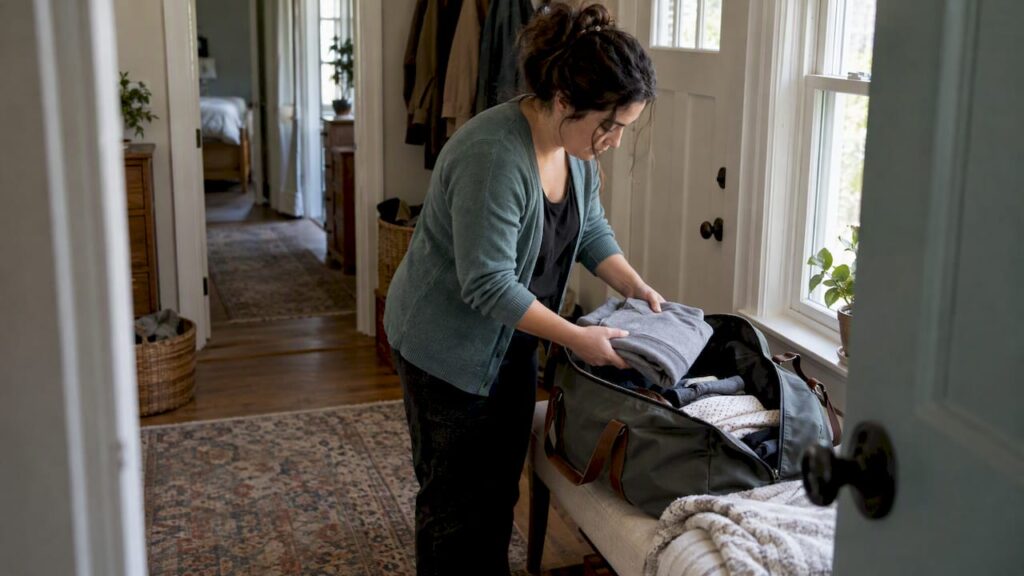
Pack short checklists for you, your baby, and your birth partner, and confirm the key essentials well before labor: a rear-facing car seat that is installed and a photo ID and insurance card in your wallet. Aim to have everything ready before your ninth month. Everything else is comfort, and we will walk through it together below.
TL;DR:
- Hospitals often provide pads, diapers, receiving blankets, and basic toiletries, so ask your facility what it supplies before packing duplicates.
- Vaginal birth stays typically last about 48 hours, while cesarean recovery may take longer; pack extra loose clothing, underwear, and a small pillow.
- Dress your newborn in one more layer than an adult would wear, but keep bulky coats and snowsuits out of the car seat.
- A partner’s separate bag should include snacks, water, comfortable shoes, parking instructions, and a written contact list to prevent avoidable distractions during labor.
- Keep pillows, loose blankets, bumpers, and stuffed animals out of the newborn’s sleep space; choose a wearable blanket for warmth instead.
Table of Contents
- 1. What should you pack in your hospital bag as mom?
- 2. What does your baby need in the hospital bag?
- 3. What should the birth partner pack?
- 4. Which paperwork and logistics should you pack and confirm?
- 5. When should you pack, and how do you stage the bag?
- 6. How does the length of your hospital stay change what you pack?
- 7. Which safety essentials do AAP and CDC guidance cover?
- 8. What extras are nice to have, and what should you leave home?
- 9. Which comfort items help with labor pain?
- 10. Which communication tools and apps help with updates and support?
- 11. How do you manage visitors and hospital protocols?
- 12. How do you prepare for postpartum emotional support?
- 13. How can your partner stay involved in labor and postpartum?
- 14. What are our quick rules for staging and last-minute checks?
- 15. How does our team help you feel ready for the hospital and beyond?
- FAQ
- Sources
1. What should you pack in your hospital bag as mom?
Think of your bag as three small chapters: labor, the first hours after birth, and the ride home. Packing this way means you never dig through a deep tote while contracting. Healthychildren packing before the ninth month and including toiletries and comfortable clothing for the birthing parent, so we build from that foundation.
For labor, keep these within arm’s reach:
- A robe or gown that opens at the front, so skin-to-skin and monitoring are easy
- Non-slip socks, because hospital floors are cold and you will walk a lot
- Lip balm, since labor can leave your lips dry
- Glasses, and a case, if you wear contacts
- A phone charger with a long cord, because outlets are rarely next to the bed
- A hair tie or soft headband
For the hours and days after birth, pack:
- A peri bottle, if you want your own (many hospitals supply one, so ask)
- Heavy-absorbency pads, or a note to yourself that the hospital provides them
- Nipple cream, a toothbrush, toothpaste, deodorant, and a small brush
- High-waisted, soft underwear in a size or two larger than usual
- A front-opening top or nightgown, and a cozy cardigan
For feeding, consider:
- Nursing bras or tanks
- Nursing pads
- Pump parts only if you already plan to pump, since hospital pumps are often available
For going home, choose one loose outfit in a comfortable size during pregnancy. Your body will not snap back immediately after birth, and that is completely normal. We always remind our clients that comfort wins over any “going-home photo” outfit.
How much clothing? For a vaginal birth, pack postpartum sleepwear and a going-home outfit, adjusting what you bring to your expected stay. A longer stay may call for a bit more, which we cover in a later section.
Pro Tip: Pack each stage in its own labeled pouch or packing cube, then lay the “labor” pouch on top. When you arrive, you can hand your partner one bag instead of unpacking everything.
A quick word on skin-to-skin: if you hope to hold your baby right after birth, a front-opening gown makes it far simpler. If you would like to learn more about skin-to-skin, our guide to skin-to-skin after birth explains it gently.
You might also pack a small notebook and pen. In the fog of the first days, many new parents like to jot down feeding times, questions for the pediatrician, and the names of nurses who were especially kind.
2. What does your baby need in the hospital bag?
Your newborn needs far less than the baby aisle suggests. Hospitals supply a surprising amount, so we focus on what is yours to bring and what must be ready for discharge.
Pack this short list:
- Going-home outfits, plus a larger size in case your baby is bigger than expected
- A soft hat, and mittens if you like them
- A wearable blanket or sleep sack, rather than loose blankets or bumpers
- A receiving blanket for the ride home
- A small pack of newborn diapers and wipes, which is optional because many hospitals provide them
- Your pediatrician’s name and phone number, written down
On the safe-sleep side, HealthyChildren.org lists clothes and a receiving blanket for the baby to wear home. We lean toward a sleep sack because it keeps your baby warm without anything loose in the sleep space. Our step-by-step piece on setting up a newborn’s safe sleep space pairs well with this list.
Dress for the weather, not the calendar. HealthyChildren.org suggests dressing your baby in one more layer than an adult would wear. Around Bucks County, that might mean a footed sleeper and a hat in a cold snap, or a lightweight cotton outfit in July. Keep bulky coats and snowsuits out of the car seat, since thick layers can interfere with a snug harness fit.
The car seat is the real star. Your baby cannot leave the hospital without a properly installed rear-facing seat. HealthyChildren.org and AAP guidance state that it must be installed in the vehicle before you leave, and staff will confirm it is there. Keep the manual, or at least the model number, in your bag.

Pediatric paperwork is the last piece. Write down your pediatrician’s name and phone number, and note any preferences you have about newborn screening or vaccines so you can talk them through with the care team. As always, we suggest framing these as questions to ask your provider rather than decisions to make in a rush.
3. What should the birth partner pack?
Your partner or support person will be on their feet, hungry, and emotionally full for many hours. A little planning keeps them steady and useful.
Here is what we suggest they bring:
- A change of clothes, basic toiletries, and comfortable shoes
- A light jacket or sweater, because labor rooms can run cool
- Snacks, a refillable water bottle, and a reusable cup
- Cash or a card for parking and the cafeteria
- A phone charger, a power bank, and earbuds or headphones
- A written list of key phone numbers
- Parking and entrance instructions
- A small pillow or blanket if they plan to stay overnight
Partners often forget to eat, and a lightheaded support person is no help to anyone. Pack snacks that are quiet, low-mess, and not strongly scented, since you may be sensitive to smells during labor.
One small kindness: tape a short note inside the bag listing who to call first and who will update family. It spares your partner from fielding texts while they are trying to hold your hand.
4. Which paperwork and logistics should you pack and confirm?
Missing paperwork is one of the most avoidable stressors on the day your baby arrives. Keep everything in one folder, ideally a bright one, near the top of your bag.
- Photo ID and insurance card. Keep these in your wallet and a copy in the folder.
- Hospital registration paperwork. If your hospital offers pre-registration, complete it ahead of time.
- Your birth plan, if you have one. Bring a couple of printed copies for staff.
- Pediatrician information. Include the name, practice, and phone number, plus emergency contacts.
- Entrance and parking notes. Write down which entrance to use at night and where to park, and test the route once at a quiet time.
- Car seat details. Include the manual or model number, and consider a car seat check by a certified technician.
On that last point, HealthyChildren.org suggests having your installation inspected by a certified child passenger safety technician well before your due date. It is a small appointment that removes a big worry.
If you plan to deliver at a local hospital such as Trinity Health St. Mary in Langhorne, drive the route once, note the closest entrance after hours, and ask the hospital what to bring and what they supply. Our third trimester preparation checklist is a helpful companion for the rest of your logistics.
5. When should you pack, and how do you stage the bag?
A calm schedule beats a frantic one. HealthyChildren.org recommends packing a bag with essentials for labor and the hospital stay as part of last-minute preparations, and we gently turn that into a simple timeline.
- Ahead of your due date: Start gathering items, and wash and set aside baby clothes.
- Before your ninth month: Finish packing the main bag.
- Always: Keep a small “labor essentials” pouch by the door with your ID, insurance card, phone charger, and lip balm.
- When labor begins: Move the bag to the car if it has been in a closet.
ACOG advises leaving your bag in an accessible place and making sure your car seat and route to the hospital are ready, along with arrangements for other children or pets.
Choose the right bag. We lean toward a structured duffel or rolling suitcase with compartments instead of one deep tote. You can see what you have at a glance and reach your labor items without unpacking the rest.
Stage the contents. Label three pouches, “labor,” “postpartum,” and “going home,” and keep your partner’s items in a separate small bag.
Pro Tip: Do a practice run before your due date. Ask your partner to find your lip balm and charger. If they cannot, reorganize now rather than mid-contraction.
6. How does the length of your hospital stay change what you pack?
Your stay length shapes how much you need, and it is worth knowing the typical range so you do not over- or under-pack.
HealthyChildren.org notes that mothers with a vaginal birth are typically discharged within about 48 hours, while a cesarean birth may require a longer hospital stay. Your own timeline can differ depending on your recovery, your baby’s health, and your hospital’s policies.
If a vaginal birth is likely, pack sleep sets, a going-home outfit, and underwear, adjusting the amount to your expected stay.
If a cesarean is likely or planned, consider a few extra items:
- Additional high-waisted underwear and loose, soft clothing that will not rub the incision
- A longer charger cord and a small pillow for bracing your abdomen when you cough or laugh
- Slip-on shoes, since bending can be difficult
Even if you are planning a vaginal birth, birth is unpredictable, so packing one extra outfit as a buffer is a gentle precaution. And because supplies vary, we encourage you to ask your hospital what they provide, such as pads, diapers, and basic toiletries, so you pack only what you need. Questions like “What will you give me, and what should I bring?” are exactly the sort to bring to your provider.
7. Which safety essentials do AAP and CDC guidance cover?
A few safety points matter more than any packing item, and they come from trusted sources. We keep them simple here.
Safe sleep begins in the hospital. CDC guidance emphasizes placing infants on their backs on a firm, flat surface, and avoiding pillows, blankets, and bumpers in the sleep area. Hospitals provide the sleep surface, and parents should prefer wearable blankets. The AAP, through CDC event materials, recommends keeping soft objects such as pillows, quilts, and stuffed animals out of an infant’s sleep area.
Rooming-in and skin-to-skin. CDC maternity-care materials note that skin-to-skin care and rooming-in help with breastfeeding initiation, and that rooming-in with a separate firm sleep surface is recommended during the birth hospitalization.
Car seat check before discharge. Hospital staff expect a properly installed rear-facing seat, and an early technician visit takes the pressure off.
Safety spotlight: A rear-facing car seat must be installed before you leave the hospital, and staff will verify it for discharge, so book your installation check early.
Keep these in mind as you pack:
- Back to sleep, on a firm, flat surface, every time
- Sleep sacks or wearable blankets instead of loose bedding
- No bumpers, pillows, or stuffed animals in the sleep space
- Rear-facing car seat installed and ready
- Questions about anything unclear go to your care team before discharge
8. What extras are nice to have, and what should you leave home?
Once the essentials are packed, a few small comforts can make your stay feel more like yours. Just remember the golden rule: if it adds stress, leave it out.
Optional extras many parents enjoy:
- Favorite snacks for after delivery
- An extra pillow with a brightly colored pillowcase, so it does not get mixed up with hospital linens
- A small portable speaker for a calming playlist
- Comfortable slippers
- A lightweight robe for walks down the hallway
What hospitals usually provide: basic toiletries, diapers, and receiving blankets. Policies differ, so confirm with your hospital and skip what they already supply.
What to leave behind for your baby: loose blankets, pillows, bumpers, and stuffed animals do not belong in a newborn’s sleep space, and there is no need to pack them. Valuables and jewelry can stay at home too.
9. Which comfort items help with labor pain?
Comfort tools do not replace medical pain relief, but they can make early and active labor more bearable. ACOG notes that not every pain-relief option is available at every facility, so it is worth asking your care team ahead of time about hospital labor-support policies and what you may bring.
Here are comfort items you may find helpful:
- A heat pack or rice sock for the lower back, if your hospital allows heating devices (ask first, since some prefer their own warm packs)
- A handheld massage tool or tennis ball for counterpressure, which your partner can apply to your lower back
- A focal object, such as a photo, a smooth stone, or a small card with an affirmation, to rest your eyes on during contractions
- A playlist and earbuds for rhythm and distraction
- Essential-oil-free comfort, like an unscented lotion, since strong scents can bother you in labor
- A cool washcloth for your neck and forehead
Talk through these ideas with your doctor or midwife and with us, if you work with us as your doula. The point is not to collect gadgets. It is to give you and your partner a few tried-and-true ways to stay grounded when labor gets intense. Learning positions, breathing, and partner techniques in a class is often more valuable than any item you pack.
10. Which communication tools and apps help with updates and support?
In the whirlwind of labor, someone needs to keep family informed so you are not fielding calls. A little setup beforehand keeps your focus where it belongs.
Consider these simple tools:
- A group text or messaging thread for close family, with one designated “update person,” usually your partner
- A shared note or document with phone numbers, your pediatrician’s details, and your hospital information
- A contraction timer app for early labor, so you have a clear record to share with your provider
- Your hospital’s patient portal or app, if it has one, for pre-registration and visit information
- A voicemail or auto-reply letting colleagues know you are away
Save your doula’s and provider’s numbers as favorites so they are a single tap away. If you work with a doula, agree in advance on when to call and when to text. And keep your phone charged, which is why the long cord and power bank earn their spot on the list.
We also gently suggest a short phone-free window after birth. Those first quiet hours are precious, and the announcement can wait until you are ready.
11. How do you manage visitors and hospital protocols?
Visitors come with love, and they also come with germs, noise, and opinions. Setting expectations early protects your rest and your newborn.
Start by asking your hospital about its current visitor policy, since rules on guest numbers, visiting hours, and masks can change. Then pack a few helpers:
- Hand sanitizer and a small supply of masks, in case the hospital or a guest requests them
- A short written visitor list, noting who is welcome and when, which your partner can manage
- A “do not disturb” sign or a polite note for the door, if your hospital allows it
Share a few simple ground rules before the birth, such as clean hands before holding the baby, no visits if someone is unwell, and no kissing the baby’s face. A kind but firm message from your partner is usually enough.
You do not owe anyone a visit on day one. Many families wait until they are home and settled, and that is a perfectly reasonable choice. If you want help with boundaries, we love role-playing the wording together during prenatal visits. It is amazing how much calmer you feel with a script.
12. How do you prepare for postpartum emotional support?
The days after birth can bring joy, exhaustion, tears, and everything in between. Preparing a few supports before you need them is one of the kindest things you can do for yourself.
Slip a few reminders into your bag or phone:
- A short list of people you can call at any hour
- Your provider’s number and your doula’s contact information
- The name of a lactation consultant or in-home feeding support, such as our home breastfeeding visits
- A simple postpartum care plan, which our guide to creating a postpartum care plan can help you build
- A card with warning signs to watch for, to review with your provider
It is common to feel weepy or overwhelmed in the first days. If sadness, anxiety, or intrusive thoughts persist or feel heavy, please reach out to your provider right away. You can read more in our piece on postpartum OCD and doula support, and our guide to postpartum body changes can help you know what is typical.
Asking for help is a strength, not a failure. A plan and a person to text can make the first week feel more manageable. Practicing a few newborn care skills before discharge can build your confidence, too.
13. How can your partner stay involved in labor and postpartum?
Partners often feel unsure where they fit, and the right packing choices can quietly answer that. A prepared partner is a present partner.
Here is how the bag can support their role:
- Comfort tools they can use: a massage ball for counterpressure, a cool washcloth, and a playlist
- A written copy of your birth preferences, so they can speak up for you if you cannot
- Snacks and water for both of you, because hydration and fuel keep everyone steady
- A camera or phone with space, so they can capture the first moments without scrambling
- A change of shirt, since skin-to-skin can be a meaningful moment for them too
After birth, partners can handle diaper changes, track feedings, greet visitors, and protect your rest. CDC materials note that rooming-in supports breastfeeding initiation, and a partner who is present can make that arrangement much easier.
A class can help partners feel capable, and our childbirth education offerings include guidance for the support person. Partners may feel more at ease once they have two or three concrete jobs to do.
14. What are our quick rules for staging and last-minute checks?
After many years supporting families in Bucks County, I have boiled my packing advice down to a handful of rules. Put accessibility first, because the best bag is the one you can navigate half-asleep. Install the car seat early, and let a technician check it, so the most important item is never a last-minute scramble. Pack in stages, and keep every document in one folder.
My last-minute checklist is short. Confirm the car seat is installed and inspected, with your ID and insurance card already in your wallet. Save your pediatrician’s contact in your phone, and put the bag in the trunk once you are around 37 weeks. Then breathe. You have done the work, and the rest is learning as you go.
— Alexis Wallace
15. How does our team help you feel ready for the hospital and beyond?
A checklist covers the stuff, and we help with the rest. We support Bucks County families through every stage, so you are never carrying logistics alone.
- Childbirth Education: Personalized classes that walk you and your partner through what to expect and how to prepare.
- Pregnancy & Birth Doula: Hands-on guidance with hospital logistics, comfort, and advocacy during labor.
- Postpartum Care: In-home and virtual support for discharge, feeding, and newborn care in the first days.

When you are ready, we would love to meet you. Book a free consultation, and we will help you build a plan that fits your family. Current pricing details are on our website.
FAQ
What do you need in a hospital bag?
You need three small sets of essentials: one for you, one for your baby, and one for your birth partner. Include a photo ID and insurance card, a rear-facing car seat that is installed in your vehicle, comfortable clothing, toiletries, and a going-home outfit for your baby. HealthyChildren.org recommends packing toiletries, clothing, and baby items for the ride home.
What is the 5 5 5 rule for new moms?
The 5-5-5 rule is a popular postpartum guideline: five days in bed, five days on the bed, and five days near the bed. It is a gentle reminder to rest and recover in stages. It is common wisdom rather than a medical standard, so check with your provider about what feels right for you.
Do you wear a bra during labor?
Most people skip a traditional bra and wear a front-opening gown, a soft nursing bra, or a comfortable bralette. The best choice is whatever feels easiest for monitoring and skin-to-skin. Many clients pack a nursing tank to wear after birth.
What is required in a hospital bag?
The true requirements are your photo ID, insurance card, and a properly installed rear-facing car seat for discharge. HealthyChildren.org and AAP guidance say the seat must be installed before you leave. Everything else is for comfort, and you can confirm what your hospital supplies.