

Yes, targeted birth and postpartum support for single mothers exists, and the most effective combination is a peer support group, one professional in your corner (a doula or perinatal therapist), and a small team of two or three helpers you can call at 2 a.m. Start today with three moves: join a Postpartum Support International group, name one person as your core backup, and book a consult with a doula or perinatal mental-health therapist before your third trimester.
TL;DR:
- Joining a postpartum support group and naming one core backup early can improve emotional and practical support during the first weeks after birth.
- Building a team of three to five reliable helpers before delivery ensures consistent care for overnight help, meals, errands, and pediatric visits.
- Professional support from doulas, lactation consultants, and mental health therapists can reduce birth complications and address postpartum mood issues effectively.
- Planning and organizing key logistics such as meals, bills, pediatric appointments, and emergency contacts before labor reduces stress and allows smoother recovery.
- Applying for public assistance programs like WIC, Medicaid, and community doula services early can ease financial strain and expand available resources.
Table of Contents
- What Single Mom Birth Support Actually Looks Like
- How to Build Your Support Team Before Delivery
- Professional Supports Worth Knowing About
- Your Postpartum Planning Checklist (First 2 to 6 Weeks)
- Financial and Community Assistance Worth Applying For Now
- Where to Find Support Groups and Online Communities
- When to Seek Clinical Help
- Real Planning, Real Visits: What This Looks Like in Practice
- What I Want Single Moms to Know Before They Decide Anything
- How Serenity Doula Fits Into Your Plan
- Sources
- FAQ
What Single Mom Birth Support Actually Looks Like
Support for solo parents falls into three buckets, and most single mothers need all three, not just one. Peer support comes from people who get it because they are living it too. Practical help covers meals, errands, and childcare relief. Professional help means trained providers, doulas, therapists, lactation consultants, who bring clinical or evidence-based skill to your care.
The professional piece has real data behind it. A 2026 systematic review in Obstetrics & Gynecology pooled results from twelve randomized trials and 18 additional studies and found doula support is linked to lower rates of preterm birth and cesarean delivery, plus better attendance at postpartum checkups.
- Peer support: other single moms, virtual groups, and moderated forums that reduce the loneliness of solo decision-making.
- Practical help: meal drop-offs, overnight backup, pediatric appointment coverage, errands.
- Professional help: doulas, IBCLC lactation consultants, and PMH-C perinatal therapists trained to catch what a general checkup might miss.
Stacking all three does more than any single support alone. Isolation is one of the biggest risk factors for a rough postpartum recovery, and combined support directly counters it.
How to Build Your Support Team Before Delivery
You do not need twenty people. You need three to five people who will actually show up, and you need them lined up before your due date, not scrambling the week you go into labor.
- List the roles you need filled. Overnight backup for the first two weeks, someone for meals, someone for errands and pharmacy runs, and someone who can take a pediatric appointment if you are recovering from a cesarean or an infection.
- Ask directly, with a specific ask attached. Instead of “let me know if you can help,” try: “Can you commit to Tuesday and Thursday nights for the first two weeks after I deliver?” Specific requests get specific yeses.
- Set the boundary up front. Tell each helper what you need and what you do not, whether that is quiet company or hands-off practical tasks only.
- Confirm a backup for every role. People get sick, work schedules shift, and a single point of failure will let you down exactly when you cannot afford it.
- Lock this in by 34 to 36 weeks. That gives you a buffer if baby arrives early.
Pro Tip: Text your top three helpers a shared note with your due date, hospital, and a rough plan. People show up better when they know exactly what “showing up” looks like.
Professional Supports Worth Knowing About
A trained doula does more than coach breathing during contractions. Doulas offer continuous labor support, help you communicate preferences to your care team, and, as one qualitative study on doulas supporting single mothers found, often connect solo parents to community resources like transportation and parenting classes on top of comfort measures in the room.
Here is who else belongs on your radar:
- Birth doulas provide continuous labor support and postpartum follow-up. That Obstetrics & Gynecology review found moderate-certainty benefits for cesarean and preterm birth rates.
- Perinatal mental-health therapists (PMH-C credentialed) have specialized training in pregnancy and postpartum mood disorders, not just general talk therapy. The credential matters because it signals training your regular therapist may not have.
- IBCLC lactation consultants address feeding problems early, which matters enormously when there is no partner up at 3 a.m. to troubleshoot a bad latch with you.
- Postpartum doulas handle newborn care coaching, light household support, and recovery guidance during those first exhausting weeks.
Many hospitals and nonprofits run sliding-scale or community doula programs, and Medicaid coverage for doula services is expanding in a growing number of states. Ask your OB or midwife directly what is covered.
Your Postpartum Planning Checklist (First 2 to 6 Weeks)
Set this up before labor starts, not after you are home with a newborn and no energy left for logistics.
- Freeze at least two weeks of meals, or set up a meal train through friends or family.
- Put recurring bills on autopay so nothing lapses while you are focused on recovery.
- Schedule your baby’s first pediatrician visit before delivery so the appointment is already on the calendar.
- Set up a feeding station near your bed or couch with water, snacks, and burp cloths within arm’s reach.
- Assemble a recovery kit: pads, pain relief your provider approves, and a phone charger that lives in one spot.
- Write an emergency contact sheet and tape it somewhere visible, not buried in your phone.
- Plan sleep in shifts if you have any overnight help at all, even one night a week helps more than you’d expect.
Pro Tip: Pack a “go bag” for the hospital that doubles as your first week home kit, phone charger, comfy layers, snacks. One less decision to make when you’re exhausted.
Financial and Community Assistance Worth Applying For Now
Single-parent families face measurably higher financial strain and social isolation, according to the American Pregnancy Association, which makes public assistance worth applying for early rather than waiting until money is tight.
- WIC covers healthy foods, nutrition counseling, and breastfeeding support for pregnant and postpartum mothers; call 1-800-942-3678 or visit the USDA WIC program page to find your local office.
- Medicaid covers pregnancy-related care in every state, with income thresholds that vary; your OB’s office or county health department can point you to your state’s application.
- Community health centers and food banks often offer sliding-scale doula programs alongside basic services, worth a call even if you assume you will not qualify.
Where to Find Support Groups and Online Communities
Postpartum Support International runs a free, facilitated weekly virtual group specifically for unpartnered and solo parents, and its HelpLine connects callers to local providers at 1-800-944-4773. That is often the fastest way to talk to another parent who understands the specific weight of doing this alone.
- Virtual groups (PSI, Facebook communities, apps) offer flexibility and privacy, especially useful in the newborn haze when leaving the house feels impossible.
- In-person groups through hospitals or community centers build face-to-face connection but require more logistics.
- Research on parenting communities suggests virtual peer support can be just as effective as in-person formats when it is combined with at least some local support.
- Most groups ask you to register online in advance; expect a welcome email with meeting links and basic guidelines.
When to Seek Clinical Help
Postpartum mood disorders affect roughly 1 in 5 new mothers, and single parents may carry added risk from sleep loss, financial pressure, and less day-to-day buffering, according to a guide on single-parent perinatal mental health. A prospective multiregistry study also found higher rates of psychiatric diagnoses among single mothers before and after childbirth, which underscores why early screening matters.
Watch for these red flags, and treat any one of them as reason enough to reach out:
- Persistent sadness, anxiety, or rage that does not lift after a few days.
- Trouble bonding with your baby or intrusive, frightening thoughts.
- Inability to sleep even when the baby is sleeping.
- Any thought of harming yourself or your baby, call 988 immediately.
Ask your OB, midwife, or pediatrician directly whether they screen for postpartum mood disorders at every visit, and request a referral to a PMH-C credentialed therapist if something feels off. The PSI HelpLine can also connect you to local perinatal specialists the same day.
Real Planning, Real Visits: What This Looks Like in Practice
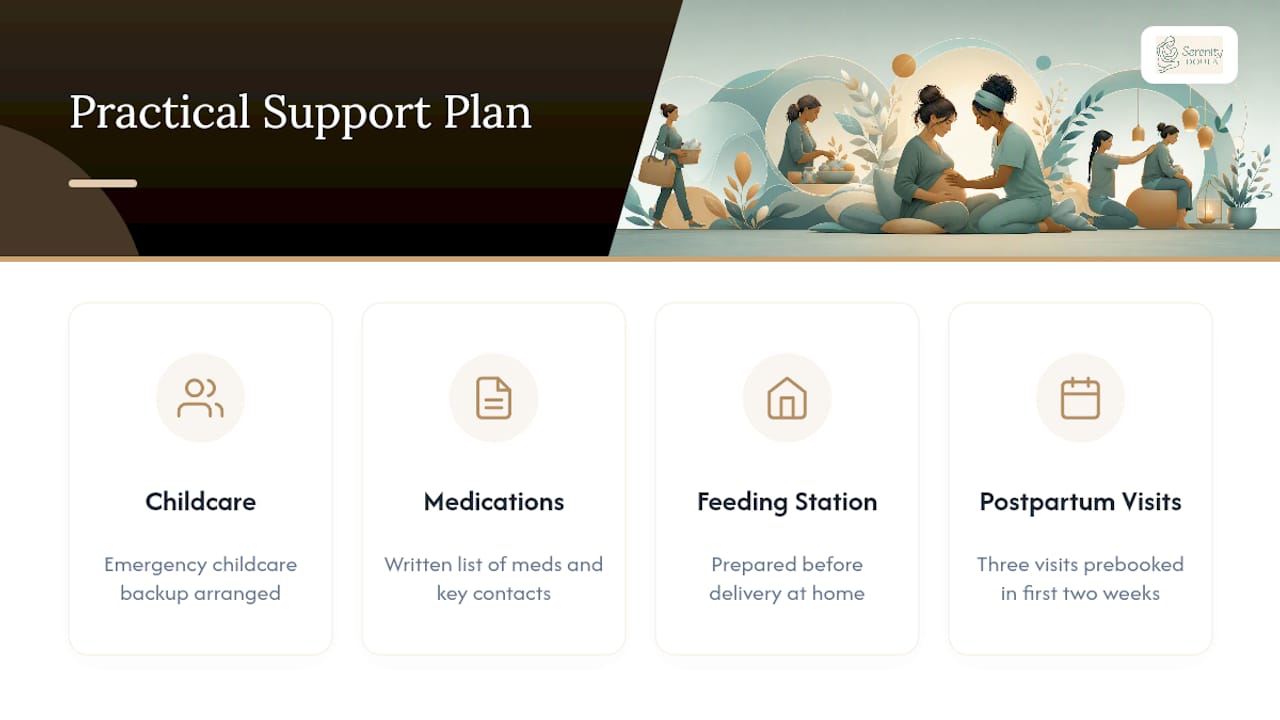
I’ve sat across from clients in Doylestown who had a full birth plan typed up but no one confirmed to drive them home. We fix that first. Practical planning includes emergency childcare backups, a written list of medications and contacts, a feeding station set up before delivery, and postpartum visits prebooked in advance, often three in the first two weeks, so recovery and feeding get consistent support instead of one-off check-ins.
When you interview a doula, ask what a typical labor support call looks like, how they coordinate with your OB or midwife, and what postpartum visits include. A good consultation should feel like a conversation, not a sales pitch.
Referrals to local therapists and lactation consultants across Bucks County help when you need more than one type of support at once.
— Alexis Wallace
What I Want Single Moms to Know Before They Decide Anything
The conventional advice tells single mothers to “build a village,” which is true but incomplete. A village of thirty acquaintances helps less than three people who show up on time. The research on solo-parent networks backs this up: a small, committed core team beats a large, casual one every time.
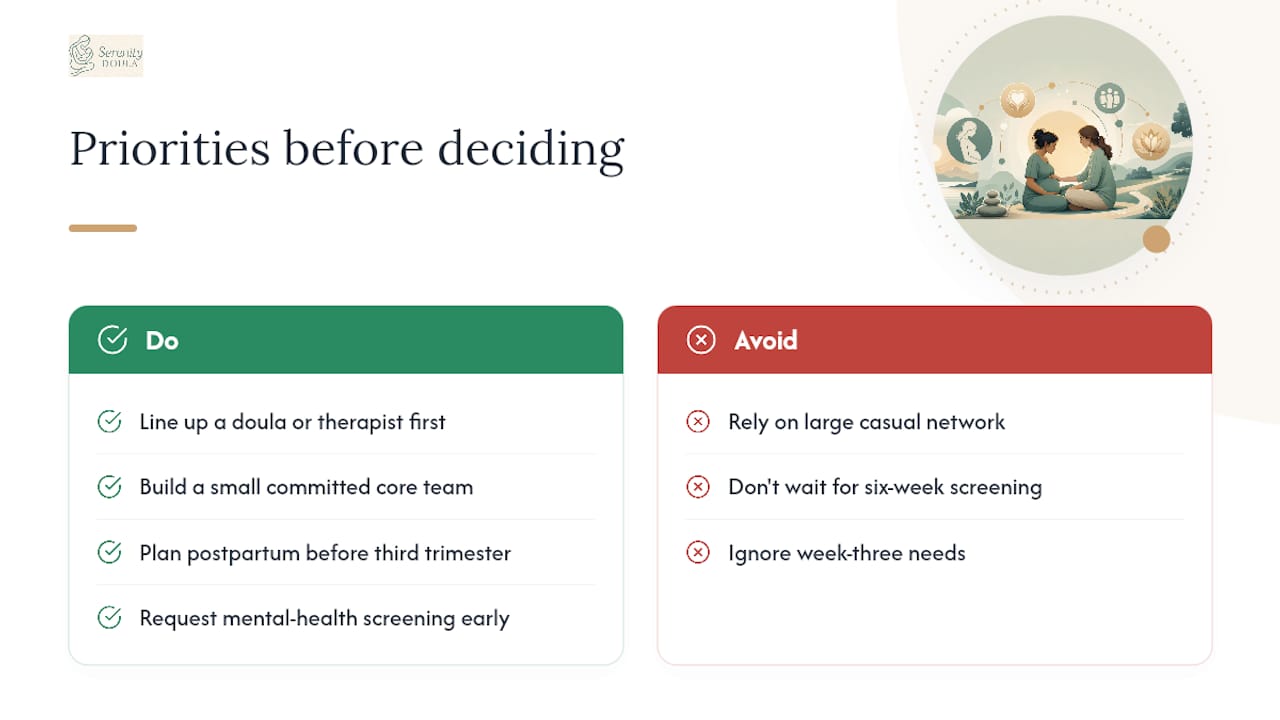
What is overrated is waiting until the third trimester to think about postpartum. Most single mothers I’ve worked with spend enormous energy on the birth plan and almost none on week three, which is often the hardest week of all. What is underrated is asking for a mental-health screening proactively rather than waiting for a provider to bring it up. Given the elevated psychiatric risk single mothers face, that screening should happen early and often, not as an afterthought at your six-week checkup.
My honest priority order: line up your professional support first, because a doula or therapist can help you build the rest of the plan around real evidence instead of guesswork. Everything else, the meal train, the emergency contact sheet, gets easier once you have one steady professional relationship anchoring the whole plan.
— Alexis Wallace
How Serenity Doula Fits Into Your Plan
There are high-touch options available for single mothers in Bucks, Montgomery, Philadelphia, and Burlington Counties who want a professional relationship, not just a checklist. For solo parents, that often means a birth doula who advocates for you in the delivery room when there is no partner to speak up, paired with in-home postpartum care so recovery and feeding get real, hands-on support in the first weeks.

Many clients also start with a private childbirth education class, which gives you a chance to build your birth plan and your questions for your provider well before labor starts. A free consultation is the easiest first step: we talk through your due date, your support team, and which service, birth doula support, postpartum care, or both, fits your situation. Those near Newtown or Doylestown may find useful local resources for delivery, including nearby hospitals. Book your free consultation and let’s build your plan together.
Sources
PSI HelpLine (1-800-944-4773), WIC program info (1-800-942-3678), ACOG, and the Obstetrics & Gynecology doula review.
This article is general information, not a substitute for advice from a qualified doctor. Consult a qualified healthcare professional about your own circumstances before acting on anything here.
- Doula support during pregnancy, childbirth, and postpartum: a systematic review (Obstetrics & Gynecology, 2026)
- Being a single parent (American Pregnancy Association)
- Psychiatric outcomes and perinatal health in single mothers (prospective multiregistry study)
- Single Perinatal (Pregnancy and Postpartum) Parent Support (Postpartum Support International)
FAQ
What resources are available for single mothers in Texas?
Texas residents can access the same federal programs available nationwide, WIC, Medicaid, and SNAP, through their local health department, plus Postpartum Support International’s virtual groups, which are open regardless of state. Community health centers often add local doula or counseling referrals on top of those federal programs.
How do I take care of a newborn as a single mom?
Focus on the basics: a stocked feeding station, a confirmed overnight backup for at least a few nights a week, and pediatrician appointments scheduled in advance. Leaning on a small core team of three to five people, rather than trying to manage everything solo, makes early recovery significantly more sustainable.
What should I do when I’m pregnant and alone?
Start by joining a peer support group like PSI’s single parent group and booking a consultation with a doula or perinatal therapist before your third trimester. Confirming even one or two reliable helpers well before your due date makes the biggest difference in how supported you feel during labor and recovery.
What assistance can a single mother get?
Single mothers can access WIC for nutrition support, Medicaid for pregnancy-related medical coverage, and community programs including sliding-scale doula care. Serenity Doula also offers birth doula and postpartum care packages for families in Bucks, Montgomery, Philadelphia, and Burlington Counties, with current pricing available through a free consultation.