

Yes, you can physically check your own cervix for dilation, but most obstetric providers don’t recommend it because the results are usually unreliable and it isn’t risk-free. The one rule that overrides everything else: if your water has broken, you’re bleeding, you have a cerclage or placenta previa, or you have a history of preterm labor, do not attempt a self-check. Call your provider instead. If none of those apply and you still want to try, talk it through with your care team first and follow strict hygiene and stop rules.
TL;DR:
- Self-checks carry a low but real risk of infection, especially if membranes have ruptured or if you have bleeding, cerclage, or placenta previa.
- Proper hygiene, positioning, and communication with your provider are crucial if you choose to check your cervix, but most professionals recommend against routine self-assessment.
- fingertip measurements are imprecise and can vary day to day, making them unreliable for predicting labor onset, which is why contraction patterns and fetal movement offer better clues.
- Clinical examinations by healthcare providers use multiple factors beyond dilation alone, providing a more complete picture of labor progress.
- Monitoring external signs like contraction strength, duration, and the purple line, along with fetal movements, offers a safer, more accurate way to track labor at home.
Table of Contents
- Is checking your cervix at home safe?
- How do you check your own cervix for dilation?
- What does the number you feel actually mean?
- When should you call your provider instead of checking yourself?
- What are safer ways to track labor progress at home?
- How do doctors and midwives check cervical dilation?
- What a doula wants you to know about checking your own cervix
- Why the obsession with a number misses the point
- Consider working with a doula who knows what to watch for
- Sources
- FAQ
Is checking your cervix at home safe?
Safety here depends entirely on your individual history. For most low-risk, full-term pregnancies without red flags, an occasional self-check carries low but real risk. For others, it’s a firm no.
Skip self-checks entirely if any of the following apply to you:
- Your water has broken (ruptured membranes)
- You’ve been diagnosed with placenta previa or vasa previa
- You have a cervical cerclage (stitch)
- You’re experiencing active, unexplained bleeding
- You have a history of preterm labor
- Your provider has specifically told you to avoid internal exams
The concern isn’t just theoretical. Introducing bacteria from your hands into the cervix raises infection risk, and if your membranes have already ruptured, that risk climbs. Bleeding after a check can also mask or mimic a more serious complication, which makes it harder for your provider to figure out what’s actually happening.
It’s worth knowing that ACOG’s own guidance treats cervical exams as something clinicians reserve for moments when the result will actually change management, not a routine box to check. You have the right to decline exams from your provider, too. If a professional exam is optional in many cases, that’s a good sign you don’t need to be checking yourself daily out of anxiety.
How do you check your own cervix for dilation?
If you’ve talked with your provider and decided to move forward, precision and hygiene matter more than speed. Here’s the safest sequence:
- Call your provider first if you’re unsure. A quick phone conversation can save you from an unnecessary or poorly timed check.
- Wash your hands for at least 20 seconds with soap and warm water. Trim any long nails and remove rings that could scratch delicate tissue.
- Use clean hands or sterile gloves, and skip lotions or oils, which can interfere with what you feel and introduce irritants.
- Get into a position that relaxes your pelvic floor. A supported squat, one foot propped on the edge of the tub, or side-lying with your top leg bent all work. Tense muscles make the cervix harder to reach and easier to misjudge.
- Gently insert your index and middle fingers, angled toward your lower back, until you feel a firm, puckered, donut-like structure. That’s your cervix.
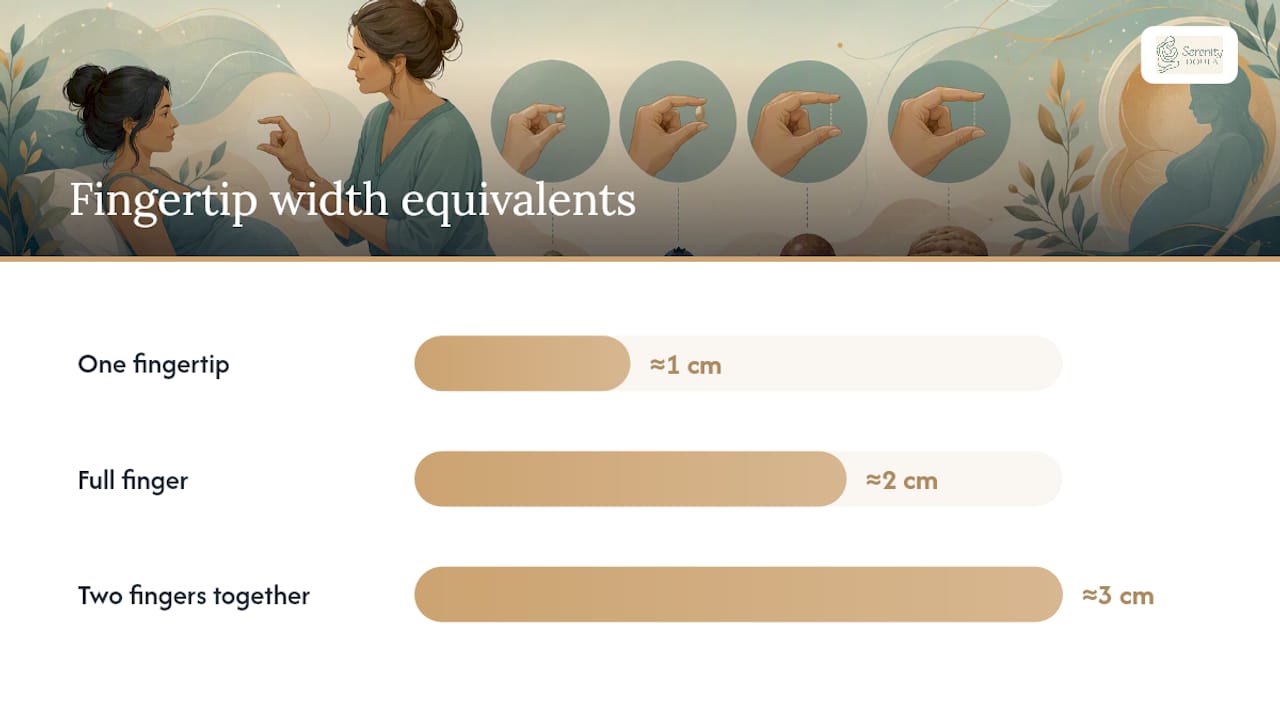
- Use fingertip width as a rough guide only. One fingertip is roughly 1 centimeter, a full finger close to 2, and two fingers side by side about 3, according to guidance from Parents. Treat this as a ballpark, not a diagnosis.
- Stop immediately if you feel pain, notice fresh bleeding, feel a gush or trickle of watery fluid, or simply can’t reach comfortably. Call your provider rather than trying again.
Pro Tip: Do this after a warm shower, when your muscles are naturally more relaxed. A tense pelvic floor is the number one reason people can’t find their cervix or come away with a painful, inconclusive check.
The Bump and other patient resources are consistent on one point: fingertip-to-centimeter rules are approximate, and a self-check can introduce bacteria even when done carefully. If you’re preparing for your first attempt, it helps to read through what to expect during a dilation check beforehand so you know what you’re actually feeling for.
What does the number you feel actually mean?
A number on its own tells you very little. Dilation is how open your cervix is, effacement is how thinned it’s become, position describes whether it’s pointed forward or still tilted back, and fetal station tracks how far your baby has descended. Clinicians combine all of these into what’s called a Bishop score, which gives a much fuller picture than dilation alone.
That matters because fingertip measurements are genuinely imprecise, even for trained hands. Tissue that feels firm one day can feel soft and stretchy the next, and where your baby’s head is sitting changes what you’re able to feel entirely.
- Dilation: how open the cervix is, in centimeters
- Effacement: how thin the cervix has become, in percent
- Consistency: firm, medium, or soft
- Position: posterior, mid, or anterior
- Station: the baby’s descent relative to your pelvis
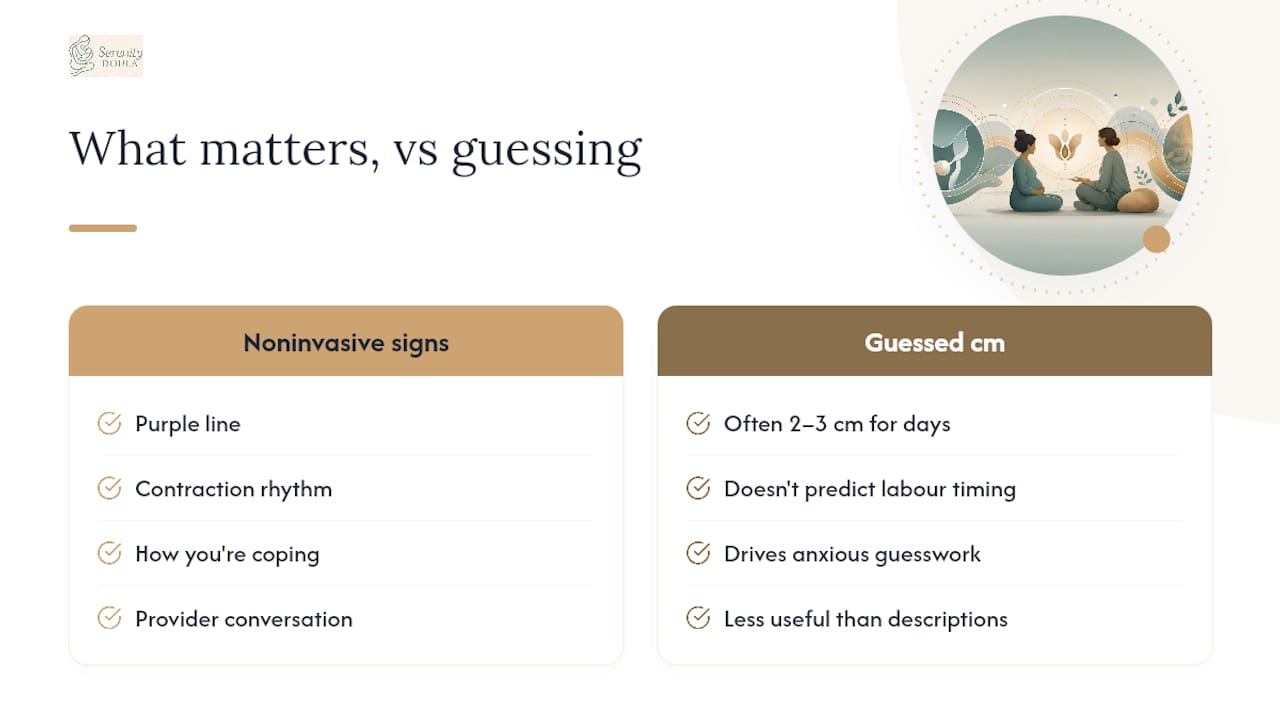
Here’s the reassurance worth holding onto: many people walk around 2 to 3 centimeters dilated for days without going into active labor, per Parents. A single number, checked once at home, rarely predicts when labor will actually start.
When should you call your provider instead of checking yourself?
Certain signs matter more than anything your fingertips can tell you. Contact your provider or head to triage if you notice:
- Regular, strong contractions, commonly every five minutes for an hour, or whatever timing your provider gave you
- Any fresh vaginal bleeding
- A gush or steady trickle of fluid that could mean your water has broken
- A noticeable drop in your baby’s movement
- Fever, chills, or pain that feels different from typical late pregnancy discomfort
If a self-check leaves you with bleeding or watery discharge afterward, don’t wait to see if it resolves. Call right away. And if your provider has specifically asked you to track dilation at home as part of your care plan, follow their instructions exactly and report back using their preferred method rather than improvising your own system.
If you’re getting close to any of these signs, it’s worth reviewing a hospital bag checklist now, so you’re not packing in a panic later.
What are safer ways to track labor progress at home?
Several noninvasive signs give you useful information without any infection risk at all. The purple line is one example: a discoloration that runs up the crease of the buttocks during labor, which midwifery research has tracked as a rough external marker of progress, though it isn’t present in every labor and shouldn’t be relied on alone.
Timing your contractions tells you more than a single dilation check ever could. Watch for:
- Contractions becoming longer, stronger, and closer together over time
- Losing your mucus plug or noticing increased pelvic pressure
- Changes in your baby’s movement patterns as labor approaches
- The purple line lengthening, if you’re able to observe it
None of these require internal touch, and together they build a much more honest picture of where you are than one fingertip check.
How do doctors and midwives check cervical dilation?
Providers use a gloved, lubricated exam with two fingers to assess dilation, effacement, consistency, position, and fetal station all at once, according to Cleveland Clinic. That combination is exactly why a clinical check tells your team more than a self-check ever will.
- Sterile gloves and lubricant reduce friction and infection risk
- Two fingers assess multiple factors in one exam, not just how open you are
- Exams are typically reserved for moments when the result will change your care plan
- You can ask your provider how a specific finding will actually affect your birth plan before agreeing to a check
You also have the option to decline a routine check if you’d rather skip it. It’s a reasonable question to bring up during a cervical exam conversation with your OB or midwife well before your due date.
What a doula wants you to know about checking your own cervix
Clients ask me about self-checks constantly, usually somewhere around 37 or 38 weeks when the waiting starts to feel unbearable. My honest answer: the number rarely tells you what you think it will.
Being 2 or 3 centimeters dilated for days is common and doesn’t predict when labor starts. Comfort and contraction patterns usually matter more than chasing a specific number.
I encourage clients to bring a short script to their next appointment instead of guessing at home: “If I wanted to check dilation myself, what would you want me to know first?” or “Is there anything in my history that would make a self-check risky for me?” Those two questions do more for your peace of mind than any fingertip ever will.
Pro Tip: If you do check and feel unsure about what you found, write down exactly what you felt (soft, firm, open, tight) rather than trying to assign it a number. That description is often more useful to your provider than a guessed centimeter count.
Part of what a doula does is help you track the noninvasive signs, the purple line, contraction rhythm, and how you’re coping, so you walk into every conversation with your provider with real information instead of anxious guesswork.
Why the obsession with a number misses the point
Here’s what the evidence actually supports: dilation checks, whether done by you or by a clinician, are a small piece of a much larger picture. ACOG itself treats routine exams as optional rather than essential, which tells you something about how much weight a single number deserves in your own mind.
The conventional wisdom, that you need to know your exact dilation to know how close you are to labor, doesn’t hold up. Two people can both be “3 centimeters” and be days apart from delivery, because effacement, station, and consistency all shift independently of the number that gets the most attention.
If you’re going to spend energy monitoring anything at home, I’d put contraction patterns, fetal movement, and how you’re coping ahead of a fingertip check every time. Those signs are free, safe, and often more predictive. Save the self-check conversation for your provider, and let them help you decide if it’s even worth doing in your specific case.
— Alexis Wallace
Consider working with a doula who knows what to watch for
Serenity Doula gives Bucks County families a second set of trained eyes during the waiting weeks, someone who can help you track contraction patterns, the purple line, and other noninvasive signs instead of relying on guesswork at home. That kind of steady, informed support is exactly what turns anxious last weeks into something more manageable.

A doula never replaces your OB or midwife’s clinical judgment, but Serenity Doula’s team helps you prepare smarter questions for your Trinity Health St. Mary or Doylestown-area provider and interpret what you’re noticing between appointments. Our childbirth education classes teach you exactly which signs of labor matter and which ones you can safely let go of watching. If you’re weighing whether labor support is right for your birth plan, book a free consultation and let’s talk through where you are right now, no pressure, no obligation.
Sources
For deeper reading beyond this guide, ACOG’s committee opinion, Cleveland Clinic’s cervical check overview, and Mayo Clinic’s dilation and effacement illustrations are all solid starting points. Always bring specific questions back to your own provider.
This article is general information, not a substitute for advice from a qualified doctor. Consult a qualified healthcare professional about your own circumstances before acting on anything here.
- Cervical check — Cleveland Clinic
- How to check your cervix for dilation — The Bump
- How to check for cervical dilation at home — Parents
FAQ
Can I check if my cervix is dilated at home?
Yes, it’s physically possible, but many OB-GYNs advise against routine self-checks because of infection risk and how unreliable the results tend to be for untrained hands, according to Forbes Health.
How can I tell if I’m touching my cervix?
The cervix feels like a firm, donut-shaped structure with a small opening in the center, usually reachable by angling your fingers toward your lower back; if you feel nothing but soft tissue, you likely haven’t reached it yet.
Is checking your cervix dilation painful?
It shouldn’t be sharply painful, though it can feel uncomfortable or pressure-like, especially if you’re tense; real pain is a stop signal, and you should call your provider if it occurs.
Can you feel yourself if your cervix is dilated?
You can sometimes feel an opening with your fingertip, but the fingertip-to-centimeter guide is only approximate, and tissue consistency or your baby’s position can change what you perceive, so treat any home estimate as a rough guess rather than a diagnosis.