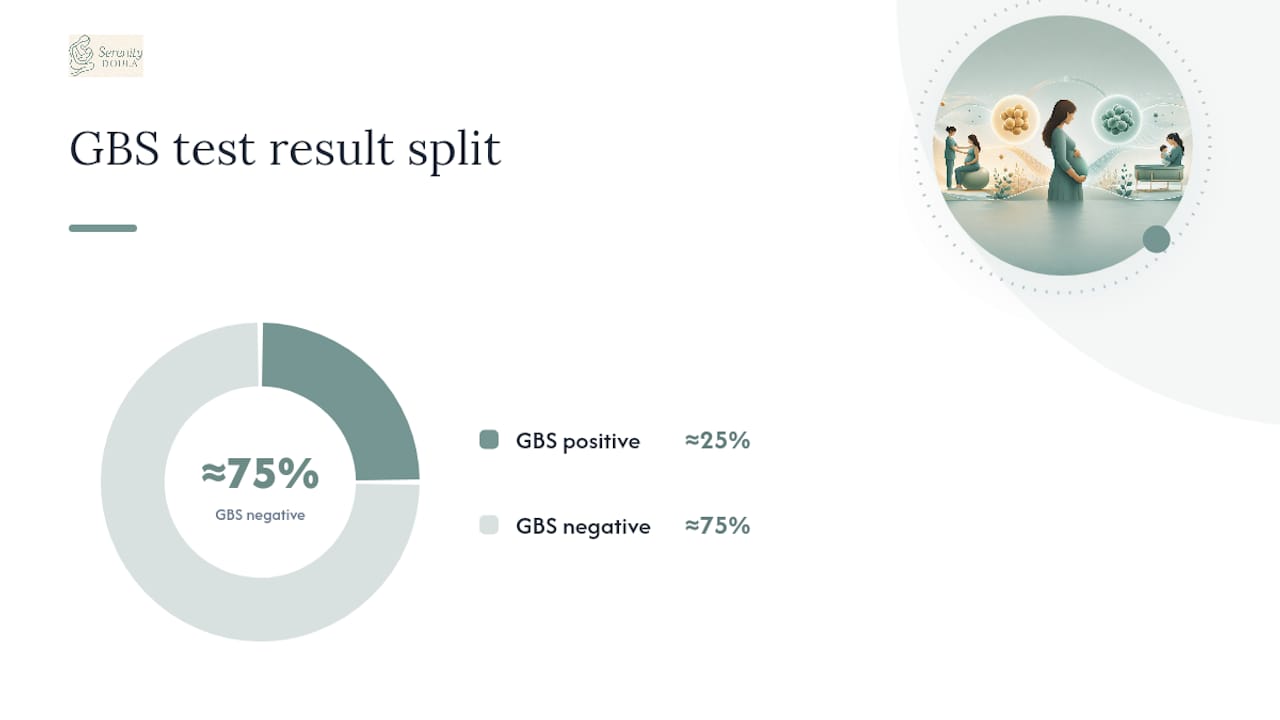
The single most effective way to prevent newborn GBS disease is universal third-trimester screening combined with appropriate intrapartum antibiotic prophylaxis (IAP) when indicated. That’s the clear guidance from both the CDC and ACOG, and it’s the foundation of every GBS-aware birth plan. Group B Streptococcus (GBS) is a bacteria that roughly 1 in 4 pregnant people carry without any symptoms, and while it’s harmless to most adults, it can cause serious infection in newborns if passed during labor.
The good news? When screening and treatment happen at the right time, the risk to your baby drops dramatically.
The one question to ask at your next prenatal visit: “Have I been scheduled for a 36–37 week vaginal-rectal GBS culture, and what is our plan if the result is positive?”
- Universal screening in late third trimester is the accepted standard
- Penicillin is the preferred antibiotic given through an IV during labor (IAP)
- No licensed GBS vaccine exists yet, so screening and IAP remain the primary tools
- Safe adjuncts like probiotics show promise but do not replace IAP when it’s indicated
Key Takeaways
Universal third-trimester GBS screening combined with timely intrapartum penicillin is the most effective way to prevent early-onset GBS disease in newborns, per CDC and ACOG guidance.
| Point | Details |
|---|---|
| Screen at 36–37 weeks | A vaginal-rectal culture collected in late third trimester is the accepted standard for all pregnant people. |
| IAP with penicillin is the primary prevention | IV penicillin at least 4 hours before delivery offers the greatest protection; ampicillin is an acceptable alternative. |
| Allergy alternatives exist | Cefazolin, clindamycin, or vancomycin are used based on allergy risk and susceptibility testing results. |
| Probiotics show promise, not proof | A meta-analysis found that Lactobacillus probiotics were associated with reduced odds of a positive GBS culture, but trial quality varies. |
| Serenity Doula | Provides GBS-aware birth planning, triage advocacy, and IAP timing support for families in Bucks County and surrounding counties. |
Table of Contents
- 1. How GBS screening works and what your results mean
- 2. Intrapartum antibiotic prophylaxis: the most proven prevention
- 3. What to do if you test positive for GBS
- 4. Natural and adjunct strategies worth discussing with your provider
- 5. What doesn’t work and what to avoid
- 6. Where GBS vaccine research stands right now
- 7. A doula’s perspective on GBS and what it means for your birth
- Serenity Doula supports GBS-aware birth planning in Bucks County
- Sources
- FAQ
1. How GBS screening works and what your results mean
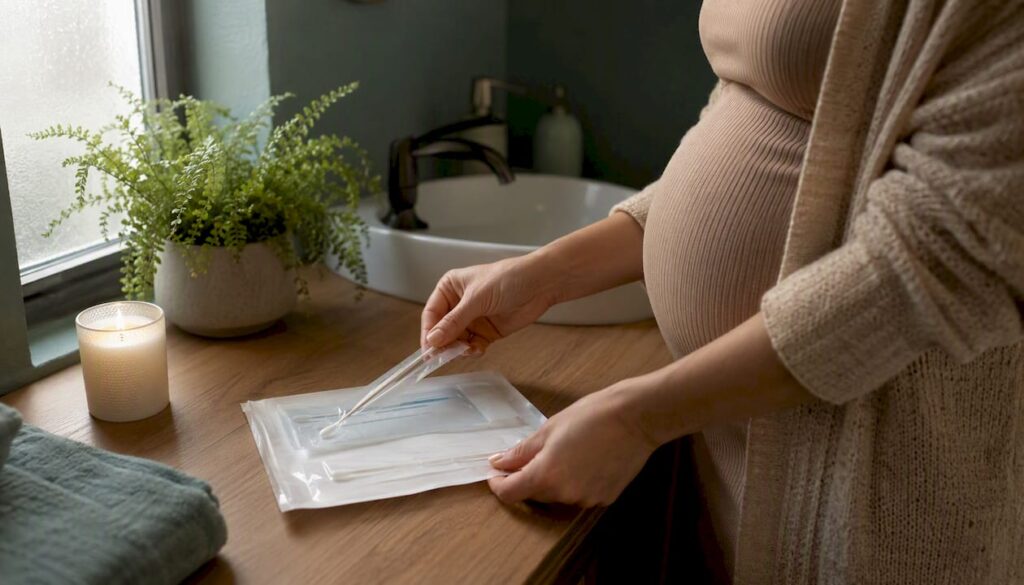
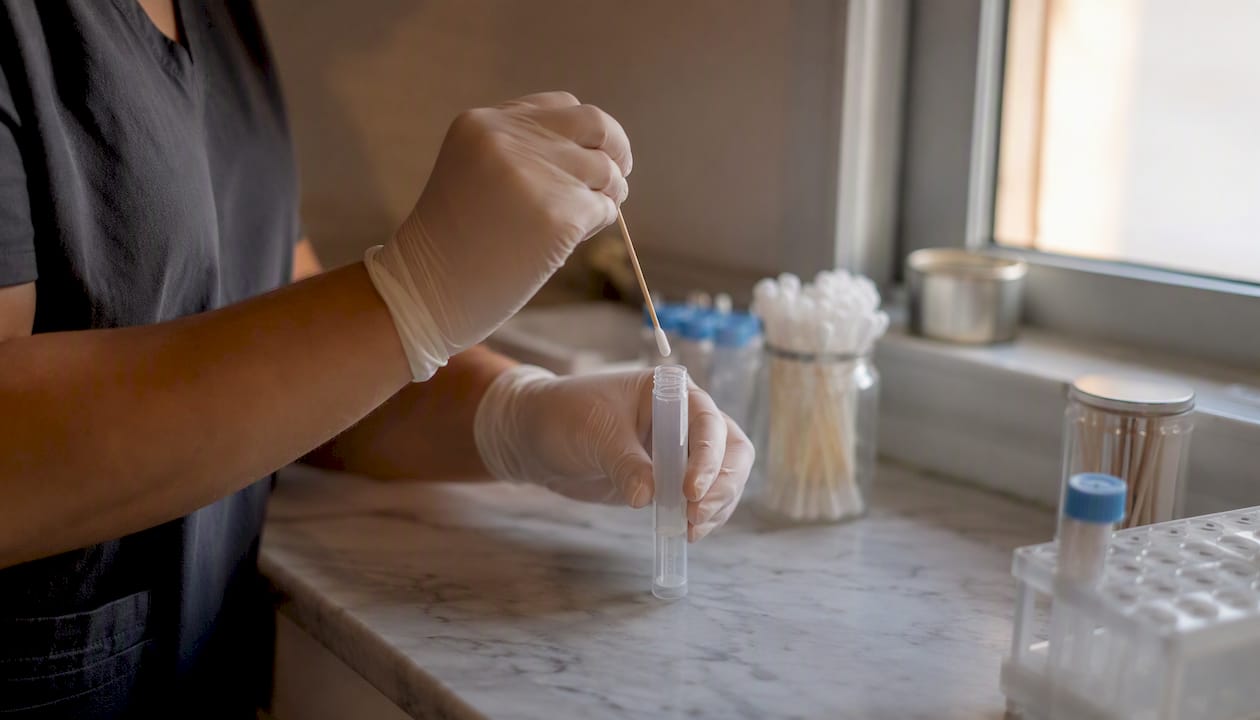
ACOG recommends a vaginal–rectal culture collected in late third trimester. That specific window matters because GBS colonization can be transient, and a result from earlier in pregnancy may not reflect your status at delivery. The culture remains the gold standard, though some hospital settings now offer NAAT (nucleic acid amplification testing), a molecular method that returns results faster and can be used in labor when culture results are unavailable.
What does a positive result actually mean for your birth? Practically, it means your GBS status gets charted and your care team plans for IV antibiotics when labor begins. Because colonization can change between your test date and your due date, many hospitals treat the late third trimester result as the operative status for the entire pregnancy.
A few common pitfalls worth knowing:
- Swab technique matters. The swab should collect from the lower vagina and rectum, not just the vaginal opening. An incorrectly collected sample can miss GBS entirely.
- Testing too early (before late third trimester) is less predictive of your status at delivery.
- A negative result isn’t a guarantee. GBS can colonize after testing, which is why risk-based protocols exist for situations like preterm labor or prolonged rupture of membranes.
Pro Tip: Bring a printed copy of your GBS lab result to the hospital when you go in for delivery. Triage teams see dozens of patients; having the result in hand means your status is recognized immediately, even if the electronic chart hasn’t transferred yet.
2. Intrapartum antibiotic prophylaxis: the most proven prevention
IAP is the intervention with the clearest evidence behind it. When antibiotics are given through an IV during labor to a GBS-positive person, the risk of the baby developing early-onset GBS disease decreases substantially. Penicillin is the first-line choice; ampicillin is an acceptable alternative when penicillin isn’t available.
Timing is everything. Receiving IAP at least 4 hours before delivery gives the antibiotic time to cross the placenta and reach protective levels in the baby. Receiving it for at least 2 hours still offers some protection. That said, ACOG is clear that you should never delay an urgent obstetrical intervention just to reach the 4-hour mark.
Penicillin allergy pathways
If you have a penicillin allergy, your provider has options, and the right choice depends on how serious your allergy history is:
| Allergy Risk Level | Recommended IAP Agent |
|---|---|
| Low risk (e.g., rash only, no anaphylaxis) | Cefazolin |
| Higher risk, GBS susceptible to clindamycin | Clindamycin (susceptibility-guided) |
| High risk, clindamycin resistance or unknown | Vancomycin |
Antimicrobial susceptibility testing on your GBS culture is what guides the clindamycin decision. This is worth asking your provider about explicitly if you have any penicillin allergy history, because the right antibiotic choice depends on your specific culture results.
Stat to know: Receiving IV penicillin at least 4 hours before delivery is associated with the greatest reduction in early-onset GBS disease risk, according to CDC prevention guidance.
When you arrive at the hospital in labor, the clock on your IAP starts the moment the IV goes in. Your doula or birth partner can help make sure that happens promptly by flagging your GBS-positive status at triage check-in, before you’ve even been taken to a room.
3. What to do if you test positive for GBS
A positive GBS result is not a crisis. About 1 in 4 pregnant people receive one, and with the right plan in place, your baby’s risk stays very low. The goal is preparation, not panic.
Here’s a practical checklist to work through with your provider after a positive result:
- Confirm the result is in your chart. Ask your OB or midwife to verify the positive culture is documented and flagged for your delivery team.
- Discuss IAP timing with your provider. Talk through what happens if labor moves quickly or if your water breaks before contractions begin.
- Share your penicillin allergy history. If you’ve ever had a reaction to penicillin or cephalosporins, ask whether an allergy evaluation is appropriate so the right alternative can be selected in advance.
- Plan for preterm labor or prolonged rupture of membranes (PROM). If your water breaks more than 18 hours before delivery, or if you go into labor before 37 weeks without a recent culture, your provider will typically start empiric IAP regardless of a documented result.
- Prepare a pediatric handoff note. Ask whether your baby will need additional monitoring after birth given your GBS status.
- Brief your birth partner or doula. They should know your GBS status and be ready to mention it at triage admission.
Pro Tip: Write a short script on an index card: “I am GBS-positive. My culture was collected on [date]. I need IV penicillin as soon as possible.” Hand it to triage staff the moment you arrive. It sounds simple, but in a busy labor unit, that card can save critical time.
For cesarean births planned before labor with membranes intact, routine IAP for GBS is generally not indicated, per ACOG guidance. Confirm this with your provider based on your specific situation.
4. Natural and adjunct strategies worth discussing with your provider
Many families ask whether there’s anything they can do during pregnancy to reduce GBS colonization before labor. The honest answer is: some adjuncts show genuine promise, but none have been proven reliable enough to replace IAP when it’s indicated.
Probiotics are the most studied natural option. A systematic review and meta-analysis of antenatal probiotic trials found that Lactobacillus-containing probiotics were associated with reduced odds of a positive GBS culture, suggesting a moderate decrease in colonization rates. That’s a meaningful signal. The proposed mechanisms include vaginal acidification, competitive adhesion to mucosal surfaces, and immune modulation. However, many of the included trials had risk of bias, strains and dosing varied widely, and results were inconsistent across studies. Probiotics are low-risk during pregnancy for most people, but they’re an adjunct, not a guarantee.
Hibiclens (chlorhexidine) washes are sometimes discussed as an intrapartum antiseptic measure. Evidence for vaginal chlorhexidine washes in labor as a GBS prevention strategy is limited, and this is not a standard recommendation in U.S. protocols. If you’re curious about it, ask your provider directly. One firm note: do not douche with any antiseptic solution. Douching disrupts normal vaginal flora and is not protective against GBS.
Other low-risk lifestyle measures that may support vaginal and gut health include:
- Eating a diet rich in fermented foods (yogurt, kefir, sauerkraut) to support a healthy microbiome
- Managing blood sugar, since some research suggests glycemic control may influence vaginal flora
- Staying well-hydrated and avoiding unnecessary antibiotic use during pregnancy, which can disrupt flora balance
These are general health measures, not proven GBS eliminators. Frame them as part of holistic pregnancy preparation rather than a clinical protocol.
Pro Tip: If you want to try a probiotic during pregnancy, ask your provider which Lactobacillus strains are appropriate for you. Starting several weeks before your 36-week culture gives the most time for any potential effect. And if you’re also taking prenatal supplements, it’s worth checking for interactions, including with collagen supplements, which some families add during pregnancy for skin and joint support.
5. What doesn’t work and what to avoid
Some approaches circulating online sound reassuring but lack the evidence to back them up, and a few carry real risks. Knowing what to skip is just as useful as knowing what to do.
- Douching is not protective. Rinsing the vaginal canal with any solution, including antiseptic ones, disrupts the natural bacterial balance that actually helps keep pathogens in check. The CDC and ACOG both discourage douching during pregnancy.
- Routine antenatal antibiotics to eradicate GBS carriage are not recommended. Taking oral antibiotics during pregnancy to clear GBS before labor doesn’t work reliably. GBS recolonizes quickly, and repeated antibiotic courses carry risks including antibiotic resistance and disruption of healthy flora. This approach is not supported by current evidence or guidelines.
- Unvalidated home protocols claiming to “cure” GBS before labor (garlic suppositories, herbal washes, essential oil applications) have no reliable clinical evidence behind them. They are not substitutes for IAP when IAP is indicated.
- Delaying hospital arrival to avoid IV antibiotics is a risk, not a strategy. Arriving late in labor reduces the window for IAP to reach protective levels in the baby.
The review literature is consistent: prevention of neonatal GBS disease centers on screening at the right time and appropriate IAP during labor. Adjuncts may support overall health, but they don’t replace that core protocol.
6. Where GBS vaccine research stands right now
No licensed maternal GBS vaccine is available in the United States or globally. The WHO) identifies GBS as a leading cause of newborn infection worldwide and notes that vaccine development is an active public health priority, but candidates are still in clinical trials.
The goal of a maternal GBS vaccine would be to stimulate the mother’s immune system to produce antibodies that transfer to the baby before birth, offering protection without requiring intrapartum antibiotics. That’s a meaningful distinction from IAP, which interrupts transmission during labor rather than building the baby’s immunity in advance.
Other areas of active research include:
- Improved NAAT testing for faster, more accurate intrapartum GBS detection
- Larger, better-designed probiotic trials with standardized strains and dosing
- Antiseptic protocols in labor settings and their effect on transmission rates
For now, screening plus IAP remains the only proven prevention strategy. Vaccine timelines are uncertain, and no candidate is expected to be available in the near term. The best thing you can do today is make sure your 36-week culture is scheduled.
7. A doula’s perspective on GBS and what it means for your birth
When a client calls me after getting a positive GBS result, the first thing I hear in their voice is worry. And the first thing I say is: this is manageable. A positive result doesn’t change your birth plan as much as you might fear. What it does is add a few specific steps, and that’s exactly where I come in.
My job in a GBS-positive birth is partly logistical. Before labor, I help clients create a simple checklist card with their GBS status, culture date, and antibiotic preference (or allergy history) written clearly. We rehearse what to say at triage. I remind partners that their most important job in the first 20 minutes at the hospital is to make sure that IV goes in.
The emotional piece matters just as much. Carrying a positive GBS result for weeks before your due date can feel heavy. I work to normalize it, because statistically, it’s common, and with the right care, outcomes are excellent. Families I support at Trinity Health St. Mary in Langhorne and at hospitals throughout Bucks County, Doylestown, and Newtown consistently tell me that feeling prepared made the difference between arriving at the hospital anxious and arriving calm and ready.
I also coordinate with the pediatric team when needed. If a baby is born to a GBS-positive parent who didn’t receive a full course of IAP, the newborn may need additional observation. Knowing that protocol in advance, rather than hearing it for the first time in the delivery room, helps families stay grounded.
The evidence-based birth framework I use with every client means we talk through the research together, ask the right questions at prenatal visits, and build a plan that reflects both the clinical guidance and what matters most to your family.
Serenity Doula supports GBS-aware birth planning in Bucks County
A positive GBS result adds specific steps to your birth plan, and having someone in your corner who knows those steps cold makes a real difference. Serenity Doula offers birth doula support for families throughout Bucks County, including Newtown, Doylestown, and surrounding areas in Montgomery, Philadelphia, and Burlington Counties. That support includes helping you prepare your GBS checklist card, coaching your partner on triage advocacy, and staying with you through the IAP process so nothing falls through the cracks.
Families who want to go deeper on hospital protocols, antibiotic timing, and birth planning can also explore Serenity Doula’s private childbirth education classes, where GBS, IAP, and newborn care decisions are covered in detail.
Ready to build a birth plan that accounts for GBS? Schedule a free consultation with Serenity Doula and walk into labor feeling prepared, not anxious.
Sources
These are the primary references worth bookmarking before your next prenatal visit. Bringing them to your appointment gives you a concrete starting point for the GBS conversation with your OB or midwife.
- Prevention of Group B Streptococcal Early-Onset Disease in Newborns: ACOG Committee Opinion Summary, Number 797
- Preventing Group B Strep Disease in Newborns
- Systematic review/meta-analysis of probiotics to reduce antenatal GBS colonisation
- Group B Strep In Pregnancy: Test, Risks & Treatment
FAQ
Can you do anything to prevent GBS in pregnancy?
Yes. Universal screening at 36–37 weeks followed by IV penicillin during labor (IAP) is the most effective prevention, per CDC and ACOG. Antenatal probiotics containing Lactobacillus may reduce colonization odds, but they don’t replace IAP when it’s indicated.
What makes you more likely to have GBS?
GBS colonization is common and often random. About 1 in 4 pregnant people test positive. Higher-risk situations for neonatal disease include preterm labor, prolonged rupture of membranes (more than 18 hours), and fever during labor, all of which typically prompt empiric IAP even without a positive culture on file.
Is GBS considered an STD?
No. GBS is not a sexually transmitted infection. It’s a bacteria that naturally lives in the gastrointestinal and urogenital tracts of many healthy adults and can be passed to a newborn during labor, not through sexual contact.
Can probiotics get rid of group B strep?
Probiotics have not been shown to reliably eliminate GBS colonization. A meta-analysis found a reduced odds ratio for a positive GBS culture with Lactobacillus-containing probiotics, but trial quality was variable and results were inconsistent. Probiotics may be a useful adjunct, but they are not a substitute for IAP when your provider recommends it.