

A hypnobirthing doula is a trained birth support professional who combines continuous emotional and physical labor support with hypnobirthing techniques like breathwork, guided visualization, and self-hypnosis coaching. She’s the right fit if you want mind-body coping tools plus a steady, informed presence in the room. The evidence behind hypnosis in labor is promising, not guaranteed, so think of it as one strong layer in a flexible birth plan, not a replacement for medical care.
TL;DR:
- Hypnobirthing doulas teach breathing, visualization, and partner support techniques that require prenatal practice to be effective during labor.
- Evidence suggests hypnobirthing may lower analgesic use but does not guarantee a medication-free or unmedicated birth; it is one of multiple supportive strategies.
- Starting hypnobirthing classes around 28 to 32 weeks is ideal, but later sessions can also be effective with a condensed schedule, depending on your preparation pace.
- Choosing a doula requires verifying certification, clear back-up plans, and transparent fee structures to avoid surprises during labor and postpartum care.
- Hypnobirthing skills remain helpful in medical interventions like epidurals, inductions, or cesareans, as they support mental grounding regardless of the clinical circumstances.
Table of Contents
- What Does a Hypnobirthing Doula Actually Do?
- Does Hypnobirthing Actually Work? What the Research Says
- When Should You Start Hypnobirthing Classes?
- How Do You Choose the Right Hypnobirthing Doula?
- Does Hypnobirthing Still Work With an Epidural or C-Section?
- Real Talk From a Bucks County Doula
- Get Personalized Hypnobirthing Support From Serenity Doula
- Sources
- FAQ
What Does a Hypnobirthing Doula Actually Do?
The role breaks into three phases, and each one asks something different of her.
Before labor, she teaches you the mechanics: breathing patterns, visualization scripts, affirmations, and audio tracks you’ll practice at home, often with your partner taking an active coaching role. She helps you draft a hypnobirthing birth plan that spells out your preferences for lighting, language, and who does what when contractions intensify.
During labor, she shifts into hands-on mode:
- Guiding relaxation and breathing cues in real time as contractions change
- Suggesting positions and comfort measures that ease pressure and pain
- Advocating for your preferences and translating clinical updates from your nurse or midwife into plain language
- Serving as a calm, familiar presence when everything else in the room feels unfamiliar
After birth, she debriefs the experience with you, connects you to breastfeeding support resources, and refers out to pelvic floor therapists or postpartum counselors when needed.
Hypnobirthing techniques get woven into every phase rather than saved for the big moment. That’s the part people miss. The prenatal practice is what makes the labor-room coaching actually work, because your body has already rehearsed the response. Our breathing techniques guide walks through several exercises worth practicing before your due date.
Does Hypnobirthing Actually Work? What the Research Says
Here’s the honest answer: the evidence is encouraging but not airtight, and any hypnobirthing doula worth hiring will tell you that upfront.
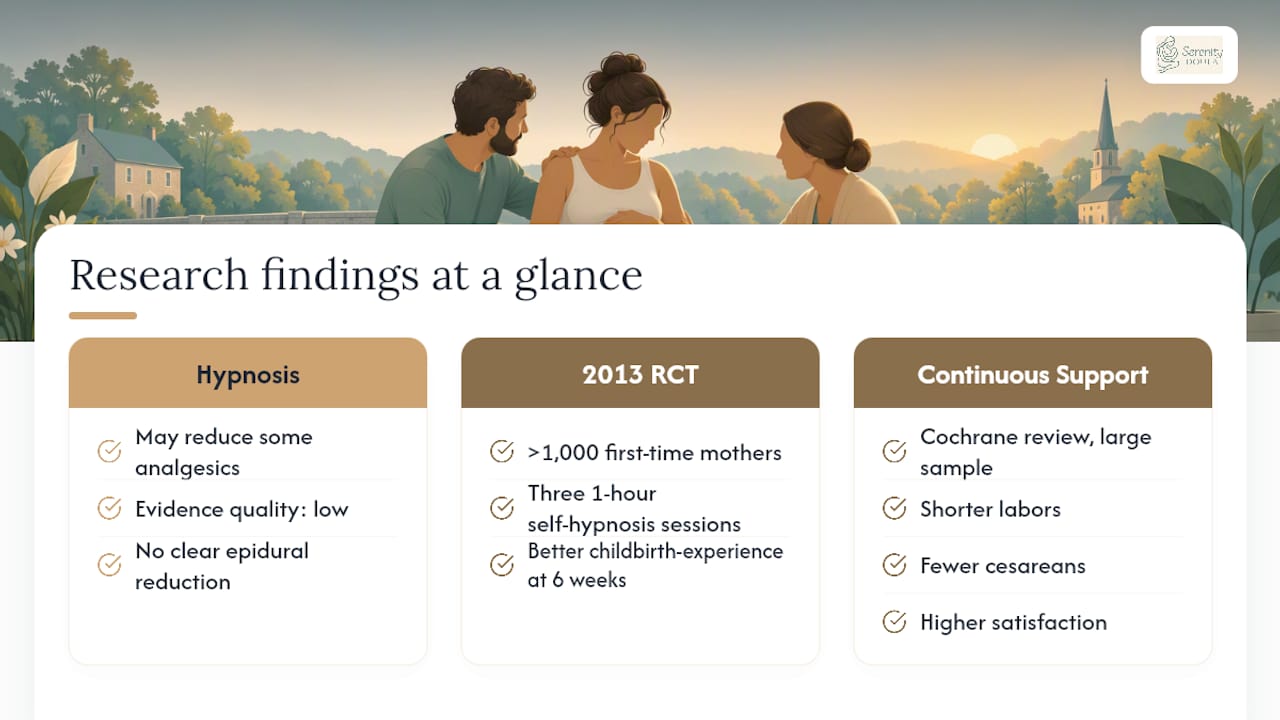
A Cochrane review of nine trials involving a large number of women found hypnosis may reduce use of certain analgesics during labor, but the evidence quality was low, and there was no clear reduction in epidural rates. That’s not a strike against hypnobirthing. It just means it’s a coping tool, not a guarantee of a medication-free birth.
A separate randomized trial involving over a thousand first-time mothers found that women who received three one-hour self-hypnosis sessions before labor reported meaningfully better childbirth-experience scores at six weeks postpartum than those who got relaxation training or usual care.
That 2013 trial matters because it measured how women felt about their births, not just clinical outcomes. Pair that with what we know about continuous labor support: a Cochrane review covering a large international sample found that one-to-one support during birth is linked to shorter labors, fewer cesareans, and higher satisfaction. Hypnobirthing plus doula support stacks two evidence-backed strategies rather than betting on one alone.
When Should You Start Hypnobirthing Classes?
Most hypnobirthing curricula work best starting around 28 to 32 weeks, though this flexes depending on your schedule and how quickly you want to build the habit of daily practice. Starting earlier isn’t wasted time. Starting later in pregnancy is still workable, just more condensed.
Class formats vary by what fits your life:
- Private sessions at home, usually three to five sessions, with pacing built around your calendar
- Small group classes, which cost less per person and add the benefit of hearing other parents’ questions
- Virtual coaching, useful if you’re managing a demanding job or travel schedule
A solid curriculum covers breathwork patterns, guided visualization scripts, affirmation practice, structured partner coaching, and audio tracks for home relaxation practice. The Cleveland Clinic’s overview of hypnobirthing confirms these are the standard building blocks across most programs.
Pro Tip: Ask exactly what “hypnobirthing” means in a doula’s package before you book. Some offer a full structured curriculum with audio and partner homework. Others simply reinforce calming language you learned elsewhere. Request a sample session outline before signing anything.
Before comparing packages, confirm what’s included: number of prenatal visits, day-of labor coverage, backup doula arrangements, and whether postpartum follow-up is bundled in or billed separately.
How Do You Choose the Right Hypnobirthing Doula?
Interviewing a hypnobirthing doula should feel like a conversation, not an interrogation, but you still want clear answers on a few specifics.
Ask about her training and certification, what a typical prenatal session outline looks like, and how she involves your partner in practice. Ask what happens if she’s unavailable when you go into labor. A defined backup plan isn’t optional; it’s standard practice, and DONA International’s interview guide for parents recommends asking about it directly.
Watch for a few red flags:
- Promises of a “pain-free” or guaranteed unmedicated birth
- Vague answers about fees, contract terms, or what happens with cancellations
- No documented backup coverage
Trust signals worth confirming include DONA or equivalent certification, a written contract outlining scope and fees, and honest client feedback you can actually verify.
| What to Ask For | Why It Matters |
|---|---|
| Sample prenatal session outline | Confirms structured curriculum versus reinforcement only |
| Written backup doula agreement | Protects you if she’s unavailable at your due date |
| Fee and refund policy in writing | Prevents surprise costs mid-pregnancy |
| Partner coaching plan | Ensures your partner has an active role, not a passive one |
There’s no single reliable national average for hypnobirthing doula fees. Ask each doula for a written scope and total price during your consultation rather than anchoring to a number you saw online.
Does Hypnobirthing Still Work With an Epidural or C-Section?
Yes, and this is where a lot of confusion sets in. Hypnobirthing skills aren’t an all-or-nothing bet against medical intervention. Breathwork and visualization still help you stay grounded whether you get an epidural, need induction, or end up with a cesarean.
A hypnobirthing doula adjusts her coaching to the situation:
- During an induction, she helps you use breathing and visualization through longer waiting periods and stronger contractions from Pitocin
- After an epidural, she shifts to helping you rest, change positions safely, and stay mentally present
- Before a cesarean, she uses calming language and breath cues to ease pre-surgical anxiety
Hypnosis should never delay a necessary medical decision. If your provider recommends an intervention, that conversation with your clinical team comes first. Good questions to bring to your obstetrician or midwife: “How would hypnobirthing coaching fit into an induction protocol here?” and “What’s your comfort level with a doula present during a cesarean?”
Real Talk From a Bucks County Doula
I once worked with a couple in Doylestown who practiced their hypnobirthing scripts every single night for eight weeks, and by the time labor started, the husband didn’t need to be told what to do. He just started the breathing cues himself. That’s the payoff. Practice isn’t about achieving some perfect trance state. It’s about building a reflex you can lean on when things get intense.
When I meet prospective clients, I ask two things: what does calm actually look like for you, and who do you want in the room when it gets hard? Those answers shape everything else.
Pro Tip: Partners, practice the “counting exhale” together nightly starting at 30 weeks. Inhale for four counts, exhale for eight. It’s simple, and it works because you’ve already done it a hundred times before labor starts.
— Alexis Wallace
Get Personalized Hypnobirthing Support From Serenity Doula
You can find doulas who offer continuous, evidence-based support for hypnobirthing prenatal care, labor support, and postpartum follow-up as a connected whole, rather than a patchwork of separate providers.

Our Childbirth Education classes cover breathwork, visualization, affirmation practice, and structured partner coaching, and pair naturally with our Pregnancy & Birth Doula support for day-of labor coverage in Newtown, Doylestown, and across Bucks County, including births at Trinity Health St. Mary. A typical package includes prenatal visits to build your hypnobirthing skills, continuous support during labor, and a Postpartum Care follow-up so the support doesn’t end when the baby arrives. It’s best suited for families who want one trusted, evidence-based team from pregnancy through the fourth trimester.
Book a free consultation to talk through your birth preferences, bring your questions about timing and fees, and find out whether our approach fits how you want to bring your baby into the world.
Sources
- Hypnosis for pain management during childbirth — Cochrane review
- Randomized trial of antenatal self-hypnosis for childbirth experience (2013)
- Continuous support for women during childbirth — Cochrane review
- Hypnobirthing: Classes, technique and benefits — Cleveland Clinic
This article is general information, not a substitute for advice from a qualified doctor. Consult a qualified healthcare professional about your own circumstances before acting on anything here.
FAQ
What week should you start hypnobirthing classes?
Most parents start structured hypnobirthing classes around 28 to 32 weeks to leave enough time for regular home practice. Starting later in pregnancy still works with a condensed private-session schedule.
How much does it typically cost to have a doula?
There’s no single reliable national average, since fees vary by region, package, and included services like postpartum follow-up. Ask any doula for a written scope and total fee during your consultation rather than relying on a generic figure, and current Serenity Doula pricing is available by request during a free consultation.
Will insurance cover a postpartum doula?
Coverage for postpartum doula care varies widely by insurance plan and state, and many plans still don’t cover it directly. Ask your insurer specifically about doula reimbursement codes, and ask your doula whether she provides documentation for reimbursement claims.
What are the downsides of hypnobirthing?
The main limitation is that evidence quality is mixed. A Cochrane review found low-quality evidence for reduced analgesic use and no clear drop in epidural rates. It’s a helpful coping skill, not a guaranteed path to an unmedicated birth, and some parents feel disappointed if they expect otherwise.